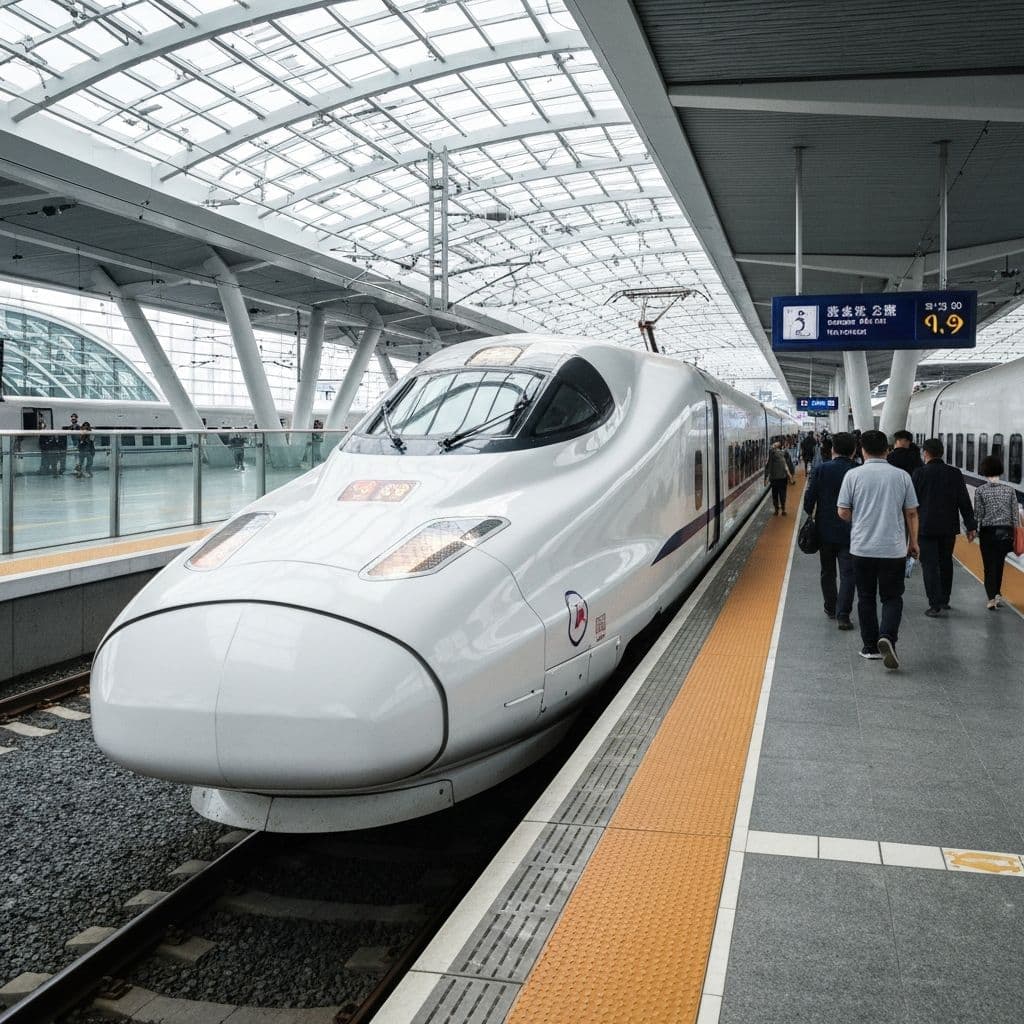

Welcome to the future of travel. China's high-speed rail network is not just a mode of transport; it's an experience that redefines efficiency and comfort. Spanning over 42,000 kilometers, it is the most extensive and widely used high-speed railway system on the planet. For international visitors, mastering this network is the key to unlocking the vast and diverse landscapes of China, connecting megacities, ancient capitals, and picturesque countryside with breathtaking speed.
This guide is designed to demystify the entire process for you. We will walk you through everything from understanding the different train classes and booking platforms to navigating the major stations and ensuring a smooth journey. By the end, you'll be ready to confidently explore China by bullet train.
Why Choose China's High-Speed Rail?
Flying between cities might seem faster on paper, but when you factor in travel time to distant airports, security checks, and potential delays, the China high-speed rail network often comes out ahead. Stations are typically located in city centers, making them incredibly convenient. The trains are renowned for their punctuality, comfort, and the stunning views they offer of the Chinese countryside.
Traveling by bullet train is an attraction in itself. You'll glide past terraced rice fields, dramatic mountain ranges, and sprawling urban landscapes, all from the comfort of a spacious, quiet cabin. It's an eco-friendly and incredibly efficient way to see the country.
Key Benefits for Travelers
Punctuality: Trains are famously on time, with delays being a rare exception.
Comfort: Spacious seats, ample legroom, and clean carriages make for a relaxing journey.
Frequency: On popular routes like Beijing to Shanghai, trains depart every 10-15 minutes.
City-Center to City-Center: Avoid long commutes to out-of-town airports.
Scenic Journeys: Witness the changing landscapes of China from your window.
Understanding Your China Bullet Train Guide: Train Classes and Codes
Not all high-speed trains are the same. They are identified by a letter code that indicates their speed and service level. Understanding these codes is the first step in choosing the right train for your journey. The most common codes you will encounter are G, D, and C.
G-trains (Gaotie) are the fastest, reaching speeds of up to 350 km/h (217 mph). D-trains (Dongche) are also high-speed but make more stops, while C-trains (Chengji) are often used for shorter intercity routes. For most long-distance travel, you will be looking at G or D trains.
Seating Classes Explained
Once you've chosen a train, you'll need to select a class. The options are straightforward and comparable to flying.
Second Class (二等座 Er Deng Zuo): The most economical option. Seats are arranged 3+2 across the carriage. It's perfectly comfortable for journeys of a few hours.
First Class (一等座 Yi Deng Zuo): Offers wider seats arranged in a 2+2 configuration, providing more space and legroom. Ideal for longer trips.
Business Class (商务座 Shang Wu Zuo): A premium option featuring spacious, adjustable leather seats in a 2+1 or 1+1 configuration. It typically includes priority boarding, access to VIP lounges, and complimentary meals.
How to Use China High-Speed Rail: A Step-by-Step Booking Guide
This is the most crucial section for foreign travelers. Booking tickets can seem daunting, but with the right tools and knowledge, it's a straightforward process. The key is to plan ahead, especially during Chinese public holidays when tickets sell out quickly.
Option 1: The Official 12306 Booking Guide for Foreigners
The official platform is China Railway's website and app, called 12306. It offers the most direct access to schedules and tickets. While the interface has improved for foreigners, it can still be challenging.
Registration: You must register an account on the 12306 website or app using your passport details. This process requires email or phone verification and can be finicky.
Payment: This is the biggest hurdle. The 12306 system primarily accepts Chinese bank cards (UnionPay). Some international credit cards may work, but success is not guaranteed.
Advantage: You get real-time availability and can book tickets the moment they are released (30 days in advance).
Option 2: Third-Party China Rail Ticket Booking Apps
For most foreign tourists, third-party apps are the recommended solution. They act as intermediaries, simplifying the process and accepting international payment methods.
Popular and reliable options include Trip.com (formerly Ctrip) and TravelChinaGuide. These platforms have English interfaces, accept major credit cards like Visa and Mastercard, and provide customer support. You will pay a small service fee, but the convenience is well worth it for a stress-free experience.
Collecting Your China High-speed train tickets for foreigners
Once booked, you need to collect your physical tickets before boarding. You cannot board with just a booking confirmation.
At the Station: Take your passport (the same one used for booking) to the self-service ticket machines or the ticket office window.
Self-Service Machines: Look for the ones with a passport scanner. Select the "Passport" option, place your passport on the scanner, and your ticket(s) will be printed.
Important: Always allow extra time before your departure to collect your tickets, as queues can be long.
Navigating Major High-Speed Rail Routes
To give you a sense of the scale and convenience of the network, here are two of the most popular and iconic routes for travelers.
Beijing to Shanghai High-Speed Train
This route is the backbone of the network, connecting China's political capital with its financial hub. The distance of over 1,300 kilometers is covered in just 4.5 to 6 hours, depending on the number of stops.
Trains depart frequently from Beijing South Station and arrive at Shanghai Hongqiao Station. It's a highly comfortable alternative to a 2-hour flight when you consider total travel time. The journey offers glimpses of the North China Plain and the industrialized Yangtze River Delta.
Shanghai to Xi’an High-Speed Train
This route takes you from the ultra-modernity of Shanghai to the ancient capital of Xi'an, home of the Terracotta Army. The journey covers approximately 1,500 kilometers and takes around 6-7 hours.
You'll experience a dramatic change in scenery, from the coastal flats to the inland landscapes. It's a perfect example of how the high-speed rail network makes exploring China's historical and cultural diversity incredibly accessible.
At the Station and Onboard: Your Journey Made Easy
Chinese high-speed rail stations are massive, modern complexes. While they can be intimidating at first, they are well-organized.
Station Procedure
Security Check: Your first stop. All bags go through an X-ray machine, similar to airport security.
Ticket and Passport Check: Show your physical ticket and passport to the gate attendant. They will check that the name on the ticket matches your passport.
Waiting Hall: Find your train number on the large departure boards to locate your designated waiting area and gate.
Boarding: Gates open 10-15 minutes before departure. Scan your ticket at the automatic gate to access the platform.
Onboard Etiquette and Amenities
The train environment is generally quiet and relaxed. There are a few things to know to ensure a pleasant journey for everyone.
Food and Drink: Most long-distance trains have a dining car serving hot meals, or a trolley service. You can also bring your own food and non-alcoholic drinks.
Luggage: There is ample space for luggage above the seats and at the ends of each carriage. There are no strict weight limits, but be mindful of space.
Quiet Carriages: Some trains have designated quiet carriages where phone calls and loud conversations are discouraged.
Cleanliness: Toilets are Western-style and kept clean. They are located at the end of each carriage.
Essential Tips for a Smooth Trip
Beyond booking and boarding, a few extra tips will make your experience with the China high-speed rail network seamless.
Download a Translation App: Having an app like Pleco or Google Translate (with offline Chinese packs downloaded) is invaluable for reading signs and communicating.
Have Your Hotel Address in Chinese: Show this to taxi drivers when you arrive at your destination station.
Mobile Data: Ensure you have a working Chinese SIM card or a global roaming plan. You'll need it for navigation and accessing your e-ticket confirmations.
Power Outlets: All seats have power outlets (both Chinese and universal two-pin sockets), so you can keep your devices charged.
Mastering the China high-speed rail network is one of the most rewarding skills you can acquire as a traveler in China. It offers an unparalleled combination of speed, comfort, and access. With this guide in hand, you are now equipped to plan and execute your bullet train adventures with confidence. Happy travels!
Disclaimer: This information is provided for reference only and was last updated on . Requirements and regulations may change. Always verify with official sources before making travel plans.