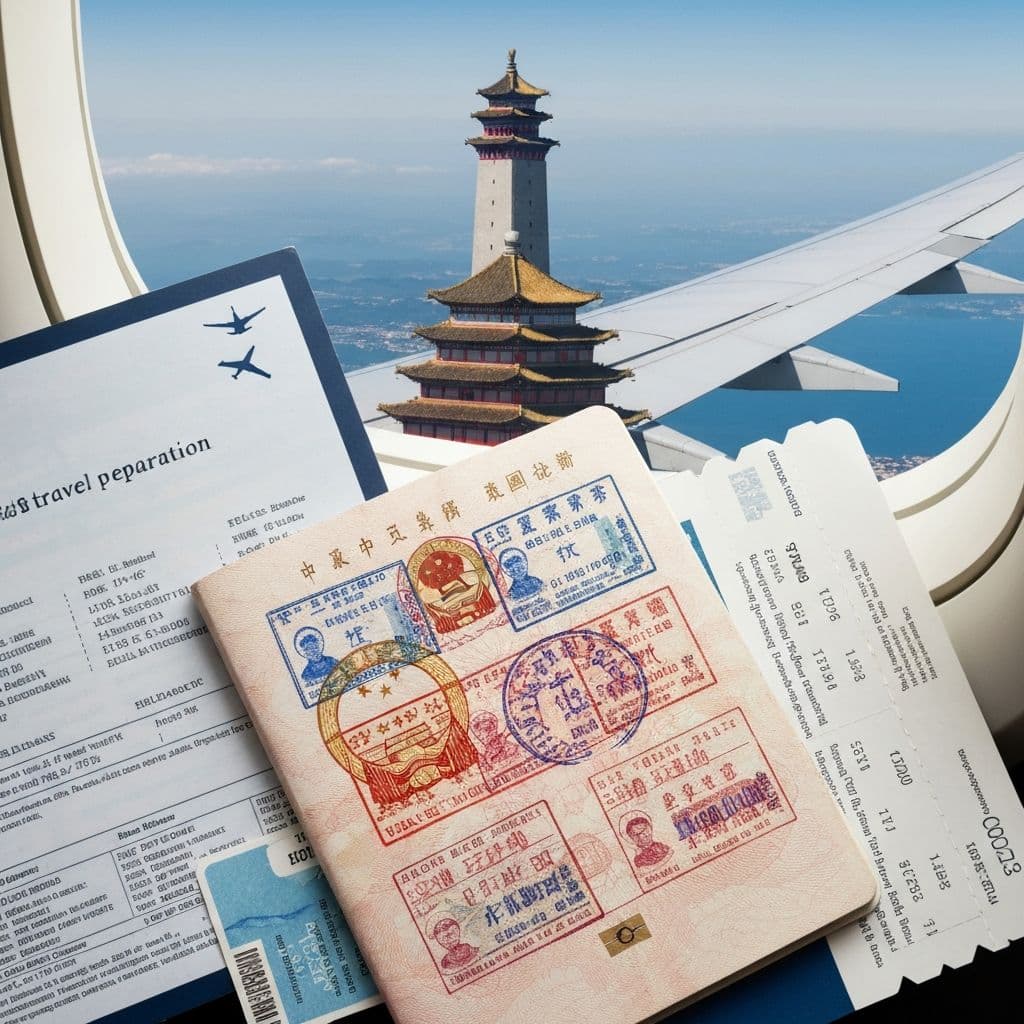

If you're planning a trip to China, you've likely seen various claims online: some say China is extremely safe, others say cultural differences can be overwhelming. What's the truth?
For tourists, China is a very safe country.
But "safe" doesn't equal "familiar." This guide won't just tell you with slogans like "China is safe," but will explain: why it's safe, in what situations you might feel uncomfortable, and how to truly prepare.
I. Safety is not a feeling, but a set of verifiable facts
In major Chinese cities (such as Beijing, Shanghai, Guangzhou, and Chengdu), you rarely encounter violent crimes targeting tourists. This is not luck, but the result of several verifiable factors working together:
Extremely strict gun and knife control: It's virtually impossible for ordinary people to possess firearms. Armed robberies are extremely rare.
Extensive public surveillance coverage: Almost all public places have cameras. These include train stations, subway stations, shopping malls, and even some streets.

Police and security personnel are ubiquitous: You'll always see uniformed personnel in subway stations, tourist attractions, and train stations. If you get lost or need help, you can simply walk up and ask.
You don't need to be afraid to walk on certain streets after dark like in some countries. But in any country, maintaining basic awareness of your belongings (don't leave your phone in your coat pocket, keep your backpack zipped up) is still a smart move, because petty theft still exists in crowded places.
II. What makes you most "uneasy" is often not crime, but the feeling of being out of control.
Many travelers feel nervous when they first arrive in China, not because they are afraid of being attacked, but because:
Complete language barrier: taxi drivers can't understand the English address you write, and the menu has no letters—this can make you feel helpless.
Mobile network "paralysis": Your Google Maps, WhatsApp, Instagram, and Gmail will not function properly in mainland China. Without a VPN, even finding directions will be difficult.
The app ecosystem is completely different: No Uber, you'll use Didi; no Google Translate, you'll use Microsoft Translate; no Yelp, you'll use Dianping.
Payment methods: Alipay and WeChat are widely used in China. If you haven't linked them properly, you'll find yourself unable to buy anything even if you have the money.
These are not personal safety issues, but they can cause anxiety. And anxiety makes you feel "unsafe".
Our advice: Before arriving in China, please get these three things sorted out—it's more important than any self-defense technique:
Internet Access: Install a reliable VPN before departure (and make sure it works in China).
Payment Tools: Download Alipay or WeChat Pay and link it to an international credit card (most Visa/Mastercard are now supported). Don't carry a large balance; just scan codes when needed.
Offline Maps and Translation: Download Baidu Maps or Gaode Maps (Chinese, but with an English interface option), and translation software.
III. Solo Female Travelers: What's the Real Experience Like?
The friendliness of major Chinese cities towards solo female travelers often surprises Western travelers. This isn't because "Chinese women are braver," but rather due to the inherent structure of the environment:

Public places are always crowded: At 10 PM in the subway, 11 PM on the street, or midnight in a convenience store, you won't be isolated in a completely deserted corner. This "constant flow of people" is itself a form of natural surveillance.
24-hour hotel reception is standard: Even very cheap budget hotels will always have someone at the front desk. You don't have to worry about "the door being locked after 11 PM and no one opening it."
Ridesharing is very cheap and transparent: If you feel something is off about a neighborhood at night (e.g., dim lighting, few people), simply call a Didi (ride-hailing app). Usually, a car will be available within minutes, and the trip record is available in real time. The cost may only be $3-5.
Being in China doesn't mean there are no dangers. Walking alone drunk late at night in areas with many bars (such as Sanlitun in Beijing or the Bund in Shanghai), or venturing into undeveloped areas of remote rural areas, still carries risks.
IV. Why are subways and high-speed trains safe?
China's train and subway systems have strict security check procedures.As a first-time visitor to China, you might initially find it frustrating: queuing for bag checks at the subway entrance, swiping your passport and having your luggage X-rayed at the train station.
But consider this: it means no one can carry knives, flammable materials, or explosives into the most crowded areas. You don't need to be wary of people next to you on the subway.
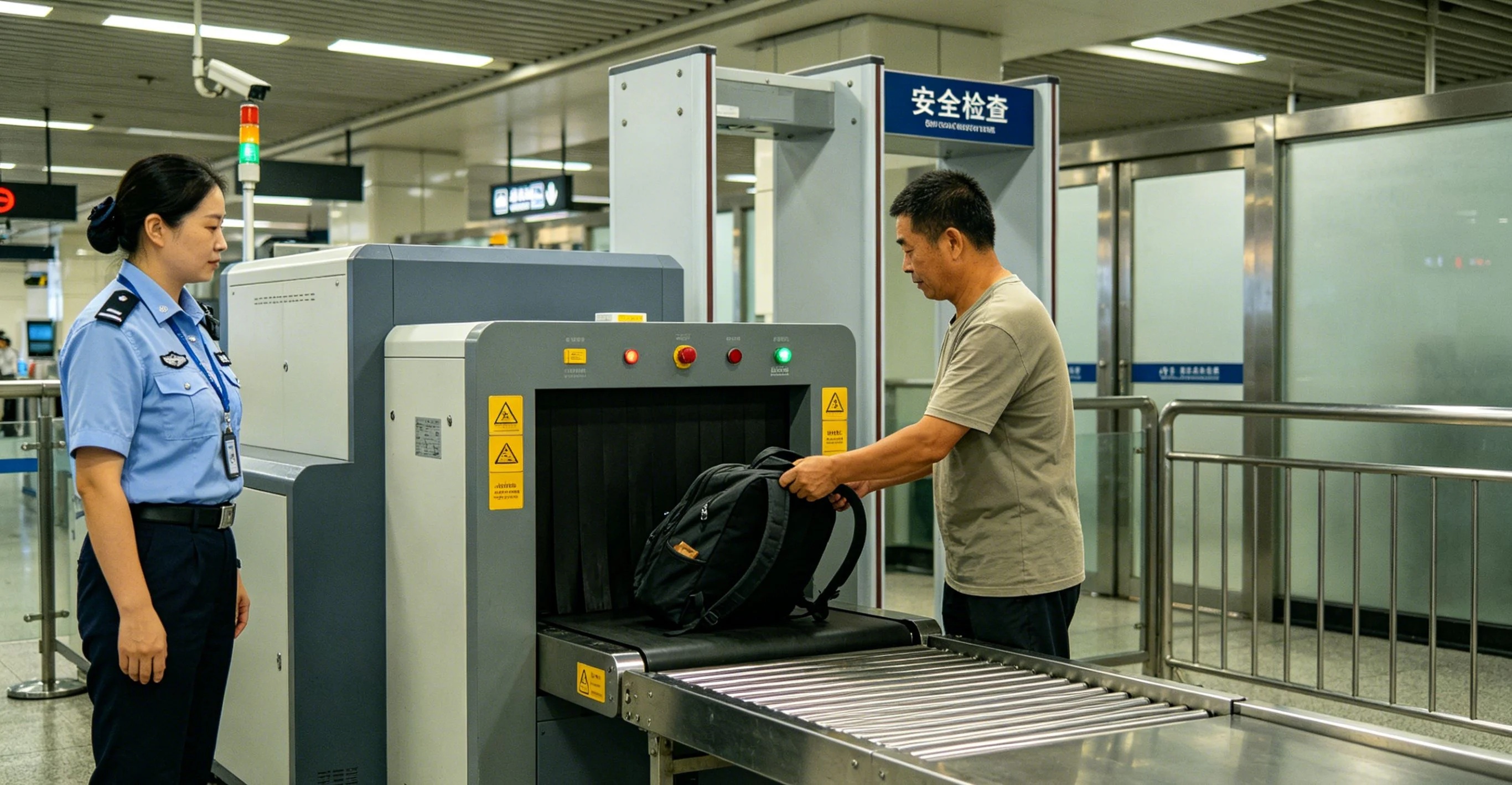
Here are a few other design features you might not know:
Subway platforms have fully enclosed glass screen doors—preventing anyone from falling or being pushed onto the tracks.
Every subway and high-speed train car has an emergency intercom button that connects directly to the driver or railway police.
Railway police patrol almost all long-distance high-speed trains, not just at the originating station.
Allow extra time for security checks (especially at train stations, which can take 15-20 minutes). Do not attempt to bring any knives, lighters, or excessive liquids—security personnel are very strict.
V. Finally: What should you really be worried about?
The reality is that most Chinese travelers encounter problems like: dead phone battery, VPN connection issues, no money in Alipay, not being able to find someone who speaks English, and missing their train. These won't hurt you, but they can be very frustrating.
Therefore, your "safety preparation checklist" should look like this:
Install and test your VPN before departure (it's recommended to prepare two different VPNs as backups).
Link your international credit card to Alipay or WeChat and deposit a small amount of RMB (or have a friend transfer money to you upon arrival).
Download an offline translation pack (Chinese and English).
Write down the names of your hotel, train station, and attractions in Chinese in your phone's notes app (e.g., "Beijing Capital International Airport T3").
Buy a local SIM card immediately upon arrival (there are China Mobile or China Unicom counters at the airport; you can get one with your passport).
Know the emergency phone numbers: Police 110, Fire Department 119, Ambulance 120.
VI. A Practical Preparation Checklist for Tourists
1. Internet and VPN: Essential Before Departure
China's Great Firewall blocks Google, WhatsApp, Instagram, Google Maps, etc. Install a working VPN (such as ExpressVPN, NordVPN, or Surfshark) before your trip and activate it.
Two Internet Options:
International Roaming: Convenient but expensive, and some carriers are still restricted by the firewall.
Chinese Local SIM Card: Cheap (around $30 USD for a large amount of data), but requires a visit to a service center with your passport and a VPN.
For short-haul trips, we recommend using an international eSIM (such as Airalo), which can bypass some restrictions.
2. Payment: You must learn to use Alipay.
Download Alipay, register with an international mobile phone number, and link your Visa/Mastercard. It covers almost all scenarios, from street vendors to hotels.
Remember: When paying, open the app, tap "Scan," and scan the merchant's QR code.
3. Maps: Forget Google Maps
Gaode Maps or Baidu Maps are the most accurate. They primarily have Chinese interfaces, but you can still see pinyin and location information.
Before you set off, save the Chinese names of all the places you want to visit (hotels, attractions, restaurants) to your phone's notes app, then copy them directly into the map app.
4. Transportation: Use Didi International Version
Download Didi International Version (DiDi) and link your foreign credit card. It's best to use Pinyin or Chinese characters when entering your destination.
Purchase high-speed rail tickets in advance using Trip.com (English interface, supports foreign credit cards). Collect your paper tickets at the train station's self-service machine or window using your passport.
Disclaimer: This information is provided for reference only and was last updated on . Requirements and regulations may change. Always verify with official sources before making travel plans.