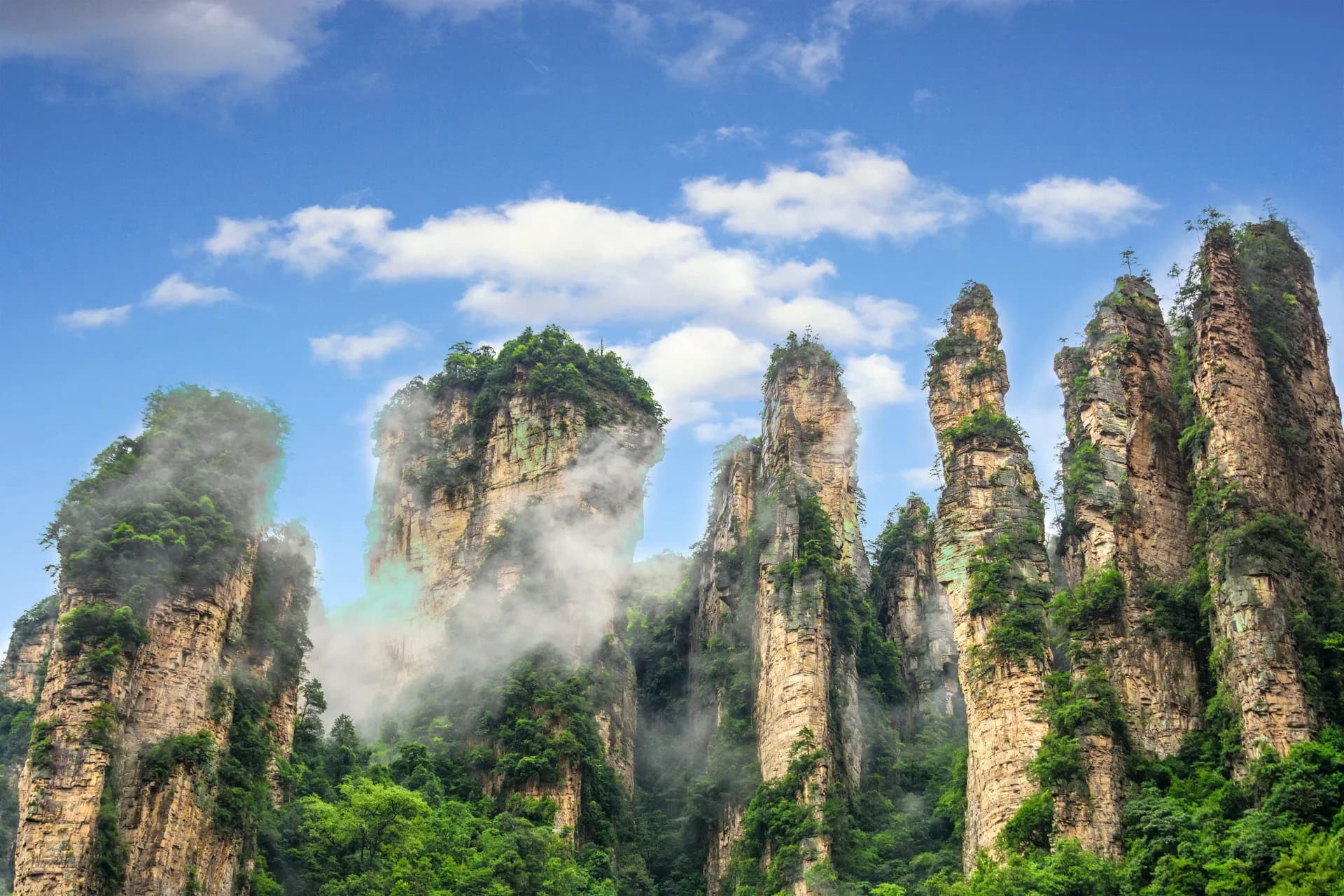

Zhangjiajie National Forest Park is China's first national forest park and a UNESCO World Natural Heritage site. Thousands of quartz sandstone peaks rise abruptly from the ground, often shrouded in mist and clouds, creating a scene of breathtaking beauty. It was the inspiration for the "Hallelujah Mountains" in the movie Avatar. Whether you're an outdoor enthusiast, a photography aficionado, or simply looking to escape the hustle and bustle of the city, Zhangjiajie will offer you an unforgettable experience.
Quick overview of tickets and transportation
Park Admission: 165 RMB/person (No off-peak season price difference, valid for four days, multiple entries allowed)
Environmental Protection Bus: 60 RMB/person
"Three Cable Cars and One Elevator" Four-Way Combo Ticket (4 one-way rides within four days): 238 RMB/person
Multi-Way Combo Ticket (Unlimited rides within four days): 298 RMB/person
Top 10 Must-Visit Attractions Explained
1. Yuanjiajie: Stepping into the "Hallelujah Mountains" of Avatar
Yuanjiajie is the most representative area of the entire park. The colossal stone pillar that pierces the clouds—the Qiankun Pillar—is the inspiration for the "Hallelujah Mountains" in the movie Avatar. Standing on the viewing platform of the Enchanting Terrace, hundreds of stone pillars stretch out like a giant army across the deep valley.
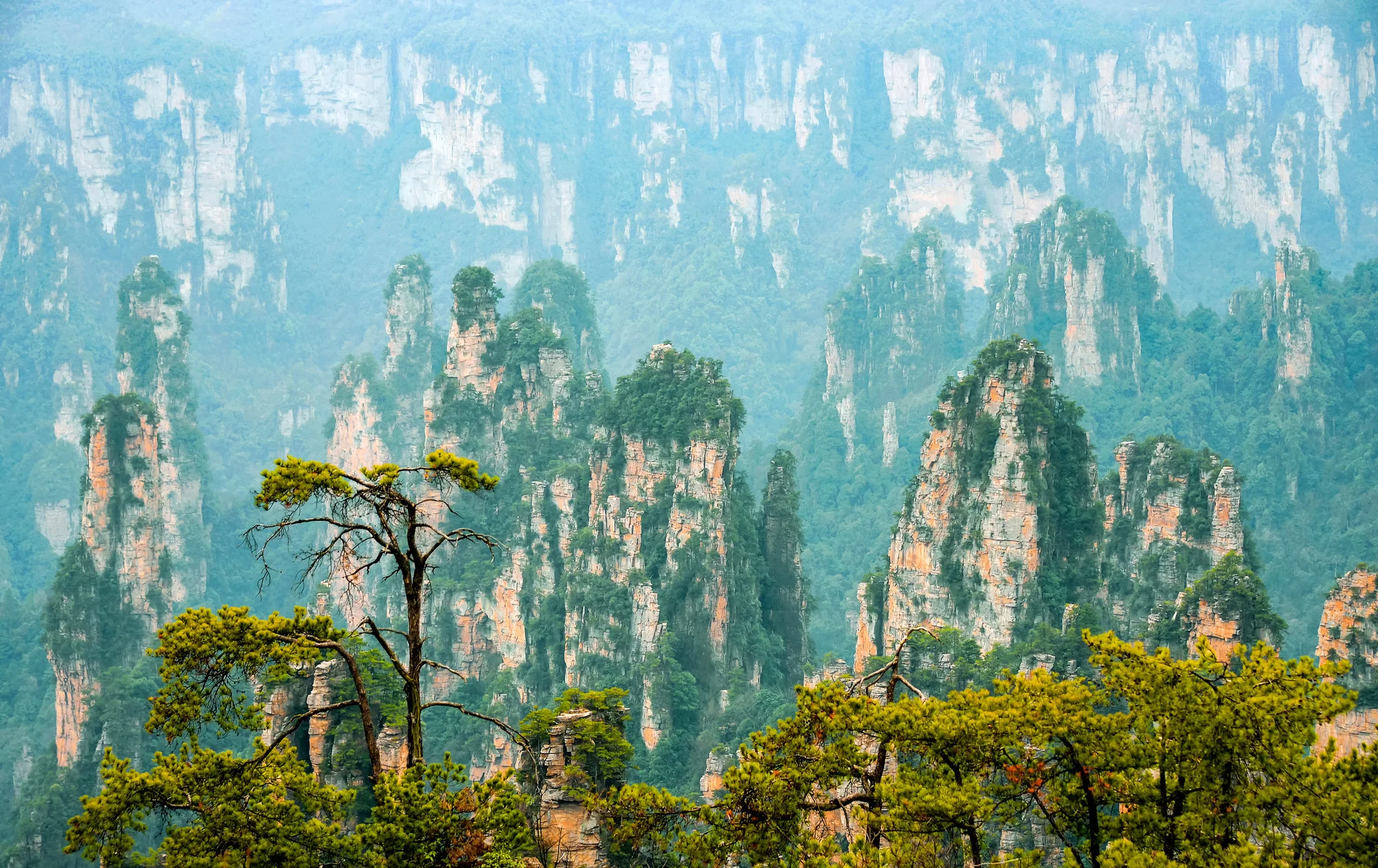
Recommended experience:
Hike to the "First Bridge Under Heaven," a natural stone bridge spanning two peaks, adorned with numerous red prayer ribbons. You can also buy one, tie it on, and leave your own wish.
Visitor Information:
The peak time for tour groups is from 9:00 AM to 3:00 PM. It is recommended to arrive earlier than 9:00 AM or later than 3:00 PM for a much better experience.
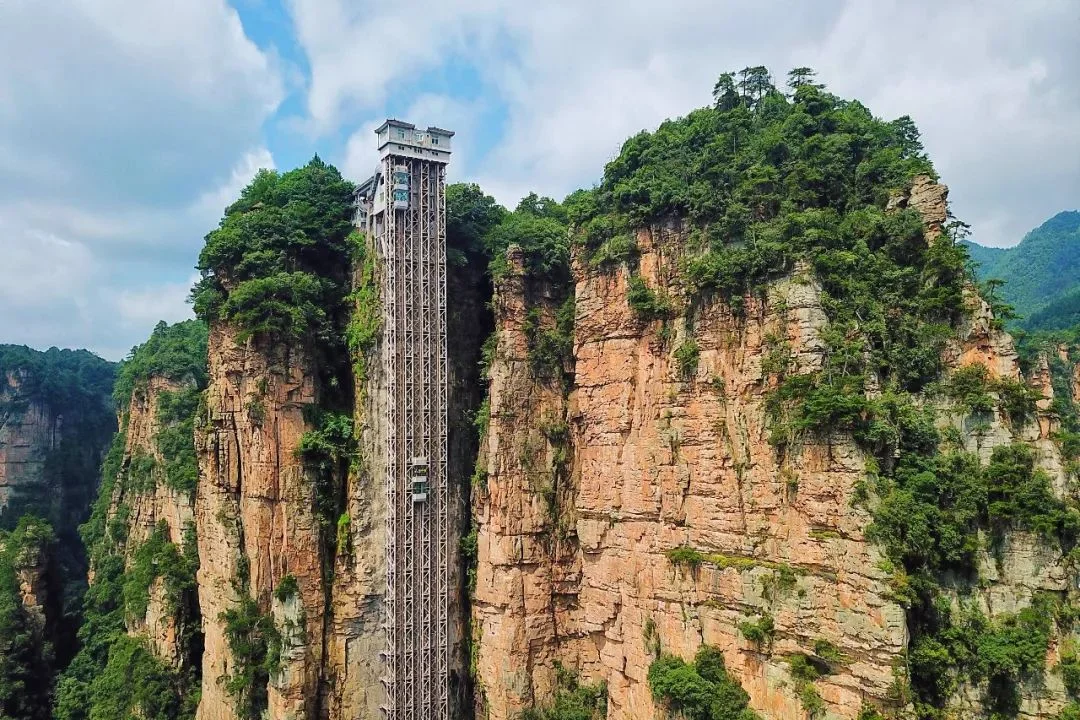
2. Bailong Elevator: A 335-meter vertical ascent, reaching the clouds in 66 seconds.
The Bailong Elevator is not only a quick way to go up and down the mountain, but it is also a breathtaking engineering marvel in itself. It holds the record for the "world's highest outdoor sightseeing elevator," with a vertical drop of 335 meters.
Unforgettable moment:
The elevator first travels through the interior of the mountain, then suddenly bursts out of the cliff face, revealing a stunning array of stone peaks—a visual impact that no hiking route can replicate.
Queuing Reminder:
During peak season, waiting times may reach 1 to 2 hours. If you are staying near the scenic area, try to arrive before the first elevator.
3. Tianzi Mountain: The "King of Peaks" Above the Sea of Clouds
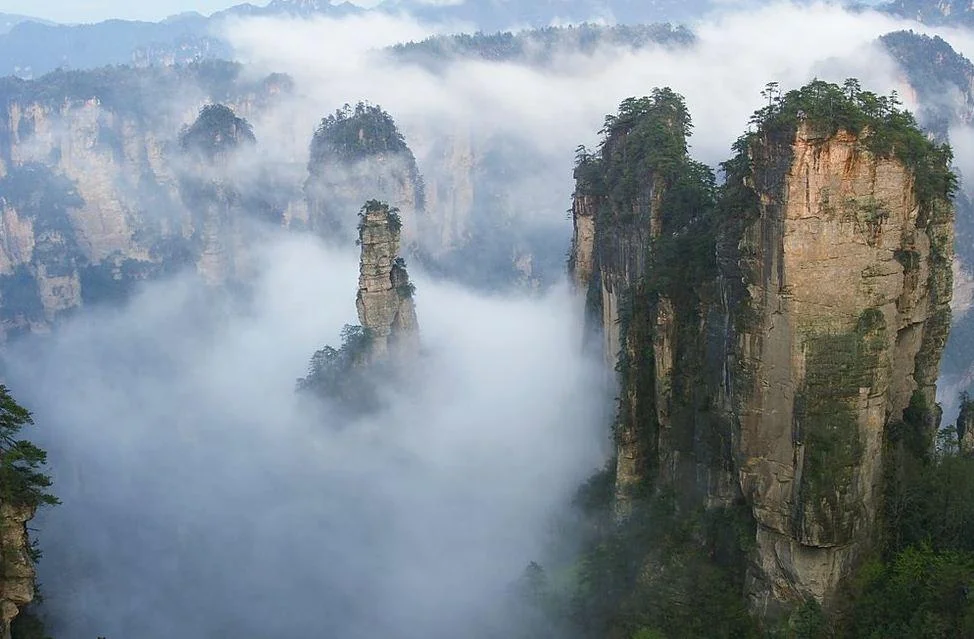
If Yuanjiajie's charm lies in the shapes of its stone pillars, then Tianzi Mountain excels in its majestic grandeur. The West Sea Peak Forest, in particular, is widely recognized as the best place in the entire park to view the sea of clouds.
Photography Tips:
The sea of clouds is most spectacular between 6:30 AM and 8:30 AM. Only the tops of the stone peaks are visible, resembling fairy islands floating on a white ocean. It is recommended to stay overnight near Tianzi Mountain to reach the viewing platform before sunrise.
4. Golden Whip Stream: A natural oxygen bar for easy hiking at the bottom of the canyon.
Jinbian Stream is the gentlest and easiest route to walk in the park, stretching approximately 7.5 kilometers. It meanders along the clear stream at the bottom of a canyon, with ancient trees providing ample shade on both sides, making the air exceptionally fresh.
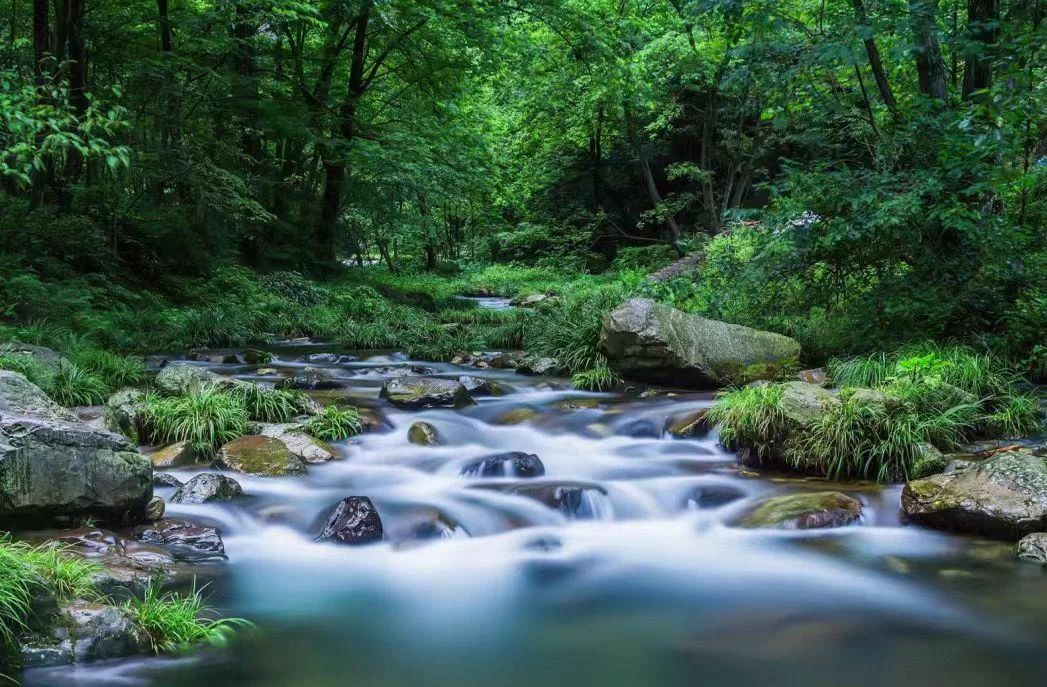
(Image source: Internet)
Highlights along the way:
This is one of the filming locations for the classic TV series Journey to the West, where you can see uniquely shaped rocks such as the "Divine Eagle Protecting the Whip".
The stream is clean and cool; you can take off your shoes and wade in it during the summer, but be careful as the rocks are slippery.
Safety Precautions for Macaques:
This area is where wild macaques are most active. Never open a plastic bag in front of the monkeys, and never feed them. All food and water must be placed in a zip-lock backpack. If a monkey approaches, do not stare at it; simply back away slowly.
5. Yangjiajie: Climb the near-vertical iron ladder and experience the "natural Great Wall".
Yangjiajie is known for its thrilling scenery and is suitable for adventurous travelers. Its "natural Great Wall" consists of rows of parallel stone walls, resembling ancient city walls. The most exciting section requires climbing almost vertical iron ladders that cling tightly to the rock face, with a deep valley right beside you.
Suitable for:
Those with a certain level of physical fitness and who are not afraid of heights. Some sections are extremely narrow, allowing only one person to pass at a time; passengers must give way to each other going up and down.
Alternative option:
If you lack physical fitness or are traveling with children, you can view the "Natural Great Wall" from the observation deck below, avoiding the need to climb the iron ladder.
6. Huangshi Village: The origin of the saying "If you don't climb Huangshi Village, you haven't truly been to Zhangjiajie."
Huangshizhai is an independent mountaintop platform, accessible by cable car or hiking (approximately 1.5–2 hours). A flat, circular trail at the summit connects several viewing platforms. Compared to Yuanjiajie and Tianzi Mountain, it is less crowded and has a quieter atmosphere.
Best Time for Photography:
The soft light of early morning or late afternoon makes the mountain peaks particularly beautiful. The direction of sunlight differs between morning and afternoon, so you can walk around the circular trail to take photos from different angles.
Cable Car Operation:
The Huangshizhai cable car usually closes around 5 PM. Please plan your descent accordingly.
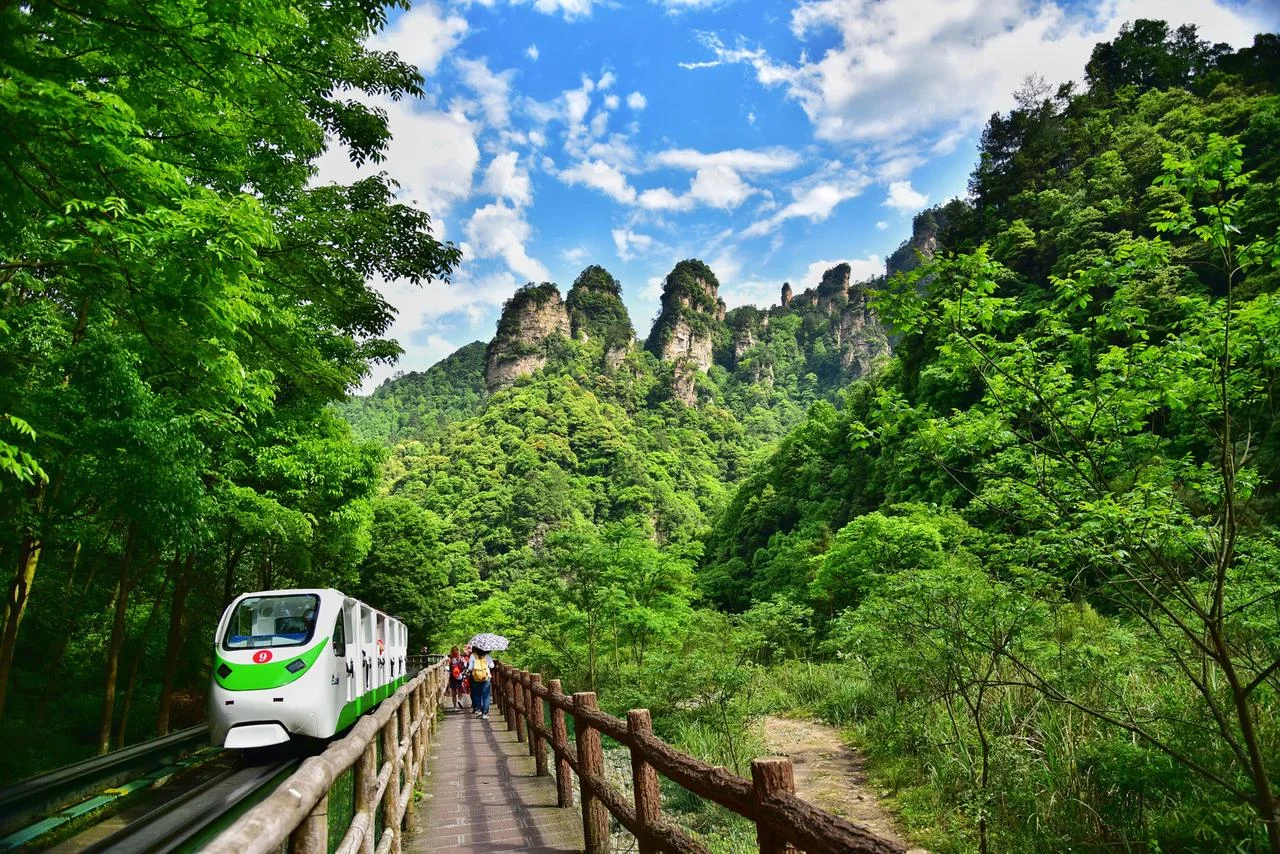
7. Ten-Mile Gallery: Take a miniature train or walk through a 5-kilometer-long landscape scroll.
The Ten-Mile Gallery is a canyon about 5 kilometers long, with peaks of various shapes on both sides, such as "Old Man Gathering Herbs" and "Three Sisters Peaks". You can choose to take a sightseeing train (about 10 minutes one way), or you can travel one way by car or on foot.
Walking Experience:
The trail is flat, and the entire walk takes about 1 hour. If you enjoy taking your time taking photos, we recommend walking in and then taking the train out.
Lighting Suggestions:
In the morning, the sun shines on the eastern peaks, while in the afternoon it shines on the western peaks. You can choose the direction based on your subject.
8. Wild macaques: An unexpected encounter with forest natives
Within the scenic area, especially along the Golden Whip Stream and near the eco-friendly bus station, you are very likely to encounter groups of wild macaques. They are the true masters of this place, and their behavior is unpredictable.
Safety Rules (Please follow):
Do not feed, tease, or stare directly at the monkey for extended periods.
Food and water must be placed in a zippered or buckled backpack; never carry them in your hand or hang them outside your bag.
If a monkey jumps on you or tries to snatch your belongings, do not scream or wave it away. Slowly crouch down and back away; they will usually leave on their own.
Visitors with children should always hold their children's hands.
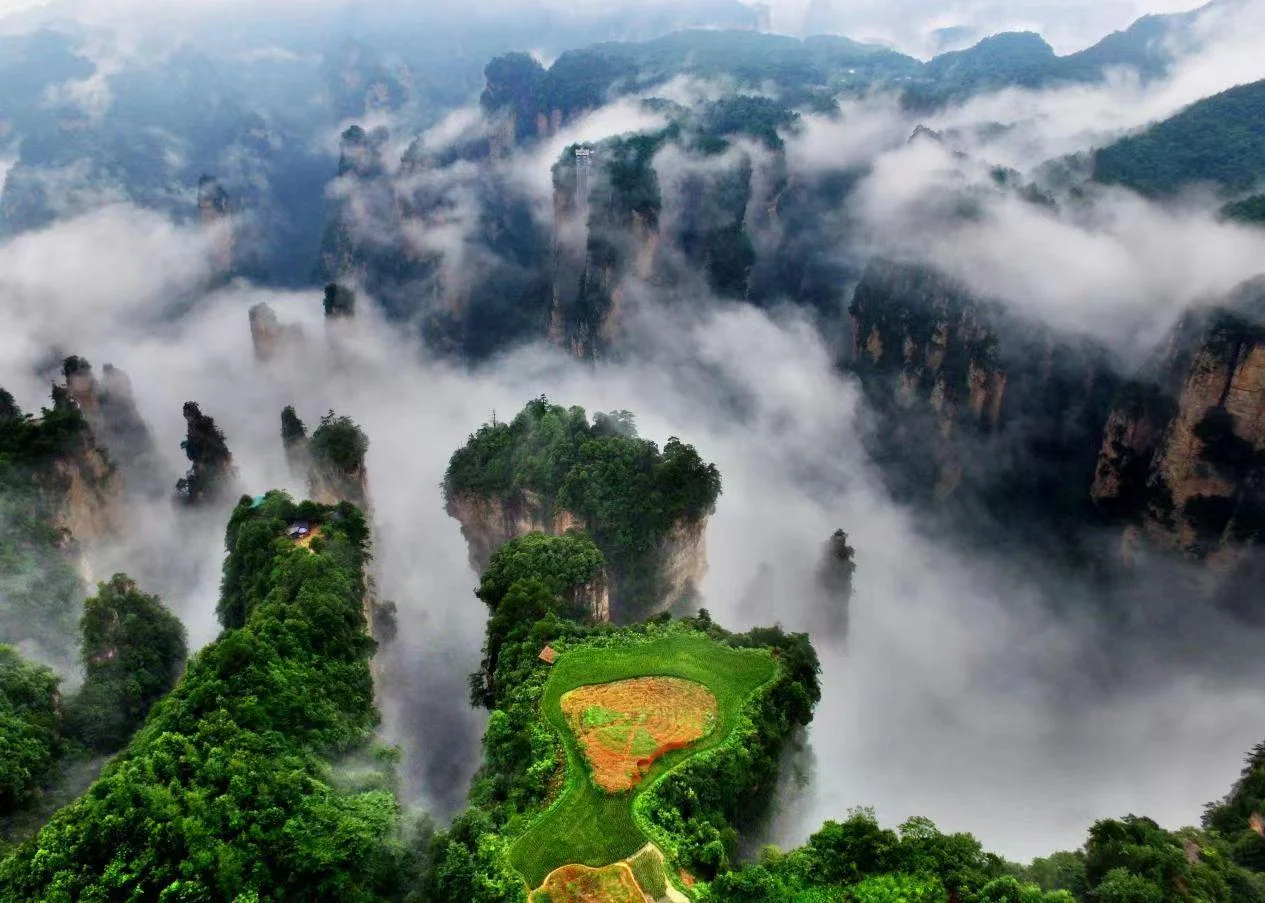
9. Aerial Gardens: Terraced Fields on the Mountain Top and the Agricultural Memories of the Tujia People
Deep within the Tianzi Mountain Scenic Area lies a terraced field surrounded by mountains, known locally as the "Sky Garden." The Tujia people still cultivate this land, creating a striking visual contrast with the distant stone peaks—ancient agricultural life on one side, and a natural wonder formed millions of years ago on the other.
(Image source: Internet)
How to get there:
It's about a 30-minute walk from the Tianzishan Environmental Protection Station, or you can take a simple vehicle provided by local villagers (approximately 20-30 yuan per person). The road conditions are quite basic, so it's recommended to wear non-slip shoes.
Cultural Etiquette:
If you encounter villagers working in the fields, you can smile and greet them. It's best to ask for permission before taking photos. Please do not trample on the crops on the field ridges.
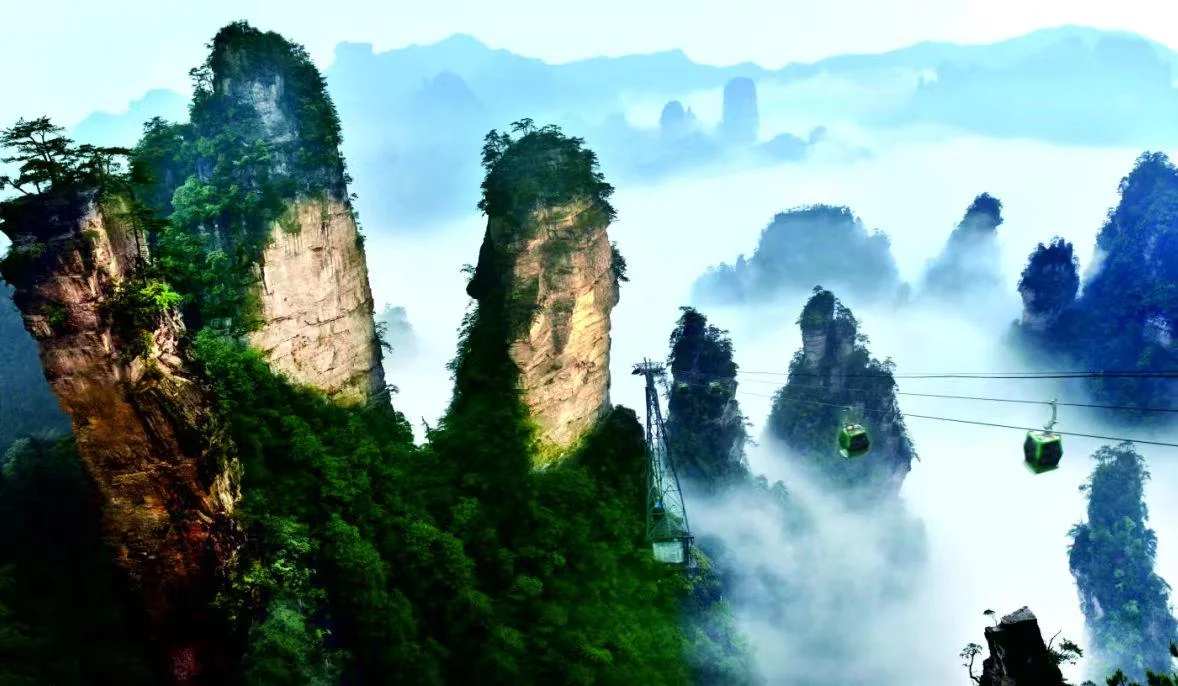
10. Cable car tour: A bird's-eye view of Pandora.
In Zhangjiajie, taking a cable car is one of the core experiences. Whether it's the Tianzi Mountain Cableway (about a 10-minute aerial journey) or the Huangshizhai Cableway, both offer a bird's-eye view of the entire peak forest landscape. Only by ascending into the air can one truly appreciate the grandeur and uniqueness of the "Zhangjiajie landform."
(Image source: Internet)
Operating Hours Reminder:
Most cable cars and the Bailong Elevator stop operating around 5 PM, and may close as early as 4:30 PM in winter. Please be sure to check the last departure time on the day of your trip to avoid being stranded at the summit.
Combined Ticket Recommendation:
If you plan to ride the cable car or elevator multiple times, purchasing a "Four-Way Combination Ticket" (238 RMB) or a "Multi-Way Combination Ticket" (298 RMB) is more cost-effective than buying individual tickets.
Best time to visit
Zhangjiajie is beautiful in all four seasons, but the experience varies greatly:
Spring (April–May) and Autumn (September–November): Comfortable temperatures, vibrant autumn foliage, and wildflowers in spring. This is the best season to visit.
Summer (June–August): Lush vegetation, but hot and humid. It's also peak tourist season in China, with long queues. If you only have time during the summer holidays, it's recommended to get up early and return late to avoid the crowds.
Winter (December–February): After a snowfall, Zhangjiajie is picturesque, with few tourists and no queues. However, temperatures at the mountaintop may drop below 0°C, and some roads may be icy; wear non-slip shoes or crampons.
General Essential Gear:
A pair of comfortable, non-slip hiking shoes. This is the most important piece of equipment, regardless of the season.
A disposable raincoat (more practical than an umbrella due to the unpredictable weather in mountainous areas).
A lightweight backpack, water bottle, and a small amount of energy snacks.
Final Practical Advice
Payment and Tickets: Tickets can be booked online (e.g., through Ctrip, Meituan, or the official mini-program) or purchased on-site (Alipay, WeChat Pay, and cash accepted). Booking one day in advance is recommended, especially during peak season.
Language Communication: Major scenic area signs are in both Chinese and English, but vendors and some staff may have limited English proficiency. It is recommended to download a translation app (such as Google Translate or Microsoft Translate) and save it offline beforehand.
Accommodation: It is recommended to stay in Wulingyuan District or near the forest park ticket station for convenient early morning entry. If you wish to photograph the sunrise, you can choose Dingxiangrong Village within the scenic area (conditions are relatively basic; please confirm its opening status in advance).
Environmental Protection: There are ample trash cans within the scenic area; please do not litter. Smoking is strictly prohibited (forest fire prevention is strict, and fines are high).
Frequently Asked Questions
Q1: How do I get to the National Forest Park from Zhangjiajie city center?
From Zhangjiajie Central Bus Station (next to the train station), take a bus to either "Wulingyuan" or "National Forest Park Ticket Station." The journey takes 40-50 minutes and costs 12-15 yuan. A taxi or Didi ride will cost approximately 80-120 yuan. We recommend choosing a ticket station based on your accommodation location: the Wulingyuan ticket station area is more lively, while the National Forest Park ticket station is closer to Huangshizhai.
Q2: How do I eat inside the scenic area? Do I need to bring my own food?
There are snack stalls and simple restaurants at the top of each major scenic area (Yuanjiajie, Tianzi Mountain, etc.), but prices are 30%–50% higher than at the foot of the mountain. It's recommended to bring some snacks (energy bars, bread, nuts) and store them in an opaque backpack—do not carry plastic bags, as this will attract macaques to steal your food. Water is sold inside the scenic area, or you can bring your own water bottle to fill with free hot water.
Q3: How should I arrange my itinerary? How many days should I spend?
I recommend 2-3 days. Day 1: Bailong Elevator up Yuanjiajie → Yangjiajie → Tianzi Mountain Cableway down (core peak forest). Day 2: Full hike along Jinbian Stream (approx. 2.5 hours) → Ten-Mile Gallery → Huangshizhai Cableway (canyon and close-up views). The ticket is valid for four days; you can slow down your pace if you have ample time.
Q4: Can I use a drone?
No. The entire Zhangjiajie National Forest Park is a no-fly zone. Flying a drone without permission may result in a fine. For panoramic aerial shots, please use the observation deck or take the cable car.
Q5: Is it still worth going on a rainy day?
Yes, but adjust your expectations. Light rain or showers can actually create a sea of clouds, which is why many photographers specifically choose this kind of weather. If it's foggy or pouring rain, visibility will be too low, so it's recommended to go to Tianmen Mountain instead or postpone your visit. Check the real-time weather forecast before you go, and bring a raincoat and waterproof shoe covers.
Disclaimer: This information is provided for reference only and was last updated on . Requirements and regulations may change. Always verify with official sources before making travel plans.