
To truly understand China, one must sit down with a cup of tea. For millennia, this simple leaf steeped in hot water has been far more than a beverage; it is the heart of a sophisticated philosophy, a social ritual, and an art form. Chinese traditional tea culture is a living legacy, woven into the fabric of daily life, spiritual practice, and national identity. It offers travelers a unique and intimate window into the Chinese soul.
From the misty mountains where tea bushes grow to the serene tearooms where it is mindfully prepared, every step in the journey of tea is imbued with meaning. This guide will take you through the rich history, regional varieties, intricate ceremonies, and modern practices of this enduring tradition, providing you with the knowledge to appreciate and participate in one of China's greatest cultural treasures.
The Roots of a National Obsession: A Brief History
The story of tea in China is as old as the civilization itself, with legends and historical records tracing its discovery and use back thousands of years. Its evolution from a medicinal herb to a global commodity is a fascinating tale of culture, commerce, and connoisseurship.
Legendary Beginnings and Imperial Patronage
The most famous origin story is associated with the mythical Shennong, who discovered tea around 2737 BC. Legend has it that Shennong, a master of herbal medicine, discovered tea by chance when a leaf from a wild tree fell into his boiling teapot. Historically, the earliest reliable record of tea use dates back to the Western Zhou Dynasty, when tea was presented as tribute to the emperor. During the Tang Dynasty (618-907 AD), tea culture truly flourished, with Lu Yu's classic work, The Classic of Tea, standardizing tea culture. During this period, tea's status as a national beverage was solidified.
The Silk Road of Tea
From the Tang period onward, tea became a major commodity on the ancient trade routes. Compressed tea bricks traveled along the Silk Road to Central Asia and beyond, often used as currency. By the time of the Song Dynasty, elegant tea competitions and powdered tea preparation were in vogue, while the Ming Dynasty popularized the loose-leaf brewing method we are most familiar with today. This long history has solidified tea's place as the cornerstone of Chinese social and spiritual life.
The Six Families of Chinese Tea
All tea comes from the Camellia sinensis plant, but processing methods create astonishing diversity. China classifies its teas into six major categories, each with a unique color, flavor, and character. Understanding these families is the first step to navigating the world of Chinese tea.
Green Tea (Lü Cha): Unoxidized, with a fresh, grassy, or chestnut flavor. Examples include famous varieties like Longjing (Dragon Well) from Hangzhou and Bi Luo Chun. It's the most consumed type in China.
White Tea (Bai Cha): Minimally processed, often just withered and dried. It is delicate, subtly sweet, and revered for its purity. Bai Hao Yinzhen (Silver Needle) is a prized example.
Yellow Tea (Huang Cha): A rare category involving a subtle "smothering" oxidation step. It has a mellow, smooth flavor, with Junshan Yinzhen being a celebrated imperial tribute tea.
Oolong Tea (Qing Cha): Partially oxidized, offering a spectacular range between green and black tea. It can be floral like Tieguanyin or roasted and mineral like Wuyi Rock Tea.
Red Tea (Hong Cha): What the West calls "black tea." Fully oxidized, yielding malty, sweet, or smoky flavors. Qimen (Keemun) and Dian Hong from Yunnan are world-famous.
Dark Tea (Hei Cha): Post-fermented, often aged like wine. It has an earthy, smooth profile. Pu'erh from Yunnan is the most well-known, prized for its complexity and health benefits.
The Art of the Tea Ceremony: Gongfu Cha and Beyond
Traditional tea culture is profound and extensive, with different forms possessing unique value and charm. Kung Fu tea, meaning "tea brewed with exquisite skill," is a highly representative and influential method within traditional tea culture. It is not a fixed ritual, but rather a brewing method that emphasizes precision, respect, and a full appreciation of the essence of tea.
Principles and Practice
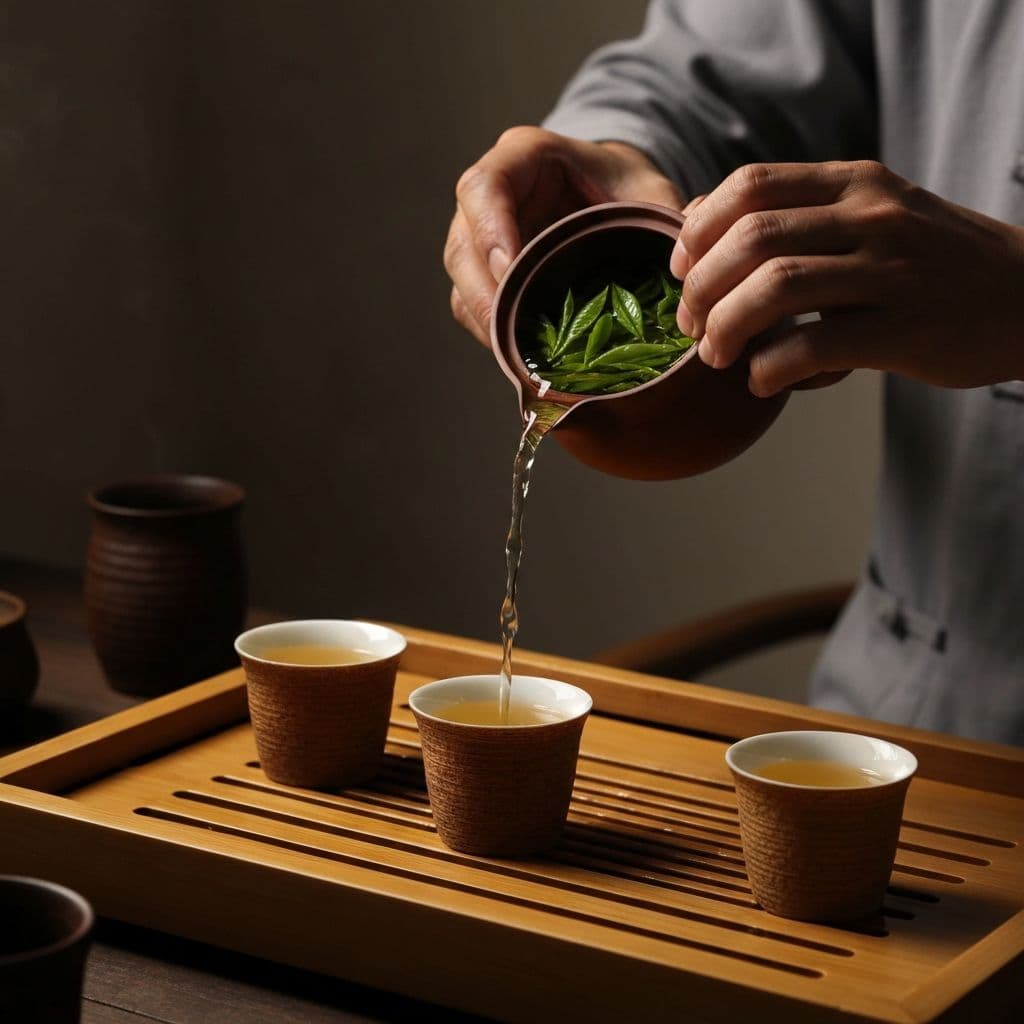
The essence of Gongfu tea lies in brewing a perfect tea soup. It uses a high tea-to-water ratio, small teaware (such as Yixing purple clay teapots or gaiwans), unique pouring techniques like "Guan Yu's Inspection of the City" and "Han Xin's Deployment of Troops," and multiple short infusions to fully showcase the evolution of the tea's flavor. The entire process is like meditation, requiring focused attention on water temperature, time, and pouring method. Its goal is to achieve harmony between the tea leaves, water, teaware, and environment.
Essential Etiquette for Guests
Participating in a tea ceremony is an honor. Observing the following simple etiquette rules is a sign of respect for the host and tradition.
Finger Tapping: When the host pours tea for you, please tap the table lightly with two or three fingers as a silent "thank you."
Receiving Tea: Please hold the teacup with both hands as a sign of respect for the host.
Tea Tasting Etiquette: Please sip the tea slowly in three small sips, savoring its aroma, flavor, and aftertaste. Most importantly, please fully immerse yourself and enjoy this peaceful and serene moment.
Tea in Daily Life and Social Fabric
Beyond formal ceremonies, tea is the invisible thread connecting everyday interactions in China. It is a universal gesture of hospitality; a cup is almost always the first thing offered to a guest. In restaurants, tea cleanses the palate. In family homes, it facilitates conversation. In business settings, sharing tea can build trust and rapport before negotiations even begin.
This deep-seated tea culture also manifests in public tea houses, which serve as community hubs for socializing, playing games, and listening to opera. Furthermore, tea is intrinsically linked to Chinese philosophy, particularly Daoism and Buddhism, where its quiet, clarifying nature aids meditation and represents a connection to the natural world. The concept of Cha Qi (tea energy) describes the physical and spiritual feeling a quality tea imparts.
Experiencing Traditional Tea Culture as a Traveler in 2026
For visitors, engaging with Chinese tea offers some of the most authentic and memorable travel experiences. Here is practical, actionable advice to help you dive in.
Visit a Working Tea Plantation: Regions like Fujian (for Oolong and white tea), Yunnan (for Pu'erh), and Zhejiang (for green tea) offer tours. Walking among the terraced bushes and learning about picking standards firsthand is unforgettable.
Attend a Local Tea Market: Immerse yourself in the bustling world of tea commerce. The Fangcun Tea Market in Guangzhou or the Maliandao Tea Street in Beijing are sensory overloads of aromas and expertise, perfect for sampling and learning.
Take a Short Tea Class: Many cultural centers and premium tea shops in major cities offer introductory workshops. This is the best way to get hands-on with Gongfu Cha brewing under expert guidance.
Relax in a Traditional Tea House: Skip the modern bubble tea chains and seek out a quiet, classical tea house. Spend an afternoon letting a tea master guide you through a tasting session. It's a lesson in slowing down.
Purchase Tea as a Souvenir: Buy tea from reputable shops where you can taste it first. A small Yixing clay teapot (seasoned for one type of tea) or a elegant gaiwan set makes for a meaningful memento. Remember, quality over quantity.
A Legacy Steeped in Time
Chinese traditional tea culture is not a museum relic; it is a vibrant, evolving practice that continues to define hospitality, artistry, and mindfulness. It teaches patience, appreciation for craftsmanship, and the joy of sharing. From the first sip of a delicate green tea to the profound depth of an aged Pu'erh, each cup tells a story of the land, the people, and their history.
As you travel through China in 2026 and beyond, accept every offered cup. Let it be your guide to deeper connections and understanding. In the quiet ritual of preparing and drinking tea, you will find a timeless portal into the heart of Chinese culture, a legacy that continues to steep, offering wisdom and warmth with every infusion.
Note: This article provides general cultural guidance. Individual experiences may vary. Always approach cultural learning with an open mind.