
As the karst peaks rise from the mist and the rice paddies trace the fingerprints of the earth along the ridges, Guilin ceases to be merely a point on a map; it becomes a living, flowing Chinese ink-wash painting.
For first-time visitors to China, this city offers not only breathtaking scenery but also a magnificent gateway into Eastern aesthetics and traditional ways of life. Whether you are an outdoor enthusiast, a cultural explorer, or simply seeking to unwind amidst stunning landscapes, this curated list will help you plan an unforgettable trip to Guilin.
I. Aquatic Poetry: The Li River, Yulong River, and the Two Rivers and Four Lakes
1. Li River: An epic journey into a living painting.
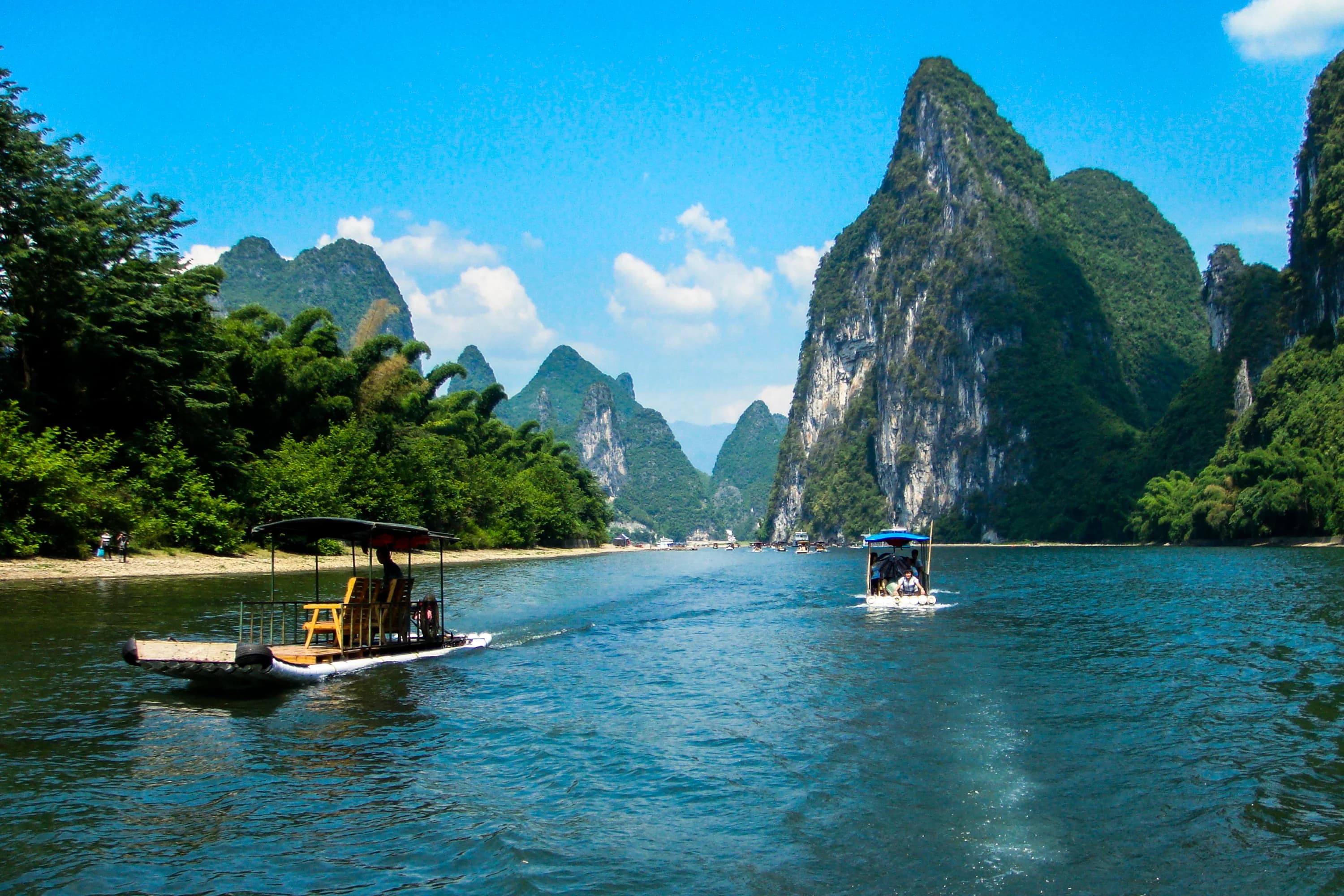
The Li River is the soul of Guilin; the fact that its landscape is depicted on the back of the 20-yuan banknote is a testament to its iconic status. The 83-kilometer waterway from Guilin to Yangshuo offers a moving visual feast.
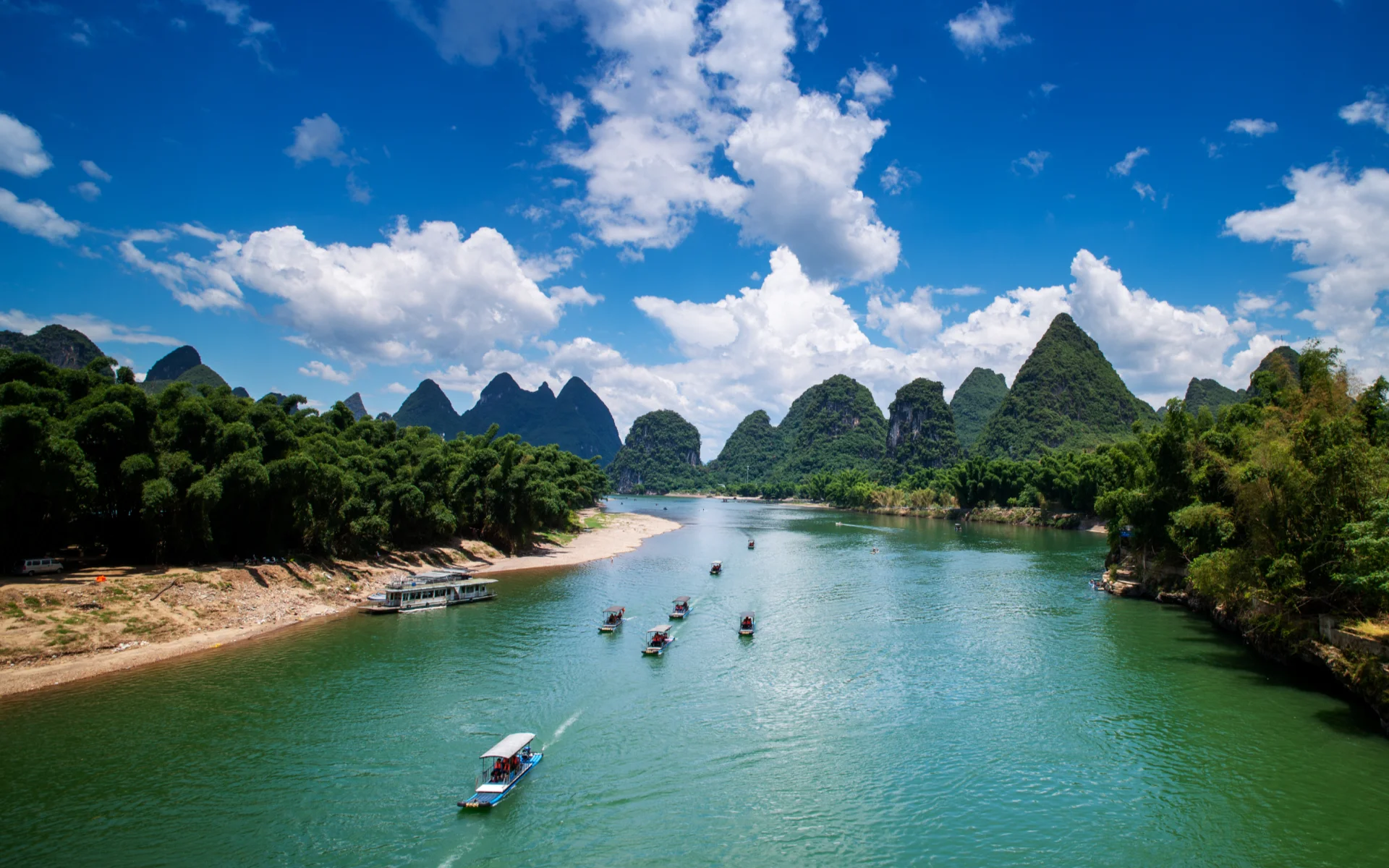
Experience Highlights:
Choose a 3-star (215 RMB/person) or 4-star (360 RMB/person) cruise boat and embark on a downstream journey of approximately 4 to 5 hours, departing from either Mopanshan or Zhujiang Wharf.Lunch is included on board (a buffet for 4-star cruises), allowing you to take in the scenery in comfort.
Best season: April to October, when water levels are high and the riverbanks are lush and green.
The boat trip is one-way; luggage travels with the boat, and the final stop is Yangshuo Wharf.
2. Yulong River: A serene journey on a handcrafted bamboo raft.
In contrast to the broad expanse of the Li River, the Yulong River is a more picturesque tributary within Yangshuo. Here, there is no roar of motors—only the tranquility of a pole slicing through the water. Drifting downstream on a handcrafted bamboo raft past ancient bridges and pastoral landscapes offers a perfect way to experience the Chinese "slow life."
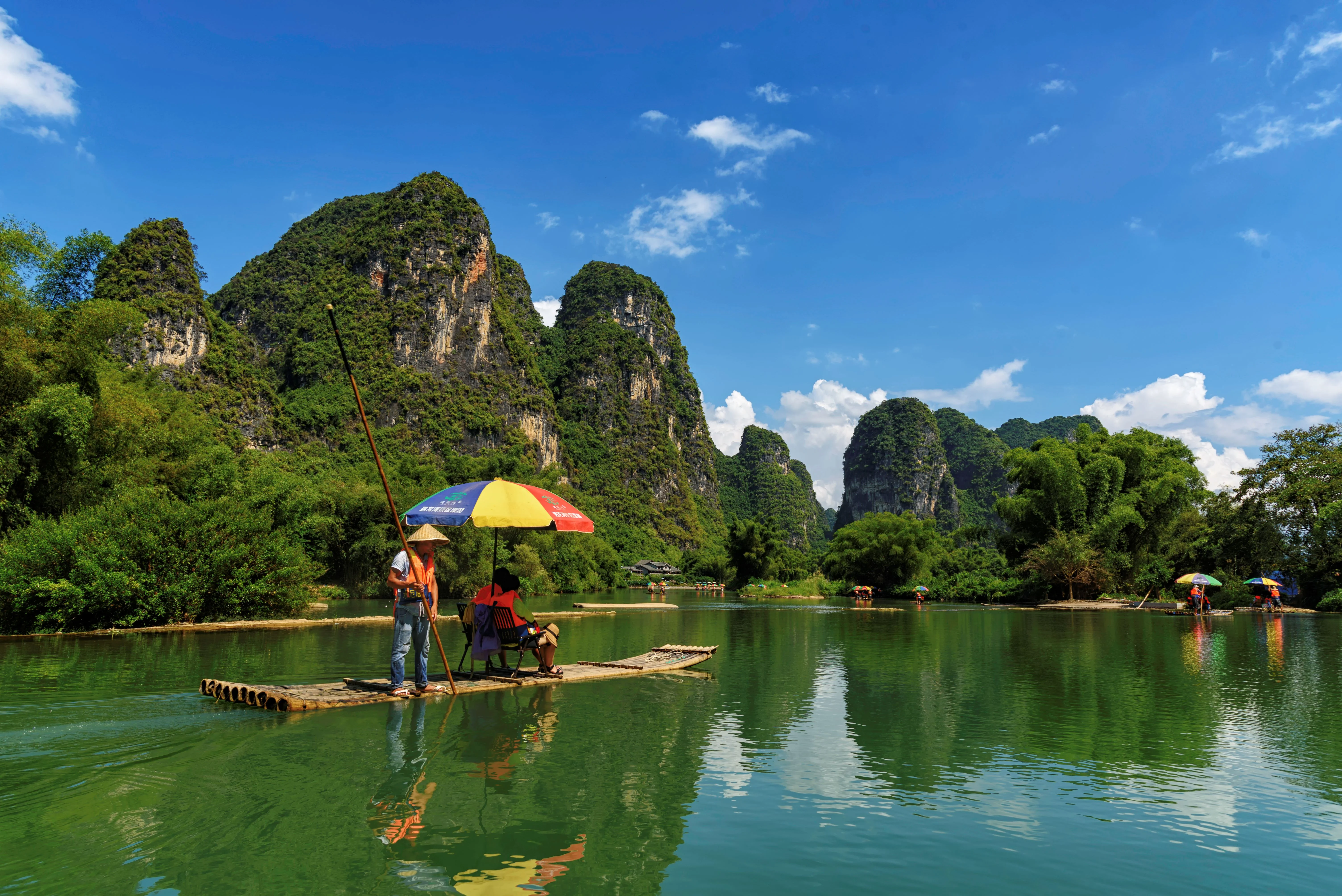
Recommended route: Jinlong Bridge to Jiuxian; approximately 9 km long, taking about 2 hours; fare is 255 yuan per raft (limited to 2 passengers).
Route Highlights: You will pass over 28 small weirs; the raft will plunge down the slopes, and your shoes and trouser cuffs may get wet.
Optional Activity: You can rent an electric scooter near Jiuxian Wharf (approx. 30 yuan/day) and ride along the riverside.
Best Time to Start: Take the first departure at 8:00 AM; the light is soft, and there are fewest tourists.
Children under 1 meter tall and seniors over 70 may only ride the stable, large rafts; be sure to wear sandals and use a waterproof pouch for your mobile phone.
3. Two Rivers and Four Lakes: A Night Cruise in the "Venice of the East"
This loop of waterways—comprising the Li River, the Peach Blossom River, and four inner lakes—forms a "necklace" for the city of Guilin. A night cruise is the best way to appreciate how Guilin’s cityscape blends seamlessly with its natural scenery, with the city set amidst the landscape and the landscape woven into the city.

Night Cruise: The entire trip takes approximately 80–90 minutes. Ticket prices are 190–230 RMB per adult and approximately 115–125 RMB for children. Please arrive at the pier 20 minutes in advance to collect your tickets.
Sights along the way include the Sun and Moon Pagodas, Diecai Hill, Fubo Hill, and various bridges featuring diverse architectural styles.
Walking alternative: A route spanning Jiefang Bridge → Sun and Moon Pagodas → Yang Bridge → Glass Bridge → Ancient South Gate; takes approximately 1–2 hours, is free of charge, and is ideal for an evening stroll.
Best seasons: Spring and autumn (March–May and September–November), when temperatures are moderate.
II. The Magic of Mountains and Caves: Elephant Trunk Hill, Reed Flute Cave, and Jingjiang Prince's Mansion
4. Elephant Trunk Hill: The City's Natural Totem
As the emblem of Guilin, Elephant Trunk Hill is renowned for its striking resemblance to a giant elephant dipping its long trunk into the Li River to drink. Situated at the confluence of the Peach Blossom River and the Li River, it offers an excellent vantage point for photographing the reflection of the Guilin skyline.
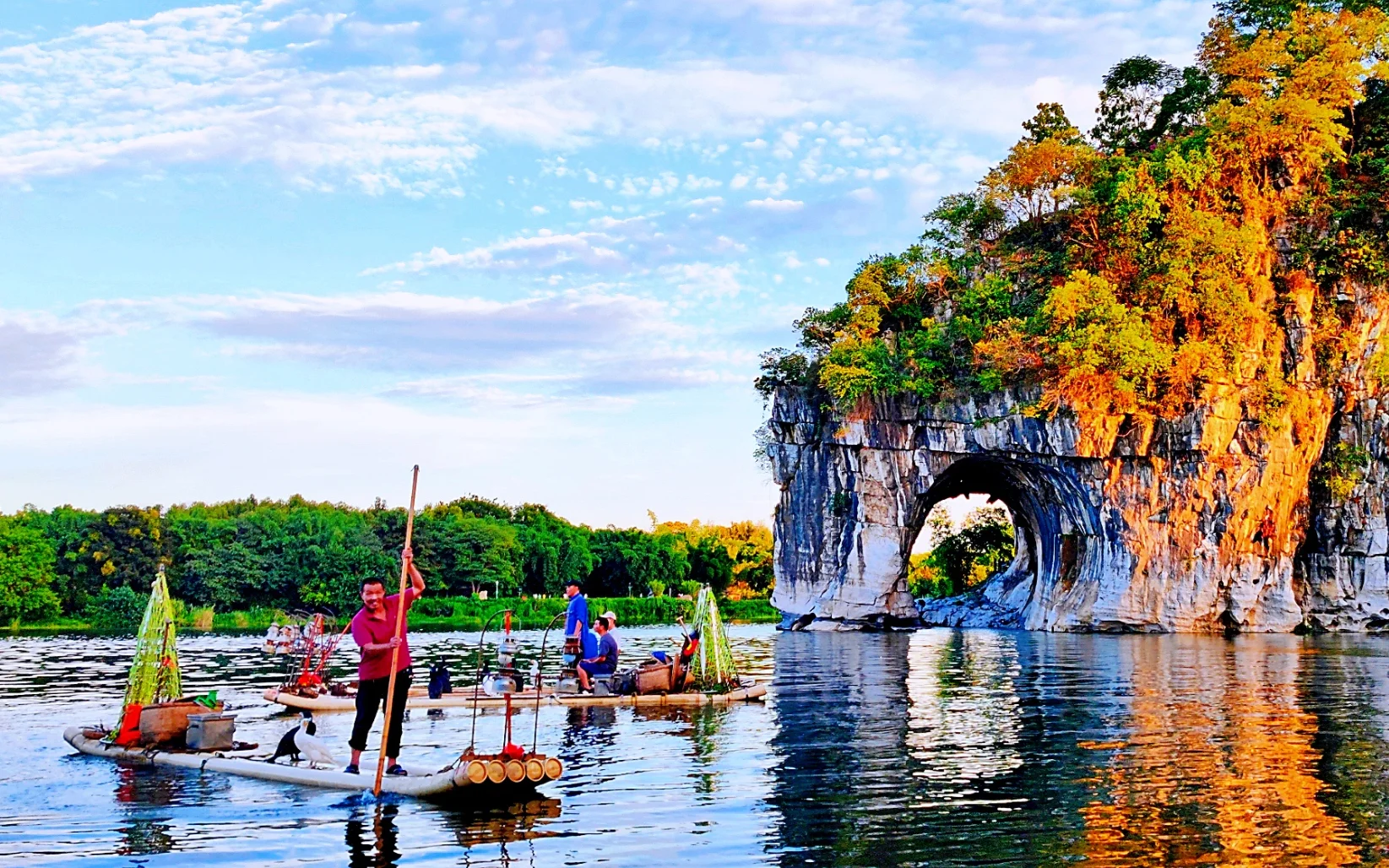
Admission: Free, but real-name reservation is required.
Key highlight: The mountain resembles an elephant extending its trunk to drink water. Located at the foot of the mountain, the Shuiyue Cave is a through-cave.
The hiking trail consists of stone steps; wearing sports shoes is recommended.
5. Reed Flute Cave: An Expedition into an Underground Crystal Palace
Guilin's karst landscape extends far beyond the surface, reaching deep underground. Known as "Nature's Art Palace," Reed Flute Cave is filled with a myriad of stalactites, stalagmites, and stone curtains that, illuminated by colorful lights, transform the space into a magnificent subterranean palace.
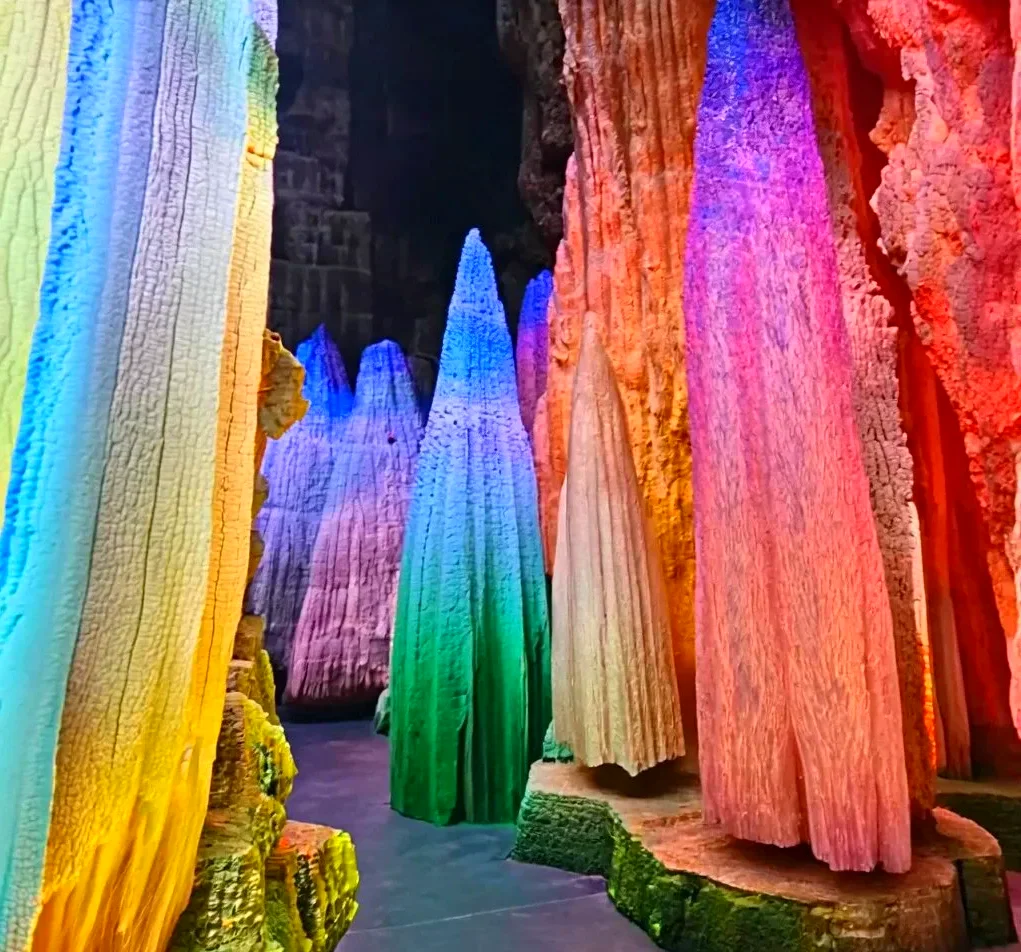
Ticket: 90 yuan/person (includes shuttle bus within the scenic area)
Opening hours: Peak season (April–November) 7:30–18:00; off-season (December–March) 8:00–17:30.
Cave conditions: The tour route is approximately 500 meters long and takes about one hour to walk. The temperature inside remains constant at around 20°C, and the ground is slippery. Please bring a light outer layer.
If time permits, the Silver Cave (Yinziyan) in Yangshuo is much larger and offers a distinct visual experience compared to the Reed Flute Cave, though it is located further from the city center.
6. Jingjiang Prince City (including Duxiu Peak)
Located in the city center of Guilin, the Jingjiang Prince's City is the best-preserved site of a Ming Dynasty princely palace in China.Duxiu Peak, located behind the Prince's City, is hailed as the "Single Pillar Supporting the Southern Sky" and offers a panoramic view of the entire city of Guilin.
Highlights: Visit Chengyun Hall and Taipingyan Cave, and experience a simulated ancient imperial civil service examination. Climb to the summit of Duxiu Peak for a panoramic view of the city and the surrounding mountains.
Admission: 100 RMB per person, including a group guided tour (primarily in Chinese; English tours require an on-site reservation).
Recommended visiting time: Arrive right when it opens at 8:00 AM to avoid tour groups.It can be combined with a visit to the Dongxi Alley Historical District and the "Two Rivers and Four Lakes" walking route.
III. Stepping Back in Time: Xingping Ancient Town vs. Yangshuo West Street
7. Xingping Ancient Town: Tracing the Scene Depicted on the 20-Yuan Note
This ancient town, which retains a more rustic charm than Yangshuo's West Street, boasts a history of 1,700 years and stands as a hidden gem along the Li River. Its greatest appeal lies in the fact that it is the location depicted on the back of the 20-yuan banknote.
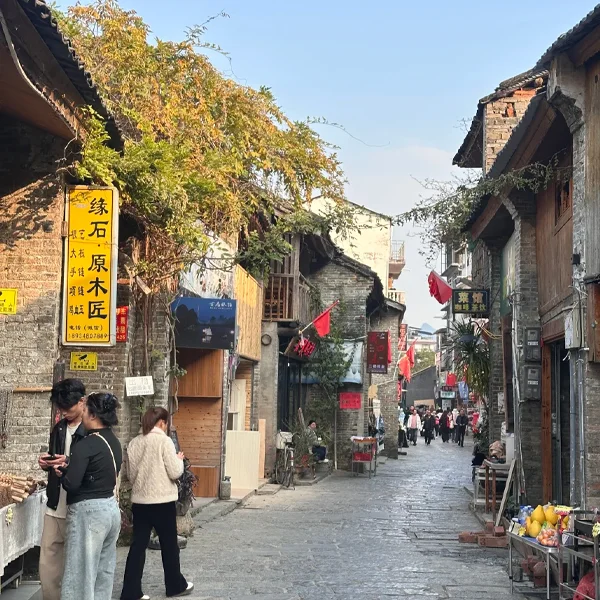
Admission: Free entry to the ancient town.
Key Attraction: The vantage point for the scene depicted on the back of the 20-yuan banknote—this can be found by descending the steps opposite "Wangwang Meishi Yuzhuang" (Wangwang Gourmet Fish Restaurant) down to the riverside.
Bamboo Raft Option: There is a wharf in the town where you can take a short bamboo raft ride to tour the most scenic section of the nearby Li River.
Note: The rocks by the river are slippery; wearing non-slip shoes is recommended.
8. Yangshuo West Street: The Modern Pulse of an Ancient Street
With a history spanning over 1,400 years, this old street serves as a stage where tradition and modernity collide. Nestled within the arcade-style buildings—characteristic of northern Guangxi—are craft beer bars, contemporary cafés, and unique shops selling handicrafts. Nighttime is when the soul of West Street truly comes alive.
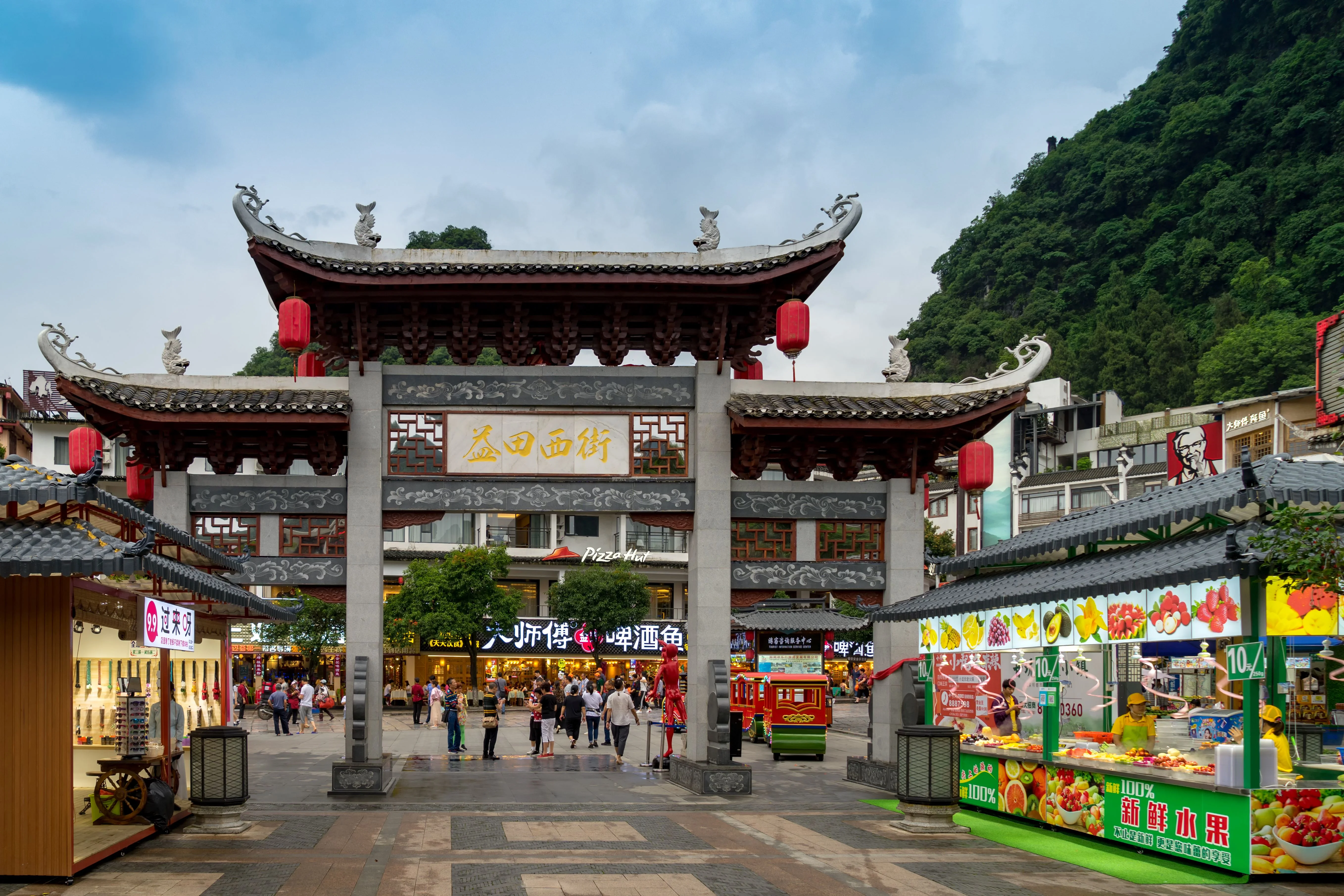
Admission: Free; open all day.
Type: Pedestrian street. It spans approximately 800 meters and is lined with buildings in Ming and Qing dynasty styles, now mostly housing restaurants, bars, and souvenir shops.
Signature dish: Beer Fish (Li River fish stewed with beer); available at many restaurants, priced at approximately 80–150 yuan per serving.
Motor vehicles are prohibited in the core area; vehicles must be parked in peripheral parking lots.
IV. Sculptures of the Land: Longji Rice Terraces and the Ten-Mile Gallery
9. Longji Rice Terraces: Artistic Sculptures of the Earth
A two-hour drive north from downtown Guilin brings you to a completely different world—the Longji Rice Terraces.When the terraced fields are flooded in spring, they resemble thousands of mirrors reflecting the light of the sky; come autumn, as the rice ripens, they transform into a golden ocean.
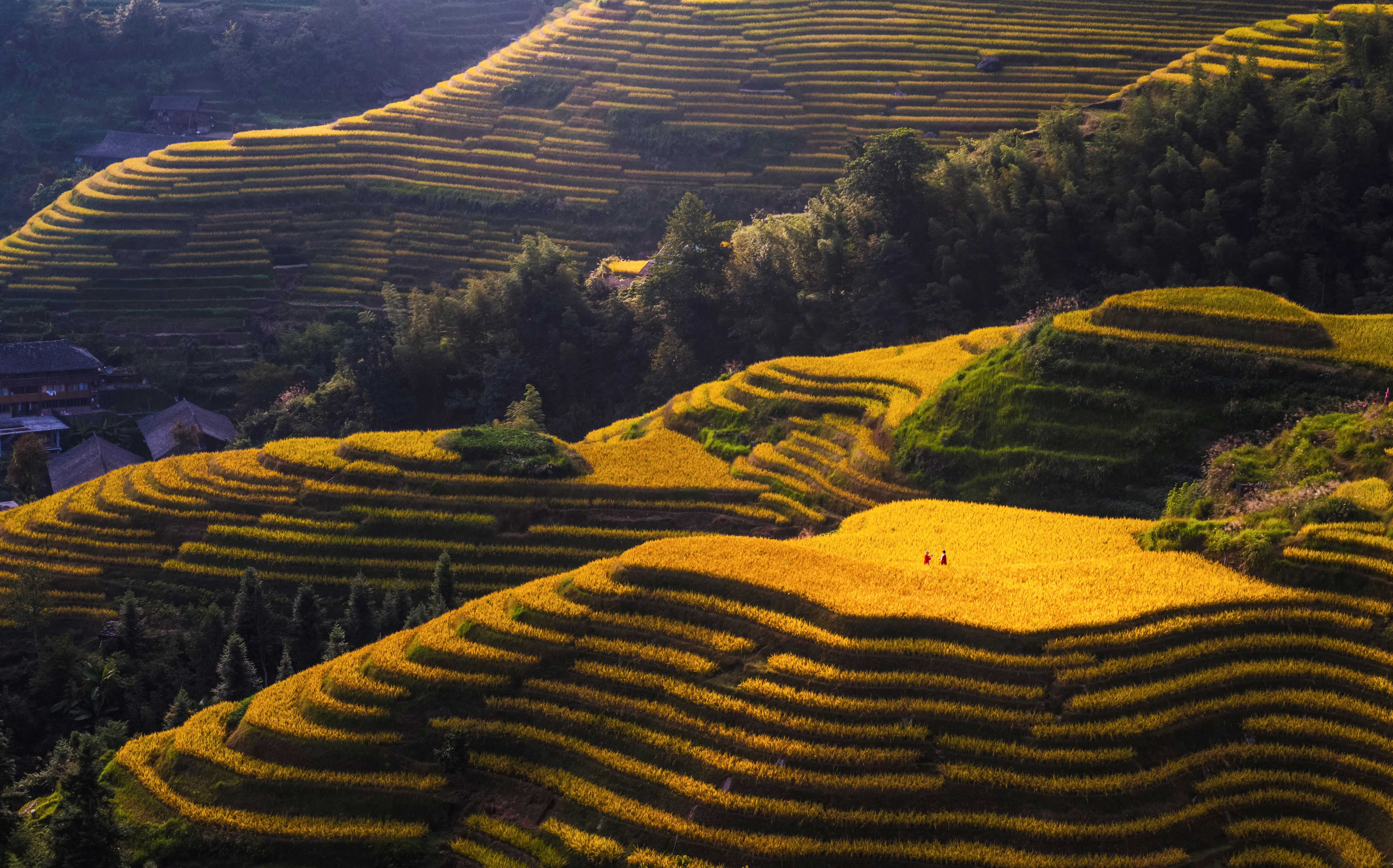
Admission: 80 yuan per person; allows multiple entries within three days of purchase. Cable car tickets must be purchased separately.
Best viewing periods: May–June (flooded fields, mirror-like effect); September–October (ripening rice, golden-yellow hue).
Nearby village: Huangluo Yao Village, where you can watch a folk performance featuring women with long hair.
10. Ten-Mile Gallery: Cycling through a natural painting.
The "Ten-Mile Gallery" is not an enclosed scenic area, but rather a roughly five-kilometer stretch of National Highway 321 south of Yangshuo. With towering mountains and picturesque countryside scenery along the route, cycling through the area feels like traveling through a vast art gallery.
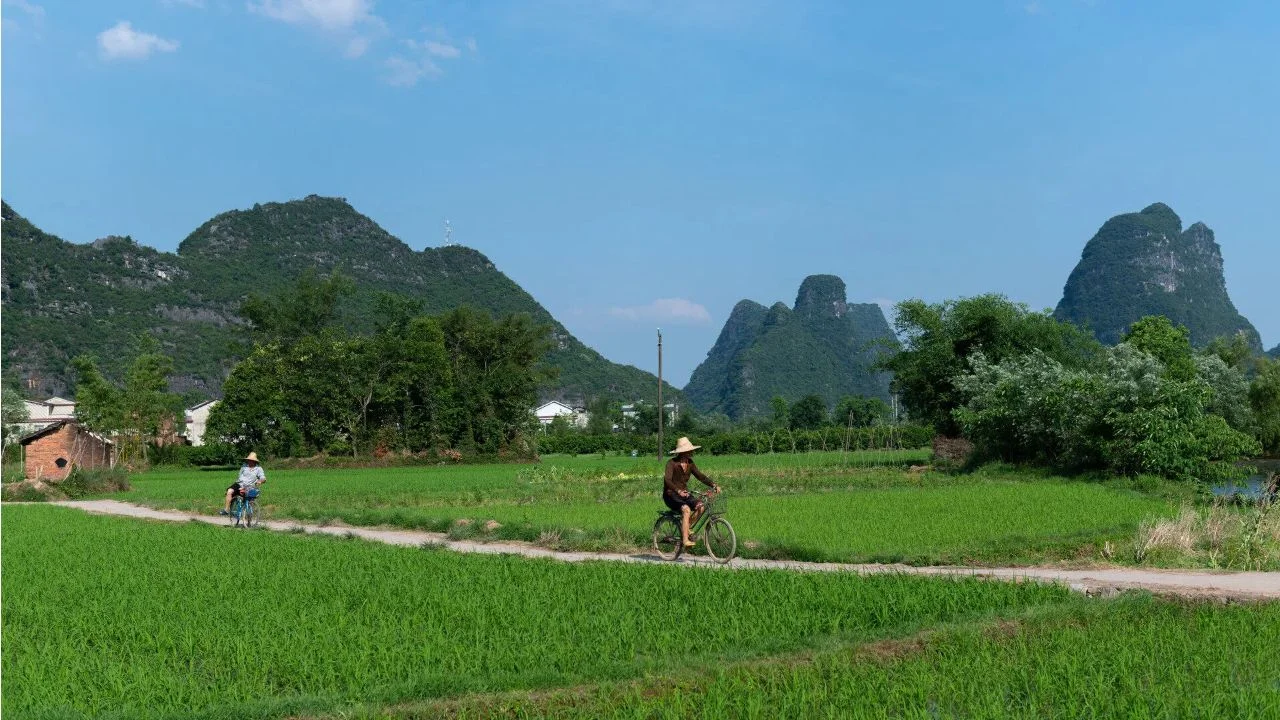
Admission: The road itself is free; individual attractions along the route (such as Butterfly Spring, the Big Banyan Tree, and Moon Hill) charge separate fees.
Recommended method: Cycling (bicycle or e-bike). Start at Fengming Parking Lot, head south to Yueliang Mountain (Moon Hill), and return. The entire trip takes approximately 3–5 hours (including stops for photos).
Private vehicles are prohibited from this road section daily between 08:00 and 18:00. Motorists must park at the outlying Fengming Parking Lot and transfer to a dedicated scenic area shuttle or rent a bicycle to enter.
Frequently Asked Questions About Traveling to Guilin
Q1: What is the best season to visit Guilin?
Spring and autumn (March–May and September–November) offer the most comfortable temperatures. Summers (June–August) are hot, humid, and rainy, while winters (December–February) are cold and damp.
Q2: How do I get from Guilin to Yangshuo?
High-speed train (approx. 30 minutes; second-class seat: 25–30 yuan). You can also take a Li River cruise (4–5 hours one-way; the final stop is Yangshuo). A long-distance bus takes about 1.5 hours but is less convenient than the high-speed train.
Q3: What is the difference between the Li River cruise and the Yulong River bamboo raft ride? How should I choose?
Li River Cruise: Large motorized boats; a one-way trip takes 4–5 hours; offers views of expansive landscapes; ideal for those short on time who want to see the highlights in one go. Yulong River Bamboo Raft: Hand-crafted bamboo rafts; quiet and motor-free; takes about 2 hours; includes passing over small weirs for a splash of fun; ideal for those seeking tranquility and an interactive experience. You can do both—the Li River cruise first, followed by the Yulong River raft ride.
Q4: How do I get to the Longji Rice Terraces? Is the mountain road difficult to drive?
Shared shuttle services are available from Guilin North Railway Station, costing approximately 50 RMB per person for a round trip. The mountain roads are narrow and winding; self-driving is not recommended unless you are familiar with the route. Opting for a shared shuttle or a private chartered car is advisable. There is a significant temperature difference between day and night, so be sure to bring a jacket.
Q5: What special gear should I bring?
Non-slip shoes (essential), rain gear (for summer), a light jacket (for caves and the terraces, especially morning/evening), a waterproof bag (to protect your phone and camera when the bamboo raft goes over the dam), and sunscreen. Power outlets follow the Chinese standard (two flat pins); please bring an adapter.
Disclaimer: This information is provided for reference only and was last updated on . Requirements and regulations may change. Always verify with official sources before making travel plans.