
The beauty of West Lake lies not only in its scenery but also in the poetry, paintings, and legends that have accumulated over centuries. For first-time international visitors, these ten "quintessential" spots are truly worth experiencing. Below, I break them down one by one, covering what to see, how to get there, when to visit, and how to make the most of your time at each location.
1. Dawn on the Su Causeway in Spring — The top choice for walking or cycling.
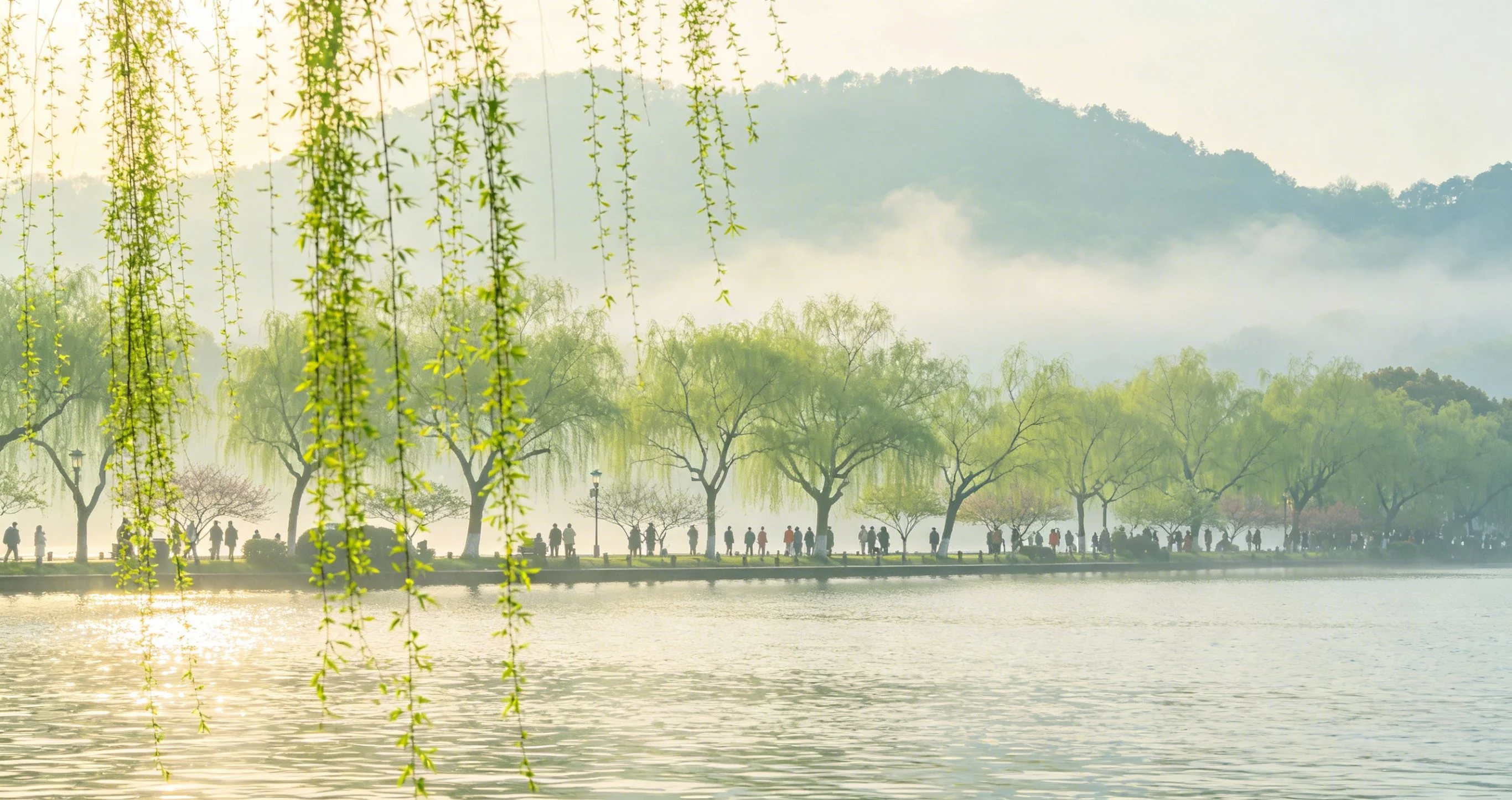
The 2.8-kilometer-long causeway was constructed under the supervision of the renowned Northern Song Dynasty poet Su Dongpo. Six bridges span the causeway, dividing the lake into a series of beautifully arranged water areas. In spring, with its pink peach blossoms and green willows, it ranks first among the "Ten Scenes of West Lake."
How to play:
Walk the entire route (approximately 40–60 minutes) or ride a shared bicycle (cycling is permitted on the embankment, but please dismount and walk the bike when it is crowded).
Best time: Late March to April. Early mornings (6:00–8:00) offer fewer crowds and soft light; the sunset in the evening is also beautiful.
Transport: Take bus No. 4 or 7 to the "Suti" (Causeway) stop; or take Metro Line 1 to Longxiangqiao Station and transfer to a bus.
The southern end of Su Causeway is near "Viewing Fish at Flower Pond" (Huagang Guanyu), while the northern end is near "Lotus in the Breeze at Crooked Courtyard" (Quyuan Fenghe), making it convenient to visit them in a single trip.
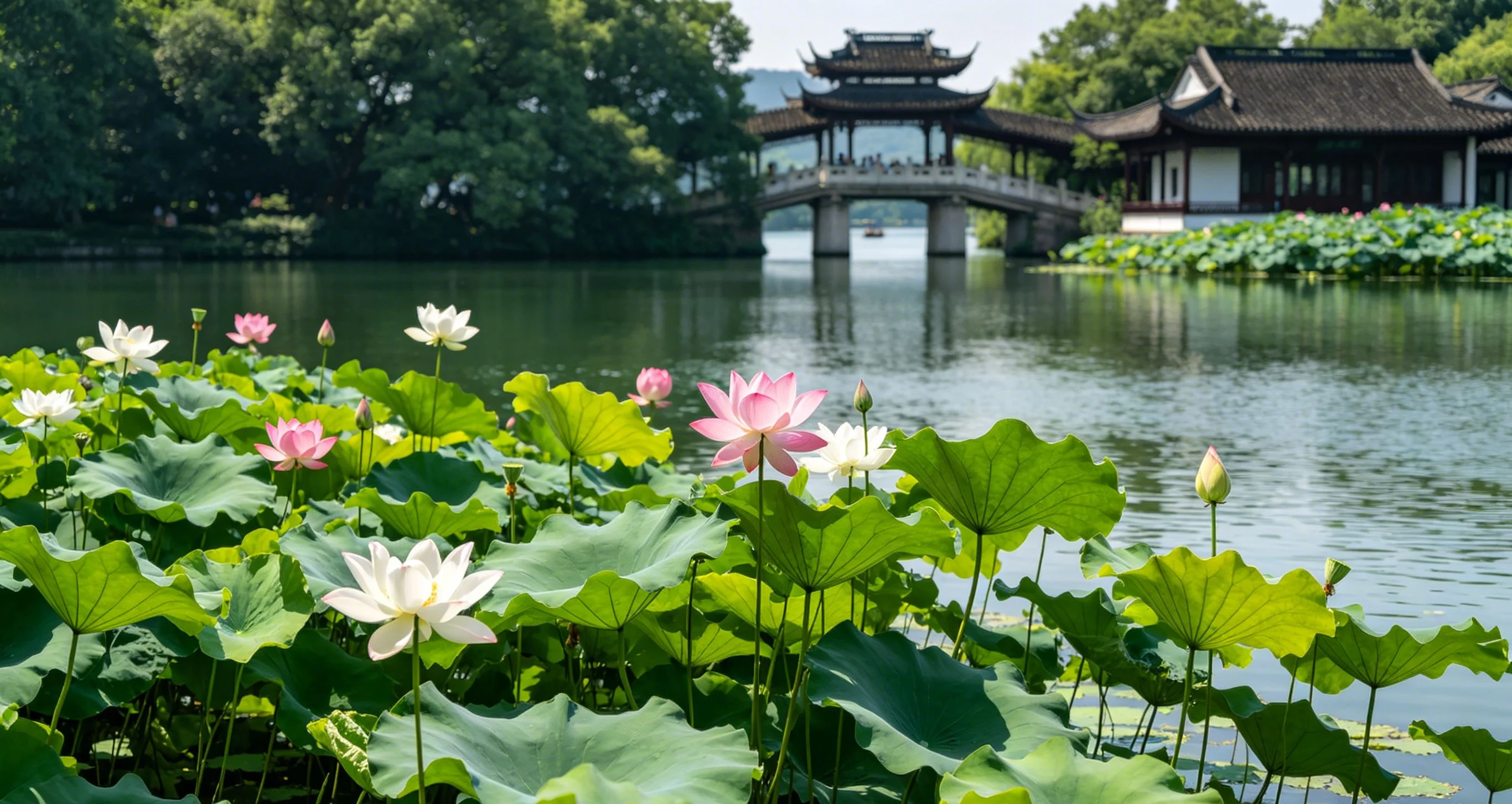
2. Quyuan Fenghe (Lotus in the Breeze at the Crooked Courtyard) — A paradise for summer lotus photography.
This lotus-themed garden features the remains of an ancient winery—legend has it that wine was brewed here during the Southern Song Dynasty, with the fragrance of lotus blossoms mingling with the aroma of the wine. In summer, the lotuses are in full bloom with a wide variety of species, making it a must-visit destination for photography enthusiasts.
How to play:
Best time to visit: June through August; the lotus flowers are most captivating in the early morning or after the rain, when they are still adorned with dewdrops.
How to explore: The garden is compact; you can stroll while admiring the lotuses, climb the Yingxun Pavilion for a panoramic view, or sit beneath the covered bridge by the lake to quietly take in the scenery.
Transport: Located right across from the northern end of Su Causeway (within walking distance), or take a bus to the "Yue Miao" (Yue Temple) stop.
"Lotus festivals" are frequently held in the summer, sometimes accompanied by evening lantern displays.
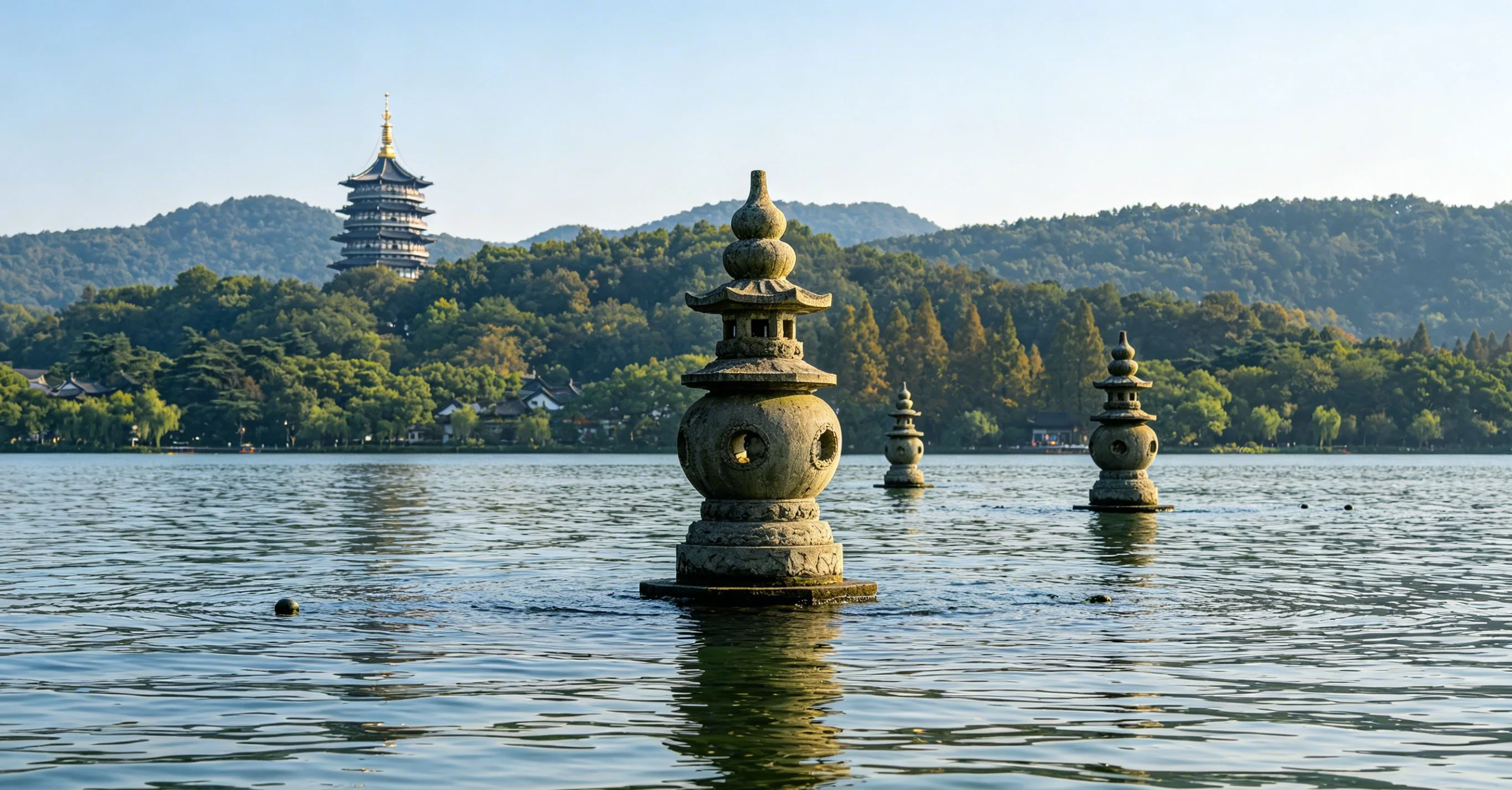
3. Three Pools Mirroring the Moon — Take a boat to the island and discover the scenery featured on the back of the RMB banknote.
The most iconic sight of West Lake—three stone pagodas standing in the water—is depicted on the back of the one-yuan RMB banknote. The pagodas are located on Lesser Yingzhou (Xiao Yingzhou), the largest island in the lake, which features garden structures such as the "Pavilion of Mutual Hearts" (Wo Xin Xiang Yin Ting).
How to play:
Boat access is mandatory: the island cannot be reached on foot. Tickets must be purchased at the Lakeside Pier, Children's Palace Pier, or Su Causeway Pier (55 RMB per person, covering the round-trip boat fare and island admission).
Note: The tower is illuminated at night, but sightseeing boat services generally stop at 17:00, so a daytime visit is sufficient.
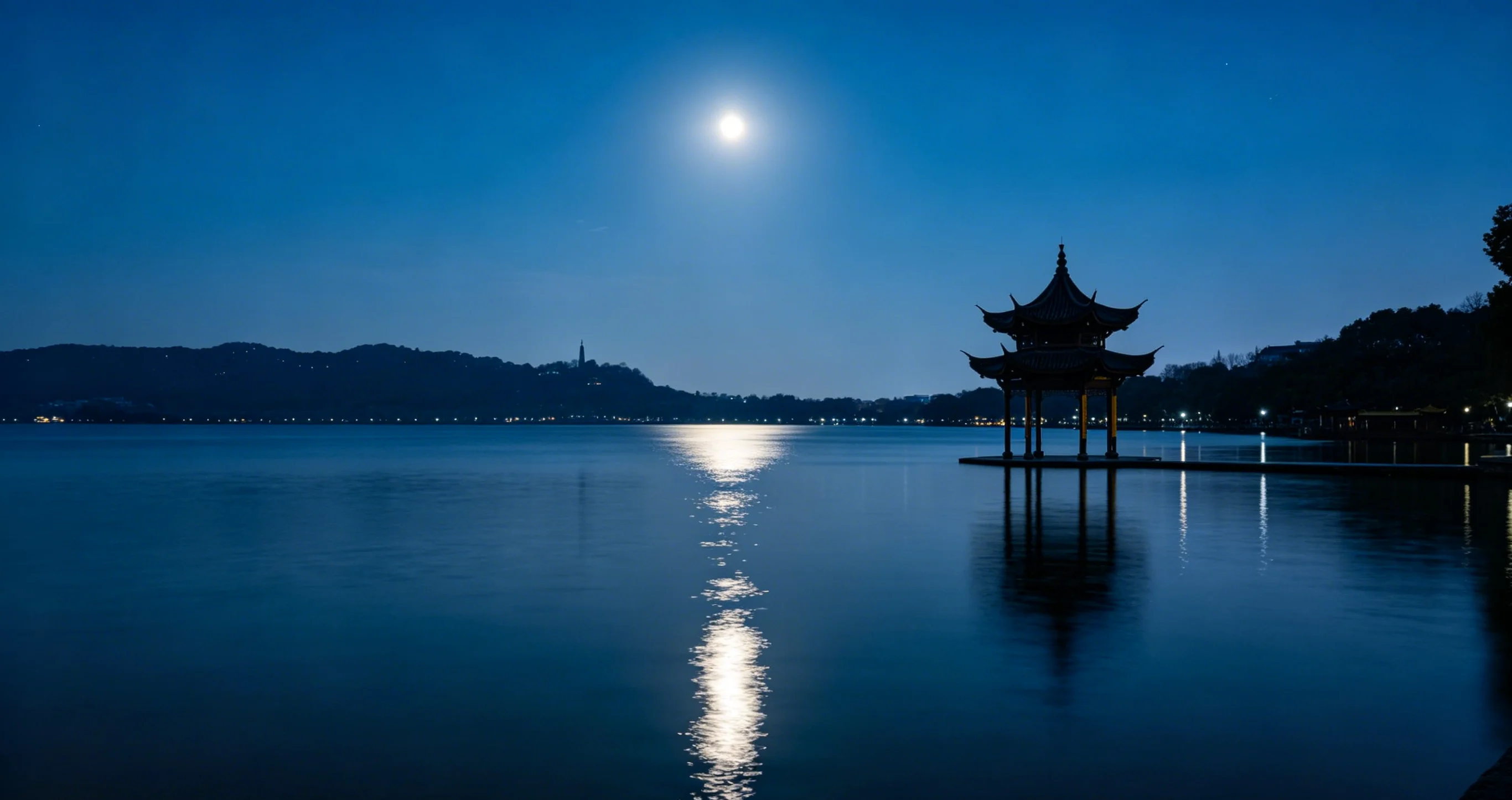
4. Autumn Moon over the Calm Lake — The best spot for viewing the Mid-Autumn moon.
Located at the western end of the Bai Causeway, this platform extends out over the lake, offering an expansive view. On a full-moon night in autumn, the lake surface resembles a mirror, and the interplay of the moon and its reflection creates a scene of exquisite poetic beauty.
How to play:
How to get there: A pleasant 15-minute walk from Broken Bridge along the Bai Causeway, or take a bus to the "Pinghu Qiuyue" (Autumn Moon over the Calm Lake) stop.
Duration: 30 minutes is sufficient; it is an ideal spot to pause during an evening stroll, with nearby teahouses available for a short rest.
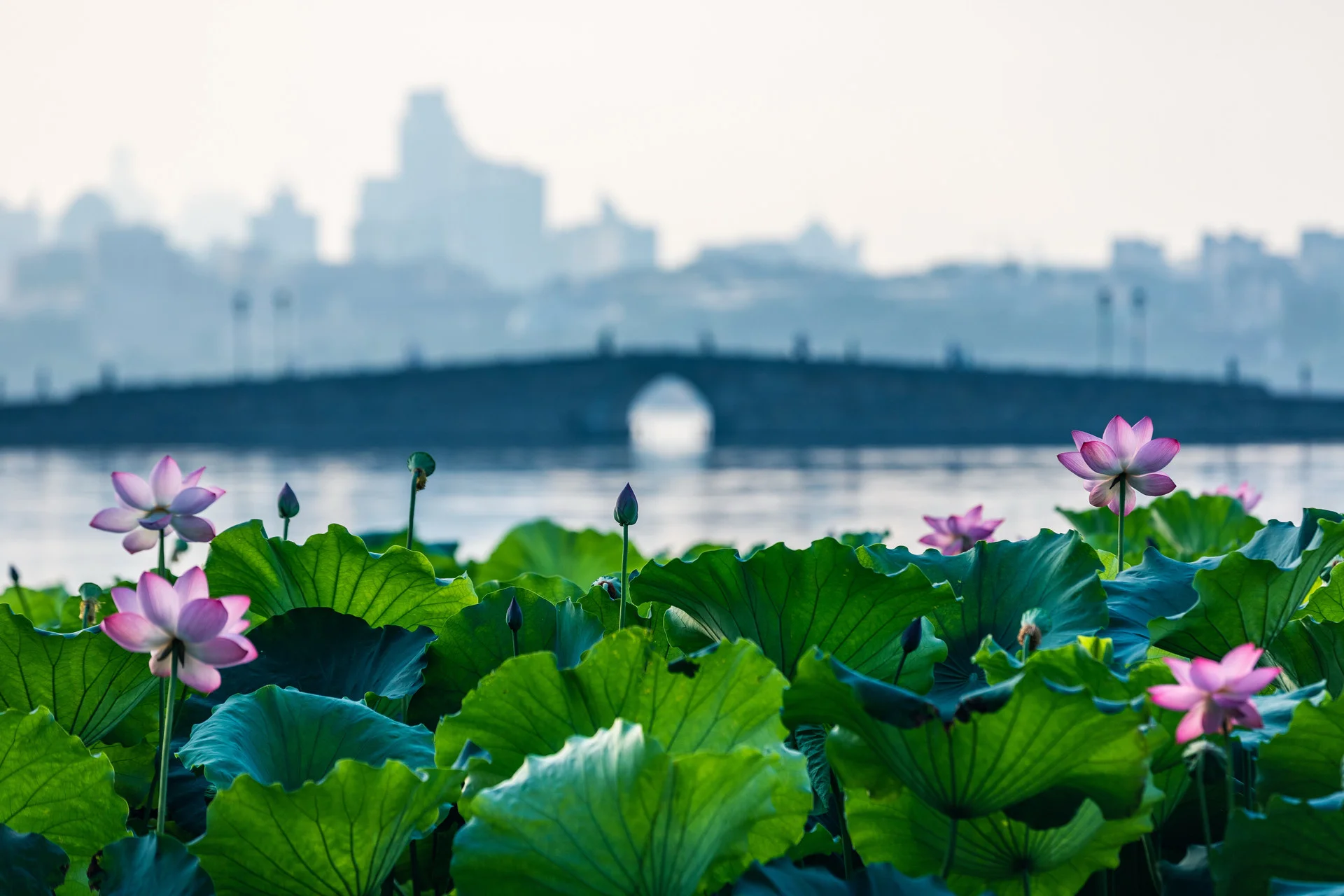
5. Remnant Snow on the Broken Bridge — The Romantic Starting Point of the Legend of the White Snake
The stone bridge at the eastern end of the Bai Causeway is the place where Xu Xian and Lady White Snake—characters from the legend The Legend of the White Snake—fell in love after sharing an umbrella during a rainstorm. The bridge itself is not actually broken; however, after a snowfall, the snow melts on the sunny side while remaining on the shaded side, creating an appearance from a distance of being broken when it is not—hence its name.
How to play:
Best time: Winter, to appreciate the evocative atmosphere of "lingering snow."
Tips: Broken Bridge is a popular photo spot, so it is recommended to arrive early. After crossing the bridge, you can continue along the Bai Causeway directly to Pinghu Qiuyue (Autumn Moon over the Calm Lake).
If you are interested in historical legends, you might also want to explore the love story of The Legend of the White Snake.
6. Orioles Singing in the Willows — An imperial garden for listening to birdsong in spring.
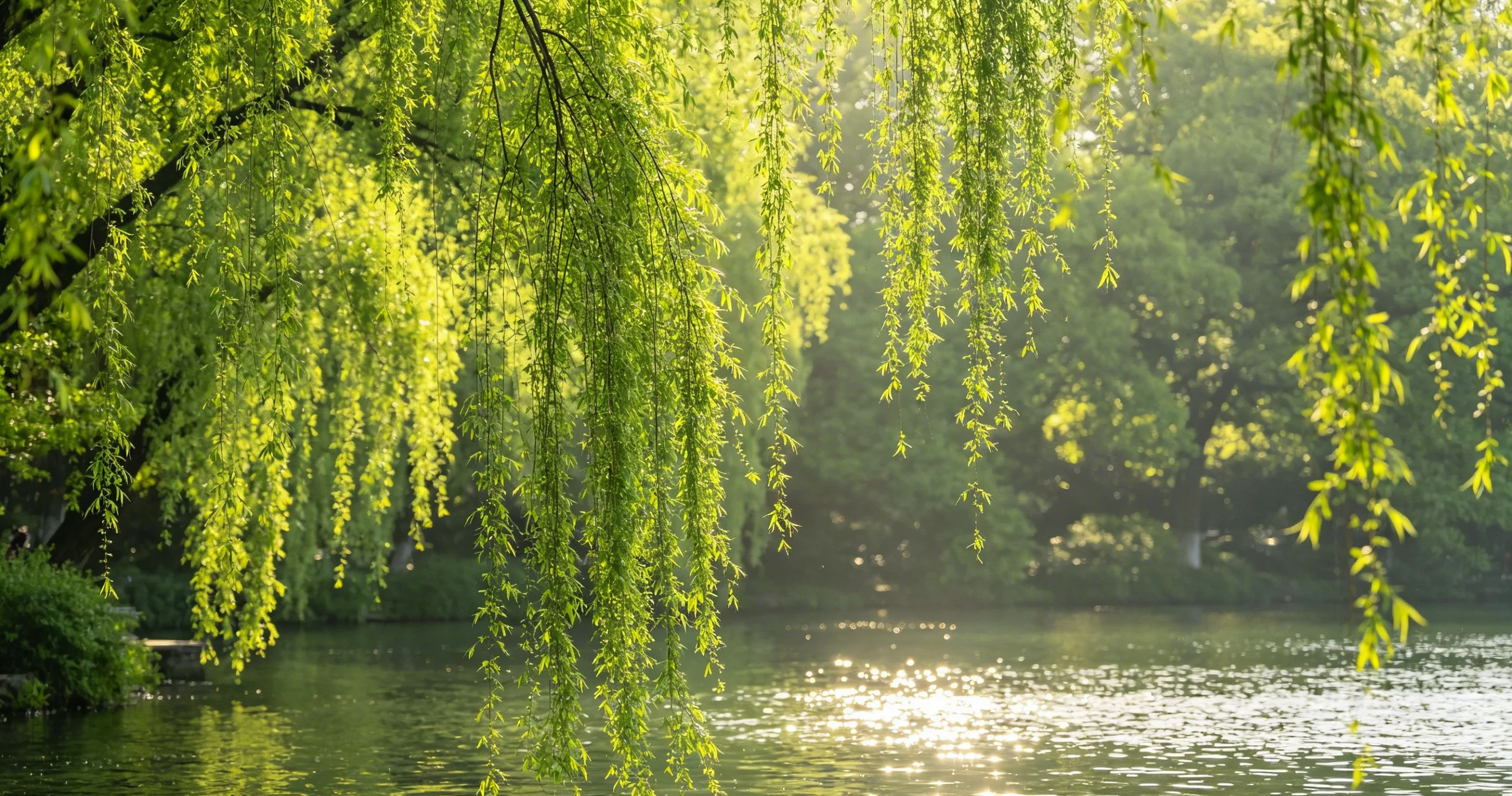
During the Southern Song Dynasty, this area served as an imperial garden; willow trees were planted all along the lake, and the ceaseless singing of orioles in the spring gave rise to the name "Wenying" (Listening to Orioles). The garden features a spacious lawn and a stele pavilion, creating a leisurely atmosphere.
How to play:
Best season: March and April, when fresh willows turn green and birdsong rings clear.
How to get there: You can take a local bus to the "Qingbomen" or "Liulang Wenying" stop.
You can combine your visit with nearby Wushan or Hefang Street.
7. Viewing Fish at Flower Pond — A Jiangnan garden for feeding fish and admiring flowers.
A large park at the southern end of Su Causeway, renowned for its Red Fish Pond, Peony Garden, and expansive lawn. Leaning over the bridge to look down, one can see hundreds of red carp vying for food—a delightful sight.
How to play:
Key Activity: Fish feeding (fish food is sold in the park, or you may bring breadcrumbs).
Best time: Spring (peony season) or summer, when the trees provide ample shade.
Suggested route: You can first explore Flower Harbor and then head north along Su Causeway, or vice versa.
8. Leifeng Pagoda in the Sunset Glow — Climb the pagoda for a panoramic view and witness the most beautiful sunset.
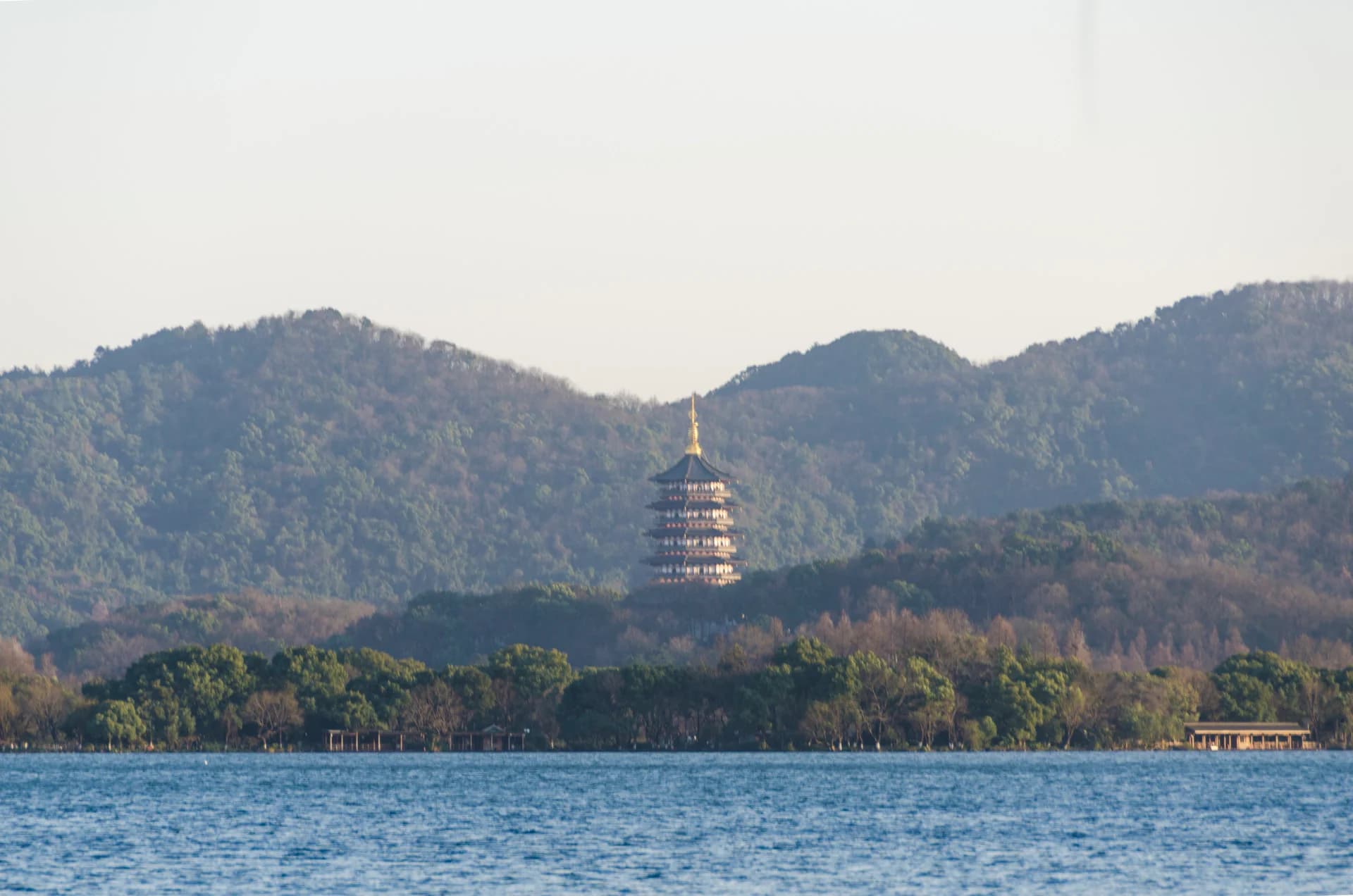
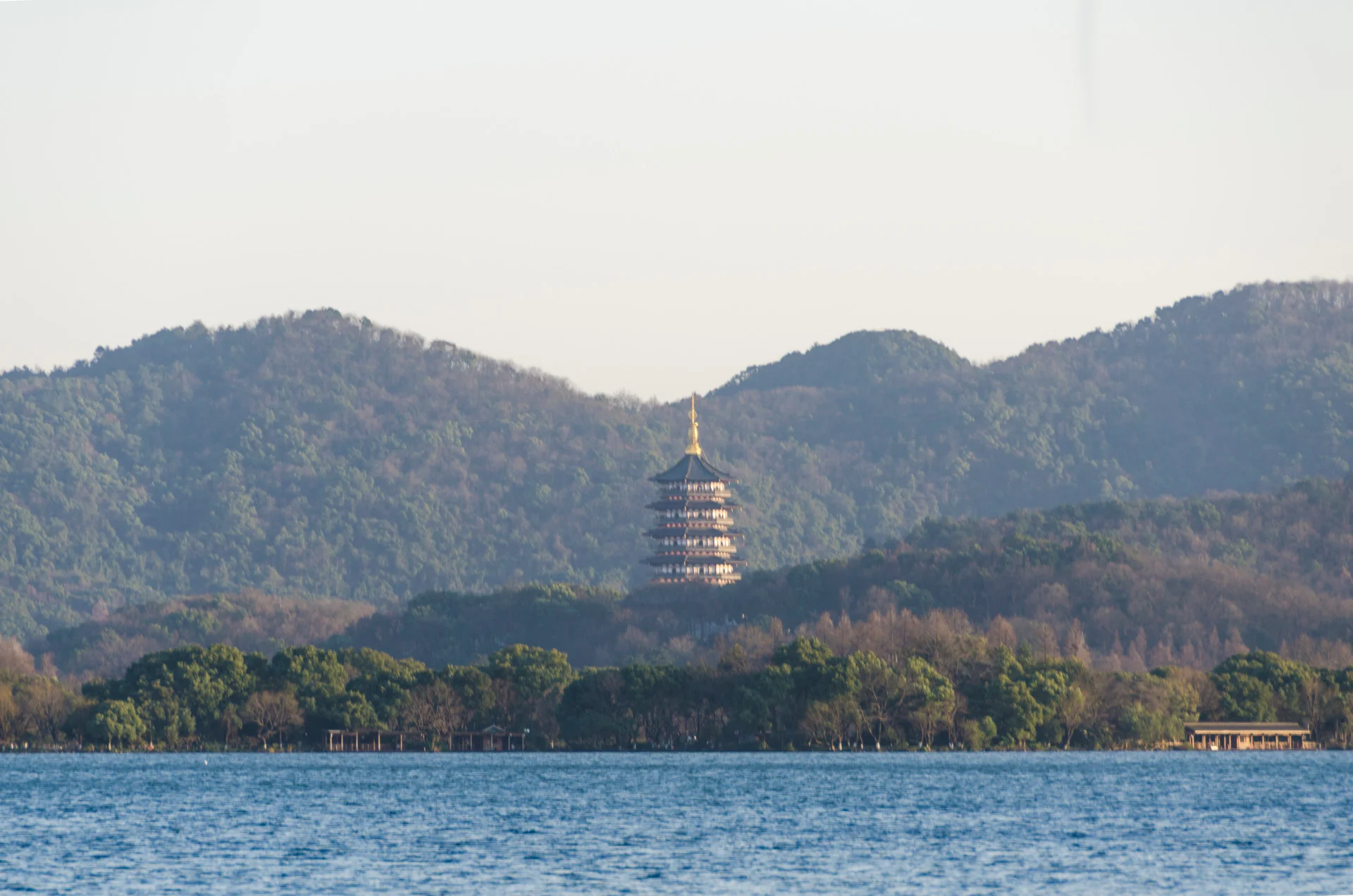
Leifeng Pagoda stands on Xizhao Hill; rising over 70 meters in height, it offers a panoramic view of West Lake from its summit. At dusk, the silhouette of the pagoda set against the sunset glow creates a magnificent scene.
How to play:
Admission: 40 yuan (opening hours vary by season: until 20:00 in summer, until 17:30 in winter).
9. Twin Peaks Piercing the Clouds — Viewing the mountain peaks amidst the clouds and mist from a distance.
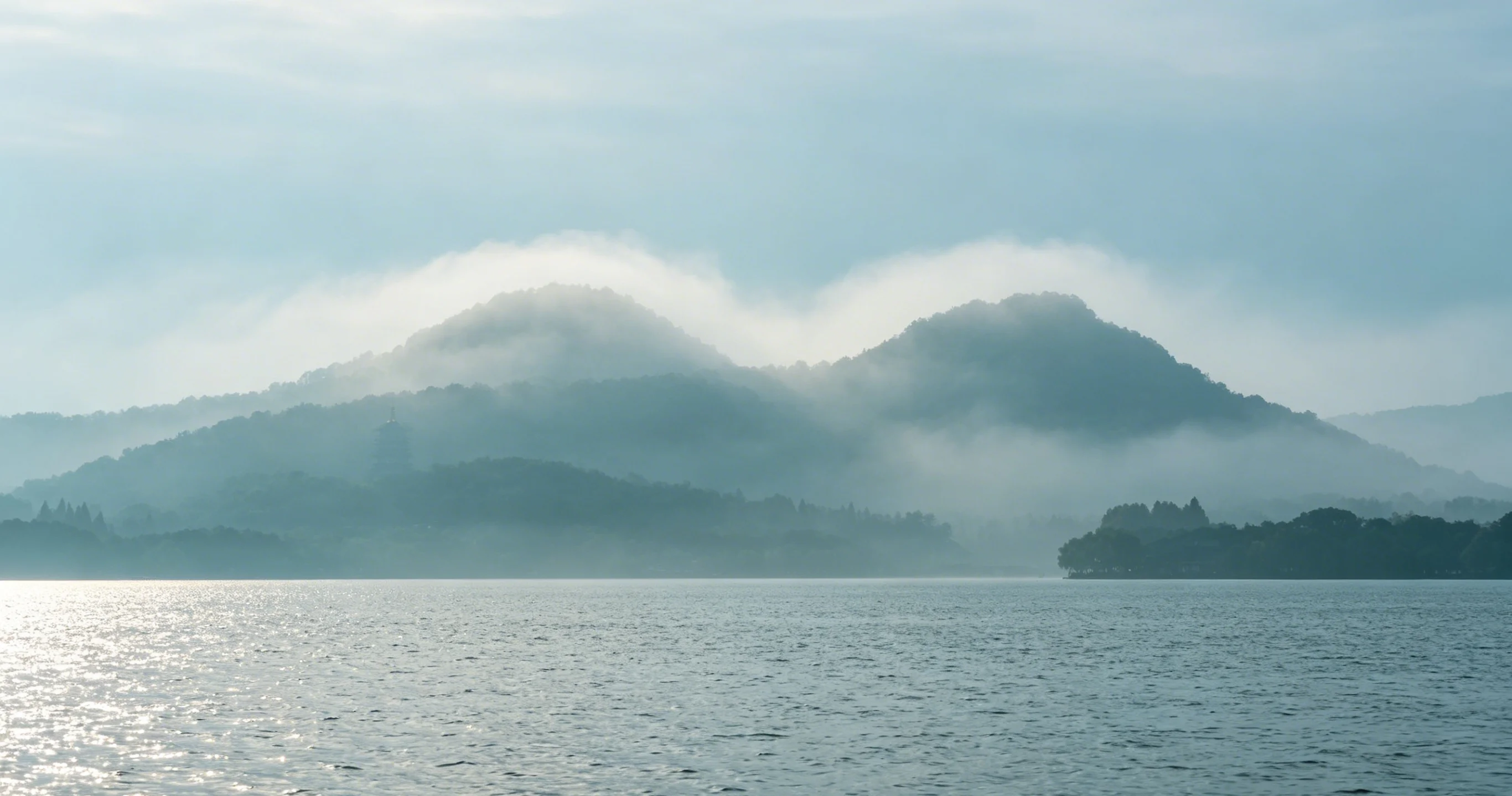
Zhinan Peak and North Peak are so named because, when shrouded in mist after rain or at dawn, their summits appear to pierce the clouds. For the best view without actually climbing the peaks, one can gaze at them from the vicinity of Hongchun Bridge.
How to play:
Best time: A morning after the rain, when the mist has not yet cleared and visibility is moderate.
Viewing spot: Hongchun Bridge (near Lingyin Road). No need to hike; you can simply park and take photos.
It can be combined with a day trip to Lingyin Temple or the Botanical Garden.
10. Evening Bell at Nanping — The evening bell tolling at Jingci Temple
At Jingci Temple, nestled at the foot of Mount Pingshan, the melodious evening bell tolls and echoes through the valley, creating a profound and evocative atmosphere. This experience is available only at a specific time—the ringing of the bell at dusk.
How to play:
Best time: Around 16:00–17:00 daily (the exact bell-ringing time varies by season).
Location: Jingci Temple (opposite Leifeng Pagoda); admission is 10 yuan.
Recommendation: First, ascend Leifeng Pagoda to watch the sunset, then enter Jingci Temple to wait quietly before the tolling of the bells; combining the two makes for an excellent experience.
Overview of the Best Times to Visit the Top 10 Attractions
Spring Dawn at Su Causeway: Spring (March–May)
Lotus in the Breeze at Crooked Courtyard: Summer (June–August); the lotuses are in full bloom and look most photogenic when covered in dew.
Three Pools Mirroring the Moon: Spring and Autumn (April–May, September–October); requires a boat ride; avoid the harsh light of midday.
Autumn Moon over the Calm Lake: Autumn (September–November), especially around the Mid-Autumn Festival; the night of the festival is best, though moon-viewing is also possible on other days if the weather is clear and cloudless.
Lingering Snow on the Broken Bridge: Winter (December–February), after a snowfall.
Orioles Singing in the Willows: Spring (March–April), 8:00 AM–10:00 AM (peak time for birdsong).
Viewing Fish at Flower Pond: Spring (peony season) or Summer, 9:00 AM–11:00 AM (fish are most active).
Sunset Glow at Leifeng Pagoda: Year-round (though sunset times are most pleasant in spring and autumn); viewing the sunset depends on the weather.
Twin Peaks Piercing the Clouds: Late spring/early summer or the autumn rainy season.
Evening Bell Ringing at Nanping Hill: Year-round (though the climate is most comfortable in spring and autumn); check the temple's announcements for specific bell-ringing times.
Visit Recommendations
Transport: Metro Line 1 (Longxiangqiao Station and Fengqi Road Station) serves as a key hub; upon exiting, you can transfer to a bus or rent a public bicycle (requires a card and a refundable 200-yuan deposit). It is recommended to download Amap (Gaode Maps) or Baidu Maps, both of which support English navigation.
Additional recommendation: Cap off the day by watching the Impression West Lake live-action performance (tickets 250–600 RMB; starts around 19:10) or the Hubin Musical Fountain (nightly at 19:30; lasts 20 minutes).
Payment Method: Alipay and WeChat Pay are almost universally accepted in Hangzhou; you can link international credit cards to them (supported in some cases).
Internet and Navigation: Google Maps, Facebook, Instagram, and similar services are inaccessible in China (a VPN is required); it is recommended to download Baidu Maps or Amap (Gaode Maps) in advance.
Disclaimer: This information is provided for reference only and was last updated on . Requirements and regulations may change. Always verify with official sources before making travel plans.