
Best time to travel: November to March is the dry season, with warm and comfortable temperatures and a moderate number of tourists; April 13-15 is the Water Splashing Festival (Dai New Year), with the whole city splashing water for blessings, creating a vibrant atmosphere; May to October is the rainy season, with frequent afternoon showers, but fewer tourists, more fruit, and lower prices.
Transportation tips: You can fly directly to Gasa Airport or take the high-speed rail to Xishuangbanna Station. Electric scooters can be rented in the city (approximately 50 yuan/day) to explore the city center. For attractions in the suburbs, it is recommended to take the scenic area shuttle bus.
Essential items: High SPF sunscreen, strong mosquito repellent, quick-drying clothes, sandals, and a waterproof phone case.
I. Core Attractions in the City
1. Starlight Night Market and Golden Pagoda
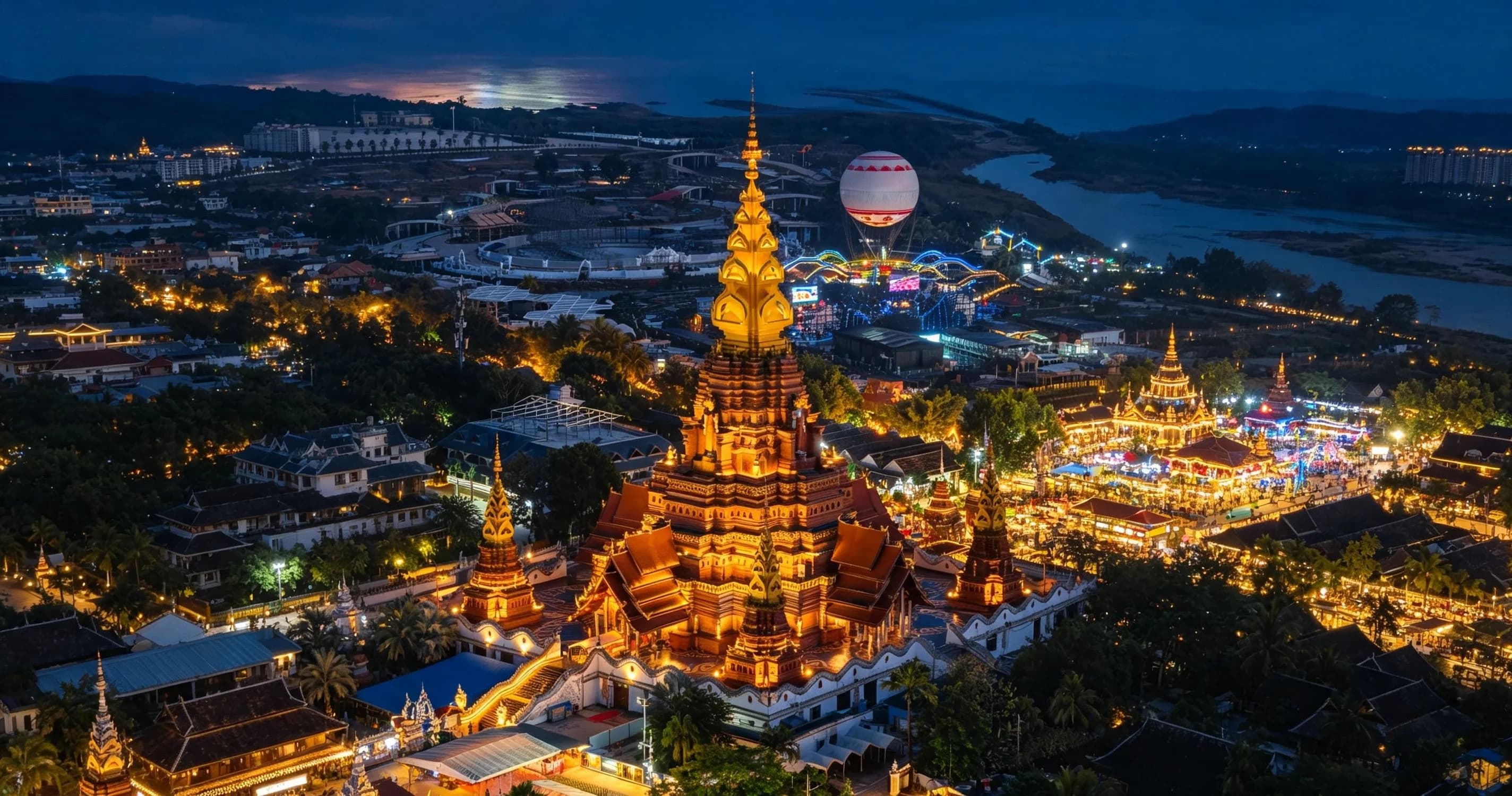
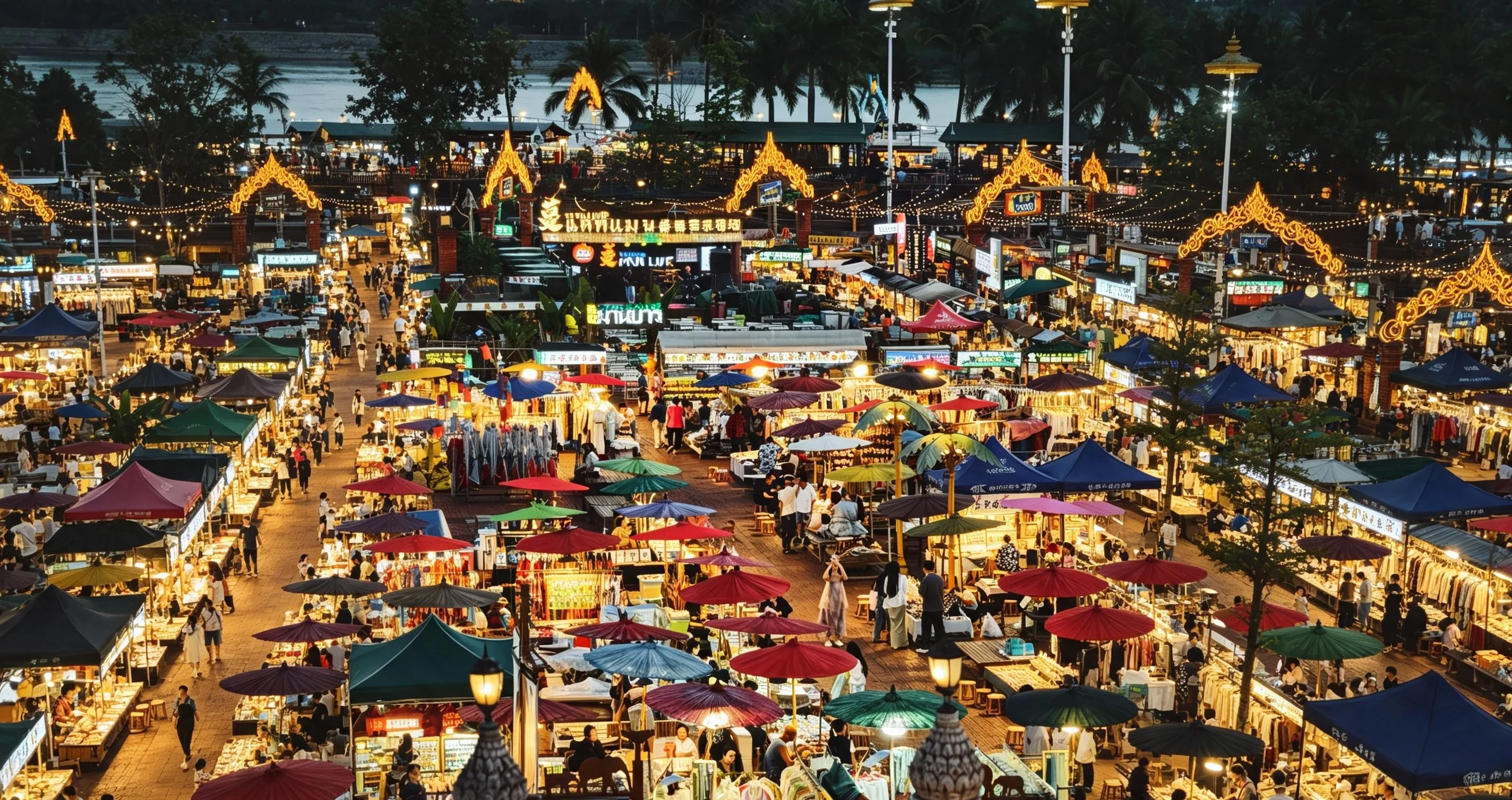
Starlight Night Market is one of the largest night markets in Southeast Asia, dazzling with lights and full of atmosphere as night falls; the Shwedagon Pagoda is a landmark of Kaohsiung, glittering with gold, and offers the best vantage point for panoramic views of the night market.
What to do:
Shwedagon Pagoda View: Climb the pagoda at dusk for panoramic views of the sunset transitioning into the blue sky and the illuminated night market. The atmosphere is divine after the lights come on at 7:30 PM.
Starlight Night Market Food and Drink: A wide variety of food including pounded chicken feet, Dai-style barbecue, fresh juice, and handmade jewelry.
Six-Country Floating Market: Enjoy a nighttime boat trip on the Mekong River.
Dai Costume Photography: Numerous photography studios are located around the night market. Try on traditional Dai clothing and take some stunning Southeast Asian-style photos.
Admission: Gaozhuang Xishuangjing, Starlight Night Market, and the Golden Pagoda are all free; admission to the Golden Pagoda requires an additional fee.
2. Manting Park
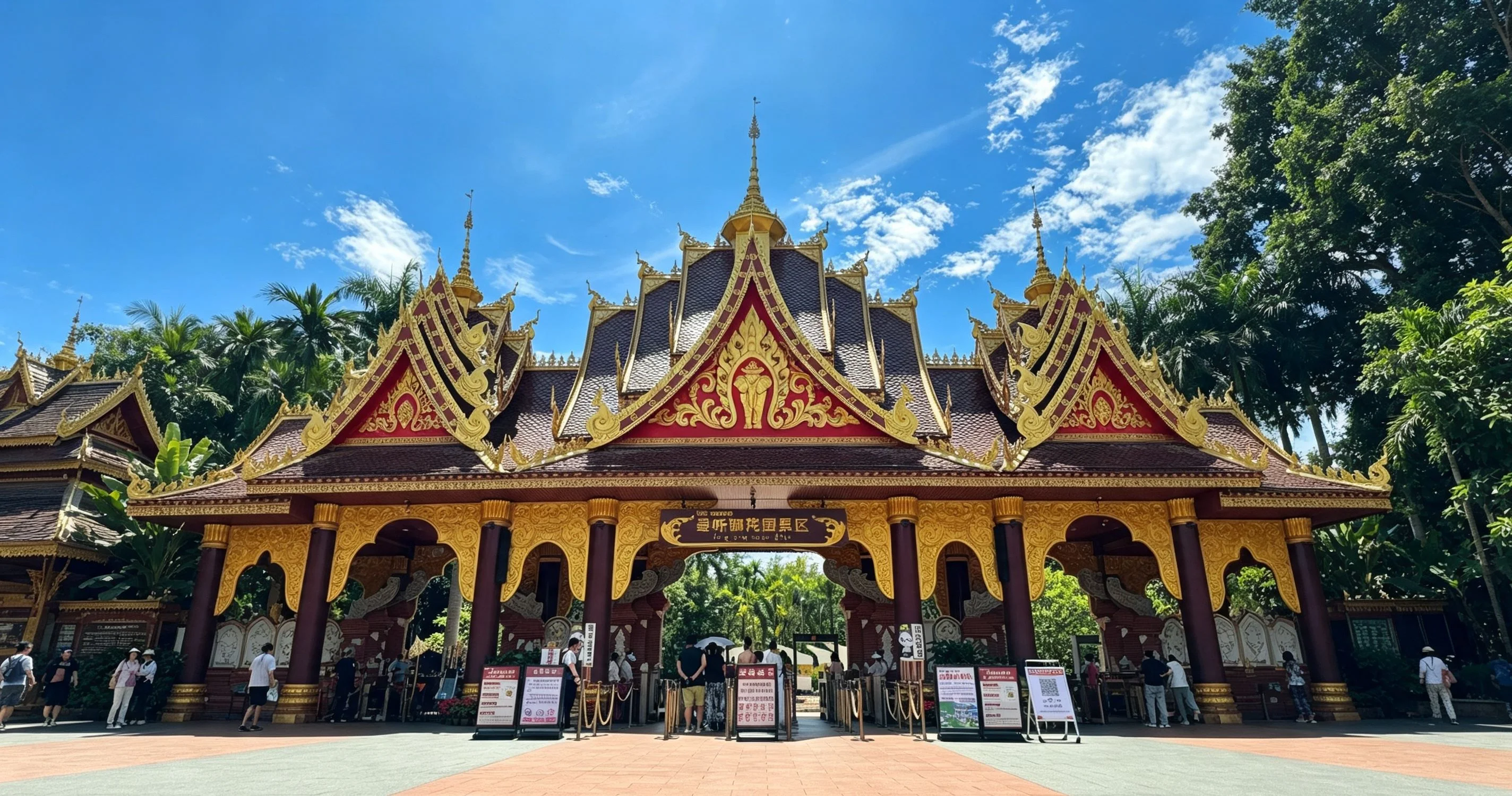
Manting Park is the oldest park in Xishuangbanna, once the royal garden of the Dai kings, with a history of over 1300 years. Ancient trees reach for the sky, and the park boasts red walls and golden roofs; every snapshot looks like a scene from a Southeast Asian epic.
What to do:
Dai King's Palace: Magnificent and stunning, perfect for wide-angle photography.
White Pagoda: Great for photos in Dai costumes (available for rent outside the park for 30-50 yuan).
General Buddhist Temple: Red walls and golden roofs paired with tropical plants create a strong Southeast Asian atmosphere.
Performances: Dai King's Procession at 10:00 AM, Elephant Show at 10:30 AM/2:50 PM/4:30 PM
Bonfire Party (separate ticket): Optional if you have time.
Tickets: Manting Park 40 RMB, Zongfo Temple free (entry with Manting Park ticket)
No tank tops or short skirts allowed at the main Buddhist temple.
3. Mengle Grand Buddha Temple
The largest Buddhist temple in Xishuangbanna is built against Nanlian Mountain. At the summit stands a 49-meter-tall gilded Buddha statue, offering panoramic views of Jinghong City. The scenic area features peacock releases and water-splashing blessing performances.
What to do:
Golden Pagoda on the Mountain Top: Entirely gilded, a leisurely stroll around the pagoda offers panoramic views of the rainforest and Jinghong city.
Cloud-Top Glass Platform: With layers of rainforest below and views of the entire city of Jinghong, it's a fantastic spot for photos.
49-Meter Auspicious Buddha: A landmark gilded Buddha statue in Xishuangbanna, perfect for quiet prayer.
Peacock Release Performance: Hundreds of blue and green peacocks swoop down from the forest.
Water Splashing Plaza for Blessings: An immersive experience of Dai-style water splashing for blessings.
Ticket price: The ticket price for Mengle Grand Buddha Temple is 120 yuan per person.
II. Attractions on the North Route (closer to the city center)
4. Wild Elephant Valley
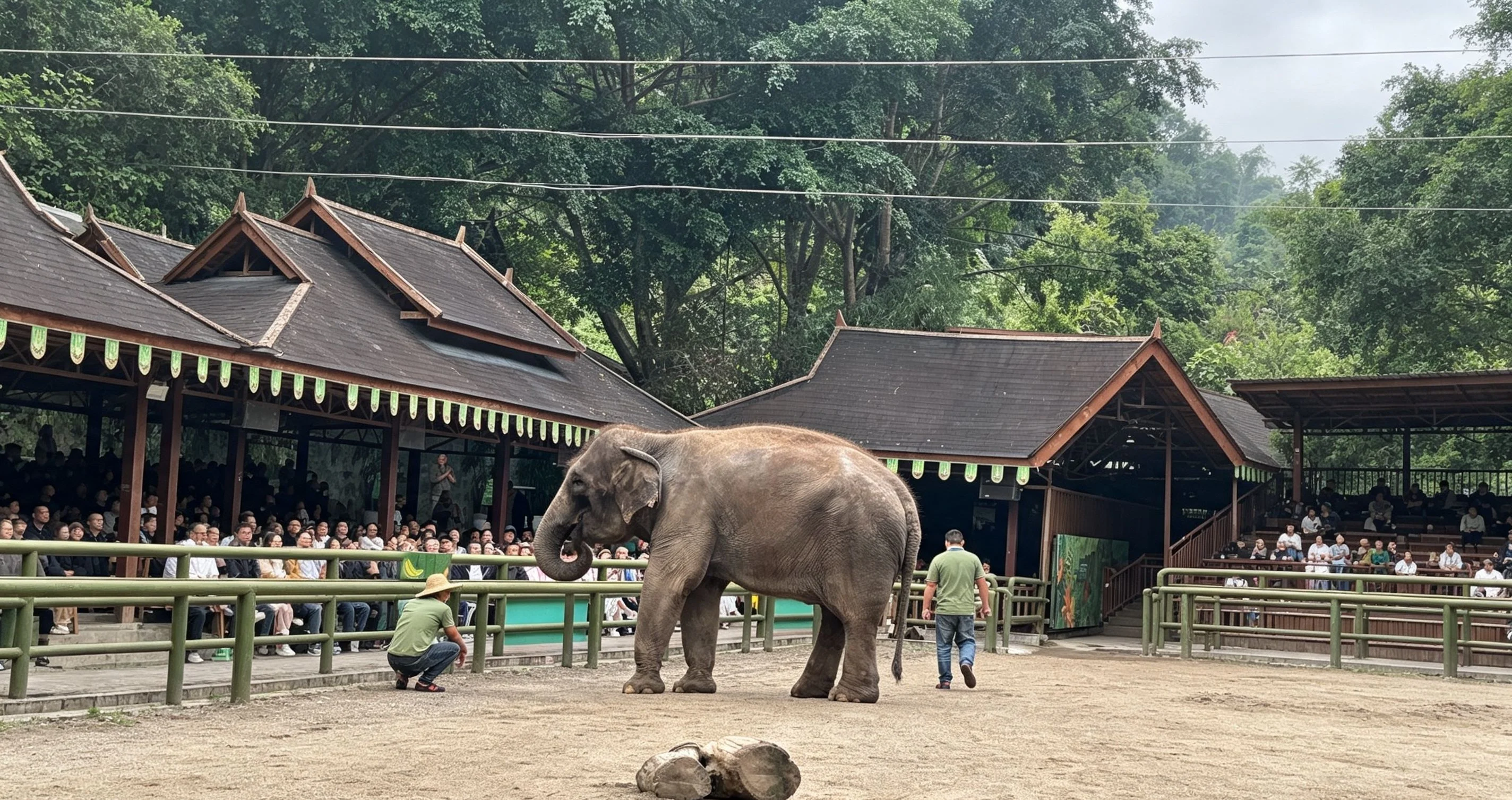
The only scenic area in China where you can observe wild Asian elephants up close, located in Mengyang Town, Jinghong City, about 36 kilometers from the city center. It serves as a central passageway for the exchange and gathering of wild Asian elephants living in the Mengyang Nature Reserve.
What to do:
High-altitude elephant observation walkway: 2.5 km long, built above the rainforest. Best viewing times are 8-10 am and 4-6 pm.
Rainforest elephant herding (most popular, requires 3 days advance booking, 298 RMB/person): Guided tour into the rainforest, hand-feeding elephants bananas.
Elephant science park show: Regular shows at 10:00 am, 12:00 pm, and 2:00 pm daily.
Butterfly garden: Home to over 200 species of butterflies.
Asian elephant museum: Educational information about elephants.
Tickets: 60 RMB; Cable car: 50 RMB one way
It is recommended to arrive before 9:00 AM, as the elephants are more active in the morning; participants in the rainforest elephant grazing are not allowed to be over 55 years old.
5. Primeval Forest Park
Located approximately 8 kilometers from Jinghong city, this primeval forest boasts a forest coverage rate exceeding 98%, making it a natural oxygen bar. It integrates rainforest hiking, ethnic cultural performances, and peacock release activities.
What to do:
Peacock Release (Must-try): 3 sessions daily (commonly 10:00, 13:10, 15:10). Hundreds of peacocks swoop down from the forest, a spectacular sight; after the release, you can feed and interact with them (feed approximately 20 RMB).
Tropical Valley Rainforest Hiking: Traverse through ancient strangler fig trees and aerial gardens.
Aini Village Bamboo Pole Dance: Free participation in ethnic song and dance interaction.
Water Splashing Carnival: Daily water splashing activities at the mountaintop plaza.
Tickets: Official price 45 yuan, often discounted to 39 yuan online; round-trip sightseeing bus 60 yuan.
Arrive 15-30 minutes early for the peacock release to secure your spot; sitting on the right side of the stage offers a better view.
III. Attractions on the East Route (relatively far from the city center)
6. Xishuangbanna Tropical Botanical Garden, Chinese Academy of Sciences
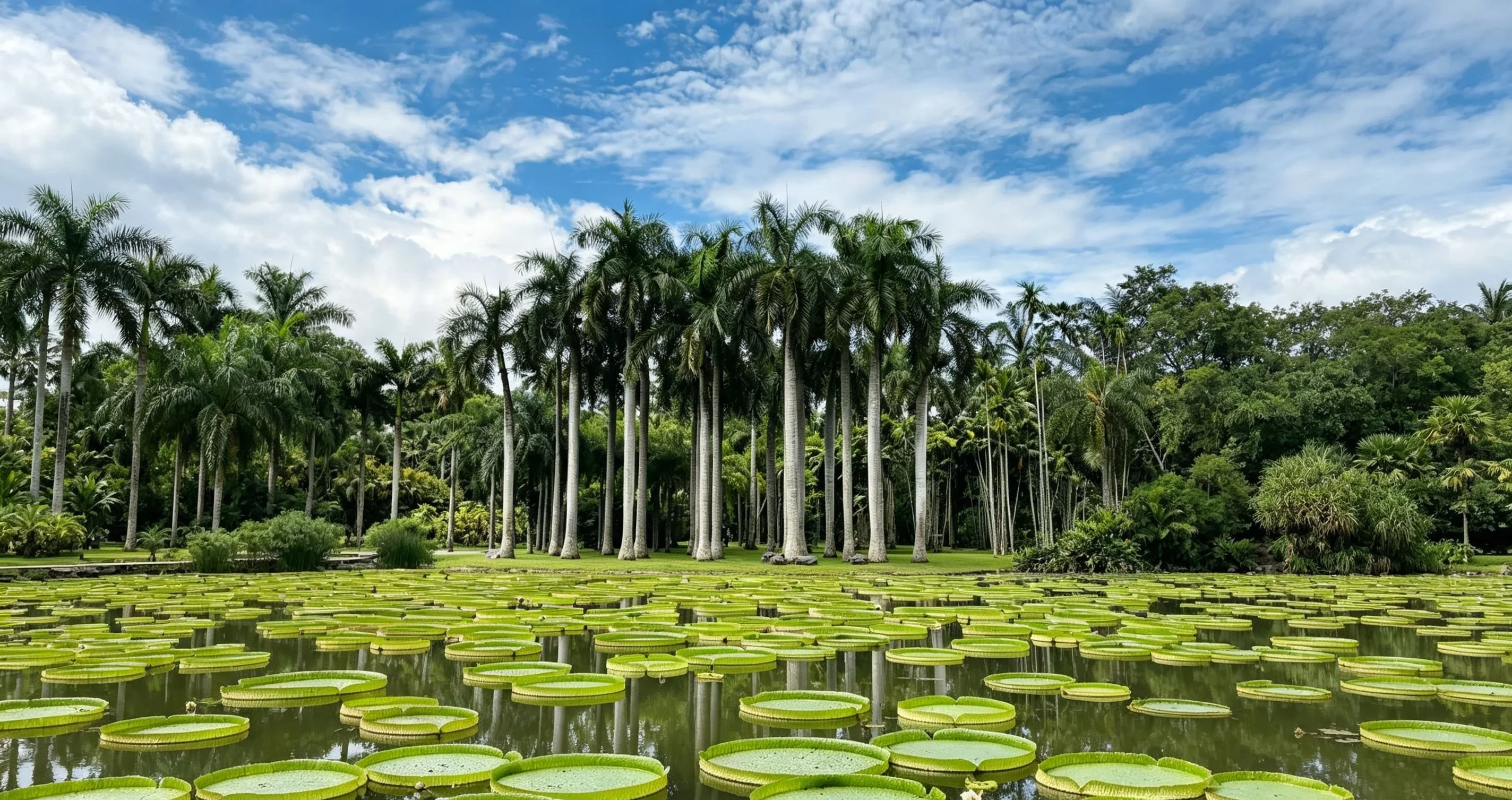
The only 5A-level scenic area in Xishuangbanna, and the largest and most biodiverse tropical botanical garden in China. Located in Menglun Town, Mengla County, about 40 kilometers from the city center. It is divided into the West Zone (artificial specialized gardens with many popular photo spots) and the East Zone (primeval tropical rainforest).
What to do:
West Zone (Must-see): Victoria amazonica (a must-see in Xishuangbanna; from June to October, you can sit on the leaves for photos, 60 RMB/person, weight limit 40kg), Garden of Exotic Flowers and Plants (interactive with dancing grass and mimosa), Palm Avenue
East Zone (Optional for those with good stamina): Hiking through the primeval rainforest, seeing buttress roots, strangler figs, and aerial gardens
Night Tour (April to October): Seeing fireflies and nocturnal insects; separate reservation and ticket purchase required.
Admission: 80 RMB; West Zone sightseeing bus: 50 RMB/person; East Zone sightseeing bus: 50 RMB/person; Full park sightseeing bus (West Zone + East Zone): 100 RMB/person.
7. Dai Ethnic Garden (Ganlanba)
This national 4A-level scenic area comprises five original Dai ethnic villages, including Manjiang and Manchunman, encapsulating Dai culture and the Water Splashing Festival. It is approximately 27 kilometers from Jinghong city center and a visit of 3-4 hours is recommended.
What to do:
Manchunman Ancient Buddhist Temple: A thousand-year-old temple with stunning red walls and golden roofs, perfect for photos.
Daily Water Splashing Festival (Core Experience): 2-3 water splashing events daily (commonly at 11:00, 13:30, and 15:30), experience the water splashing fun without waiting for the festival.
Dai Bamboo Houses: Explore an authentic Dai village and experience the slow-paced Dai lifestyle.
Intangible Cultural Heritage Experiences: Dai brocade weaving, slow-wheel pottery making, etc.
Tickets: 45 RMB; sightseeing bus: 40 RMB (the park is quite large, so it is recommended for seniors and children to purchase tickets).
Bring a change of clothes or rent costumes on-site to participate in the water splashing activity.
8. Wangtianshu Scenic Area
The core scenic area of the tropical rainforest national park boasts Asia's tallest grove of trees—the Hopea trees. Located in the northeast of Mengla County, it is about 150 kilometers from the city center, a considerable drive away. Visitors can experience a comprehensive rainforest exploration through water, land, and air.
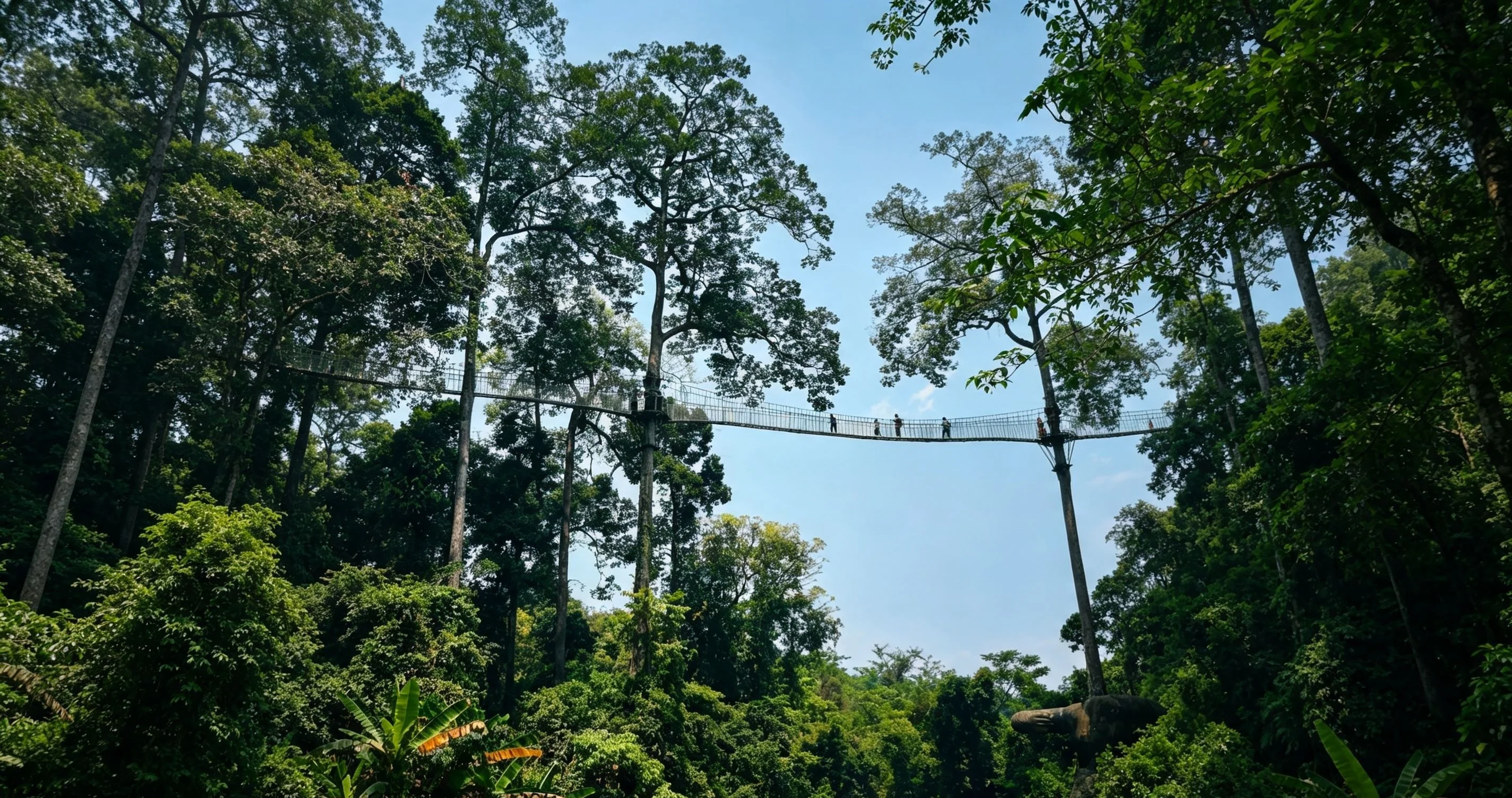
What to do:
Canopy Walk (Core Experience): A 500-meter-long, 36-meter-high suspension bridge, allowing you to stroll in the air and overlook the entire rainforest.
Nanra River Cruise: Approximately 20 minutes, enjoying the rainforest scenery along the way.
Phillip Trail: A pristine rainforest hike, seeing wonders such as strangler figs.
Instagrammable bird's nest photo spot.
Tickets: 55 RMB; Group purchase package: 180 RMB (includes admission + one-way boat ride + canopy walkway)
Those with a fear of heights should skip the canopy walkway; the one-way path does not allow for turning back.Wear sturdy, non-slip shoes, as the rainforest surface is slippery.
IV. Western Route Attractions
9. Mengjinglai (The First Village Between China and Myanmar)
This is an ancient, pristine Dai village on the China-Myanmar border, separated from Myanmar only by the Daluo River. It is located in Daluo Town, Menghai County, about 120-130 kilometers from Jinghong City.
What to do:
Visit the China-Myanmar border marker: Step into two countries with one foot in each other.
Dai stilted houses: Every household is a detached stilted house.
Experience the slow-paced life of a border Dai village: Feel the authentic atmosphere of a Dai village.
Ticket price: 50 RMB
It's quite far from the city center (about a 2.5-hour drive), so driving yourself or hiring a car is recommended.
Frequently Asked Questions
1. When is the best time to visit?
November – March (Dry season): Warm and dry; the most comfortable weather.
April 13–15 (Water Splashing Festival): Incredible atmosphere, but packed with tourists and hotel prices double.
May – October (Rainy season): Fewer tourists and plenty of fruit, though afternoon showers are common.
2. Where is a convenient place to stay?
If you enjoy a lively atmosphere, night photography, and night markets → Gaozhuang Xishuangjing
If you prioritize value for money and convenient transportation → Jinghong City Center
3. Is the Water-Splashing Festival celebrated every day?
The Dai Ethnic Village and the Primeval Forest Park offer scheduled water-splashing experiences (for example, the Dai Ethnic Village hosts two or three sessions daily), so you can enjoy the activity without having to wait until April.
4. Which attractions are most worth visiting?
Limited time (2–3 days): Gaozhuang + Manting + Wild Elephant Valley + Botanical Garden (West Zone)
Ample time: Add Dai Ethnic Village + Wangtianshu (the canopy walkway is spectacular)
Border visits: Mengjinglai + Daluo Port (requires a long drive)
Disclaimer: This information is provided for reference only and was last updated on . Requirements and regulations may change. Always verify with official sources before making travel plans.