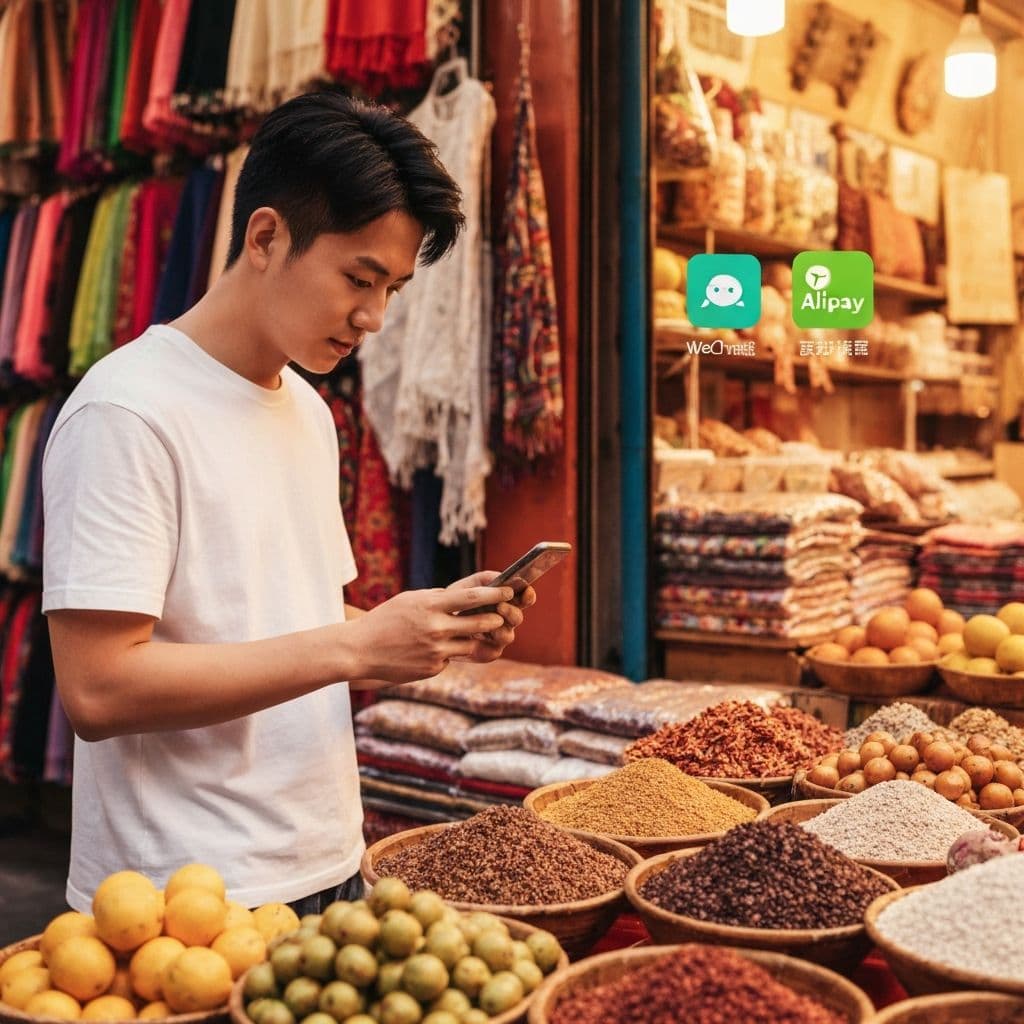

Planning a trip to China but unsure how to handle payments? You're not alone. Understanding how to use payments in China is one of the most important pre-trip preparations for international travelers. While China is rapidly moving towards a cashless society dominated by mobile apps, reliable options remain for those who prefer traditional payment methods.
This guide will walk you through everything from setting up essential payment apps to using cash and debit cards, ensuring you can easily pay for everything from street food to high-speed rail tickets.
Overview of Digital Payments in China
China's payment ecosystem is renowned for its sophistication, which can be overwhelming for first-time visitors.
The key to navigating China's payment journey lies in understanding the two main payment systems: WeChat Pay and Alipay. These are more than just payment apps; they're super apps integrated into daily life, covering everything from shopping and dining to booking taxis and paying utility bills. While some places accept cash and international debit cards, your experience will be much smoother if you choose to use digital payment methods.
Being prepared before you arrive is crucial. Unlike many countries where payments can be completed with a simple swipe, using mobile payments in China requires some initial setup. This includes linking an international credit or debit card to one of the apps. Don't worry—while it takes a little patience, the process is very simple and will be an essential tool for smooth transactions during your trip.
Setting up Mobile Payments: WeChat Pay and Alipay
For travelers, the most important question is: What types of payment apps are available in China? The answer is WeChat Pay (within the WeChat social app) and Alipay (owned by Ant Group). You don't need a Chinese bank account to use them; you can link Visa, Mastercard, and some other international cards. We recommend setting up both apps simultaneously if possible, as some merchants may prefer one.
Step-by-Step Guide: Activating WeChat Pay
First, download WeChat from the app store, use your international mobile number, and create an account (this registration process may require image verification and a "Chinese guarantor" to scan a QR code for verification). Then, tap "Me" > "Services" to access the "Wallet" section. Here, you can find the "Cards" section to add your international credit or debit card. You will need to verify your identity, usually by uploading a passport photo. This process can take anywhere from a few minutes to several hours to be approved.
Once verification is successful, you can make your payment. In the store, open WeChat, tap the "+" icon, and then select "Pay." You can show your payment QR code to the merchant for scanning, or you can scan the merchant's static QR code. For small vendors and street markets, you will almost always need to scan their QR codes. Before you authorize payment, the confirmation page will display the amount in both RMB and your native currency.
Step-by-step guide: Activating Alipay
Download the Alipay app (look for the version developed by Ant Group). The setup process is very similar. Go to "Me" > "Settings" > "Account and Security," select "Identity Information" for real-name verification, and then select "Me" > "Bank Cards" to add your international card. Alipay also offers a dedicated "Travel Pass" feature for short-term visitors, which is similar to a top-up digital wallet, but for most travelers, directly linking a bank card is usually more convenient.
Using Cash and International Cards
While mobile is king, you should not travel to China without any cash. Having some Chinese Yuan (RMB) is essential for smaller towns, rural areas, certain markets, and as a backup if your phone dies or you have connectivity issues. You can exchange currency at banks or airport exchange counters upon arrival. Always ask for some smaller bills (like 10, 20, and 50 RMB notes) for convenience.
International credit and debit cards (Visa, Mastercard, American Express) have limited but growing acceptance. You can reliably use them at:
Major international hotel chains.
Upscale restaurants in big cities.
Large department stores and malls.
ATMs for cash withdrawals (look for ATMs affiliated with major banks like Bank of China or ICBC).
Be sure to inform your bank of your travel plans to avoid your card being blocked for suspicious overseas activity. Also, note that while UnionPay is China's dominant card network, it is not typically available to short-term visitors.
Practical Payment Scenarios for Travelers
Let's apply this knowledge to common situations you'll encounter. Knowing how to use payment in China in each context will save you time and stress.
Transportation: Trains, Taxis, and Subways
For the high-speed rail (CRH), you can book tickets on apps like Trip.com or Ctrip using an international card and pick them up at the station with your passport. At the station, you can also use cash or card at the ticket windows. For subways in cities like Beijing and Shanghai, you can buy single-journey tokens with cash, but it's far easier to set up a transit card within WeChat or Alipay. For taxis, Didi (China's Uber) can be linked to your Alipay or WeChat Pay, while street hails can be paid via QR code scan in the cab.
Dining and Shopping
In restaurants, you will usually pay at the counter. A staff member will either bring a QR code to your table for you to scan or direct you to a payment counter where you can scan a code. In supermarkets and convenience stores like FamilyMart, you can use mobile pay or cash. Street food vendors and small market stalls are almost exclusively mobile pay (via QR code) or cash. Always have the payment app open and ready before you order to avoid holding up a line.
Attractions and Accommodation
Major tourist sites (e.g., the Forbidden City, Terracotta Army) often have online booking via their official WeChat channels or travel platforms, which accept linked international cards. You can also buy tickets on-site with cash. For hotels, international chains will take cards, while smaller local guesthouses may prefer mobile payment or cash. Always confirm the payment method when booking.
Essential Tips for a Smooth Financial Experience
Connectivity is Key
Mobile payments require an internet connection. Purchasing a local SIM card or a portable Wi-Fi device upon arrival is non-negotiable. Without data, your payment apps won't work. Most airports have kiosks selling tourist SIMs with data packages; ensure your phone is unlocked to use one.
Security and Backup Plans
Treat your phone like your wallet. Enable all security features on WeChat and Alipay, such as payment passwords and fingerprint/facial recognition. Always carry a backup payment method—some physical cash and at least one international card. Also, keep a photo of your passport and visa on your phone and in the cloud, as you may need them for verification.
Cultural and Practical Notes
It is considered polite to have your payment QR code ready before you reach the counter. Don't be surprised if a vendor asks "WeChat or Alipay?"—this is the standard question. If you pay with cash, it is customary to hand it over using both hands as a sign of respect, though this is less strictly observed with foreigners. Remember, bargaining in markets is common, but once a price is agreed, the payment is almost always instant via QR code.
Conclusion: Embracing the Ease of Chinese Payments
Mastering how to use payment in China might seem daunting, but with a little preparation, it becomes one of the most efficient systems you'll ever use. By setting up WeChat Pay and Alipay before or upon arrival, carrying a sensible amount of cash, and keeping a card for emergencies, you'll be equipped for any transaction. This knowledge not only makes your travel smoother but also allows you to engage with modern Chinese life authentically. Enjoy the convenience, and have a fantastic trip!
Disclaimer: This information is provided for reference only and was last updated on . Requirements and regulations may change. Always verify with official sources before making travel plans.