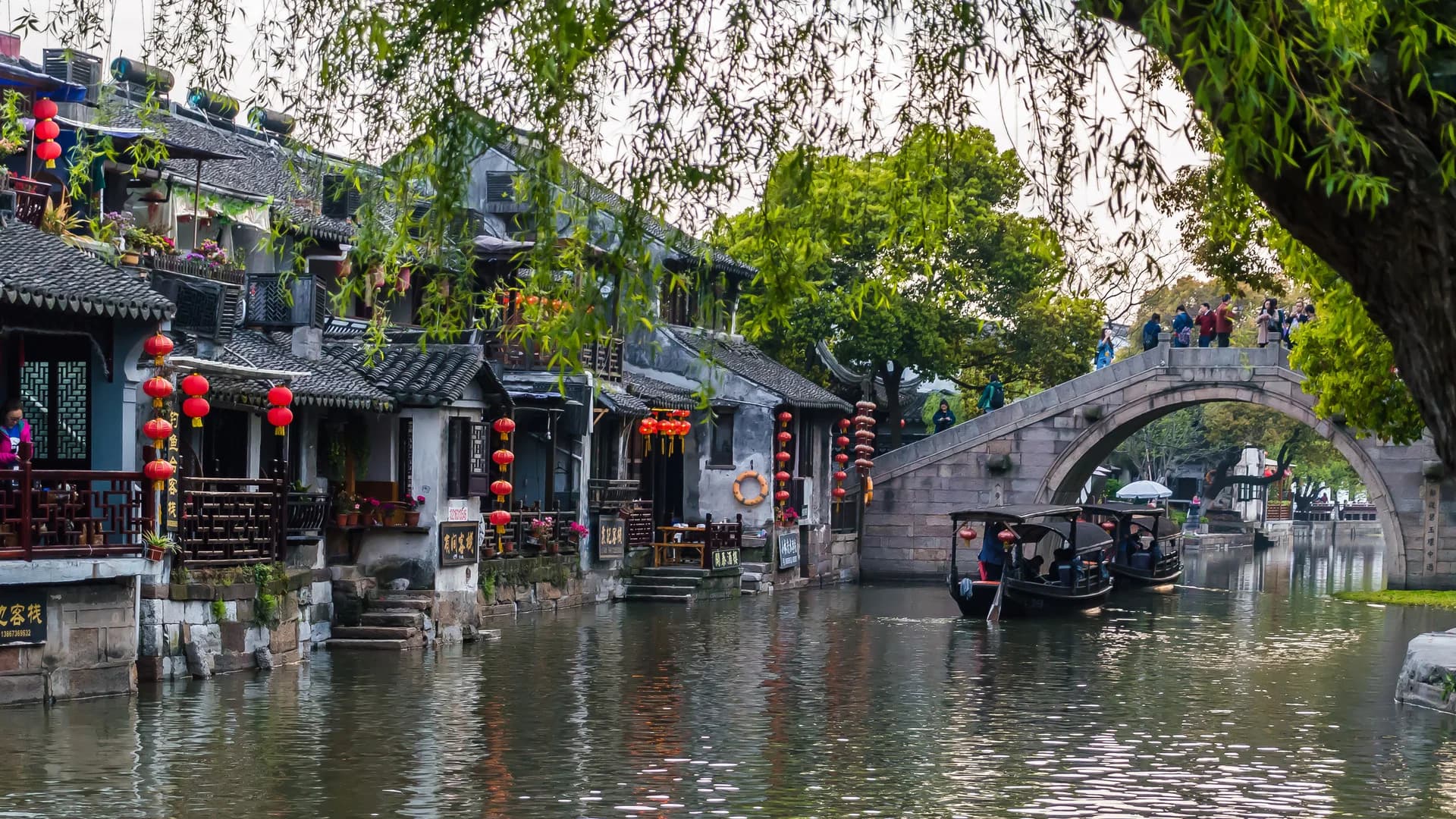

Starting from Shanghai, Suzhou, or Hangzhou, a mere hour or two's drive will take you to a completely different world—winding canals, ancient stone bridges, white-walled and black-tiled houses, and swaying hand-rowed wooden boats. This is the Jiangnan water town, a place that carries the memories of a thousand years of Chinese life.
This guide introduces you to six of the most representative ancient water towns, helping you make the best choice for you within your limited time.
Overview of the Six Ancient Towns
Zhujiajiao: Located near Shanghai, directly accessible by subway. Free admission. Suitable for a half-day trip with limited time.
Wuzhen: Divided into the East Gate traditional living area and the West Gate modern tourist area. Excellent night view, well-equipped facilities. Overnight stay recommended.
Zhouzhuang: The best-preserved Ming and Qing dynasty architecture. 50% off admission on weekdays. Known as "China's No. 1 Water Town."
Tongli: Home to the only World Heritage garden in the water town category, Tuisi Garden. Small and livable. Can be combined with a day trip to Suzhou.
Nanxun: Unique blend of Chinese and Western architecture. The Hundred Rooms Building is most tranquil in the early morning, more serene than Wuzhen.
Xitang: Famous for its continuous covered corridors and lively bar street. Romantic night view. Suitable for young tourists.
I. Zhujiajiao Ancient Town
Zhujiajiao, the closest water town to downtown Shanghai, is known as the "Venice of Shanghai." This ancient town, with over 1700 years of history, is one of the best-preserved Ming and Qing dynasty towns in Shanghai. If you have limited time and don't want to travel long distances, this is an ideal choice.
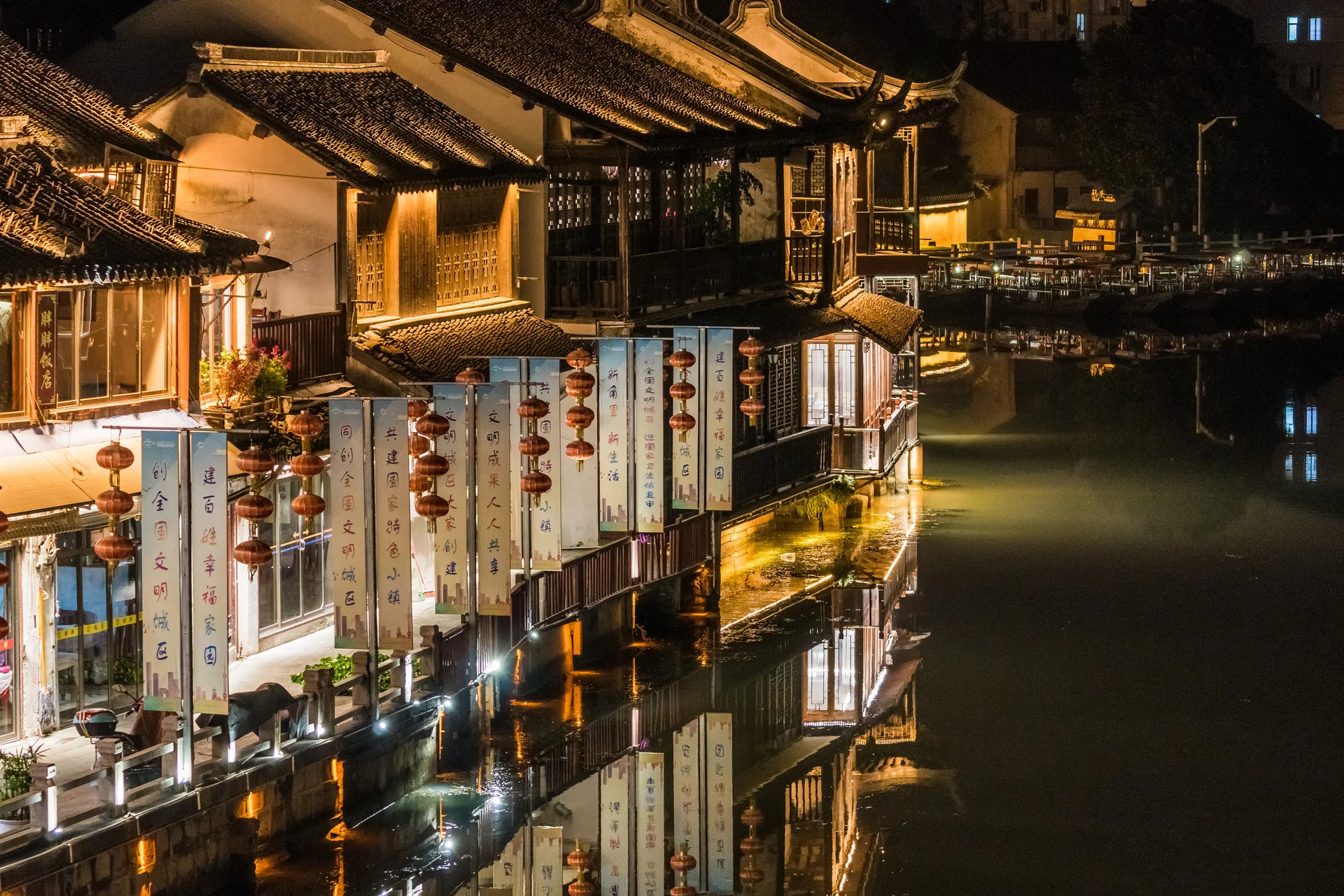
Transportation: The most convenient way from Shanghai is to take Metro Line 17 to "Zhujiajiao Station". From the station, it's about a 15-20 minute walk to the south side of the ancient town.
Opening Hours and Admission:
The ancient town street is open all day free of charge, no reservation required.
A combined ticket is 60 yuan per person (including Kezhi Garden, Hexin Garden, and two other attractions); if you wish to visit all paid attractions (Kezhi Garden, Hexin Garden, Helong Art Museum, Quanhua Watercolor Art Museum, and Grandma's Tea House), a combined ticket is 140 yuan per person.
Must-see recommendations:
The Release Bridge is the largest five-arch stone bridge in East China and a landmark of Zhujiajiao. Climbing the bridge offers panoramic views of the Caogang River.
The Qing Dynasty Post Office is the only well-preserved Qing Dynasty post office site in East China. You can buy and send postcards with distinctive Zhujiajiao postmarks.
Kezhi Garden, built in 1912, is a private garden combining Chinese and Western architectural styles.
Recommended dishes: Grandma's Rice Dumplings (sticky rice dumplings), Braised Pork Belly, Smoked Green Beans, and Dianshan Lake River Shrimp.
Recommended visit duration: 2-3 hours, or half a day.
II. Wuzhen
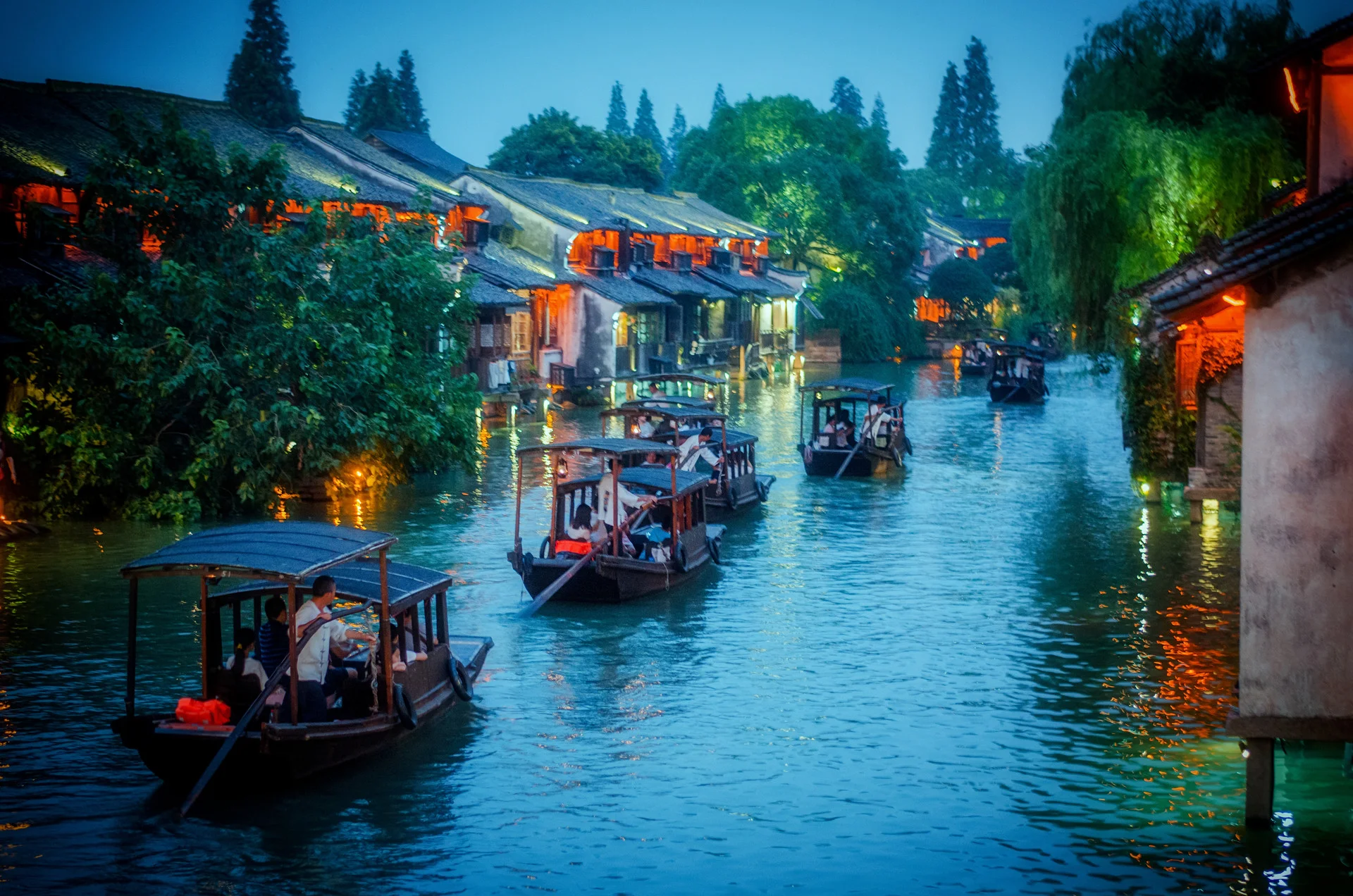
Wuzhen is the most representative and best-equipped of the six ancient towns in Jiangnan. This water town, with over 1300 years of history, is surrounded by canals, ancient bridges, white-walled houses, and wooden walkways, resembling a living Chinese ink painting. The ancient town is divided into two main areas: East Gate and West Gate.
Transportation: It takes about 2 hours by car from Shanghai and about 1 hour by car from Hangzhou.
Opening Hours and Admission Fees:
East Gate Scenic Area: Adults 110 RMB, Discounted Tickets 55 RMB
West Gate Scenic Area: Adults 150 RMB, Discounted Tickets 75 RMB
West Gate Scenic Area: Adults 150 RMB, Discounted Tickets 75 RMB
The differences between Dongzha and Xizha:
Dongzha retains more of its traditional atmosphere, featuring dye houses, wineries, a folk museum, and shadow puppet shows.
Xizha, on the other hand, has been meticulously restored and is larger in scale, boasting canal walkways, boutique hotels, riverside teahouses, and captivating night views. Many tourists visit Dongzha during the day and then move to Xizha in the afternoon, staying until evening to enjoy the night scenery.
Best time for photography: 7-9 am when there's a light mist over the canal and few tourists; and the blue hour after sunset when the lanterns begin to light up.
Suggested visit duration: 1-2 days. Allocate at least a full day for Xizha and half a day for Dongzha.
III. Zhouzhuang
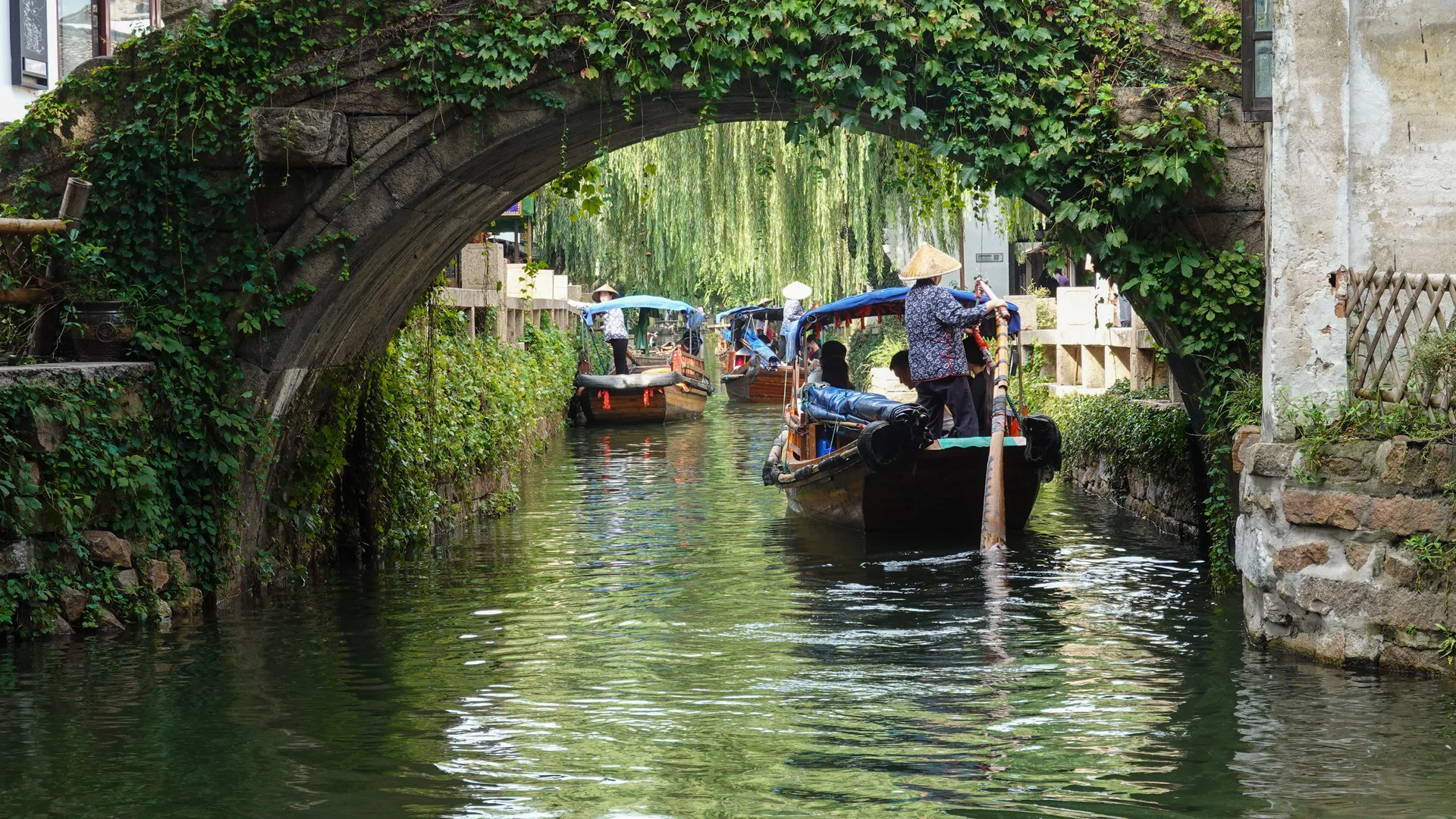
Zhouzhuang boasts a history of over 900 years and is renowned for its well-preserved Ming and Qing dynasty architecture and rich cultural atmosphere, earning it the title of "China's No. 1 Water Town." The ancient town is surrounded by canals, ponds, and lakes. Approximately half of the residences are well-preserved, with over a hundred houses featuring courtyards.
Transportation: Approximately 1.5 hours drive from Shanghai and 1 hour drive from Suzhou.
Opening Hours and Admission: Full price ticket: 100 RMB/person
Important Note: On weekdays (Monday to Friday), a 50% discount is available on full price tickets, i.e., 50 RMB/person.
Must-see recommendations:
The Twin Bridges (Key Bridges), composed of Shide Bridge and Yong'an Bridge, were built between 1573 and 1619 and are a landmark of Zhouzhuang.
Shen Hall, built in 1742, features seven courtyards, five gate towers, and over 100 rooms.
Zhang Hall, built between 1436 and 1449, has six courtyards and over 70 rooms.
Fu'an Bridge, built in 1355, has bridge towers at each of its four corners.
Unique Experience: Hand-rowed boat, 200 yuan/boat (maximum 6 people). You can ask the boatwoman to sing a few lines of Jiangnan folk songs; the soft Wu dialect accompanying the sound of the water creates a unique charm. The most beautiful light and shadow effects are after 3 pm when sunlight filters through the bridge arches. If interested, you can watch the "Four Seasons Zhouzhuang" live performance.
IV. Tongli Ancient Town
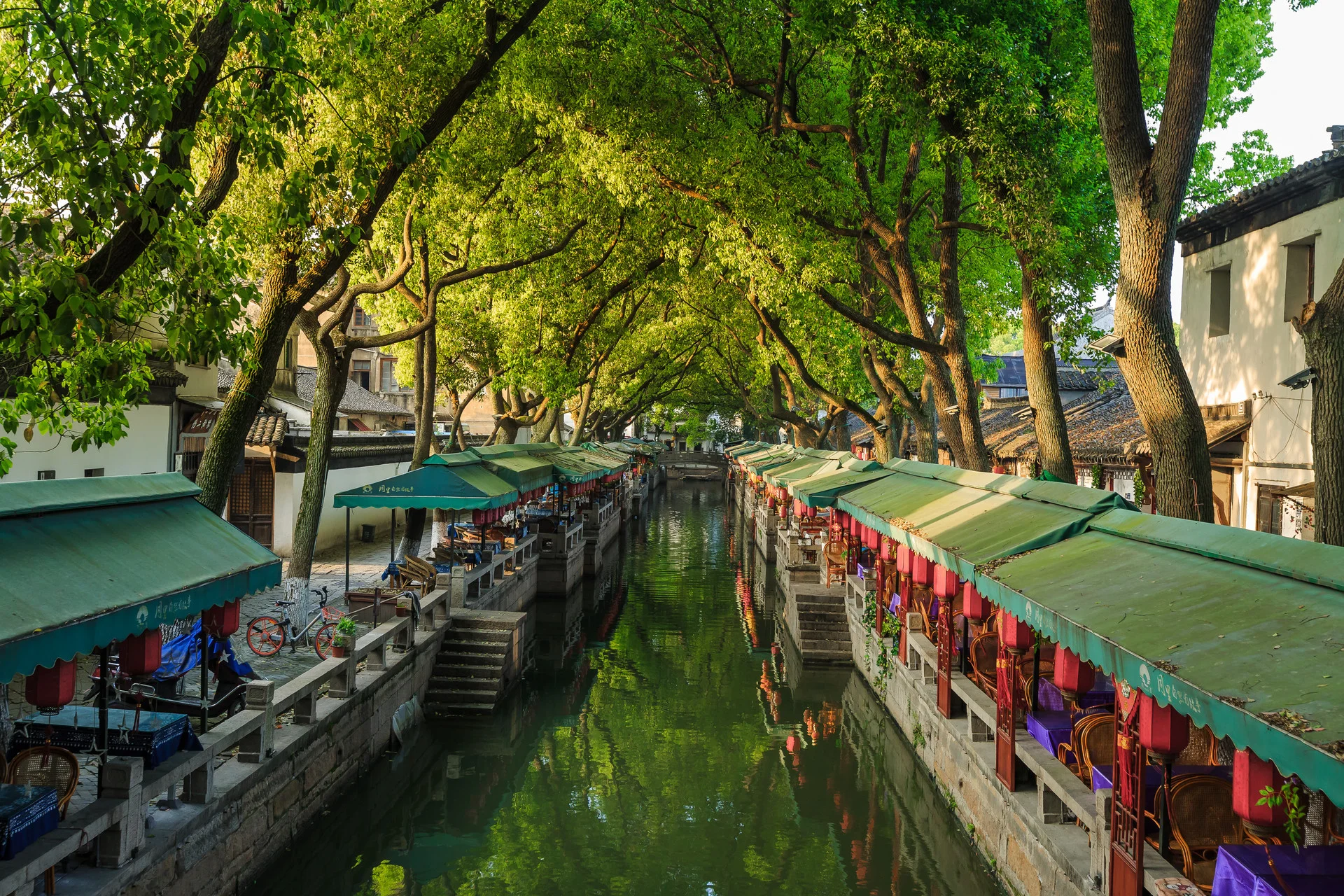
Tongli boasts a history of over 1,000 years and is Suzhou's most livable water town. Compared to the commercialization of Zhouzhuang and the theatrical feel of Wuzhen, Tongli is more like "Jiangnan that is still breathing"—the original inhabitants still live here, and you can hear the sound of oars in the morning. Tongli also has the only UNESCO World Heritage Site among water towns.
Transportation: It is about a 1.5-hour drive from Shanghai and about a 35-minute drive from Suzhou. From Suzhou, you can take Metro Line 4 to Tongli Station, and then transfer to a tourist bus or a short taxi to the ancient town.
Opening hours and admission:
Tickets are 100 yuan per person and are valid for 48 hours, allowing multiple entries and exits.
Free admission is available to those entering the ancient town before 8:00 AM or after 5:30 PM (but admission to internal paid attractions is not permitted).
Must-see recommendations:
Tuisi Garden, built between 1885 and 1887, is the only Suzhou-style garden in the water town to be listed as a World Heritage Site.
The Three Bridges—Taiping Bridge, Jili Bridge, and Changqing Bridge—are three bridges that Tongli locals must cross during weddings and birthday celebrations, symbolizing peace, good fortune, and longevity.
The narrowest part of Chuanxin Alley only allows one person to pass at a time.
Unique Experience: Hand-rowed boat (approx. 150 RMB/boat, maximum 6 people). In the evening, take a boat ride to watch the lanterns light up one by one, reflecting in the water. Later that evening, you can visit the Nanyuan Teahouse to listen to Pingtan (a traditional Suzhou storytelling performance). The next morning, head to the Three Bridges—the mist hasn't yet dissipated, and locals are washing vegetables and starting fires by the river.
Suggested visit duration: 2-3 hours, or it can be arranged as part of a Suzhou itinerary—visit Suzhou gardens in the morning and take a walk, boat ride, and tea in Tongli in the afternoon.
5. Nanxun Ancient Town
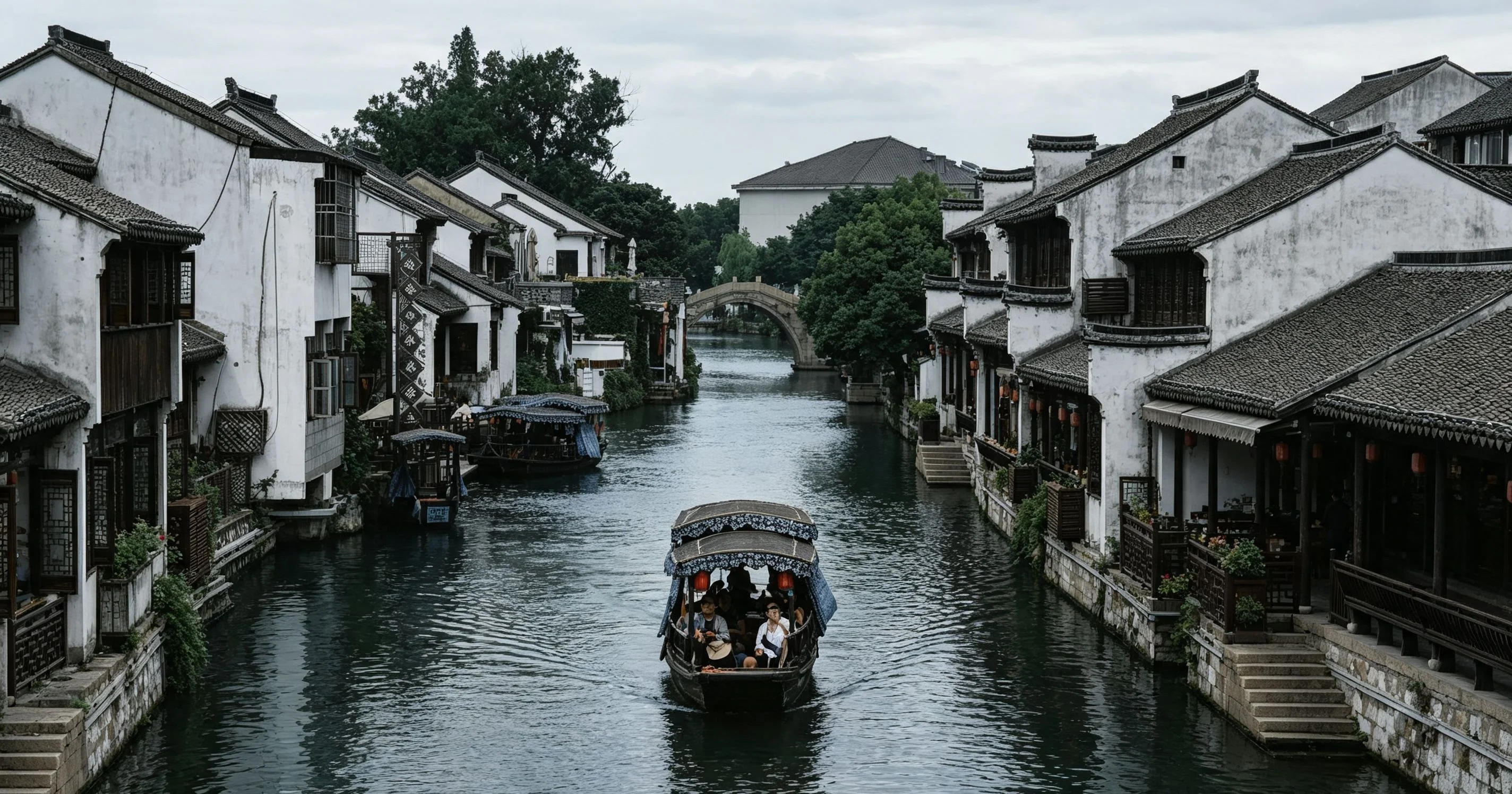
Nanxun stands out among traditional water towns—it not only boasts charming bridges and flowing water, but also features a blend of Chinese and Western architectural styles left by late Qing Dynasty silk merchants. Nanxun is part of the Grand Canal, a World Heritage Site, and a 5A-level scenic area. It is more tranquil than Wuzhen and more rustic than Zhouzhuang.
Transportation: It is about a 2-hour drive from Shanghai and about a 1.5-hour drive from Hangzhou. You can take the high-speed rail to Huzhou Nanxun Station, and then take the free shuttle bus or bus route 170 (about 15 minutes) to the ancient town.
Opening Hours and Admission:
Entrance to the ancient town streets is free all day. A combined ticket for the core attractions is 85 yuan per person (including Xiaolianzhuang, Jiayetang Library, Zhang Shiming's Former Residence, Liu's Ladder House, Zhang Jingjiang's Former Residence, etc.).
Must-see recommendations:
Baijianlou (free admission) is a 400-meter-long riverside residential complex dating back to the Ming Dynasty.
Xiaolianzhuang was the private garden of Liu Yong, one of the richest men in the late Qing Dynasty, featuring a ten-acre lotus pond and Western-style buildings.
Jiayetang Library is one of the three major libraries in Jiangnan, housing 600,000 volumes of ancient books.
Unique experiences: Daytime water bus 3 yuan/person (9:00-16:00); Evening boat tour 50 yuan/person (17:00-20:30), with lantern lights and the sound of oars. Charter a boat 160 yuan/boat (maximum 8 people).
Recommended dishes: Double-boiled noodles (fried fish + crispy pork, about 25 yuan/bowl); Xun trotters (Nanxun-style pig's trotters, about 50 yuan/serving, vacuum-packed for takeaway); Dingsheng cake; mulberry wine.
VI. Xitang Ancient Town
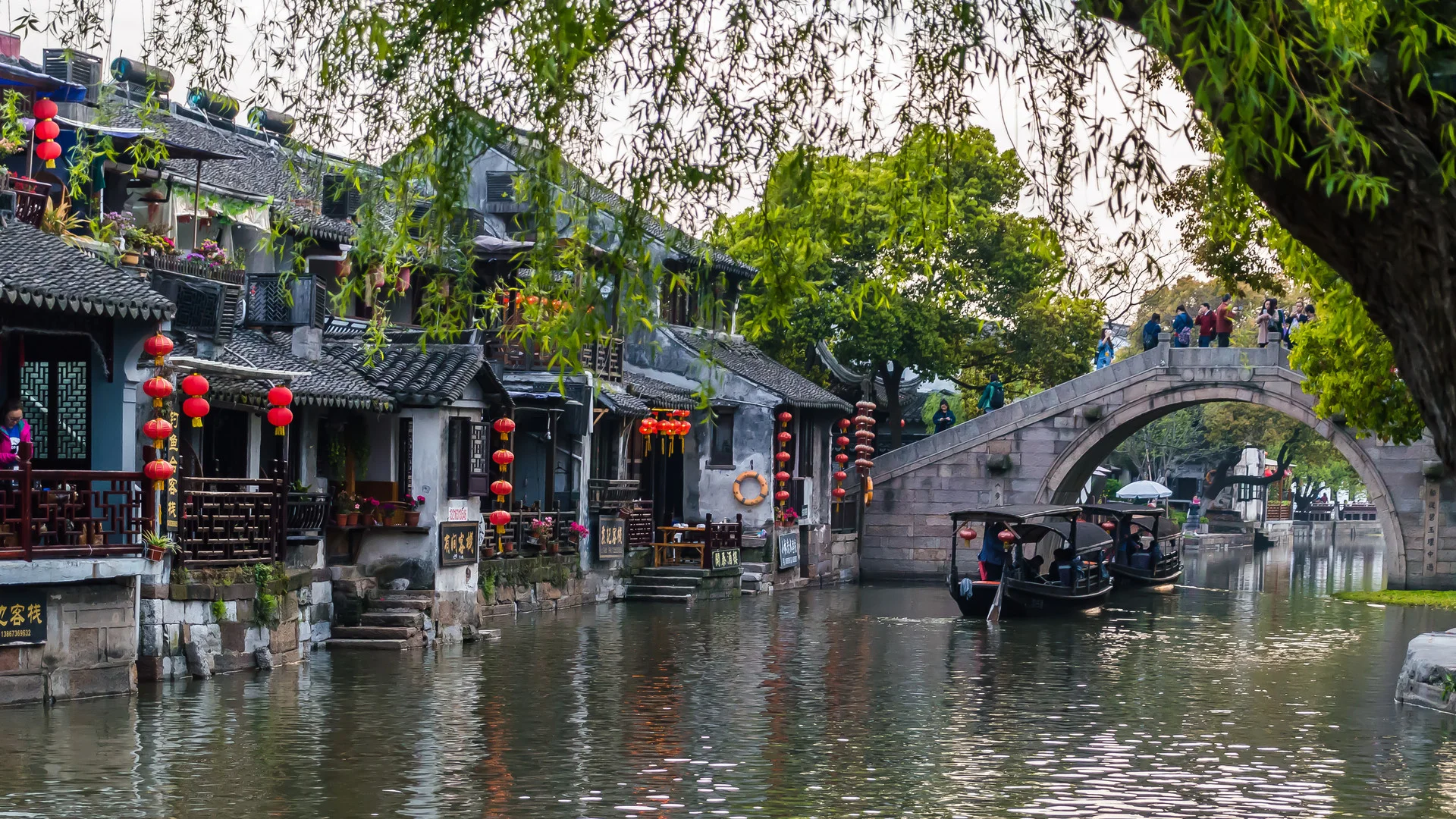
Xitang is renowned for its continuous covered walkways, vibrant nightlife, and charming ancient town atmosphere. This thousand-year-old water town is hailed as "scenery on the bridges and time under the covered walkways." The ancient town covers an area of 250,000 square meters and preserves a large number of Ming and Qing dynasty buildings. The 2,000-meter-long covered walkway is Xitang's most unique landmark.
Transportation: Approximately 1.5 hours drive from Shanghai and approximately 1.5 hours drive from Hangzhou.
Opening hours and admission:
Adult ticket: 90-95 RMB/person (including internal attractions). (Free admission after 5 PM, Sunday to Wednesday; free admission after 9:30 PM, Friday and Saturday)
Must-see recommendations:
The Misty Rain Corridor is the soul of Xitang—a covered walkway built along the river, allowing for comfortable strolling even on rainy days.
The Phoenix-Sending-a-Child Bridge—local legend says that walking on the left side brings a son, while walking on the right side brings a daughter.
Recommended visit duration: 1 day or overnight.
Frequently Asked Questions
Q1: Which ancient town is closest to Shanghai?
Zhujiajiao. It's directly accessible by Metro Line 17, about a 1-hour drive.
Q2: Which ancient town is most worth staying overnight in?
Wuzhen and Xitang have the best night views; Nanxun and Zhouzhuang are also suitable for overnight stays.
Q3: When are there the fewest tourists?
Weekdays (Monday to Friday), before 9:00 AM or after 4:00 PM.
Q4: If you could only choose one ancient town, which would you choose?
If you're looking for classic architecture and stunning night views, choose Wuzhen; if you're short on time, choose Zhujiajiao; if you want to save money on a weekday, choose Zhouzhuang; if you like architecture, choose Nanxun; if you enjoy a lively nightlife, choose Xitang; if you prefer gardens, choose Tongli.
Q5: Are there English services or signs?
Main attractions and visitor centers have English signs, but small shops and boatmen generally only speak Chinese.
Disclaimer: This information is provided for reference only and was last updated on . Requirements and regulations may change. Always verify with official sources before making travel plans.