
The quartz sandstone peaks of Zhangjiajie are a masterpiece of nature, while the ancient towns scattered throughout the mountains and rivers of western Hunan are the culmination of a thousand years of cultural heritage. This region was once the power center of the Tusi dynasty and the setting for Shen Congwen's novel, Border Town. The stilted houses of the Tujia people are built against the mountains, and the silver ornaments of the Miao people shimmer along the Tuojiang River—these ancient towns present a living, distinctly different side of western Hunan from Zhangjiajie.
Thanks to China’s well-developed high-speed rail network, it has become very convenient to explore these ancient towns from Zhangjiajie.
Fenghuang Ancient Town: "China's most beautiful small town" nestled amidst the lights of the Tuojiang River. Approximately 1 hour by high-speed rail; a 2-day, 1-night trip is recommended.
Furong Town: A thousand-year-old town with a waterfall flowing through it. Approximately 25-30 minutes by high-speed rail; one-night stay is recommended.
Border Town Chadong : the prototype of Shen Congwen's novel "Border Town," straddling three provinces. Approximately 2 hours by high-speed rail + shared ride; recommended travel time: 1-2 days.
Qianzhou Ancient City: A 4200-year-old "living ancient city." Directly accessible from Jishou by high-speed rail; half a day is recommended for a visit.
Liye Ancient Town: Home of Qin Dynasty Bamboo Slips, with 37,000 Qin Dynasty bamboo slips. The journey takes approximately 2.5 hours; a visit of half a day to a full day is recommended.
Detailed introduction of the ancient town
1. Fenghuang Ancient Town – “China’s Most Beautiful Small Town” Amidst the Lights of the Tuojiang River
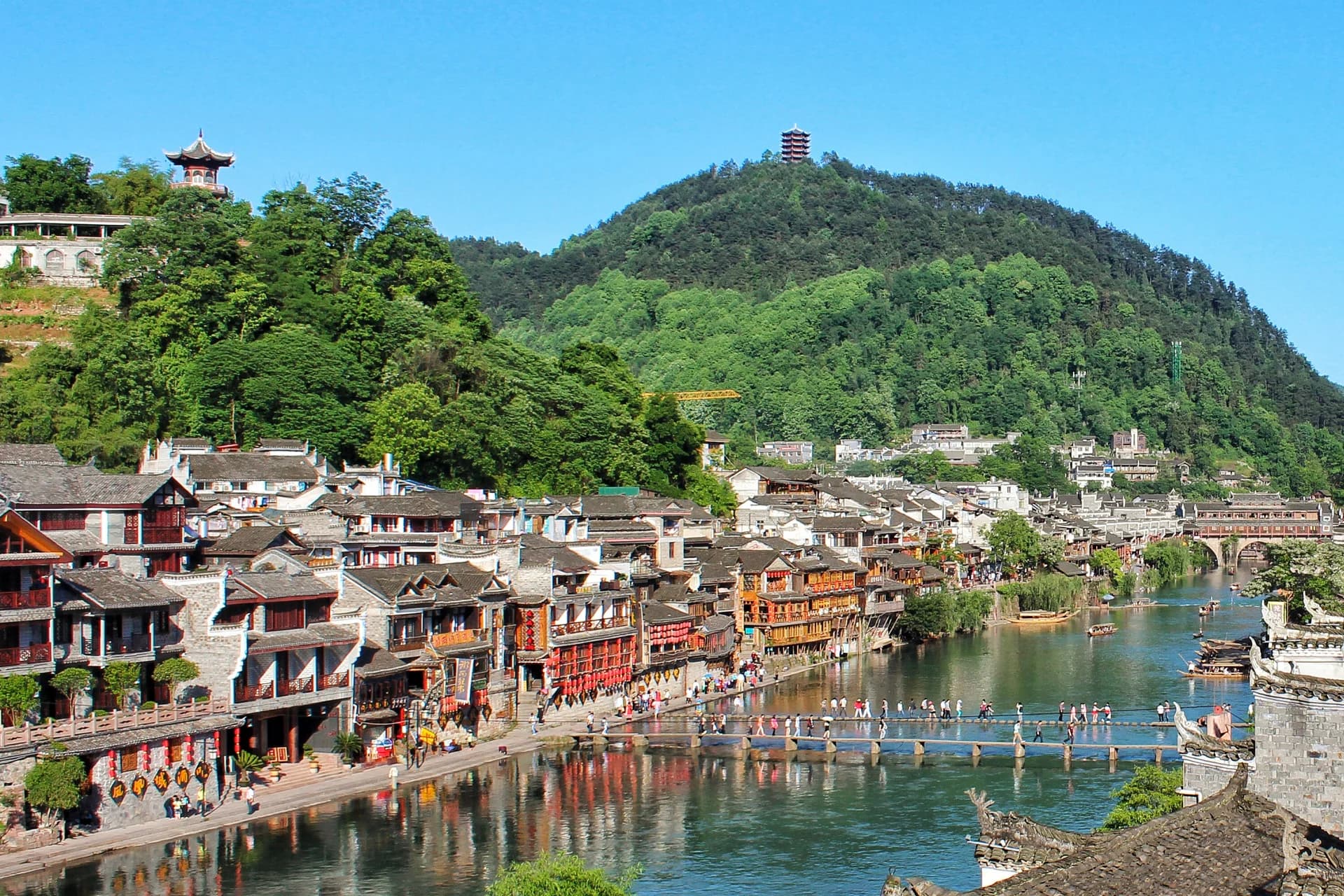
Fenghuang Ancient Town is often hailed as one of the most beautiful ancient towns in China. Nestled on the banks of the Tuojiang River, its traditional stilted houses are reflected in the water, and small wooden boats glide beneath historic stone bridges. Home to 28 ethnic groups, including the Miao and Tujia, the town boasts a rich tapestry of ethnic customs.
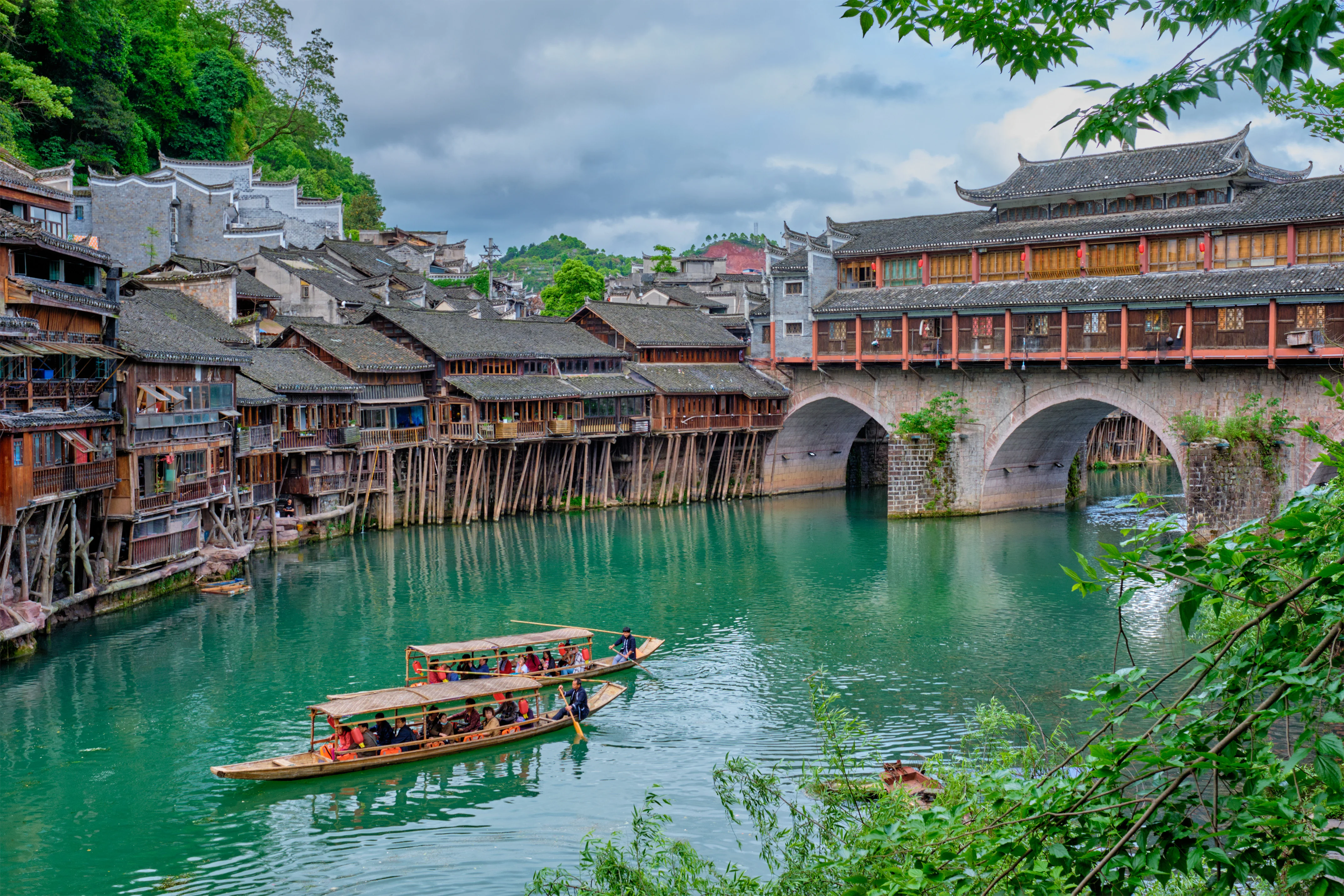
An experience you can't miss
Boating on the Tuojiang River: Drift on the river in a boat, watch the stilted houses on both banks slowly recede, and listen to Miao folk songs. During the day, enjoy the light and shadow effects; at night, watch the lanterns reflected in the water.
Night view – China's version of "Venice": After nightfall, thousands of lanterns illuminate the riverbanks, creating a dazzling interplay of light and shadow. The Rainbow Bridge and Wind and Rain Pavilion is the prime spot for capturing the night view.
Stepping Stones in the Morning Mist: Arrive at the Tuojiang River stepping stones before 6:30 AM. The morning mist blankets the river, reflecting the stilted houses in the water like a traditional Chinese ink painting.
Climb Nanhua Mountain for Panoramic Views: Reach the summit for a 360° panoramic view of the ancient city and the Tuojiang River.
Shen Congwen's Former Residence: Step into the former residence of the author of "Border Town," with its blue-tiled wooden buildings and rustic courtyard.
Transportation Options
High-speed rail (preferred): Direct train to Fenghuang Ancient Town Station. From the station, take a 7 RMB shuttle bus (15 minutes) to the North Gate, or a 30 RMB taxi (10 minutes).
Airplane: Fly to Tongren Fenghuang Airport, then take a bus (approximately 1 hour) to the ancient town.
Ticket Information
Ancient City itself: Free admission
Nine-Scenic Spot Combo Ticket: 128 RMB (Includes Shen Congwen's Former Residence, Xiong Xiling's Former Residence, Yang Family Ancestral Hall, East Gate Tower, Wanshou Palace, Chongde Hall, Chen Baozhen's Old Residence, Rainbow Bridge, and daytime Tuojiang River boat ride)
Small Attractions Opening Hours: 8:00-17:30
I highly recommend staying overnight – this way you can experience both the vibrant nightlife and the tranquility of the morning. For accommodation, I suggest choosing guesthouses along the banks of the Tuojiang River, with the best location being in the middle section (between Nanhua Bridge and Wanming Pagoda). Fenghuang boasts a rich nightlife, with cafes and bars open late into the night.
2. Furong Town – A thousand-year-old town suspended above a waterfall.
Furong Town, formerly known as Wangcun, boasts a history of over two thousand years. It was renamed in 1986 after the film "Furong Town," starring Liu Xiaoqing, was filmed there. The most breathtaking feature of this ancient town is a natural waterfall that flows through it, with Tujia stilted houses perched on the cliffs. It is thus known as "the thousand-year-old town hanging on the waterfall."
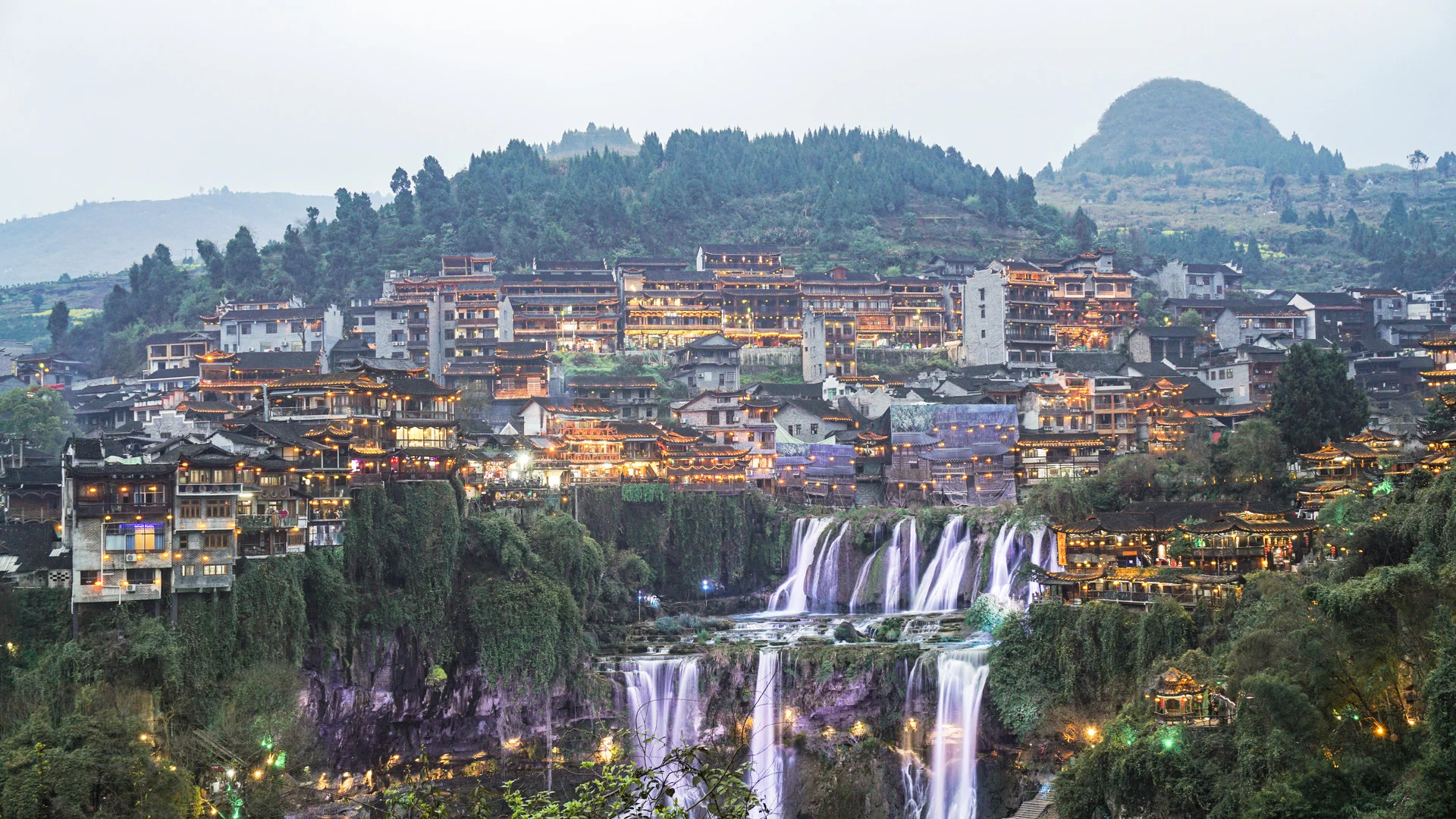
An experience you can't miss
Walk along the waterfall trail: This is the core experience of Furong Town—you can walk along the trail below and behind the waterfall, feeling the cool spray of the water. The water volume is most spectacular during the high-water season (June to September).
Stroll along the Five-Mile Stone-Paved Street: The winding bluestone-paved street has a history of hundreds of years, lined with traditional wooden stilted houses, authentic restaurants, and handicraft shops.
Visit the filming location: Try a bowl of Liu Xiaoqing's rice tofu, famous for its appearance in the movie; the most authentic version is at the original shop at No. 113 Old Street.
Tujia ethnic cultural performance: There are Tujia folk performances in the scenic area in the evenings (8 pm and 9 pm).
modes of transportation
High-speed rail (highest recommended): Take the high-speed rail from Zhangjiajie West Station to Furong Town Station. The journey takes approximately 25-30 minutes, and a second-class seat costs about 30-50 yuan. From the station, a taxi ride to the scenic area takes about 10-15 minutes and costs approximately 20 yuan.
Bus: There are direct buses from Zhangjiajie Bus Station, taking about 1.5-2 hours.
Ticket Information
Tickets: 108 RMB per person, valid for 3 days, with multiple entries allowed. Passport registration is required.
Opening Hours: 8:00-23:00
It is recommended to arrive later in the afternoon so that you can enjoy the daytime scenery as well as experience the magical atmosphere at night.
3. Chadong, a Border Town – A Poetic Border Town Depicted by Shen Congwen
Biancheng Chadong, located in Huayuan County, Hunan Province, is the setting of Shen Congwen's masterpiece, "Border Town." The most unique aspect of this ancient town is its location at the intersection of Hunan, Chongqing, and Guizhou provinces—"one foot in three provinces." Compared to Fenghuang, Chadong has fewer tourists and a lower level of commercialization, preserving the authentic atmosphere of western Hunan.
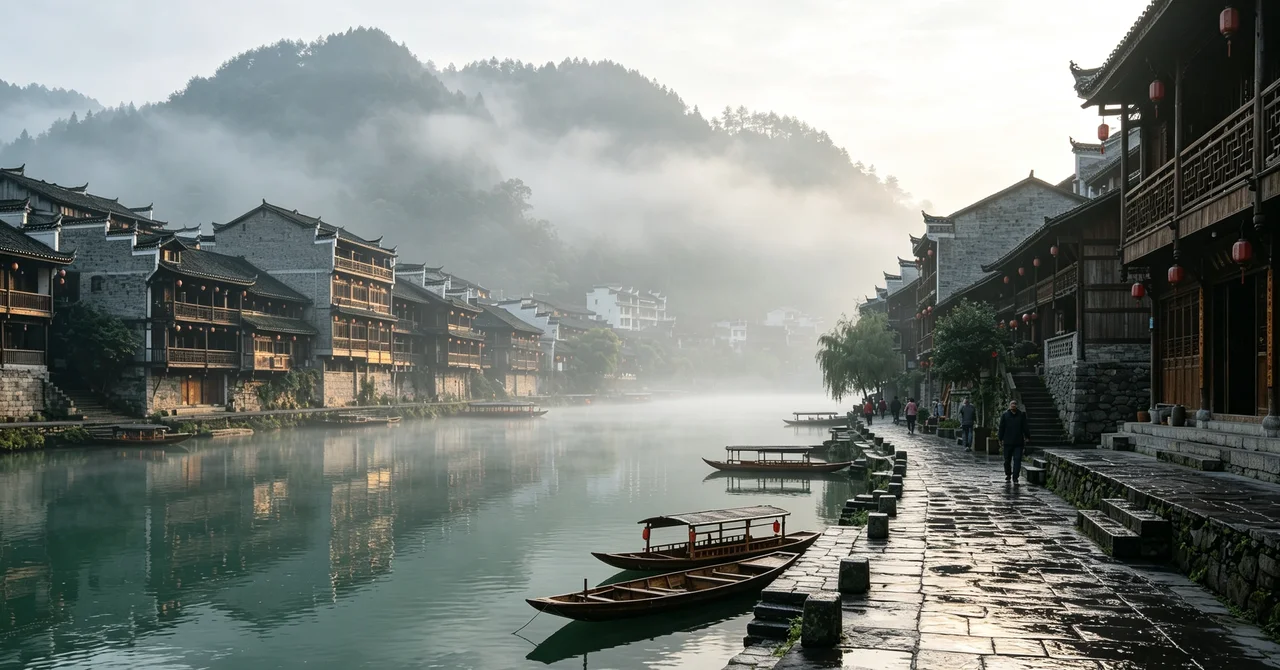
An experience you can't miss
Experience the unique sensation of stepping across three provinces simultaneously: At the tri-province boundary marker, feel the magic of having one foot in Hunan, Guizhou, and Chongqing.
Take a Lala Ferry: Cross the river on a traditional human-powered rope ferry for just 2 yuan, a 3-minute journey from Hunan to Chongqing. The first Lala Ferry in the early morning offers the most authentic atmosphere reminiscent of the novel Border Town.
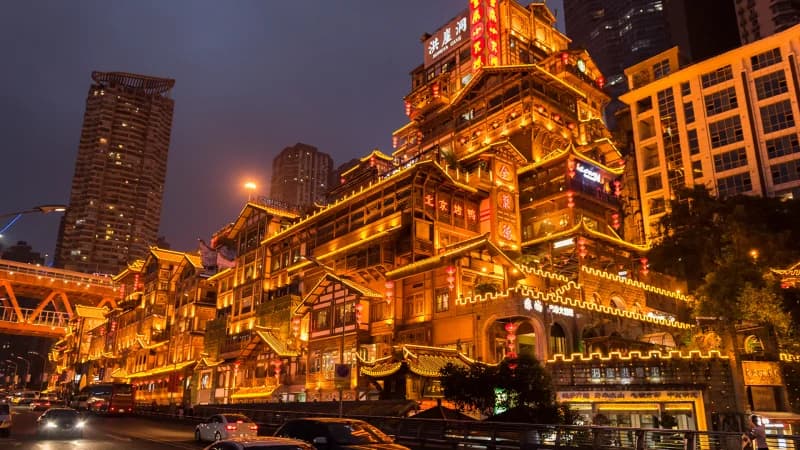
Explore Hong'an Ancient Town: After crossing the river, visit Hong'an Ancient Town on the Chongqing side.
Cui Cui Island and the White Pagoda: Visit the statue of Cui Cui, a character from the novel Border Town, and the White Pagoda.
Experience the Local Market: Market days are held on the 5th, 10th, 15th, 20th, 25th, and 30th of each lunar month. Experience the vibrant local life and the most genuine Xiangxi lifestyle.
mode of transportation
High-speed rail + carpooling: Take the high-speed rail to Jishou East Station, then carpool for about 50 yuan per person to reach Biancheng, a journey of about 1.5 hours.
Ticket Information
The ancient town itself: Free admission
Lala Ferry: 2 RMB
Three-province cruise: Approximately 25 RMB
Chadong is suitable for travelers who prefer tranquility and seek an authentic, natural experience. We recommend staying in a riverside guesthouse to enjoy the lights along the Qingshui River at night.
4. Qianzhou Ancient City – A “Twin City” on par with Fenghuang
Qianzhou Ancient City is located in Jishou City, the capital of Xiangxi Prefecture, and boasts a history of over 4,200 years. From the Ming and Qing Dynasties to the Republic of China period, it was the political, military, and cultural center of the Miao region, and together with Fenghuang Ancient City, it was known as one of the "Twin Cities" of the Southern Great Wall. Unlike the over-commercialization of Fenghuang, Qianzhou Ancient City is a "living ancient city"—a large number of local residents still live there, and its daily life is still vibrant.
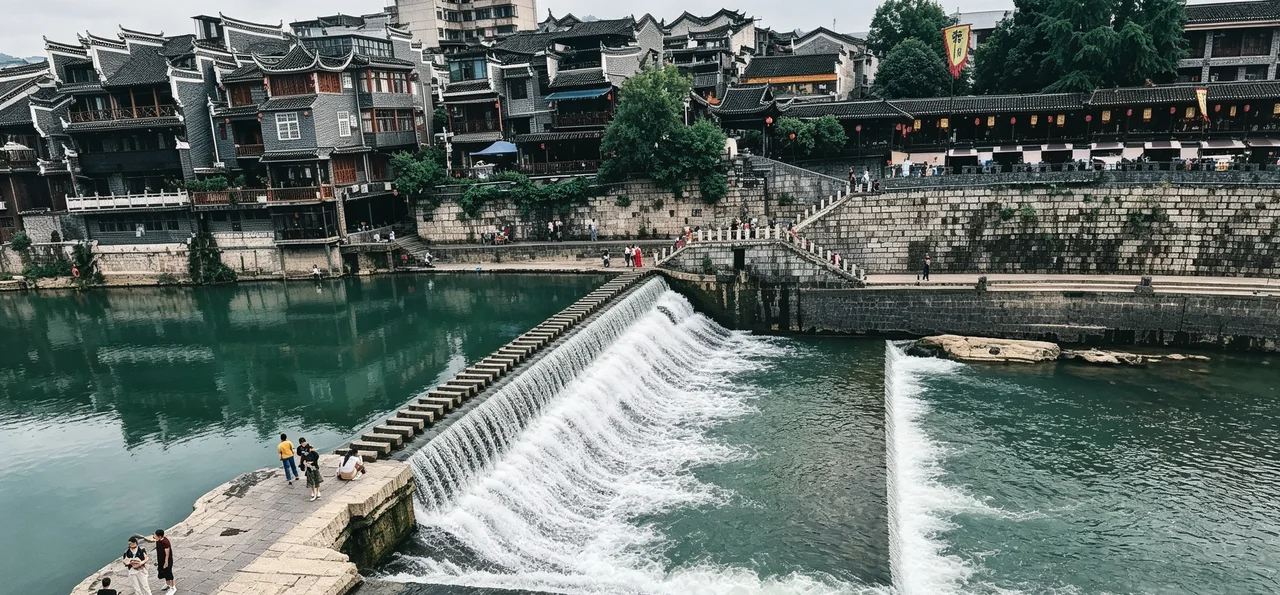
An experience you can't miss
Three Gates Opening the City Tower: Standing on the banks of the Wanrong River, the three city towers are arranged in a triangular pattern, a gem of ancient Chinese city architecture.
Hujiatang: The core scenic spot of the ancient city, consisting of a large pond and a small pond, surrounded by Ming and Qing dynasty buildings with blue tiles and gray walls.
Experience Western Hunan Intangible Cultural Heritage: Miao paintings, Miao embroidery, Miao silverwork, pottery, brocade weaving, and other intangible cultural heritage techniques converge here.
Wanrong River Painted Boat Night Cruise: Take a painted boat trip on the Wanrong River and admire the reflections of the lights on both banks.
mode of transportation
High-speed rail: Arrive at Jishou East Station, then take bus route 22 directly to the ancient city.
Ticket Information
Main Street Area of the Ancient City: Free Admission
Opening Hours: 8:00-21:00, Recommended Visit in the Evening
Qianzhou Ancient City has few tourists and prices are low. A visit of 3-5 hours is recommended. Nearby attractions include Dehang Grand Canyon, Aizhai Bridge, and Shibadong Village.
5. Liye Ancient Town – A Historical Secret of the Hometown of Qin Bamboo Slips
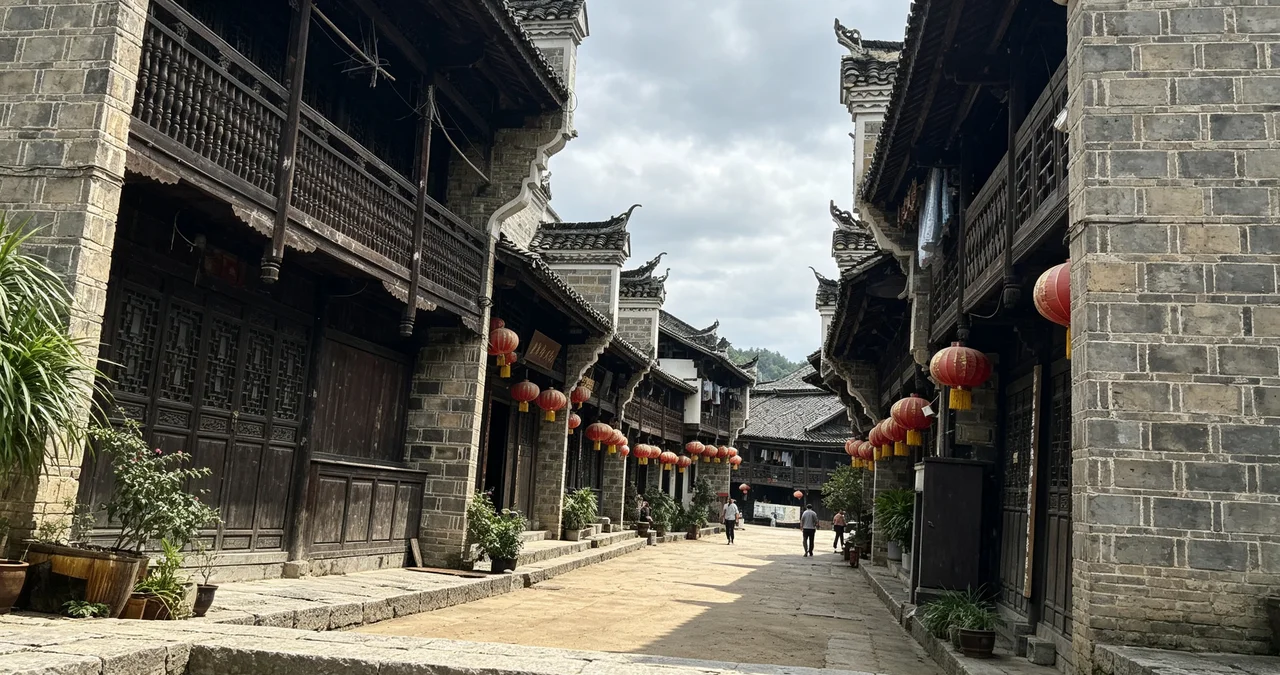
Liye Ancient Town, located in Longshan County, Xiangxi, is a famous historical and cultural town in China. Its most significant archaeological discovery is the unearthed collection of approximately 37,000 Qin Dynasty bamboo and wooden slips, earning it the title of "Hometown of Qin Bamboo and Wooden Slips." These slips fill many gaps in the historical records of the Qin Dynasty, including the world's earliest physical multiplication table. Compared to other ancient towns, Liye receives very few tourists, making it suitable for travelers interested in history and archaeology.
An experience you can't miss
Liye Qin Bamboo Slips Museum (Must-see): The world's only museum dedicated to Qin Dynasty bamboo slips. Admission is free. The museum houses over 10,000 artifacts unearthed from the Warring States period to the Qin and Han dynasties. Opening hours: Tuesday to Sunday, 9:00 AM to 5:00 PM (Closed Mondays).
Liye Ancient City Ruins: The only Qin Dynasty ancient city ruins discovered in Chinese archaeological history. Visitors can get up close to the remains of the Qin Dynasty city walls and the "First Well of China," among other things. Admission is required; approximate price is 30-60 RMB.
Stroll along the Old Streets of the Ancient Town: Walk along the seven streets and six alleys, paved with bluestone, to see the old wharf and the entrances of traditional houses, experiencing a rich sense of history.
Bamian Mountain: From Liye, you can go to Bamian Mountain for camping and stargazing.
mode of transportation
High-speed rail + transfer: Take the high-speed rail to Longshan North Station, then transfer to a bus to the town.
Ticket Information
Liye Ancient Town itself: Free admission
Liye Qin Bamboo Slips Museum: Free admission
Liye Ancient City Ruins: Ticket required, estimated price 30-60 yuan
Liye is extremely uncommercialized, making it ideal for travelers who enjoy a quiet, in-depth historical and cultural experience. A half-day to one-day visit is recommended. Nearby attractions include Bamian Mountain, Wulong Mountain, and Rebala Scenic Area (Tujia ethnic minority cultural village).
Travel Tips
Best time to visit:
Spring and autumn (March-May and September-November) are the best times to visit due to the pleasant temperatures. Summer (June-September) is the peak season for the waterfalls, when they are at their most spectacular.
Accommodation Recommendations:
Furong Town: Choose a stilted house guesthouse perched on a cliffside, offering views of the waterfall and nightscape right from your window.
Fenghuang Ancient Town: Select guesthouses along the banks of the Tuojiang River, with the best location in the middle section (between Nanhua Bridge and Wanming Pagoda).
Biancheng Chadong: Choose a riverside guesthouse to experience authentic border town life.
Cultural Etiquette:
Western Hunan is inhabited by the Tujia and Miao ethnic minorities. Please respect the customs and traditions of the local ethnic minorities, and it is best to obtain their permission before photographing them.
Practical Information
Internet: Websites like Google, Facebook, and Instagram in China require a VPN to access. It is recommended to purchase a local SIM card or activate international roaming in advance.
Payment Methods: Mobile payment (WeChat Pay, Alipay) is widely used in China. Some vendors may only accept cash, so it is advisable to carry some cash with you.
Language: Mandarin is widely spoken in most tourist areas, although some locals may speak their local dialect.
Frequently Asked Questions
Q1: Do I need a Chinese visa to visit these ancient towns?
Yes. You need to apply for a tourist visa (L-type) in advance. It is recommended to apply 4-6 weeks before departure.
Q2: Can I use Google and Facebook?
No. A VPN is required. It's recommended to install one before departure and have WeChat/Alipay readily available, as mobile payments are the most common, but also bring some cash.
Q3: When is the best time to go?
Spring and autumn (March-May and September-November) are the most comfortable seasons. Summer offers spectacular waterfalls but is crowded and hot, while winter offers fewer crowds and lower prices but is cold.
Q4: What should I be aware of?
Wear non-slip shoes (on cobblestone streets and steps); ask locals for permission before taking photos; respect the customs of the Tujia and Miao ethnic groups; motor vehicles are prohibited in the core area of the ancient city, pedestrian safety is paramount.
Disclaimer: This information is provided for reference only and was last updated on . Requirements and regulations may change. Always verify with official sources before making travel plans.