
Xi'an, the ancient capital formerly known as Chang'an, has been the seat of thirteen dynasties, leaving behind layers upon layers of historical imprints. Whether you are attracted by the mysterious underground terracotta army or filled with imagination about the magnificent palaces described in Tang poems, Xi'an will show you in reality that the charm of this ancient capital of the East is far more vivid than what is described in books.
1. Ming Dynasty City Wall – Cycling on bricks and stones from 600 years ago
This is the best-preserved and largest ancient city wall system in China. The wall is about 12 meters high, with a wide and flat top that allows bicycles to travel side by side. It stretches for nearly 14 kilometers and completely outlines the old city. After climbing the wall, one side is a quaint tiled-roofed house, and the other side is a modern street with high-rise buildings, creating a strong contrast.
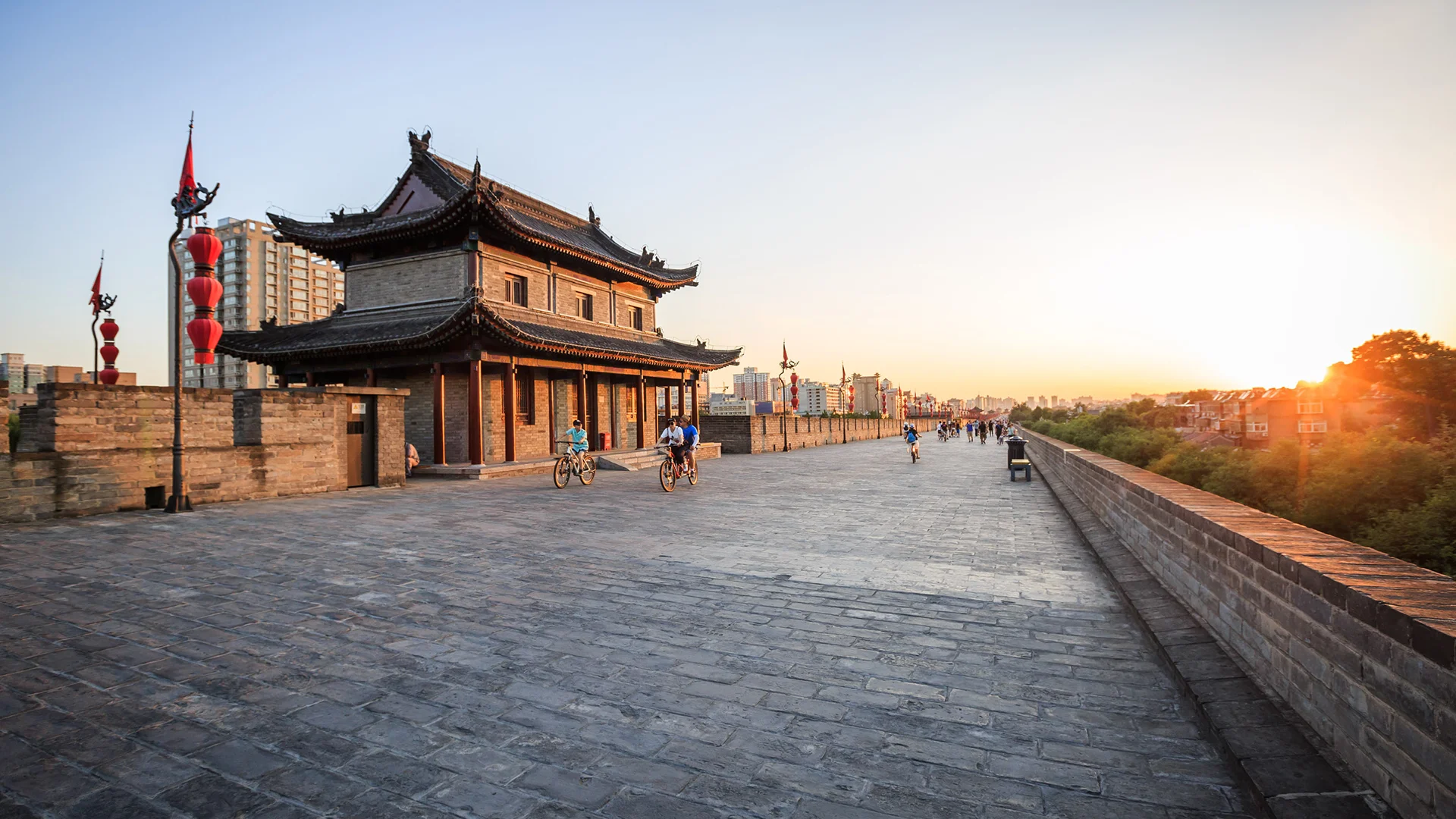
Key highlights:
Ascend the city wall from Yongning Gate (South Gate); cycle around the city wall (approximately 1.5 hours); enjoy the night view of the illuminated city wall; AR cycling glasses can also be rented on the city wall to experience a "personal smart guide".
Practical information:
Ticket Price: 54 RMB/person
Opening Hours: 8:00–22:00 (Slight variations at each gate)
Suggested Visit Duration: 2–4 hours
Transportation: Direct access from Exit A2/D of Yongningmen Station on Metro Line 2
Special reminder: You can enter the park directly by swiping your original passport; no ticket exchange is required. There are multiple bike rental and return points on the city wall, so you don't need to return to the starting point.
2. The Terracotta Army of Qin Shi Huang – Face to face with the imperial guards of two thousand years ago.
Located in Lintong District, about 40 kilometers east of Xi'an, this is the burial pit of Qin Shi Huang's mausoleum, where more than 8,000 life-size terracotta figures were unearthed, each with a unique face. The three pits each have their own characteristics: Pit No. 1 is the most magnificent, with infantry formations in perfect unison; Pit No. 2 contains a mixture of chariots, cavalry, and crossbowmen, with traces of painted decoration still visible; Pit No. 3 is the smallest in scale and is speculated to have been the command center.
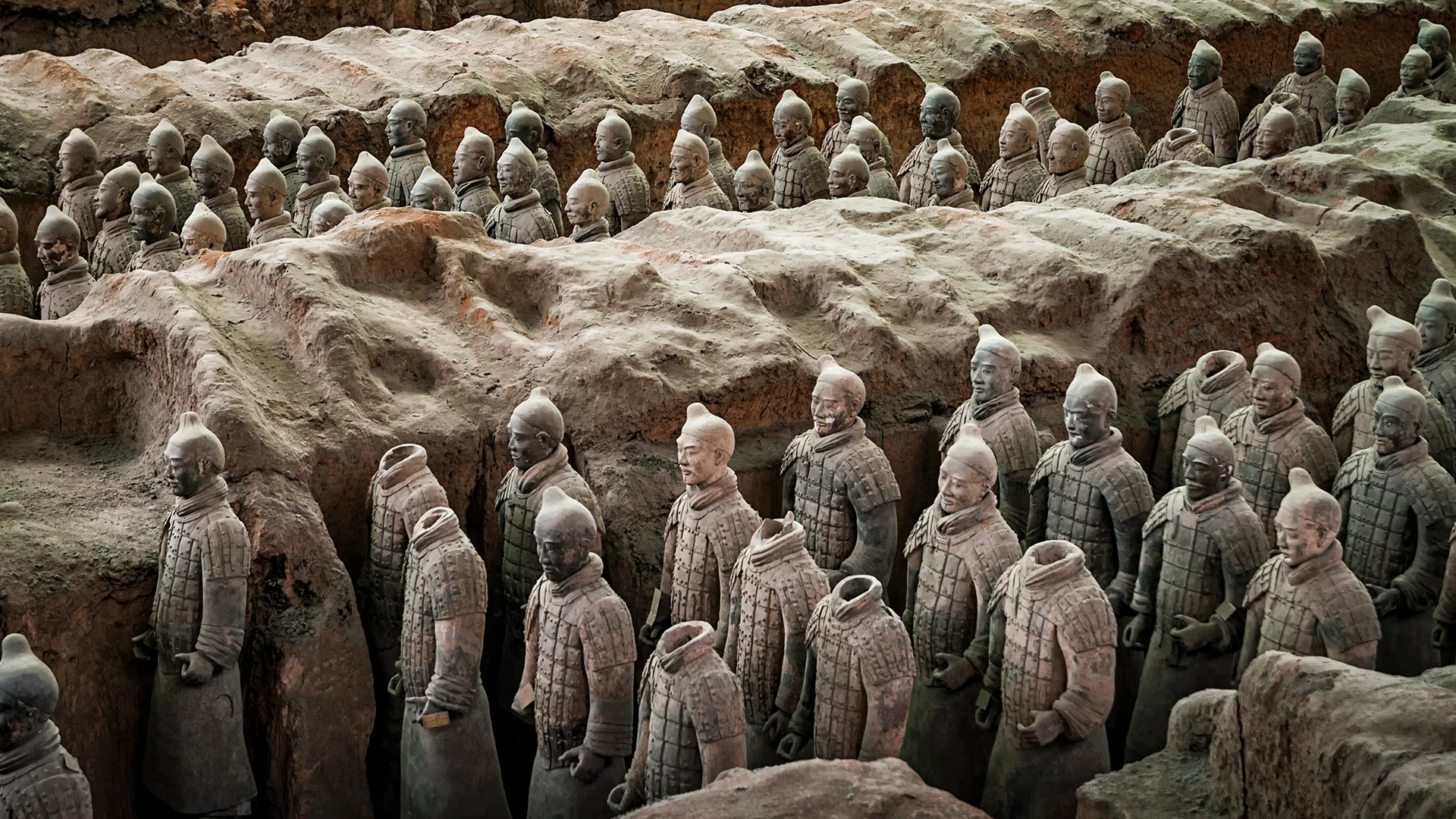
Key Highlights:
Pit 1 is the largest, with infantry and chariots arranged in neat military formations;
Pit 2 features a mixed formation of multiple military units, and the sole patterns of the shoes on the museum's prized "kneeling archer" are clearly visible;
Pit 3 is the smallest but of the highest rank, believed to be the command post of the military formation.
In addition, the two painted bronze chariots and horses in the Bronze Chariot and Horse Exhibition Hall are of extremely exquisite craftsmanship. The scenic area also includes Lishan Garden (the Qin Shi Huang Mausoleum mound), accessible by a free shuttle bus.
Practical Information
Ticket Price: 120 RMB during peak season (March to November), 90 RMB during off-season.
Opening Hours: 8:30–18:30 during peak season, 8:30–17:30 during off-season. Opening hours may be earlier during summer vacation.
Recommended Visit Duration: At least 3 hours. It is recommended to enter the park as early as 8:30 AM to avoid the peak tour group hours after 10:00 AM.
Transportation: Take Metro Line 9 to "Huaqing Pool" Station, then transfer to bus route 5 or a special line bus; alternatively, take a tourist bus from the East Square of the train station.
Important: Advance reservations must be made via the official WeChat mini-program using your real name and passport number. Tickets will not be sold on-site.
3. Big Wild Goose Pagoda & Ci'en Temple – A thousand-year-old translation center for eminent Tang Dynasty monks.
The Big Wild Goose Pagoda is located within the Da Ci'en Temple, which was built by Emperor Gaozong of Tang in memory of his mother. He invited the monk Xuanzang, who had returned from his pilgrimage to India, to serve as its first abbot. The seven-story pagoda stands 64 meters tall, offering panoramic views of the southern part of the city from its summit. The musical fountain in the north square at the base of the pagoda is one of the largest in Asia, creating a spectacular sight at night as lights and water jets dance together.
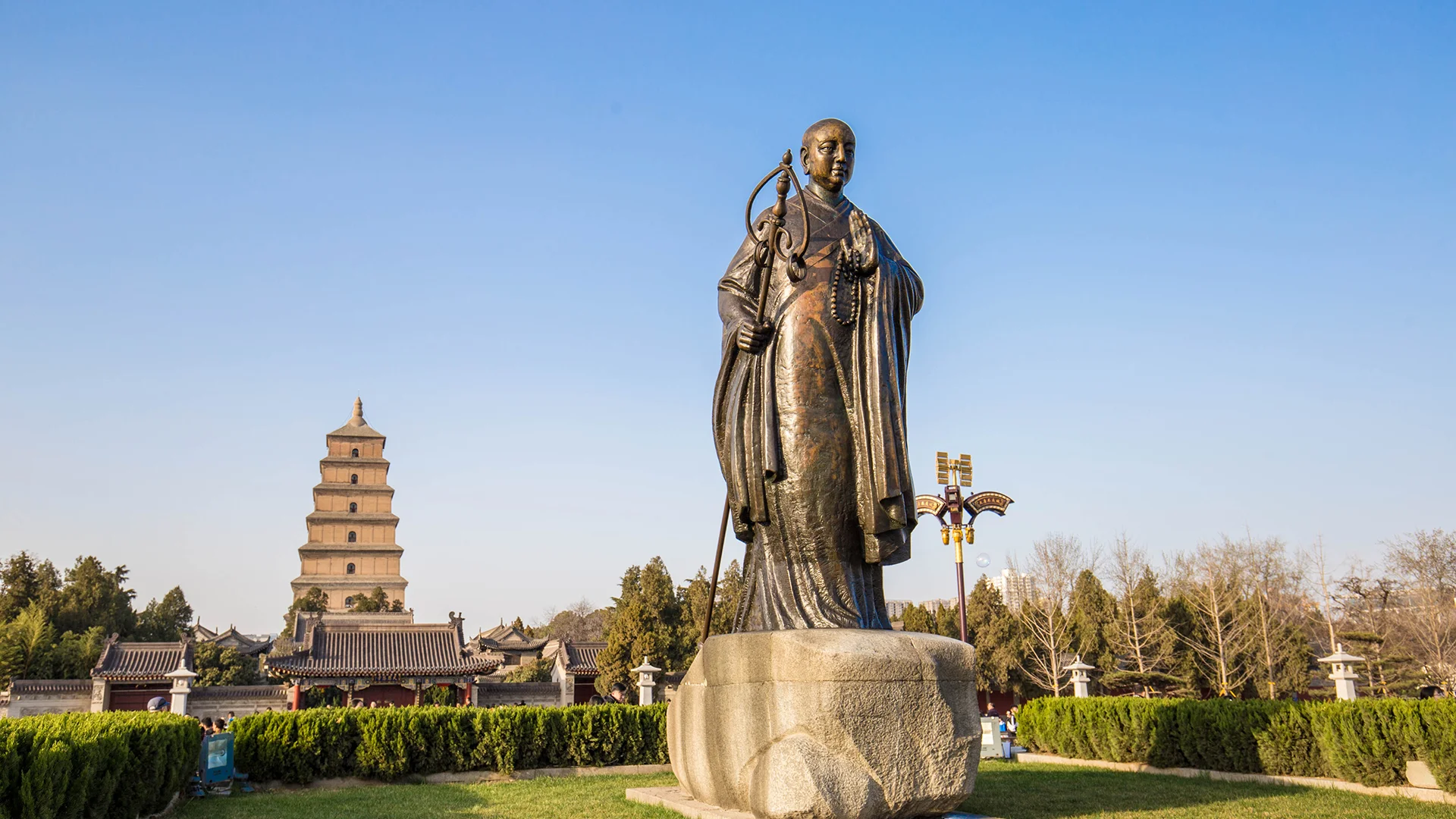
Itinerary suggestions for you
The temple entrance fee is approximately 40-50 yuan; climbing the pagoda requires a separate ticket (approximately 25 yuan).
The temple is open until around 5:30 PM. Fountain shows typically take place at 12:00 PM, 4:00 PM, 7:00 PM, and 9:00 PM (each show lasts 10 minutes).
It is recommended to visit in the evening: first tour the temple and climb the pagoda, then take photos of the Xuanzang statue and the pagoda at the South Square, and finally watch the fountain show at the North Square.
Transportation: Take Metro Line 3 or 4 to "Dayan Pagoda" Station, Exit C, and walk from there.
4. Muslim Quarter (Muslim Street) – Late-night eateries and local flavor
Actually, it's not a single street, but an entire old town area, with core lanes including Beiyuanmen, Xiyangshi, Dapiyuan, and Sajinqiao. This is Xi'an's Muslim community, densely packed with food stalls offering everything from kebabs and roujiamo (Chinese hamburger) to paomo (pita bread soaked in mutton soup) and liangpi (cold skin noodles). The air is filled with the aroma of cumin and mutton, and it gets even more lively as the night goes on.
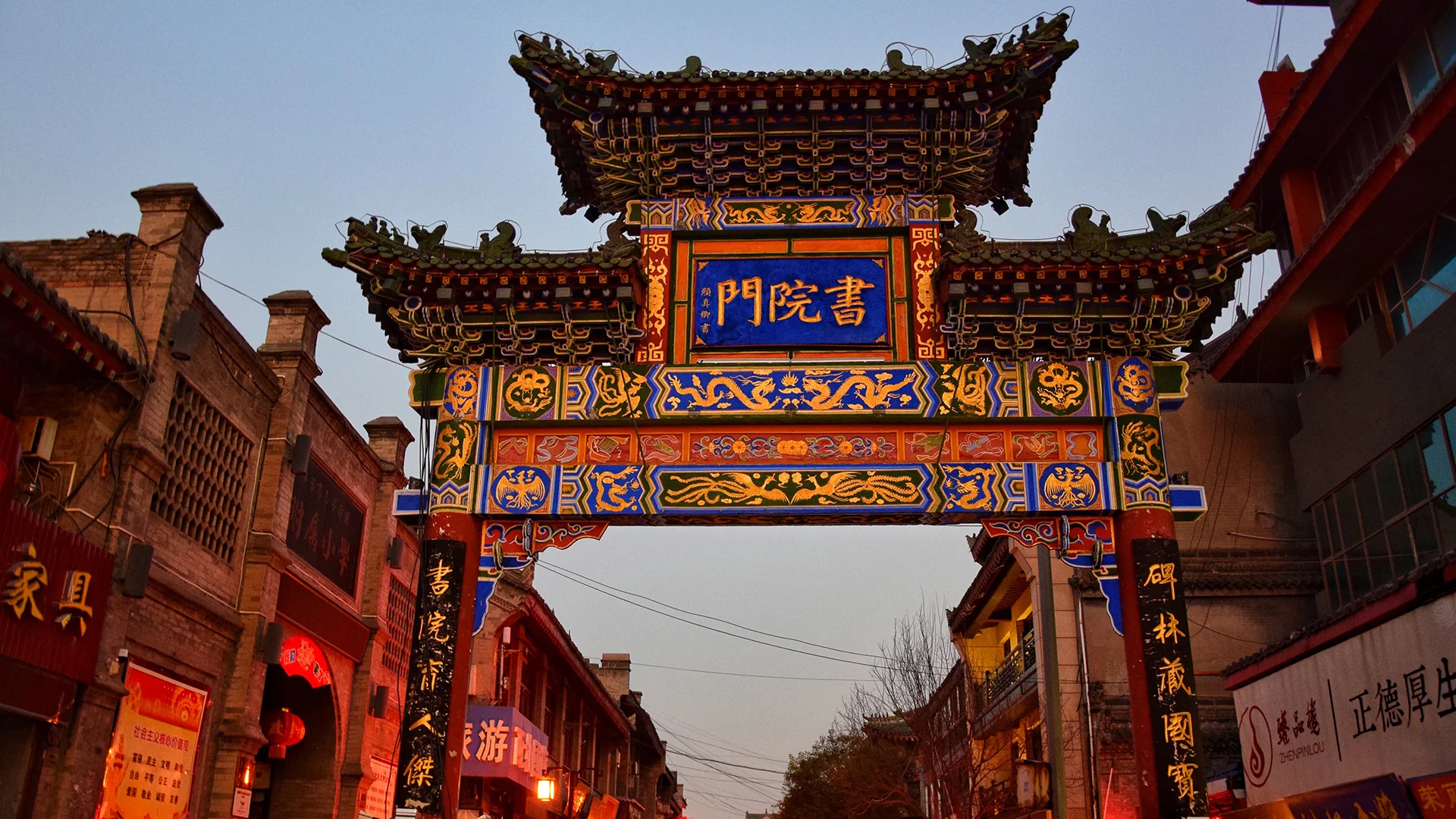
Must-try dishes:
Roujiamo (Chinese hamburger) with braised pork in a baiji bun, yangrou paomo (you break the bun yourself and then pour the soup over it), youpo che mian (pulled noodles with hot oil), and grilled mutton skewers.
Useful Information:
Admission: Free
Opening Hours: All day (Night market is the most lively)
Suggested Visit Duration: 2-3 hours
Transportation: 5-minute walk from Bell Tower Station (Metro Line 2/6)
5. Bell Tower & Drum Tower – Twin Landmarks in the City Center
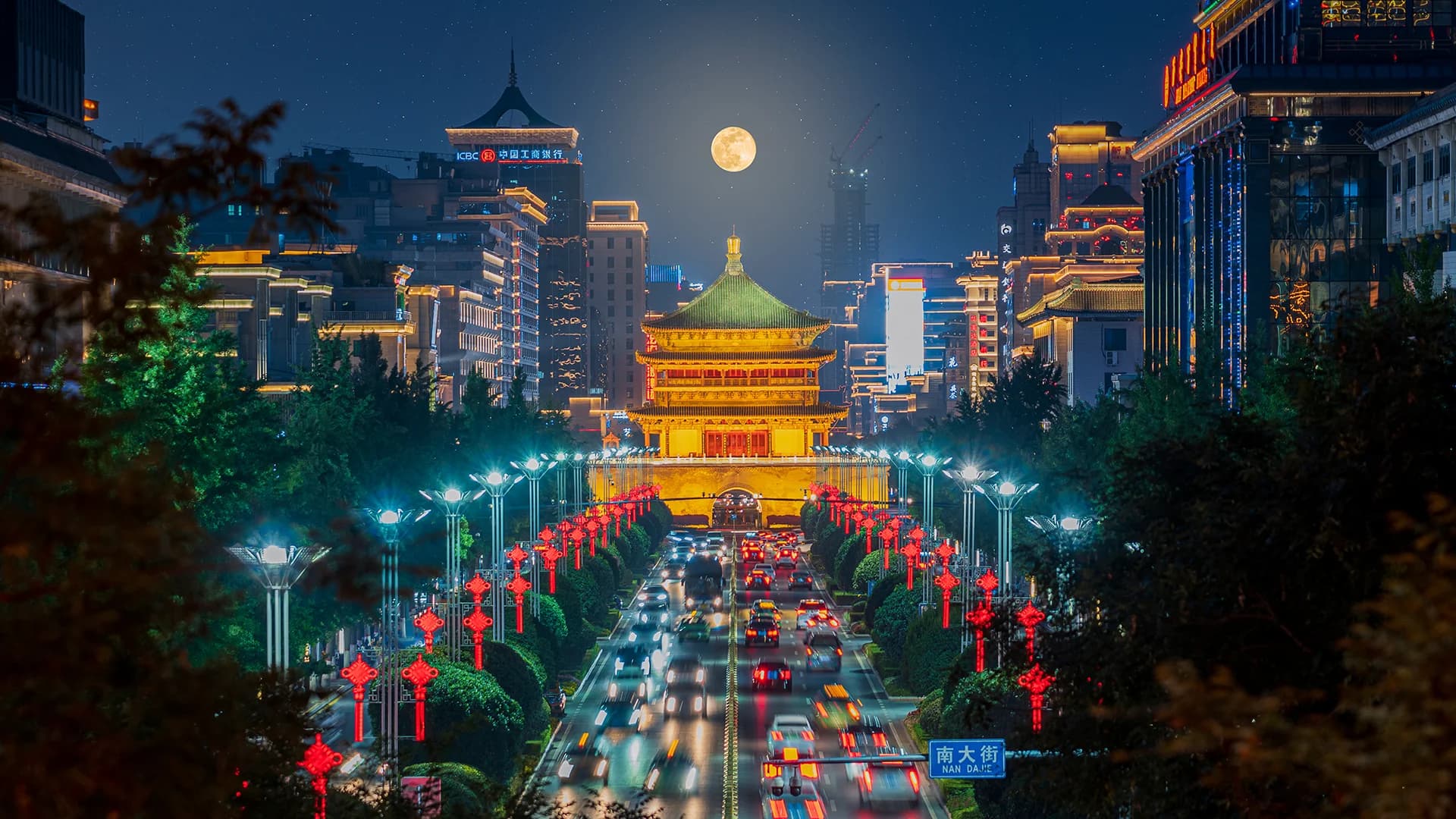
The Bell Tower was built during the Hongwu reign of the Ming Dynasty (1384) and once served as the timekeeping center; the Drum Tower is located not far to the west, and the two stand opposite each other. Climbing the towers, one can see the magnificent view of the four straight streets converging in the east, west, north, and south, especially after sunset, when the car lights blend with the outline of the ancient towers, making it extremely photogenic.
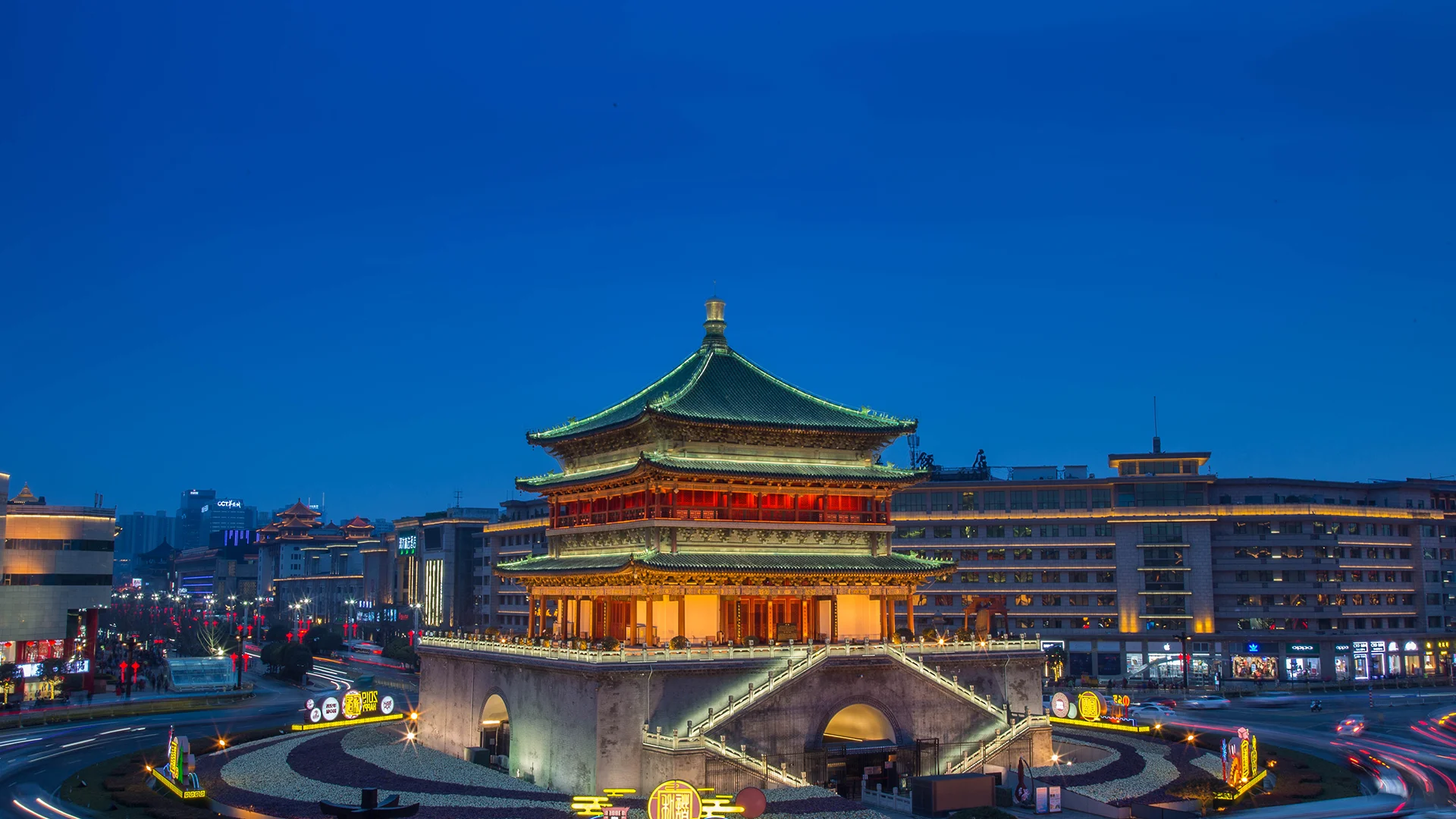
Visitor Tips
A single ticket costs approximately 35 yuan, while a combined ticket costs 50 yuan (more economical).
Opening hours: Summer until 9:30 PM, Winter until 6:00 PM.
The best time to visit is around dusk. First, go up to the Drum Tower to watch the sunset, then go up to the Bell Tower to take night photos.
For a panoramic view of the Bell Tower, no ticket is needed; go to the rooftop open-air platform of the adjacent Kaiyuan Shopping Mall for the best angle.
6. Shaanxi History Museum – A comprehensive history unfolds before your eyes.
This museum houses over 370,000 cultural relics from ancient times to the Ming and Qing dynasties, including numerous exquisite bronzes, gold and silver artifacts, murals, and Tang tri-color pottery, earning it the title of "the gene bank of Chinese civilization" among academics. The basic exhibition is free, but tickets are required; the "Treasures of the Tang Dynasty" special exhibition and the mural gallery require additional fees.
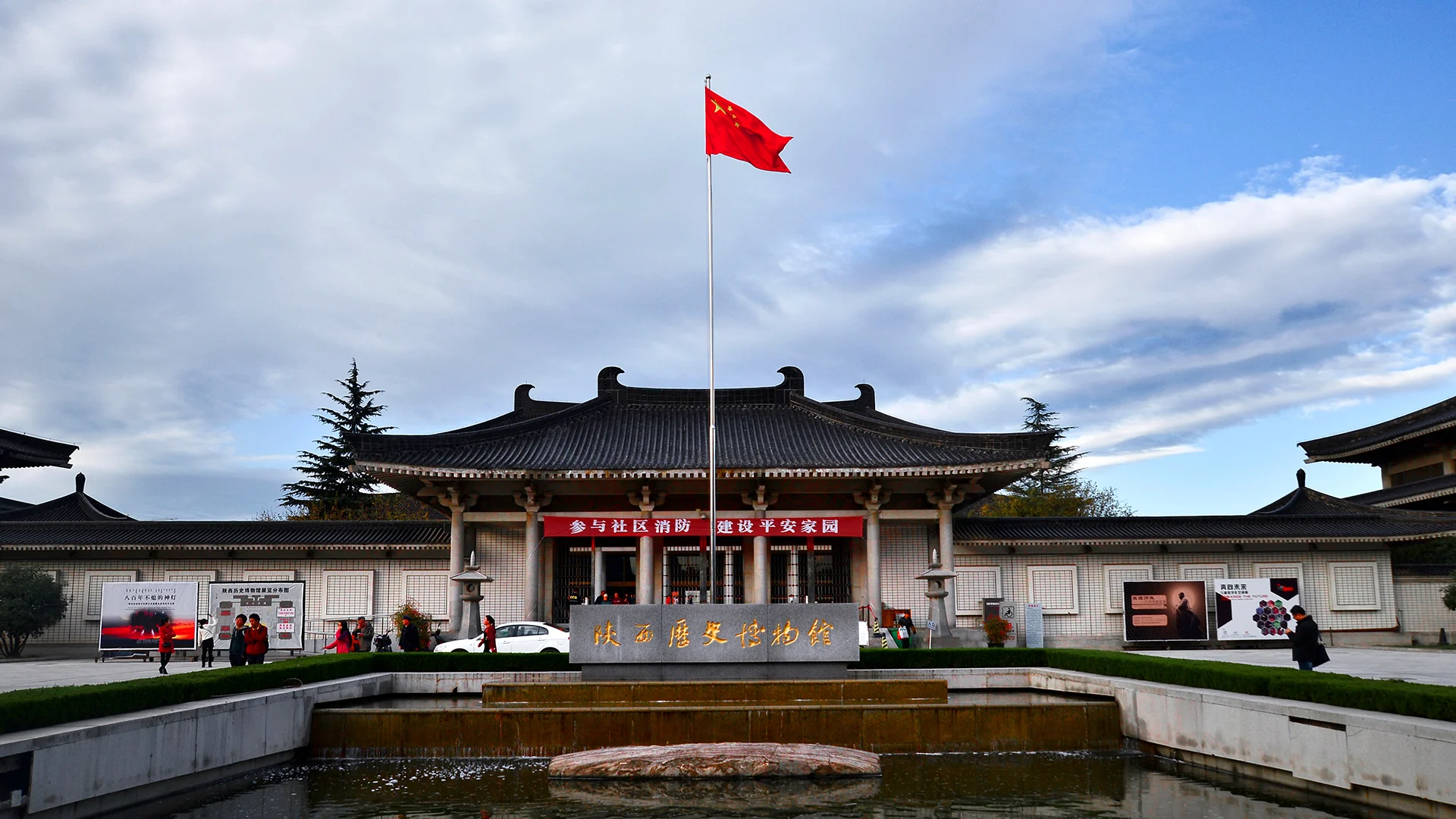
Key highlights:
The basic exhibition spans millions of years of Chinese civilization; the "Treasures of the Tang Dynasty" special exhibition; and the "Treasures of Tang Dynasty Murals Museum".
Practical Information:
Admission: Basic exhibits are free (advance reservation required)
Opening Hours: 8:30–19:00 (last ticket check at 18:00); Open as usual on Mondays
Suggested Visit Duration: 3–5 hours
Transportation: Xiaozhai Station, Metro Line 2/3, approximately 778 meters walk
7. The Grand Tang Dynasty Never Sleeps City – An Immersive Nighttime Tour of the Tang Dynasty
This is a north-south pedestrian street, about 2 kilometers long, connecting the South Square of the Big Wild Goose Pagoda and Kaiyuan Square. At night, all the buildings are illuminated with golden lights, and the Tang-style eaves, palace lanterns, and sculptures are bathed in splendor. There are numerous performance art pieces on the street, such as the "Tumbler Girl" and "Stone Man," offering highly interactive experiences and perfect for taking photos.
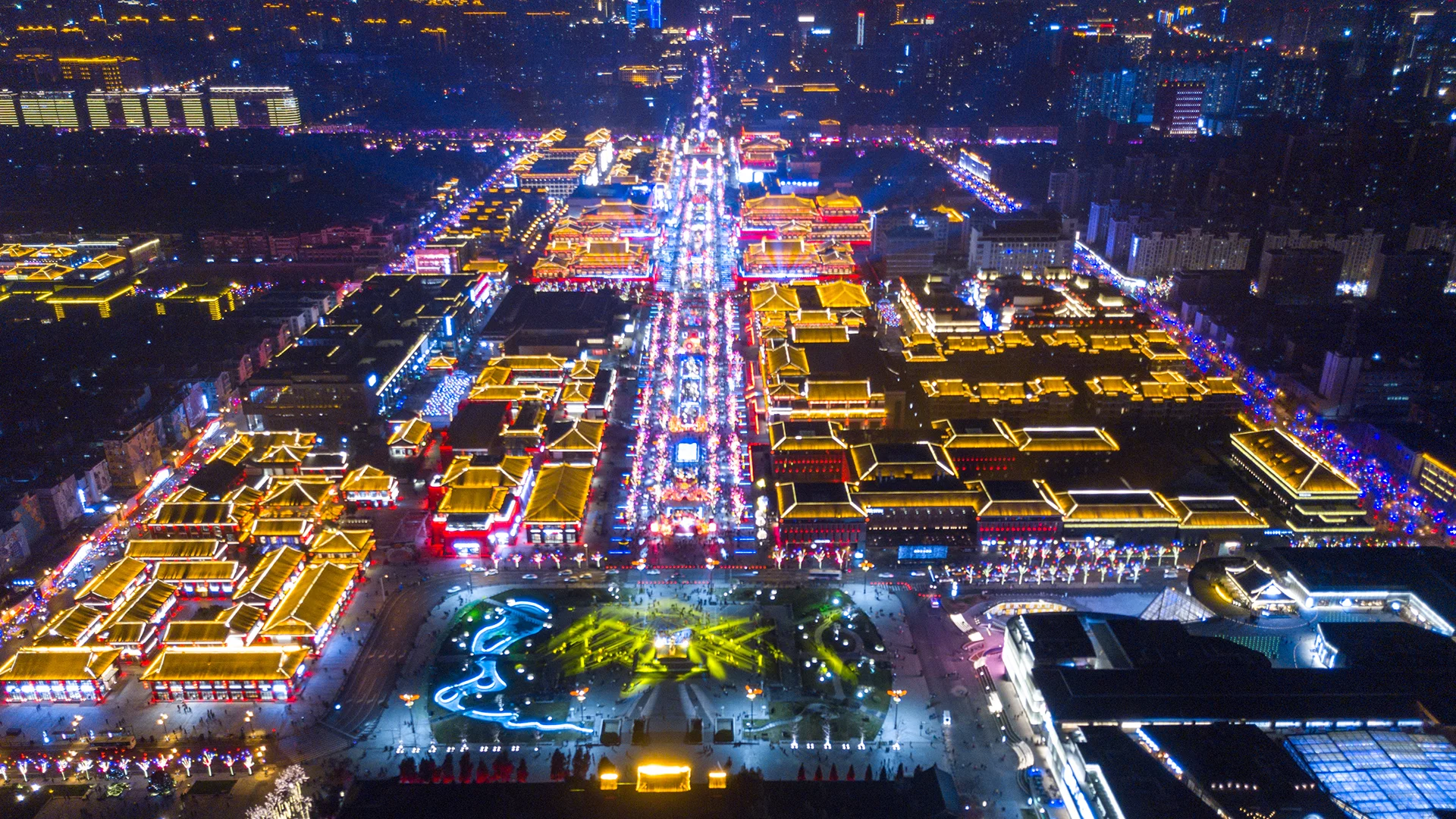
Nighttime Tour Guide
Completely free, no reservation required.
The main lighting hours are from 6:30 PM to 10:30 PM; arriving around 7 PM is recommended.
Taking photos in Hanfu (traditional Han clothing) is a major attraction here. Numerous rental shops are available nearby, with prices ranging from 100-300 RMB (including makeup and costume).
Note: Performances have a fixed schedule. For popular shows, early arrival is recommended. It's advisable to check the official WeChat mini-program for the day's schedule.
8. Huaqing Palace – Hot Springs, Love, and Modern History
Located at the foot of Mount Li in Lintong, this was once a detached palace where Tang Dynasty emperors and their concubine Yang Guifei bathed. Remains include the "Guifei Pool" and "Starry Bath," among others. It is also the site of the Xi'an Incident of 1936, and the Bingjian Pavilion still stands on the mountainside. The evening performance of the live-action dance drama "Song of Everlasting Regret," set against the backdrop of Mount Li, is a spectacular and one of Xi'an's most popular shows.
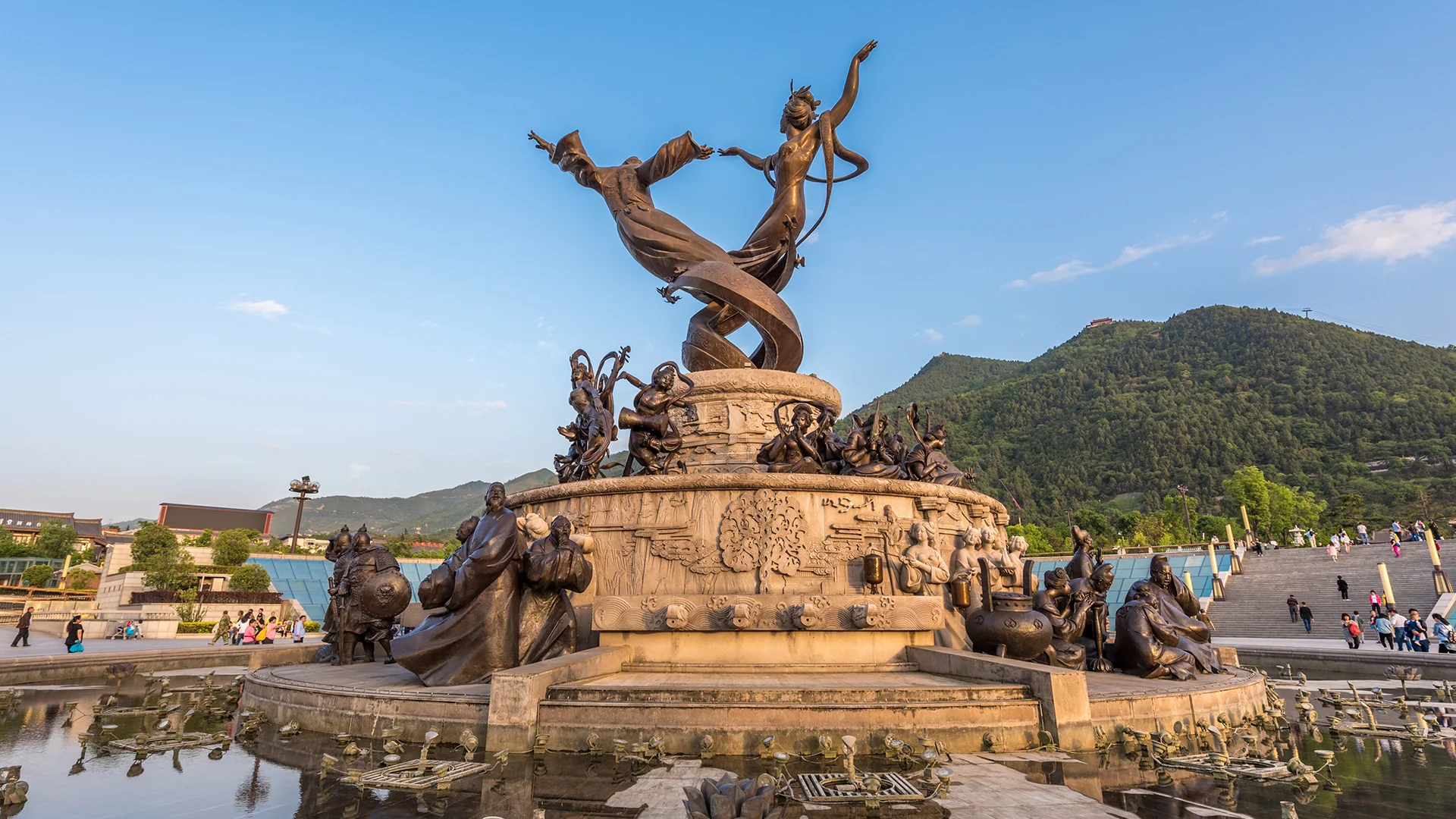
Key Highlights:
Visit the ruins of the Tang Dynasty imperial baths—including the Consort's Pool, Star Bath, and Lotus Bath; visit the Bingjian Pavilion—the site of the Xi'an Incident; watch the live-action dance drama "Song of Everlasting Regret"—a stunning performance set against the backdrop of real mountains and waters, based on Bai Juyi's long poem of the same name.
Itinerary
Ticket price: 120 RMB, including the Imperial Bath Ruins and Bingjian Pavilion area.
Opening hours: 7:00 AM to 7:00 PM.
It is recommended to visit the Terracotta Army and the Huaqing Palace together (they are not far apart). Visit the Terracotta Army in the morning, explore Huaqing Palace in the afternoon, and watch the "Song of Everlasting Regret" performance in the evening (separate ticket required, must be purchased in advance, extremely popular during peak season).
Transportation: Take Metro Line 9 directly to "Huaqing Pool" station.
9. Tang Paradise – A recreation of the grandeur of an imperial garden.
This is a large-scale themed garden built on the site of the Tang Dynasty's Furong Garden, featuring a group of antique-style buildings such as Ziyun Tower, Caixia Pavilion, and Qujiang Liuyin Pavilion. During the day, visitors can enjoy the pavilions and towers, while at night, there is a water screen movie and the live-action show "Chasing Dreams of the Tang Dynasty," with lights reflected on the water, creating a fairyland-like scene.
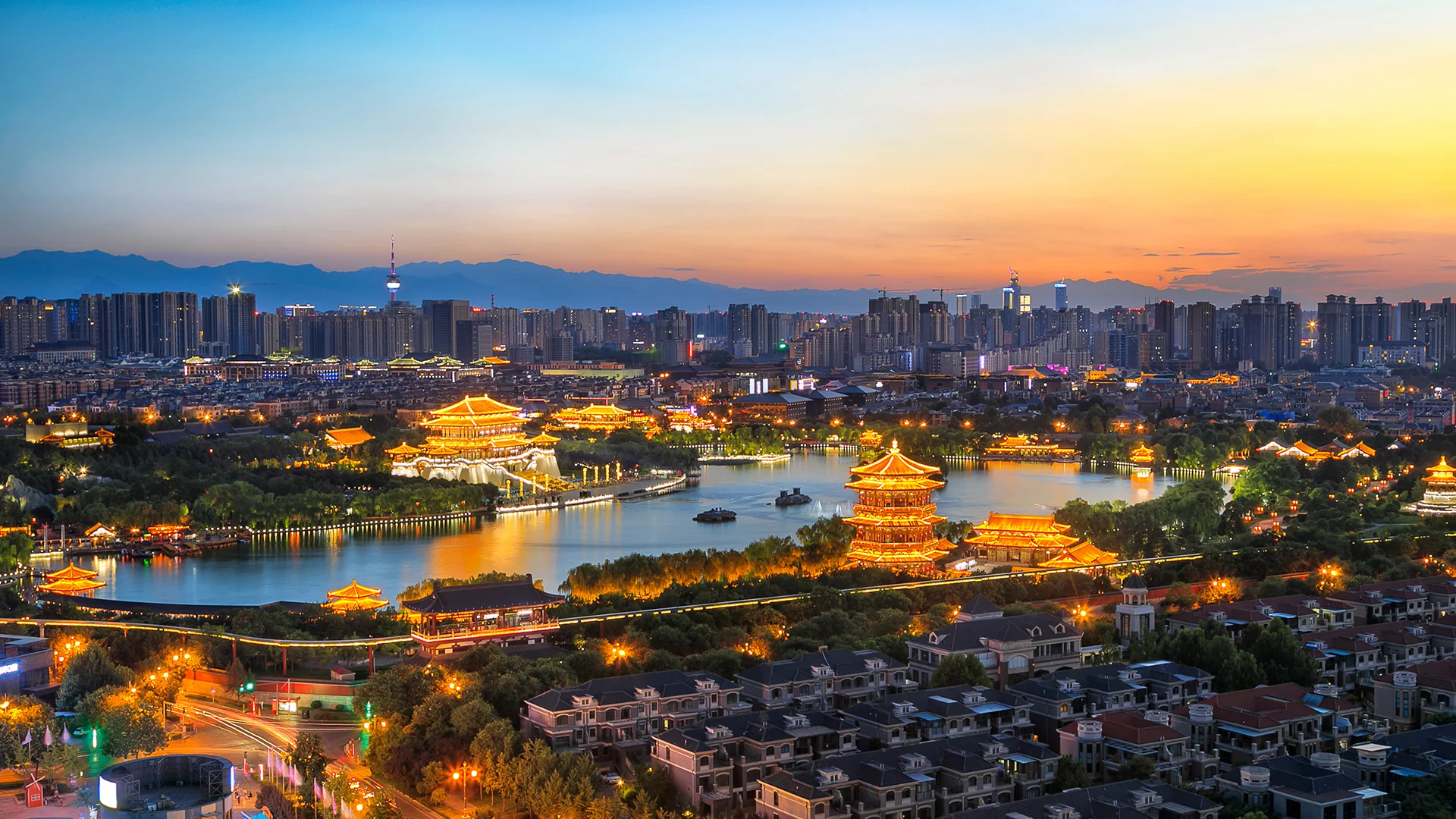
Park Visiting Strategies
Tickets: 120 RMB (daytime ticket, valid until evening), opening hours: 9:00 AM – 10:00 PM.
The best time to enter is around 4:00 PM. Take photos of the daytime architecture first, then wait to see the evening lights and performances.
Hanfu (traditional Han clothing) can be rented inside the park, and boat trips on the lake are available at the Imperial Garden Wharf.
Transportation: Take Metro Line 4 to "Datang Furong Garden" Station; the park is right outside the station.
10. Mount Hua – A Taoist Wonderland Atop a Perilous Peak
Mount Hua, known as the "Western Peak" among the Five Sacred Mountains, is famous for its steepness, especially the "Plank Road in the Sky" and "Eagle's Turn," two treacherous paths that are sure to thrill. Each of the five main peaks has its own unique attractions: the East Peak is for watching the sunrise, the West Peak for enjoying the sunset, the South Peak is the highest, and the North Peak features the "Huashan Sword Debate" stele inscribed by Jin Yong.
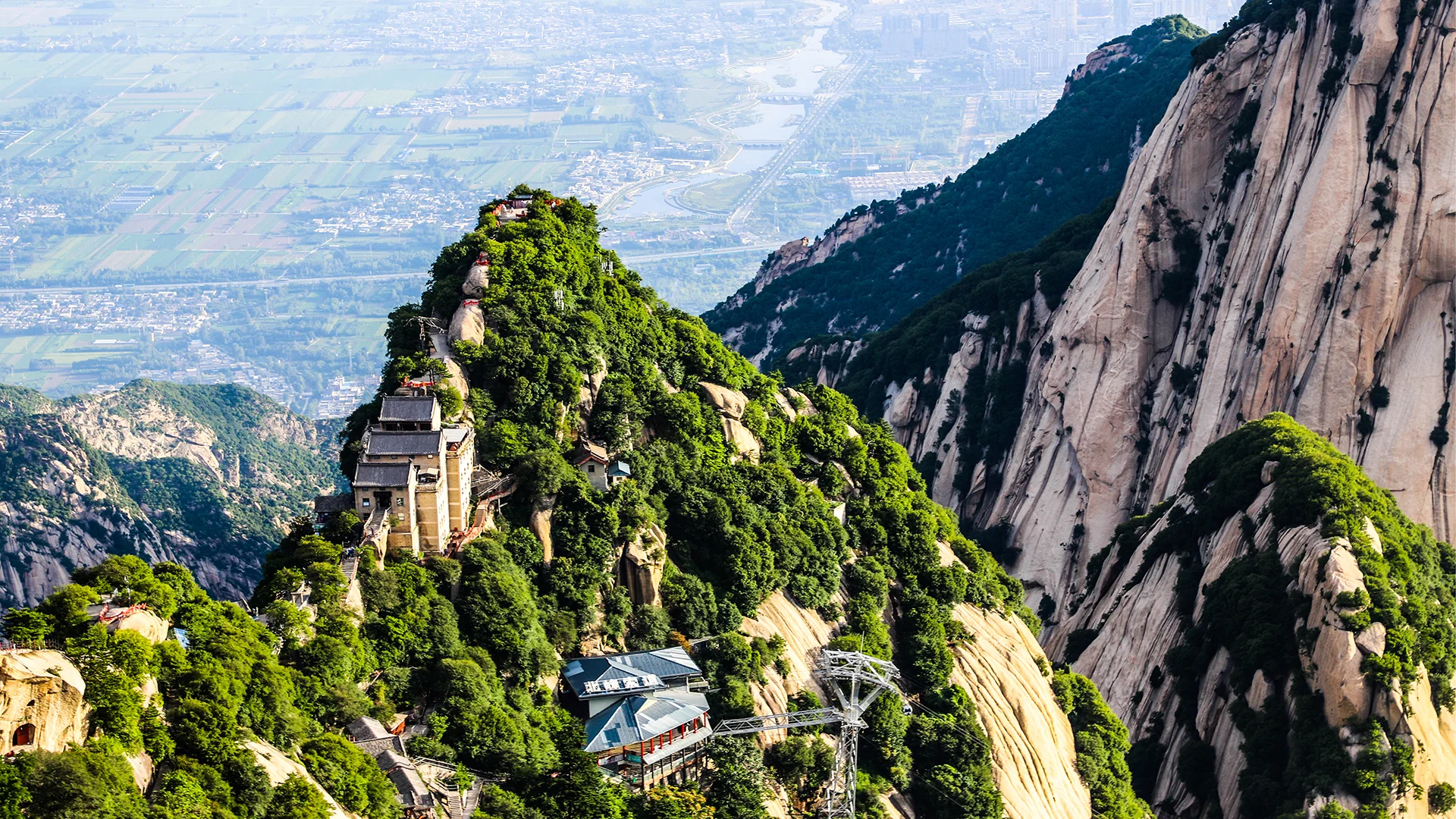
Key Highlights:
Climb the Five Peaks: West Peak is the most beautiful (stunning sunset), South Peak is the highest (overlooking the surrounding mountains), East Peak has the best sunrise, Central Peak is serene, and North Peak features Jin Yong's "Huashan Sword Competition" stele;
Challenge the Plank Road in the Sky (South Peak cliffside wooden walkway, safety rope required);
Ride the Taihua Cableway on West Peak—one of the longest cableways in Asia, 4211 meters long.
Practical Guide to Hiking
Tickets: 160 RMB in peak season, 100 RMB in off-season
Cable Cars: West Peak Cableway (approx. 126 RMB one way) is longer and offers a more expansive view; North Peak Cableway (approx. 72 RMB) is shorter but more economical.
Hiking trails are open 24 hours a day, but hiking the entire trail requires considerable physical exertion. Most visitors choose to take the cable car up and down, or go west up and north down.
Take the high-speed train from Xi'an North Station to Huashan North Station, which takes only 30 minutes. A free shuttle bus is available from the station to the visitor center.
The Plank Road in the Sky requires an additional fee for renting a safety rope. Those with a fear of heights or heart problems should not attempt it.
Useful tips for tourists
Passport: Original physical passport is required for all attraction tickets and entry (photocopies or photos are not valid).
Reservation System: Popular attractions such as the Terracotta Warriors, Shaanxi History Museum, and Mount Hua require reservations in advance. Please make reservations at least 3-5 days in advance via WeChat mini-program and bind your passport number.
Payment: Major attractions and chain stores accept Visa/Mastercard, but street food vendors only accept cash or Alipay/WeChat. It is recommended to download Alipay and bind a foreign credit card, or carry a small amount of RMB cash.
Clothing and Footwear: Xi'an attractions involve a lot of walking, especially the City Wall and Mount Hua, so old, comfortable shoes are essential. In summer, when temperatures are high (35℃+), hats and sunscreen are necessary; in winter, when it's dry and cold, down jackets are required.
Language: Major attractions have English signs and audio guides, but small restaurant menus may not be in English. It is recommended to download a translation app.
Transportation: The subway covers most attractions, with fares ranging from 2-8 RMB, and accepts card payments or QR code payments. Taxis have cheap starting fares, but traffic jams are common during evening rush hour.
Frequently Asked Questions
Q1: Do I need to bring my passport to all attractions?
Yes. Original passports are required for purchasing tickets, exchanging tickets, and entering the park. Photocopies or photos are not valid.
Q2: Can I buy tickets on-site?
Most popular attractions (Terracotta Warriors, Shaanxi History Museum, Mount Hua) require advance online booking; tickets are not sold on-site. It is recommended to book 3-5 days in advance via WeChat mini-program.
Q3: I don't speak Chinese, will I be able to visit smoothly?
Major scenic spots have English signs and audio guides (available for rent). Some attractions offer English-speaking guides; advance booking is recommended.
Q4: Do I need to book cycling on the city wall in advance?
No. You can rent bikes on-site. A single bike costs 45 yuan for 3 hours. There are multiple rental and return points, and you don't need to return to the original location.
Q5: When is the best time to visit?
Spring (March–May) and autumn (September–November) offer the most comfortable temperatures. Summers are hot and rainy, while winters are dry and cold.
Q6: Is the Huashan Plank Road safe?
Safety ropes are available, but an extra fee (approximately 30 RMB) is required. Those with a fear of heights, heart conditions, or high blood pressure should not attempt to use it.
Disclaimer: This information is provided for reference only and was last updated on . Requirements and regulations may change. Always verify with official sources before making travel plans.