
The 2026 Wulong Natural Three Bridges route is simple: start at Xiannushan visitor center, take the eco-shuttle down into the sinkhole, and walk the mostly downhill path through Tianlong, Qinglong, and Heilong bridges. Exit by shuttle or sightseeing train. Most international travelers opt for a day trip from Chongqing via high-speed train to Wulong, then a taxi or tourist bus to the site. The route follows the park’s one-way flow, minimizes climbing, and fits China’s current travel systems. The core visit takes 3–4 hours; add Xiannushan (Fairy Mountain) or Longshuixia Fissure Gorge for a full day. Key tips: start early, pre-book transport, carry your passport, and use Alipay or WeChat Pay with an international card.
Wulong Natural Three Bridges Scenic Route Guide: the best route is the official downhill loop
The best route is the park’s standard one-way downhill circuit because it is faster, less tiring, and gives the classic views in the correct sequence. If you only have one visit, follow the official shuttle-to-walk route and do not try to reverse the trail.
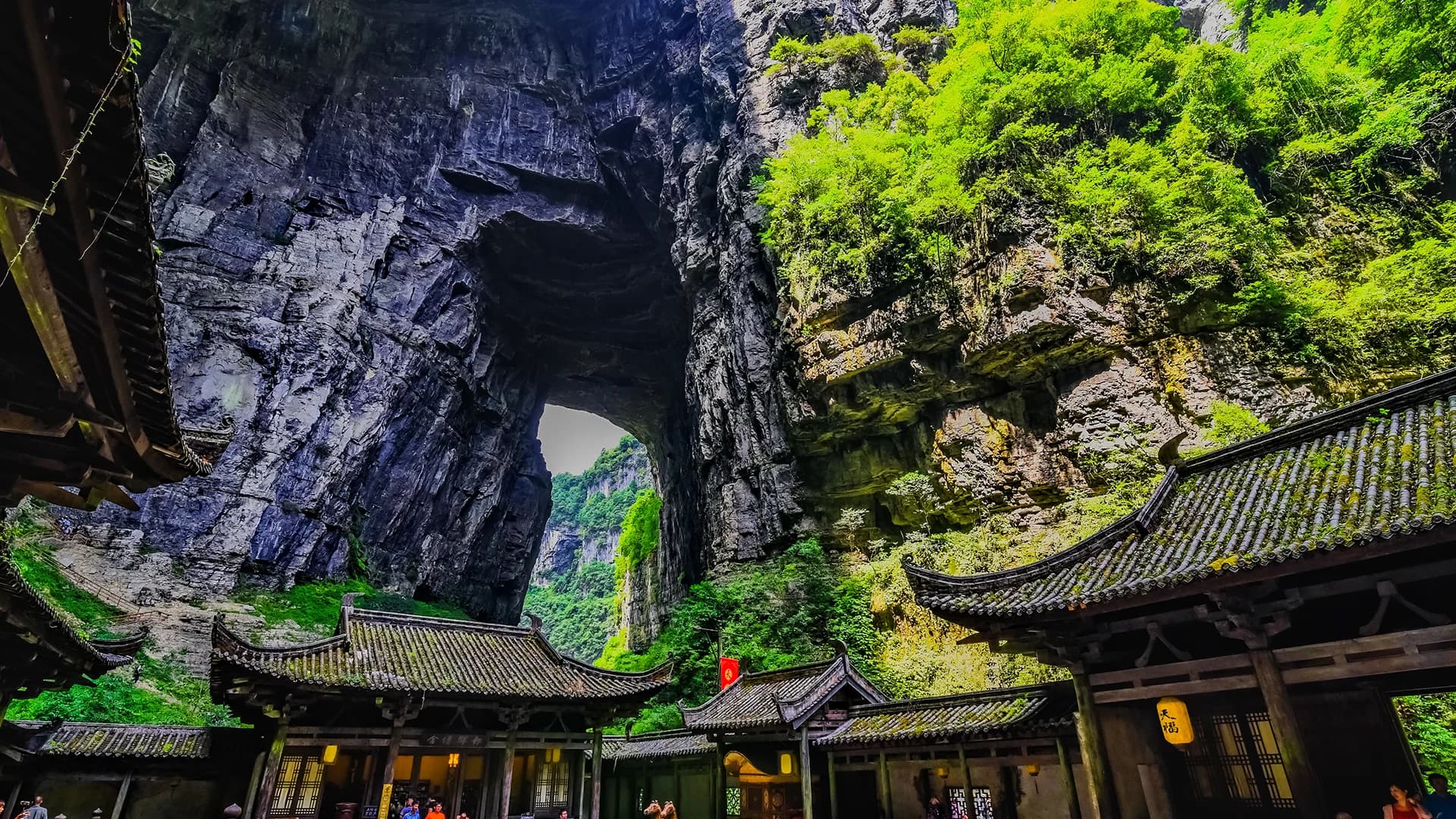
The site is in the Wulong Karst section of Chongqing and is part of the South China Karst UNESCO World Heritage property. The landscape combines tiankeng, or giant sinkholes, natural limestone bridges, forested cliffs, and film-location scenery, including the famous Tang-ren style courtyard built for the movie Curse of the Golden Flower.
What you will actually see
Tianlong Bridge: the first major arch, dramatic from the descending path and viewing platforms.
Qinglong Bridge: often considered the most atmospheric section because of the dense rock walls and moisture in the gorge.
Heilong Bridge: the final natural bridge before the exit area and shuttle connection.
Tiankeng scenery: massive collapse dolines with steep vertical walls, one of the defining karst features of Wulong.
The standard Wulong Natural Three Bridges route is scenic rather than technical. Paths are paved or stepped, handrails are common, and most visitors with average fitness can complete the walk, but there are many stairs and the route can feel slippery after rain.
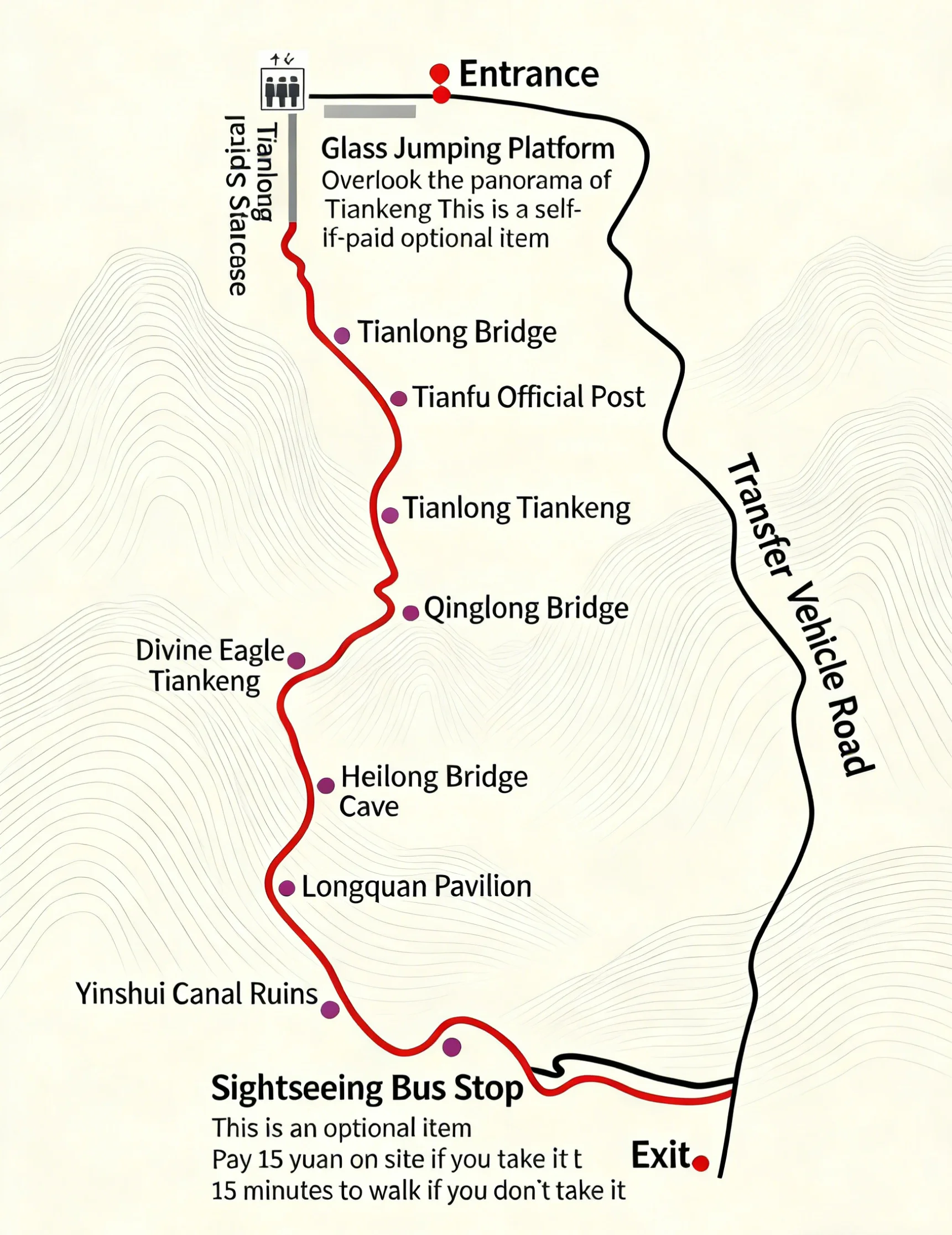
Recommended Itinerary:
Enter through the main entrance of the scenic area.
Take the spiral staircase down to the sinkhole (you can also choose to jump over the glass viewing platform at your own expense for a panoramic view of the sinkhole's landscape).
After exiting the spiral staircase, walk to the first bridge: Tianlong Bridge.
Photo Spot 1: Turn your head to the side to see a thumb-shaped opening.
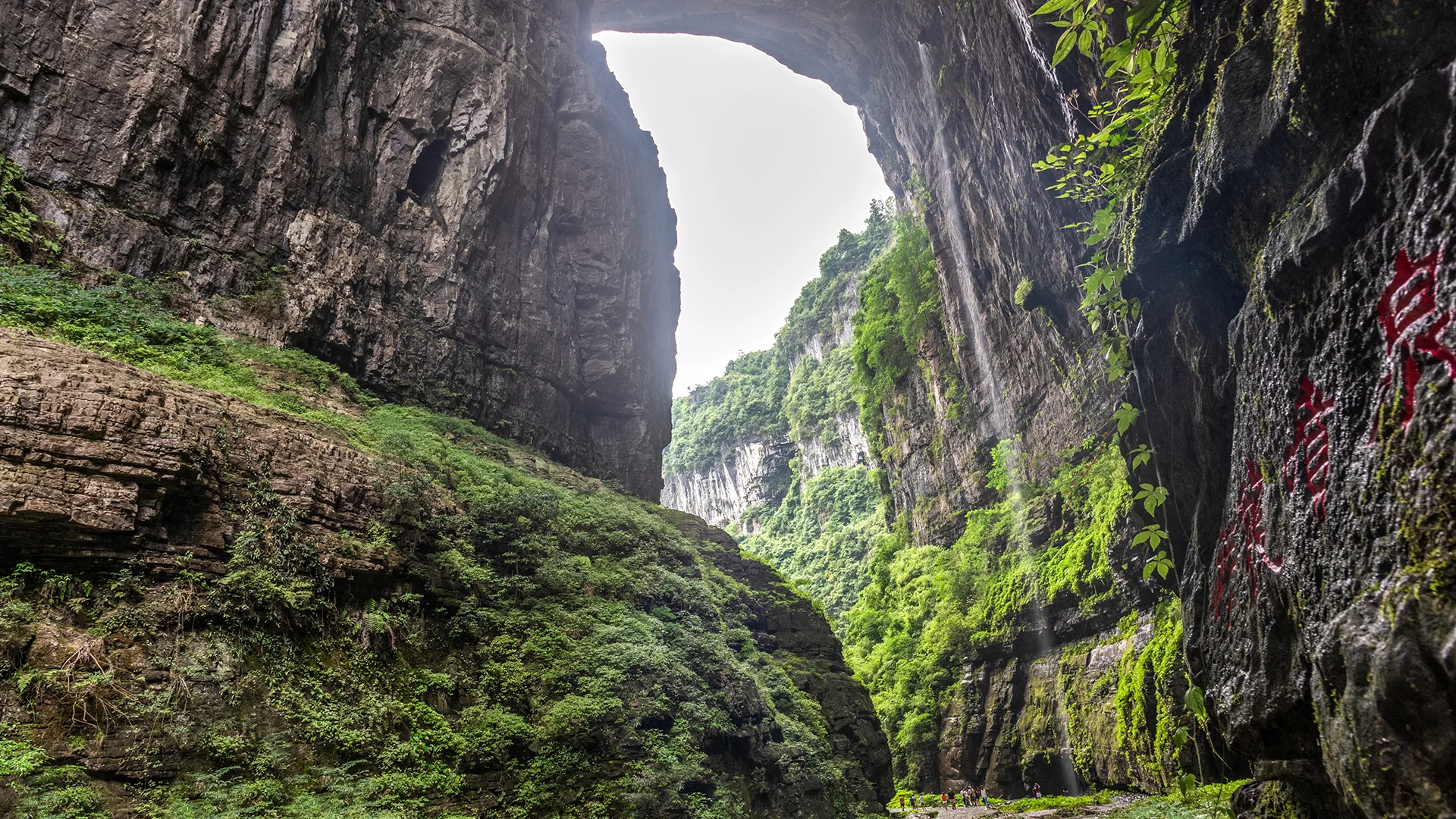
Photo Spot 2: About 5 meters to the right and above Tianlong Bridge, there's a viewing platform—the best spot for photographing the Three Natural Bridges.
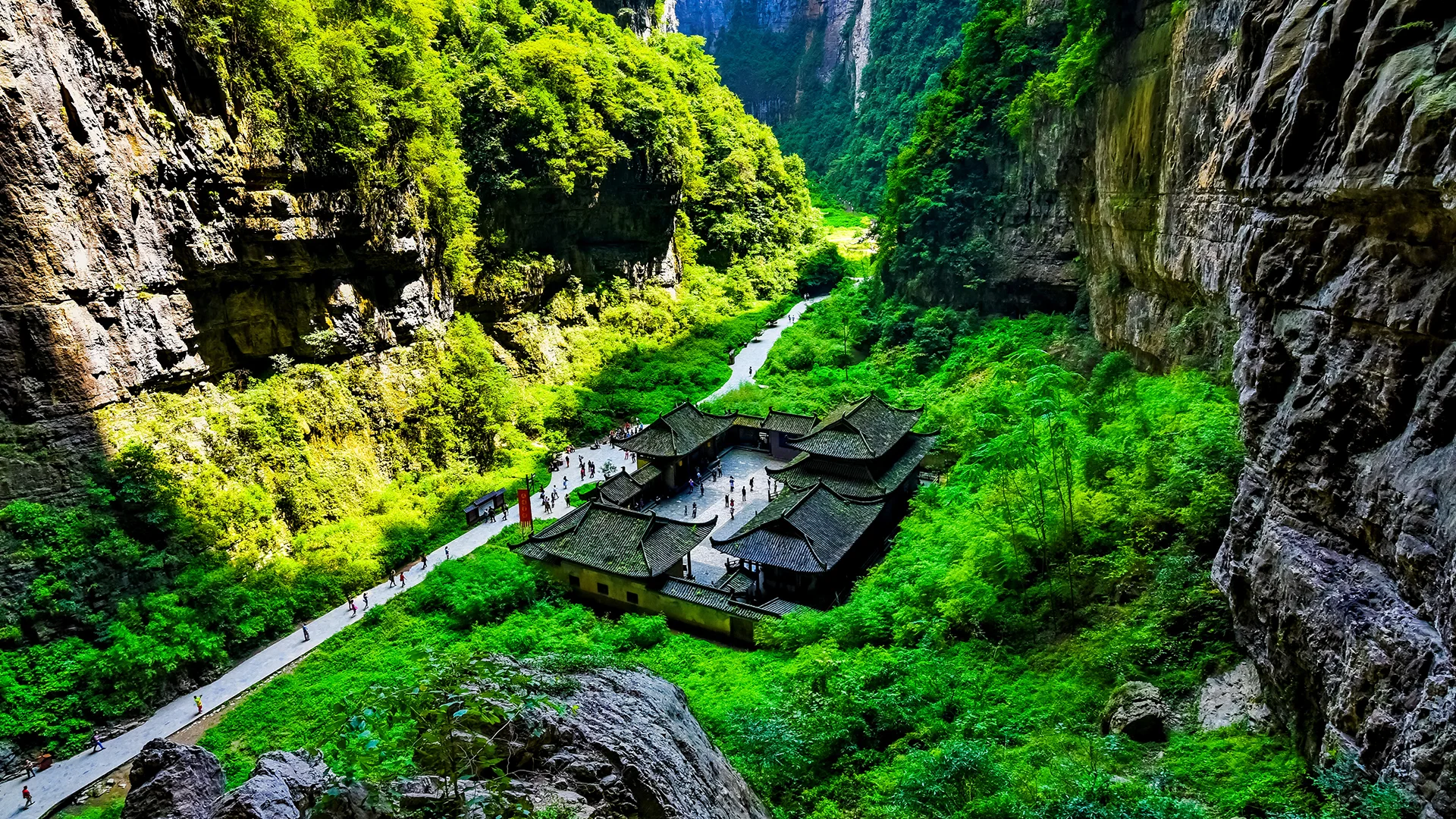
Photo Spot 3: Next to Tianlong Bridge is Tianfu Inn, a filming location for the movie "Curse of the Golden Flower".
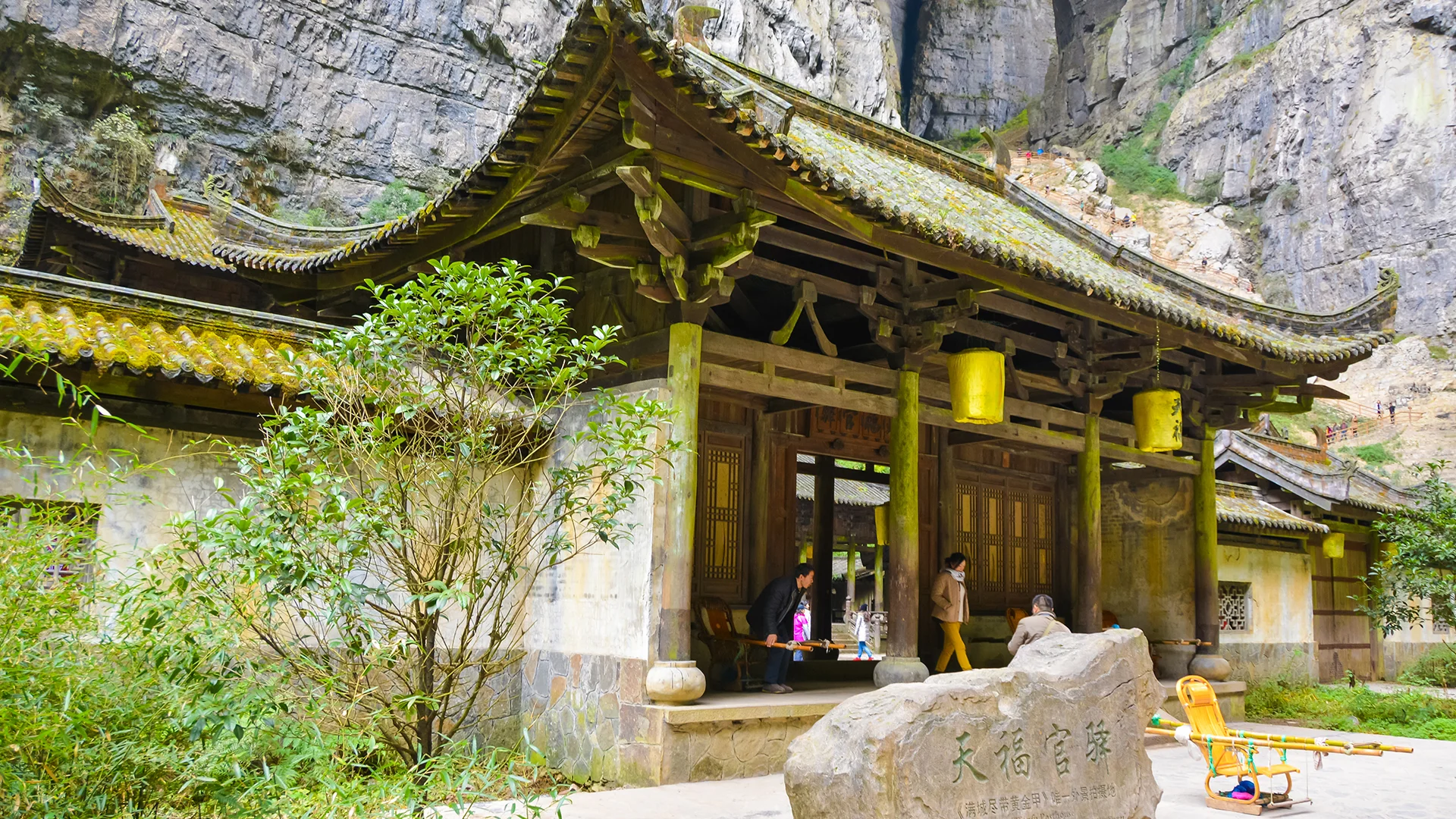
Then continue forward to the second bridge: Qinglong Bridge.
The opening of Qinglong Bridge resembles a large knife under the light and shadow.
After viewing Qinglong Bridge, you'll arrive at the third bridge: Heilong Bridge.
Heilong Bridge features attractions such as Carp Leaping Over the Dragon Gate, Divine Eagle Sinkhole, Mountain Spring Flowing Out, and even a gorilla.
After reading this, you can choose two ways to exit the scenic area: Walk from Heilong Bridge to the electric cart boarding point.
1. Take the electric cart (15 yuan, 5 minutes to the exit).
2. Walk uphill for 15 minutes to the exit.
The shortest tour route is: 30-45 minutes for immigration procedures, 2-3 hours for the tour, and then 30-60 minutes to leave and transfer to other attractions.Chongqing to Wulong Natural Three Bridges: train is the easiest option.
Best way to get there.
The easiest trip from central Chongqing is high-speed rail to Wulong followed by local transfer. For most independent travelers, Chongqing to Wulong Natural Three Bridges is best done by train, not by self-driving, because it reduces traffic risk and simplifies the day.
Chongqing’s main rail hubs for this journey are usually Chongqing North Railway Station and Chongqing East services where available on current schedules. Use the official 12306 app, Trip.com, or station ticket counters to book; foreign passports are accepted, and your passport is your boarding ID on most routes.
Option 1: High-speed rail plus taxi or tourist bus
Chongqing to Wulong by train: usually about 1.5 to 2 hours depending on the service.
Wulong Railway Station to the scenic area: typically 20 to 25 km, usually 35 to 50 minutes by taxi depending on traffic.
Taxi cost: often around ¥60 to ¥100 one way, depending on exact pickup point, season, and whether you share.
Local tourist buses: cheaper than taxis but slower and less predictable if you do not speak Chinese.
This is the best balance of speed and flexibility for a first-time visitor. If you miss a local bus, a Didi ride or a station taxi usually solves the problem quickly.
Option 2: Direct day tour from Chongqing
A packaged day tour is the simplest choice if you want transport bundled together. It usually includes round-trip coach transport, admission handling, and a Chinese-speaking guide, though English support is not guaranteed unless clearly stated.
Typical duration: 10 to 12 hours round trip.
Typical pickup zones: Jiefangbei, Guanyinqiao, or major downtown hotels.
Typical total cost: varies widely by inclusion level, often far above independent travel but easier logistically.
If language is your main worry, a reputable day tour can be worth the premium.
Option 3: Private car
Driving from urban Chongqing to Wulong is roughly 180 to 190 km depending on your starting point and the expressway route. It can take around 2.5 to 3.5 hours one way, but parking, mountain weather, and peak holiday congestion make it less attractive for short visits.
Foreign visitors should also remember that China does not recognize most foreign driver’s licenses for normal self-drive use. For that reason, a hired car with driver is usually more realistic than self-driving.
Wulong Natural Three Bridges Scenic Route Guide: tickets, timing, and on-site strategy
The smartest on-site strategy is to arrive before late-morning crowds, buy the correct bundled transport, and walk at a steady pace without stopping too long at the first viewpoint. The Wulong Natural Three Bridges scenic route guide is really about timing as much as route choice.
Prices in China can change by season or policy notice, but independent travelers should budget for the following 2026-style costs:
Scenic Area Ticket: Usually around 155 RMB (125 RMB in the off-season).
Sightseeing elevator or exit vehicle fees: sometimes charged separately, commonly around ¥15 each if in use.
Taxi from Wulong transport hub: around ¥60 to ¥100 one way.
Snacks and drinks in the area: usually higher than town prices, often ¥5 to ¥15 for water and more for convenience food.
A realistic independent day-trip budget from Chongqing is often ¥300 to ¥600 per person, excluding hotel, depending on train class and local transfers.
Best time of day and season
Best arrival time: before 9:30 am if you want lighter queues and cooler temperatures.
Best seasons: spring and autumn for comfort and clearer views.
Summer: lush scenery but more humidity, more tour groups, and higher holiday pressure.
Winter: fewer crowds, but cold steps and occasional fog can limit visibility.
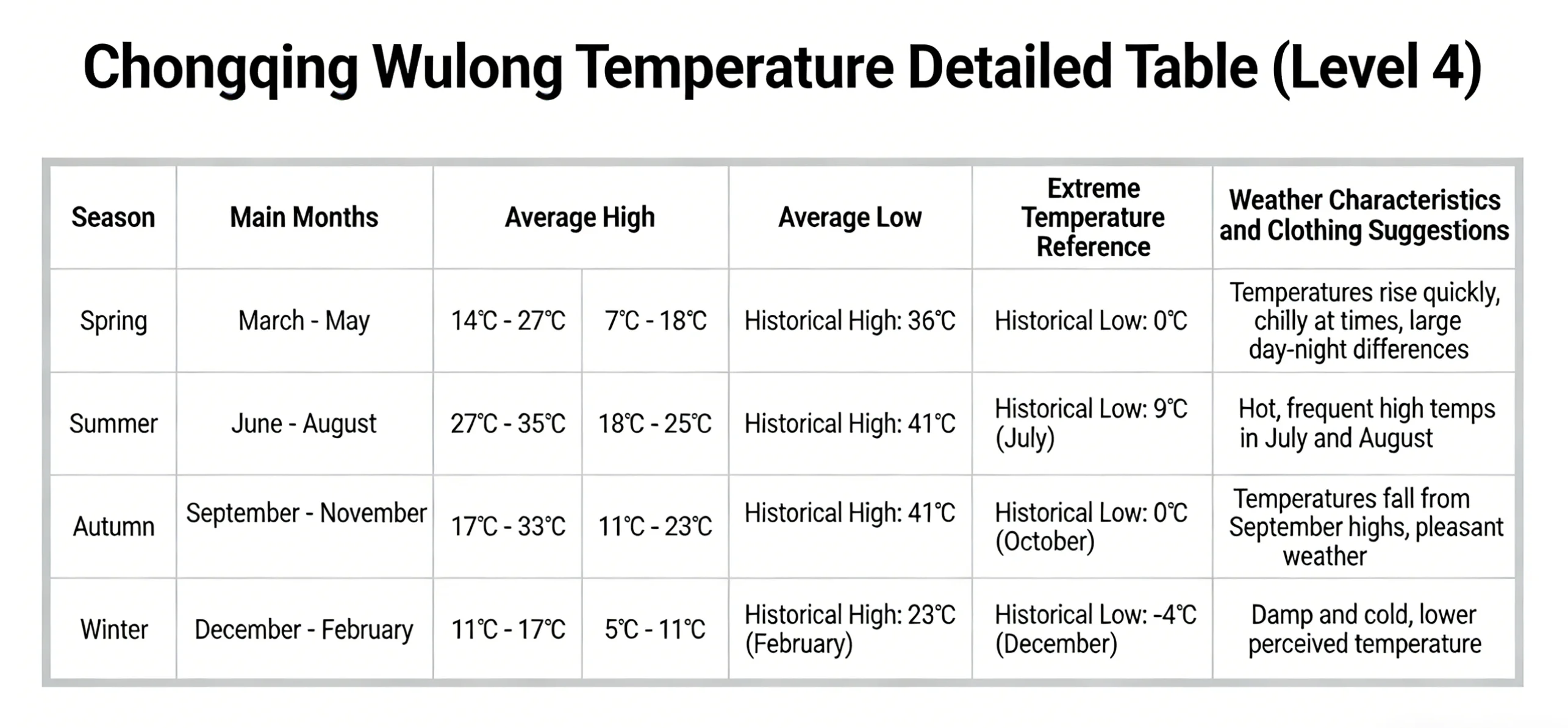
The park is usually more photogenic after light rain because the cliffs darken and vegetation looks richer, but the trail becomes more slippery. Wear shoes with grip rather than smooth sneakers.
How long you need
Fast visit: 2.5 to 3 hours inside the scenic area if you move efficiently.
Standard visit: 3 to 4 hours for photos, rest stops, and normal pacing.
Leisurely visit: 4 to 5 hours if you stop often or travel with children or older relatives.
This timing is why many visitors pair the site with one more Wulong highlight, but not two, on the same day. A packed schedule looks efficient on paper and feels rushed in the gorge.
Step-by-step ticket and entry process
Book your train or arrive in Wulong town first.
Bring your passport because ticketing and rail travel in China are identity-linked.
Buy scenic area tickets through an official channel, your hotel, a trusted platform, or on site if same-day slots are available.
Confirm whether the eco-shuttle and exit transport are included or separate.
Screenshot your booking details because mobile signal can be uneven in mountain areas.
The most common mistake is underestimating transfer time from Wulong station to the scenic entrance.
Wulong karst scenic area guide: build a practical itinerary, not an exhausting checklist
The best itinerary depends on whether you want a focused day trip or an overnight stay. A one-night stay in Wulong gives you the best experience because it spreads out transport, reduces rushing, and lets you combine karst scenery without burning a whole day in transit.
The wider area is often described as the Wulong karst scenic area guide experience rather than a single attraction. Besides the bridges, the best-known nearby sights are Xiannushan, or Fairy Mountain, and Longshuixia Difeng, the dramatic fissure gorge.
Best one-day itinerary from Chongqing
Take an early high-speed train from Chongqing to Wulong.
Transfer directly to the Natural Three Bridges scenic area.
Spend 3 to 4 hours on the route and lunch nearby.
If time and energy allow, add a short stop in Xiannushan town rather than another full scenic area.
Return to Wulong station for an evening train back to Chongqing.
This is the most realistic Wulong Natural Three Bridges itinerary for travelers based in Chongqing city. It works well if your China schedule is tight and you want the signature karst landscape without changing hotels.
Best overnight itinerary in Wulong
Day 1 morning: travel from Chongqing to Wulong.
Day 1 afternoon: visit Natural Three Bridges.
Day 1 evening: stay near Xiannushan town or in Wulong urban area.
Day 2 morning: visit Fairy Mountain grassland zone.
Day 2 afternoon: choose Longshuixia Fissure Gorge or return leisurely to Chongqing.
If you want photographs without a rushed pace, stay overnight near Xiannushan.
Where to stay
Xiannushan Town: best for scenic-area access, cooler air, and resort-style stays.
Wulong urban area: better for train connections, budget hotels, and food options.
Chongqing city: best if you strongly prefer one hotel base and can tolerate a long day.
Search using both English and Chinese names because listings vary. Useful Chinese terms include Wulong, Xiannushan, and Tiansheng Sanqiao, which is the Chinese name often used for the Three Natural Bridges area.
Food and practical stops
Wulong cuisine is part of the broader Chongqing food culture, so expect spicy flavors, noodle dishes, and hotpot options. For international visitors who want simpler meals, look for dumplings, tomato-and-egg rice, fried rice, or chain coffee shops in larger transport areas.
Bring water: at least 500 ml to 1 liter per person in warm weather.
Pack light snacks: nuts, bread, or fruit help if transfer times stretch out.
Use toilets before entering the route: facilities exist, but queue times vary during tour-group peaks.
The scenic walk is much more enjoyable if you treat it like a half-day hike, not a city stroll.
How to visit Wulong Natural Three Bridges smoothly as an international traveler
International visitors can do this trip independently if they prepare for China-specific logistics. The easiest way to avoid stress is to sort out visa status, payments, train booking, and translation tools before travel day.
Visa and passport basics in 2026
China’s entry rules have changed frequently in recent years, including expanded visa-free and transit policies for some nationalities. Check the National Immigration Administration, your nearest Chinese embassy or consulate, or your airline before booking because eligibility depends on passport and route.
Carry your passport: you need it for trains, many ticket checks, and some hotel procedures.
Keep digital copies: store scans in cloud storage and on your phone.
Hotel registration: foreign guests should stay at properties that accept international travelers, which is routine in Chongqing and common in Wulong.
Your passport is the single most important item for this trip.
Payment apps and money
Alipay and WeChat Pay both support many international cards in 2026, and they are the most useful payment tools in China. Set them up before arrival, complete identity verification if prompted, and still keep a small amount of cash as backup.
Best apps: Alipay, WeChat Pay, Didi, Amap, Baidu Maps, Trip.com, 12306, and a translation app.
Recommended backup cash: around ¥200 to ¥400 for a day trip.
Where cash helps: small shops, rural taxis, or times when mobile signal is weak.
If your phone battery dies, your payment system, tickets, and maps may disappear with it, so carry a power bank.
Language, navigation, and safety
English is limited outside major hotels and transport counters, so screenshots and Chinese place names help a lot. Save these terms: Wulong, Xiannushan, Tiansheng Sanqiao, and Chongqing North Railway Station.
Use map screenshots: mountain signal can be patchy.
Avoid last-minute transfers at night: especially if you do not speak Chinese.
Watch your footing: steps are uneven in places and become slick after rain.
Dress in layers: Wulong can feel cooler than Chongqing city because of elevation.
Respect barriers: karst cliffs and drops are real hazards despite the developed path.
This area is generally safe for solo travelers and families, especially in daylight and on the main route. The real risks are practical rather than criminal: weather, fatigue, crowds during Chinese holidays, and transport timing.
The best safety advice is simple: start early, wear grippy shoes, and leave more transfer time than you think you need.
Frequently Asked Questions
How much does Wulong Natural Three Bridges cost in 2026?
The estimated ticket price for the main scenic area is approximately 155 RMB. Additional charges may apply for some transportation services within the scenic area. Prices are subject to change depending on the season or official announcements; please check the latest ticket information before your trip.
Can I do Wulong Natural Three Bridges as a day trip from Chongqing?
Yes, and many travelers do exactly that by taking an early high-speed train and returning in the evening. It is very doable, but an overnight stay is more comfortable if you also want to see Fairy Mountain or Longshuixia Fissure Gorge.
Is Wulong Natural Three Bridges safe for solo travelers?
Yes, the main scenic route is generally safe for solo travelers during normal daytime visiting hours. The biggest issues are wet steps, crowd flow, and rural transport logistics rather than personal security.
What is the best season to visit Wulong Natural Three Bridges?
Spring and autumn are usually the best because temperatures are moderate and visibility is often better than in peak summer humidity. Summer is lush and beautiful, but it is also busier and can feel hot during transfers.
Do foreign visitors need cash, or can they rely on mobile payments?
Most travelers can rely mainly on Alipay or WeChat Pay with a linked international card, especially in Chongqing and major ticketing points. Still, carrying some cash is smart for backup purchases and smaller local services.
How difficult is the walk inside the scenic area?
The route is moderate rather than extreme, but it includes many steps and can be tiring if you rush. Most visitors with average fitness can do it comfortably in 3 to 4 hours if they wear proper shoes and pace themselves.
Disclaimer: This information is provided for reference only and was last updated on . Requirements and regulations may change. Always verify with official sources before making travel plans.