
When you first see traditional Chinese dwellings, you might find them quite unique—some are hidden in the earth, some are round like fortresses, some have white walls and black tiles like paintings, and some are supported by wooden stakes on rivers. You might wonder: why do the Chinese build their houses this way?
Each type of house is an answer to the questions the Chinese ask of nature. This guide will take you into seven of the most classic Chinese dwellings, helping you understand the wisdom of survival written in the walls, roofs, and wooden stakes. You don't need to know architecture; just a curious mind will allow you to understand these "living houses."
I. Shaanxi Cave Dwellings – A Constant-Temperature Home Living in the Loess Plateau
Northern Shaanxi is located in Northwest China, a region characterized by numerous gullies and scarce rainfall, yet possessing an exceptionally thick layer of loess, sometimes reaching depths of tens of meters. This loess has a unique characteristic—it stands upright, resembling a massive earthen wall.
In ancient times, people did not choose to "conquer" this land, but rather to "live" within it—digging caves into the loess cliffs—these are the cave dwellings.
House Styles
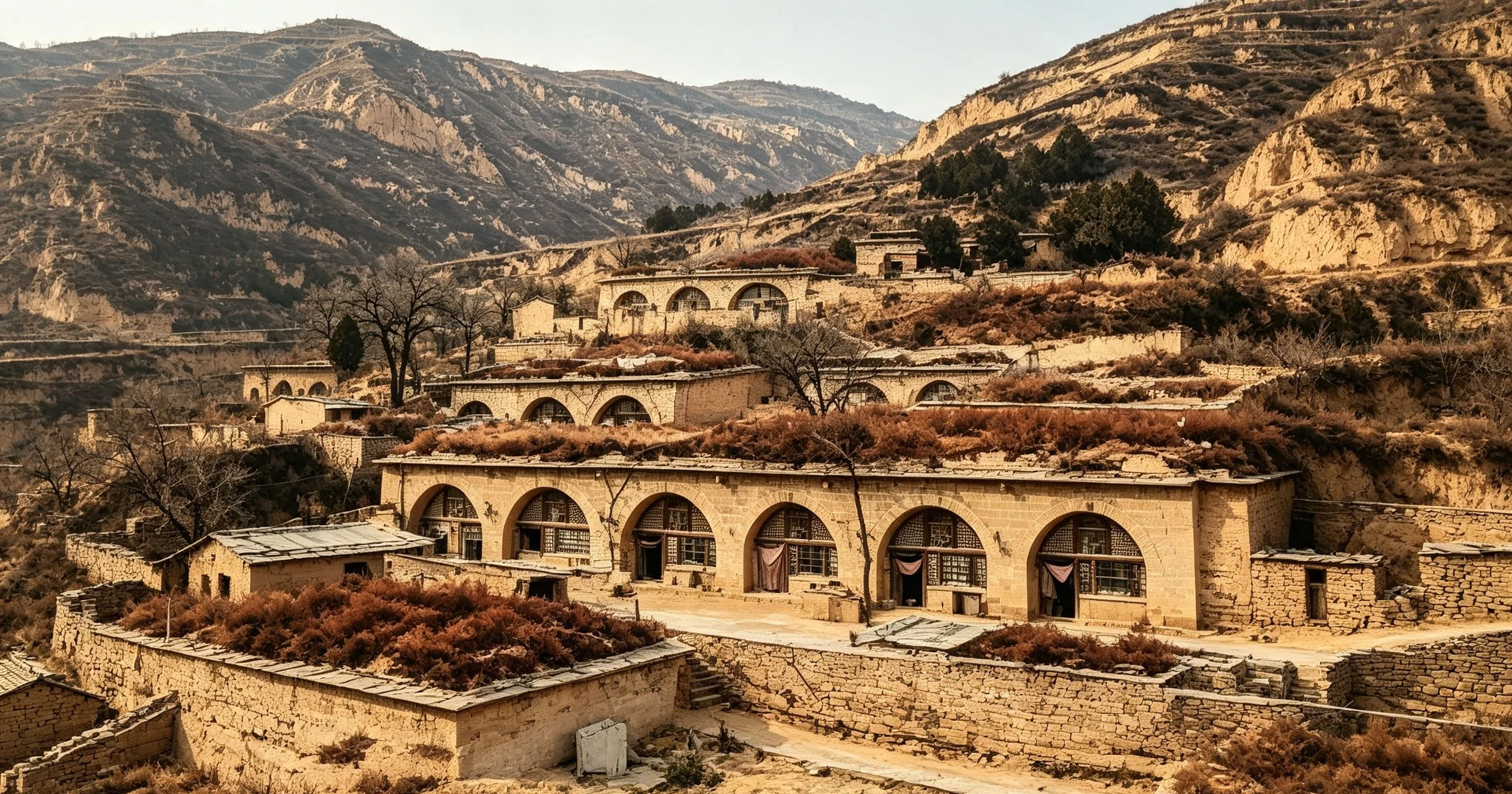
Cliffside Style: The most common type is the house dug horizontally directly into the side of a hillside.
Sunken Style (also called a pit cave): A large square pit is dug into the ground, and cave dwellings are carved into the pit walls. The house is invisible from a distance; only upon approaching does one discover the courtyard below, hence the name "underground courtyard house."
Detached Style: Does not rely on a mountainside; it is constructed of bricks and stones in an arched shape, standing independently on the ground.
What's the wisdom behind it?
A natural air-conditioned room: The cave dwellings are covered with 3 to 5 meters of loess, making them about 10 degrees Celsius cooler than outside in summer and about 15 degrees Celsius warmer in winter.
A kang (heated brick bed) connected to the stove, warming the whole family: The most important feature of the cave dwelling is a large earthen kang, taking up almost half the room's area. The stove is connected to the kang—when cooking, smoke and heat flow under the kang, warming it—a double benefit.
Where can I watch it?
Best time to visit: Spring and autumn are the most comfortable; the cave dwellings are cool in summer, making them a great place to escape the heat.
Recommended places to go:
Mizhi County Cave Dwelling Ancient Town (Yulin, Shaanxi) – The only existing cave dwelling ancient town in China, hailed as a "museum of cave dwellings."
Yan'an Pagoda Mountain Cave Dwellings – Located within Pagoda Mountain in Yan'an, featuring cave dwelling guesthouses such as "Pagoda Cave Garden."
II. Fujian Tulou – Family Fortresses Deep in the Mountains
Fujian Tulou, scattered deep in the mountains of western Fujian, was listed as a World Cultural Heritage site in 2008.
Tulou are large, sturdy round or square houses built using local red clay, gravel, bamboo, and wood.
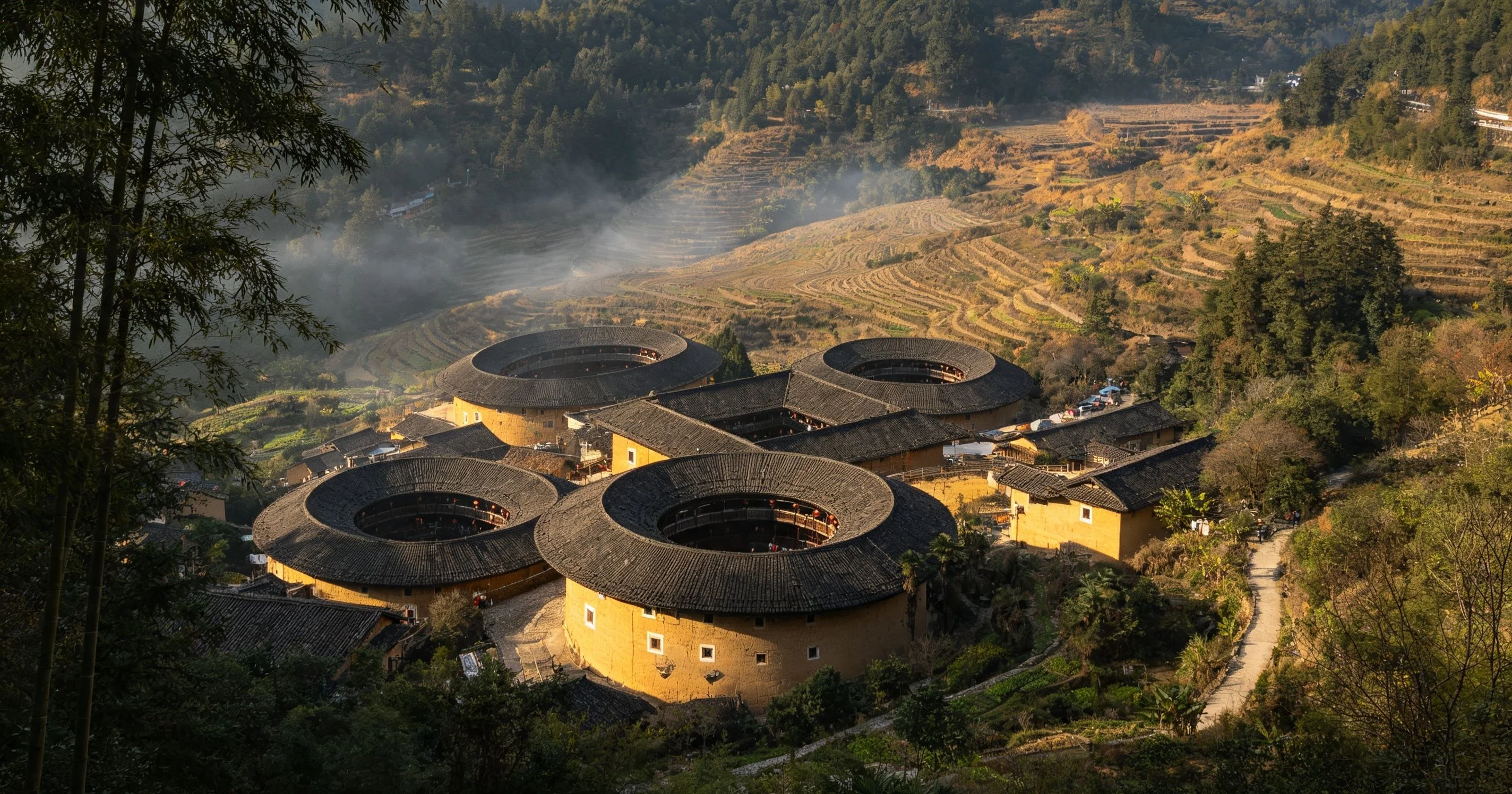
What do the houses look like?
Each earthen building is like a small, vertical village.
These earthen buildings can be round or square, with the largest reaching nearly 100 meters in diameter and four or five stories high. All rooms face the center—the ground floor is the kitchen, the middle floor is for storage, the upper floors are bedrooms, and the ancestral hall at the very center is the spiritual core of the family.
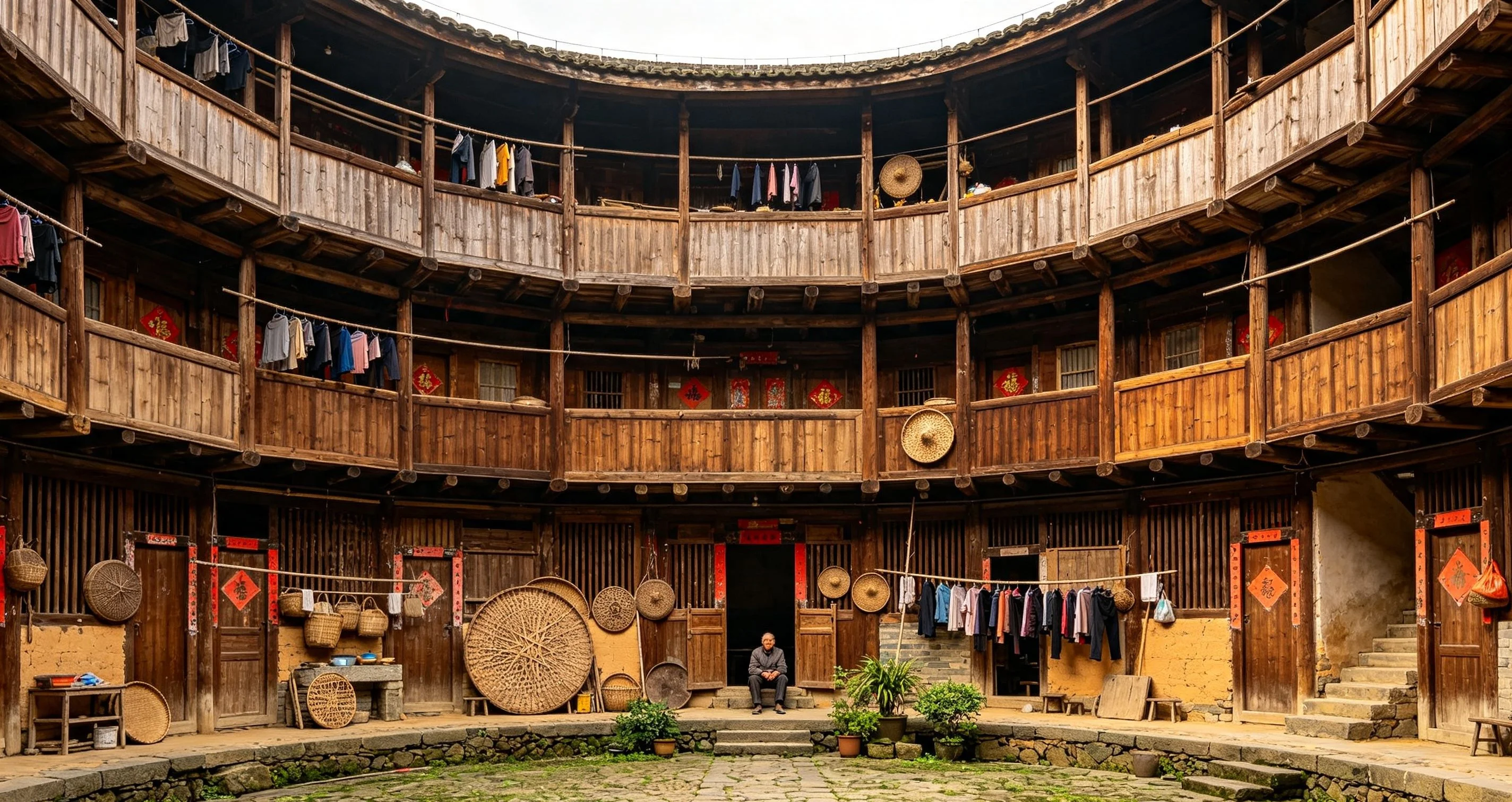
What wisdom does it possess?
The walls are thick enough to withstand artillery fire: the walls are sturdy enough to stop cannonballs and resist earthquakes.
The defenses resemble a military fortress: the ground floor has no windows, and the doors are covered with iron plates. The top floor has watchtowers and gun ports, and the building contains wells and granaries.
Recommended Attractions
(The World Heritage Site comprises 46 buildings in six clusters and four individual buildings, distributed across Yongding, Nanjing, and Hua'an counties)
Yongding District: See the "King of Tulou," Chengqi Building; the "Prince of Tulou," Zhencheng Building; and the most original Chuxi Tulou Cluster.
Nanjing County: See the "Four Dishes and One Soup" Tianluokeng Tulou Cluster (five tulou arranged on a hillside like dishes and soup); and the Hegui Building built on marshland.
III. Ancient Hui-style Houses – Feng Shui Philosophy in Ink Painting
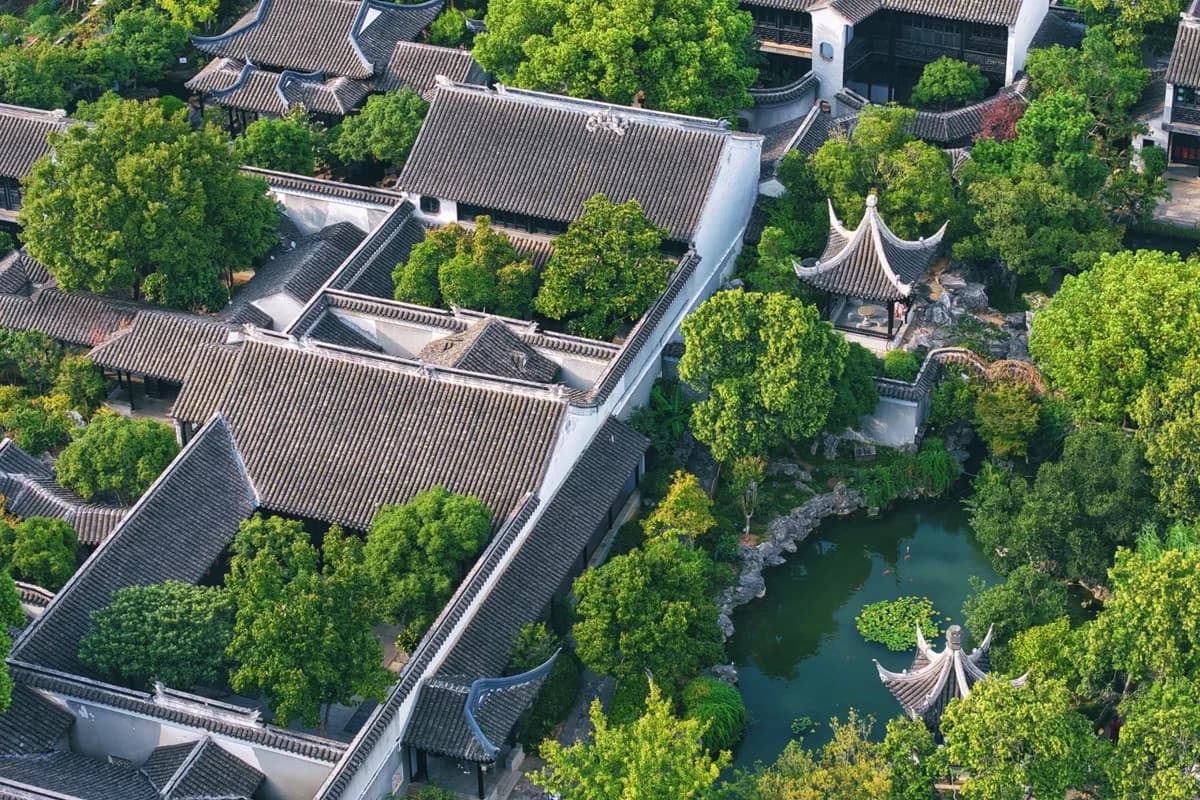
Hui-style architecture is the most distinctive symbol of Huizhou culture, concentrated amidst the green hills and clear waters south of Huangshan Mountain in Anhui Province.
Hui-style architecture is renowned for its white walls, black tiles, towering gable walls, and exquisite brick, wood, and stone carvings.
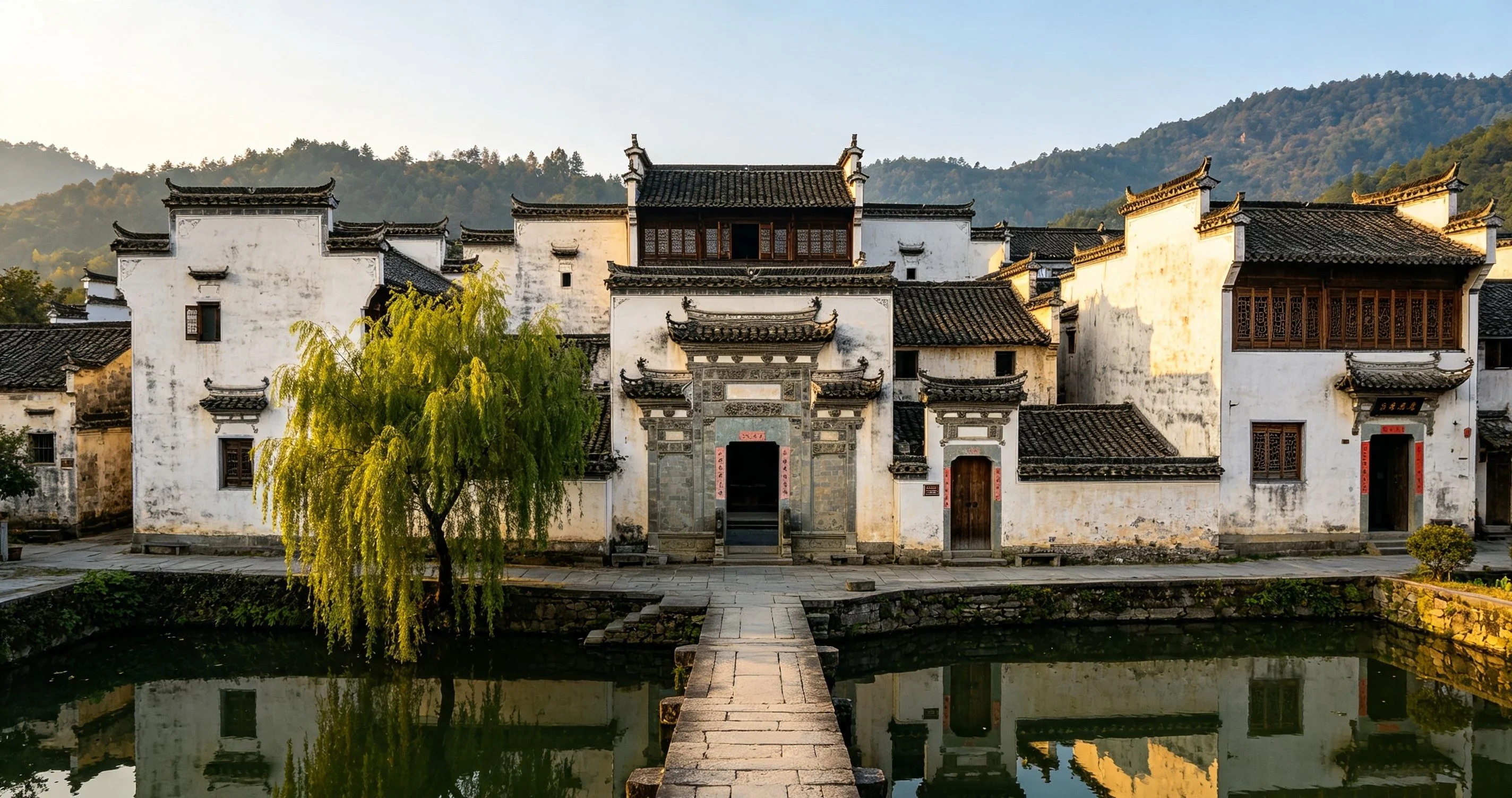
The Wisdom of the House
The Courtyard – A Symbol of Wealth and Prosperity.
The most distinctive feature of Huizhou residences is the "courtyard" – a square opening in the center of a house surrounded by four sides. Rainwater flows from the courtyard into a trough in the yard, which the Huizhou people call "Four Waters Returning to the Hall".
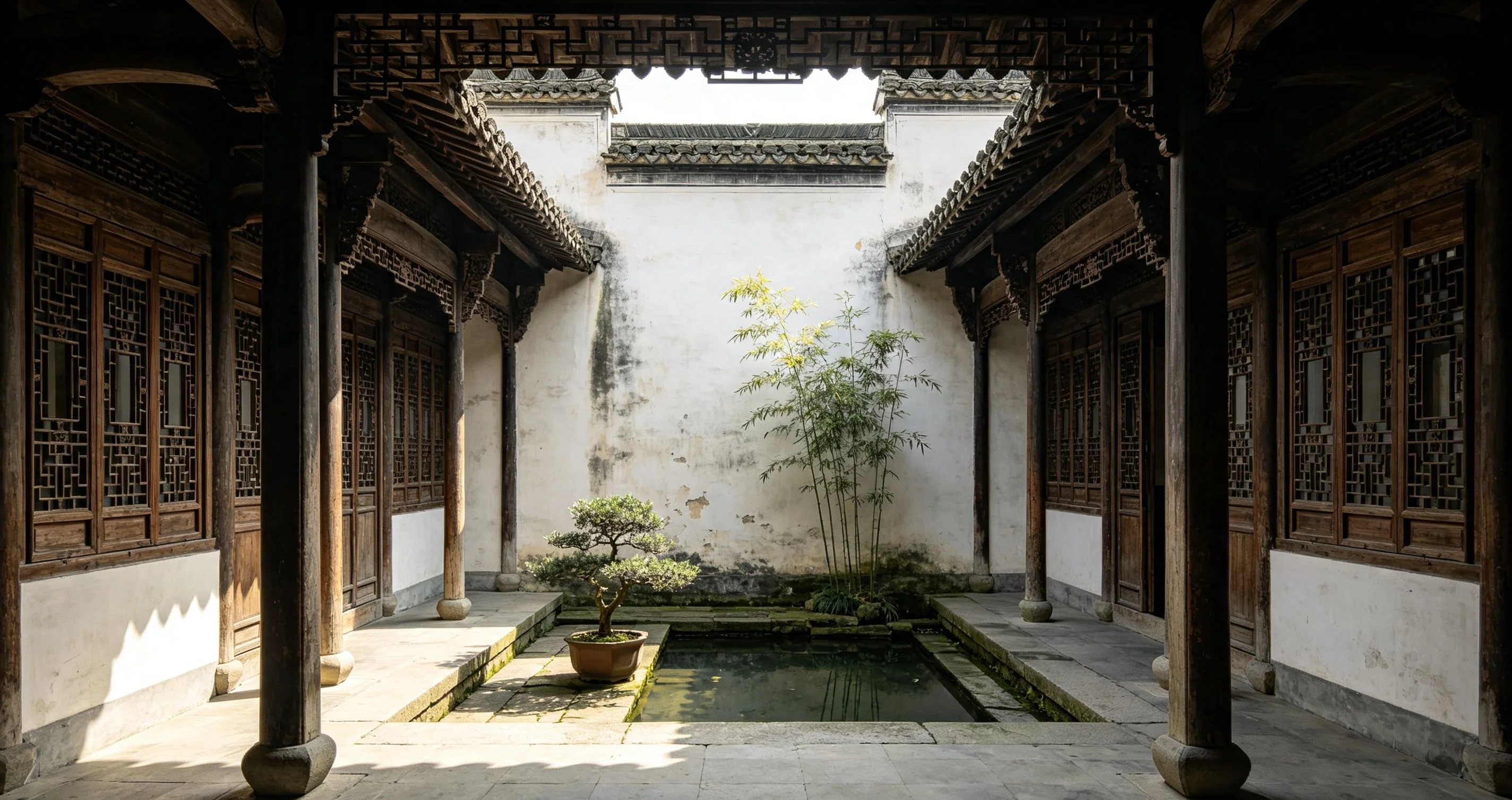
Horse-head walls—beautiful and fireproof.
The towering horse-head walls are not only beautiful decorations but also practical "firewalls"—they can block flames from spreading if a neighbor's house catches fire.
White walls and black tiles—moisture-proof and heat-insulating.
White walls prevent moisture, and black tiles insulate against heat. The entire village unfolds like a traditional Chinese ink painting.
Recommended Places to Visit:
Hongcun: Over 140 Ming and Qing dynasty residences remain. The village entrance is like a painting, perfect for taking photos and leisurely strolling.
Xidi: Over 300 ancient Ming and Qing dynasty residences are preserved. The ancient alleys are deep and rich in cultural atmosphere.
IV. Beijing Courtyard Houses – A Square and Orderly World
Beijing's courtyard houses (siheyuan) are representative of northern Chinese residential architecture, concentrated in the old city of Beijing.
The history of courtyard houses can be traced back to the Yuan Dynasty, and the layout of the hutongs from that era is still preserved in the Nanluoguxiang area. The courtyard house is more than just a house; it embodies the traditional Chinese concepts of "harmony between man and nature" and "respect for elders."
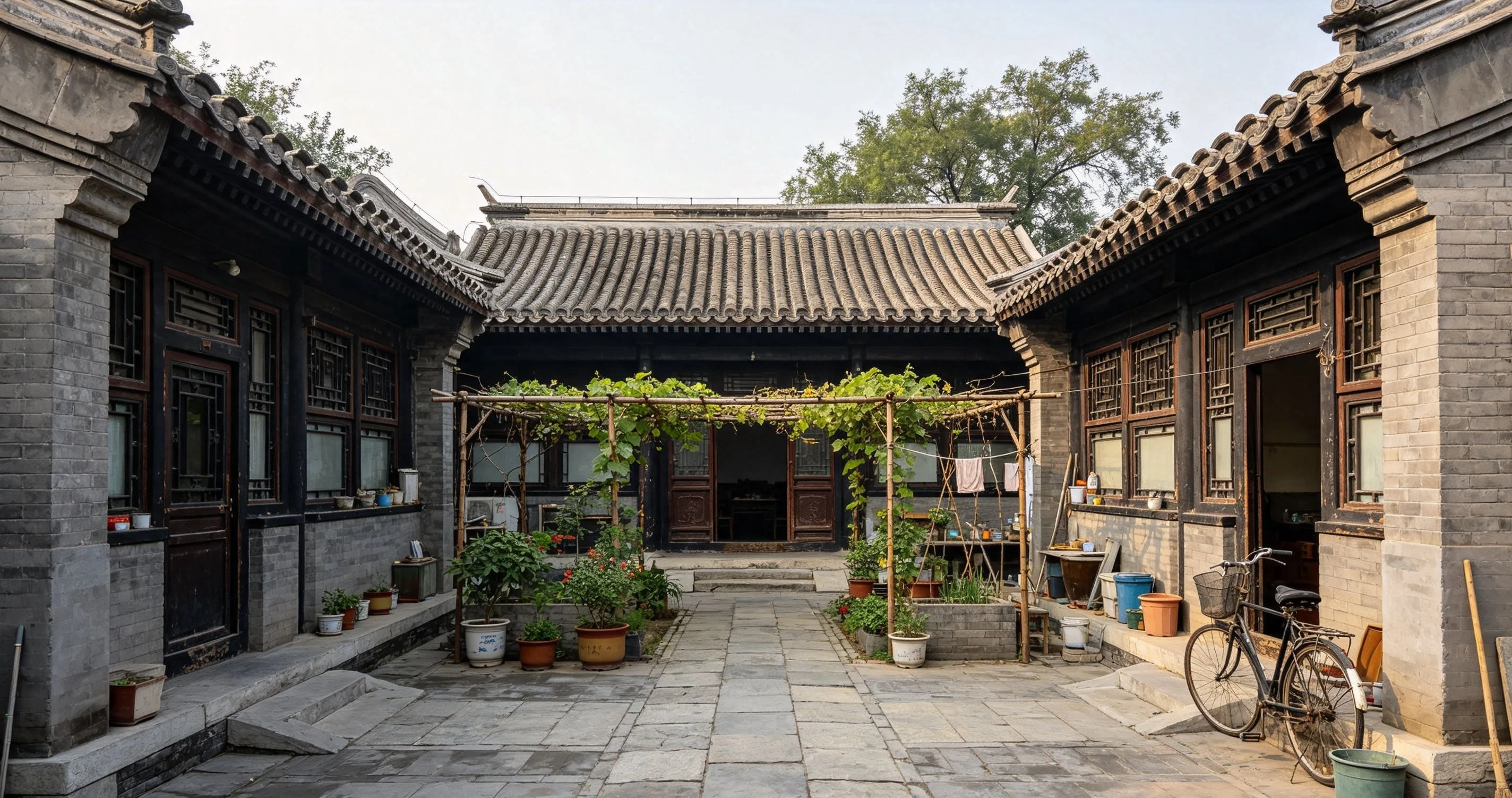
What does the house look like?
The basic layout of a siheyuan (courtyard house) is a courtyard surrounded by houses on four sides—the main house faces south (south-facing is considered the most important orientation for houses in northern China), with wing rooms on the east and west sides, and the rear building on the south side. The main gate is usually located in the southeast corner.
This layout is well-suited to Beijing's climate—in winter, when the north wind blows, the south-facing main house provides shelter from the wind; in summer, when the southeast wind blows, the southeast-facing gate is ideal for catching the wind.
Recommended Places to Visit:
Nanluoguxiang Area: Preserves the layout of Yuan Dynasty hutongs; courtyards such as No. 13 Yu'er Hutong are open to visitors.
Shijia Hutong Museum: A typical three-courtyard siheyuan (traditional courtyard house), showcasing old Beijing folk customs.
Dongsi Hutong Museum: A typical three-courtyard siheyuan, retaining the original bright gate, screen wall, and hanging flower gate, among other traditional architectural features.
V. Stilted Houses in Western Hunan – Pavilions in the Sky Suspended Over the River
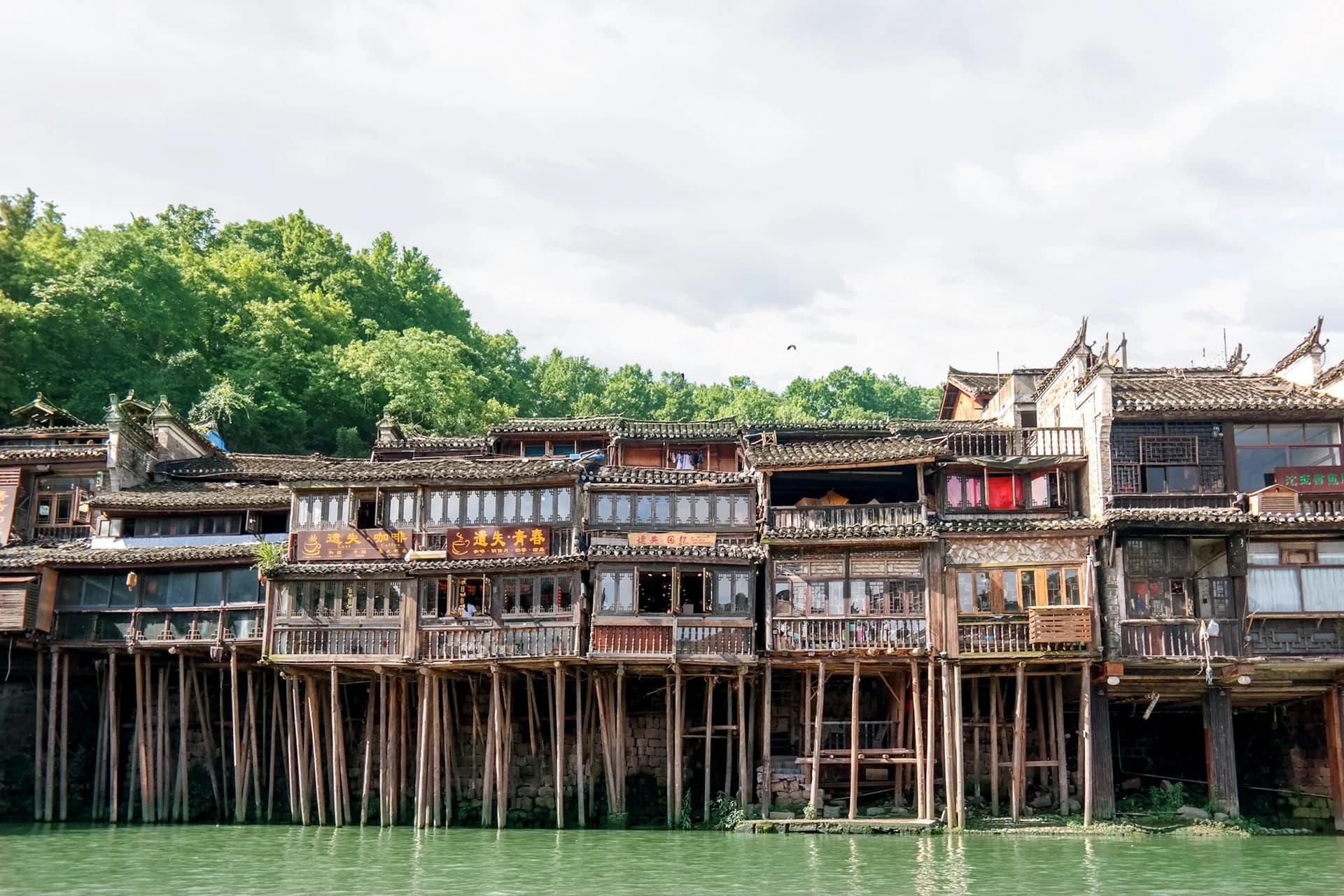
The stilted house has a history of more than 4,000 years and was created by ethnic minorities such as the Tujia and Miao to adapt to the mountainous areas. Because the terrain in the mountains is steep and it is impossible to dig flat ground for a foundation, they simply supported part of the house in mid-air with wooden piles.
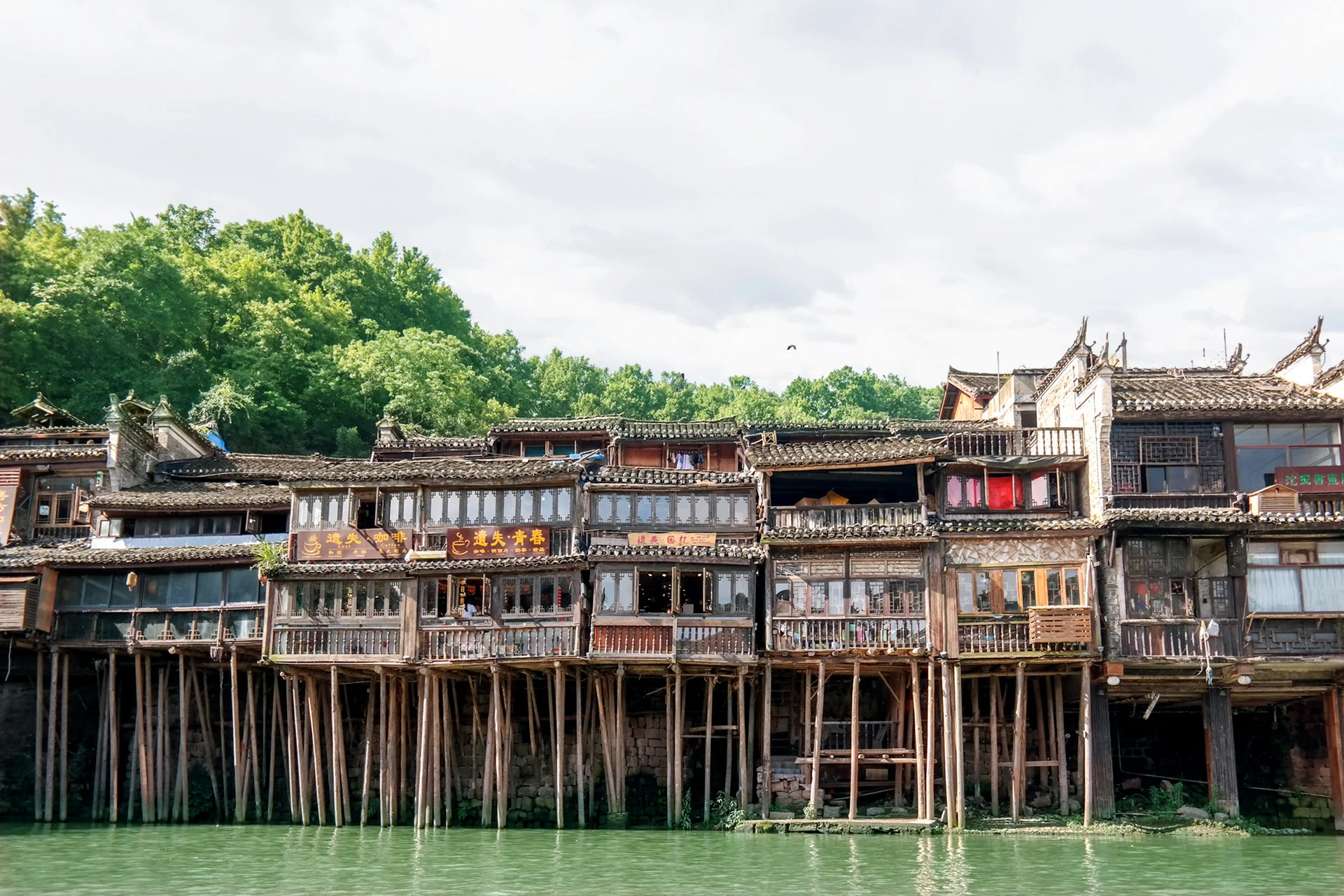
The Wisdom of the House
The stilted house has two floors—the upper floor is well-ventilated and dry, serving as bedrooms and living rooms; the lower floor is elevated and used as a pigsty, cattle pen, or storage space. The houses are mostly of the mortise-and-tenon timber structure, with upturned eaves on the roof, and carved railings, doors, and windows.
Recommended Places to Visit
Fenghuang Ancient Town: The most classic stilted building landscape; the Huilong Pavilion stilted building complex is 240 meters long and still houses more than a dozen families.
Furong Town: Famous for the movie "Furong Town," it features Ming and Qing dynasty Tujia stilted buildings. A waterfall flows through the town, earning it the nickname "the thousand-year-old town hanging on the waterfall."
Fenghuang Ancient Town is a popular destination for travel photography. You can change into traditional Miao costumes and take photos in front of the stilted houses.
VI. Dai Bamboo Houses – A Poem in the Rainforest
The Dai people's bamboo houses are located in the tropical rainforests of Xishuangbanna, Yunnan. Traditional Dai dwellings are stilted bamboo houses; early versions used only bamboo, but now a combination of bamboo and wood is more common. The craftsmanship of building these bamboo houses has been listed as a provincial-level intangible cultural heritage.
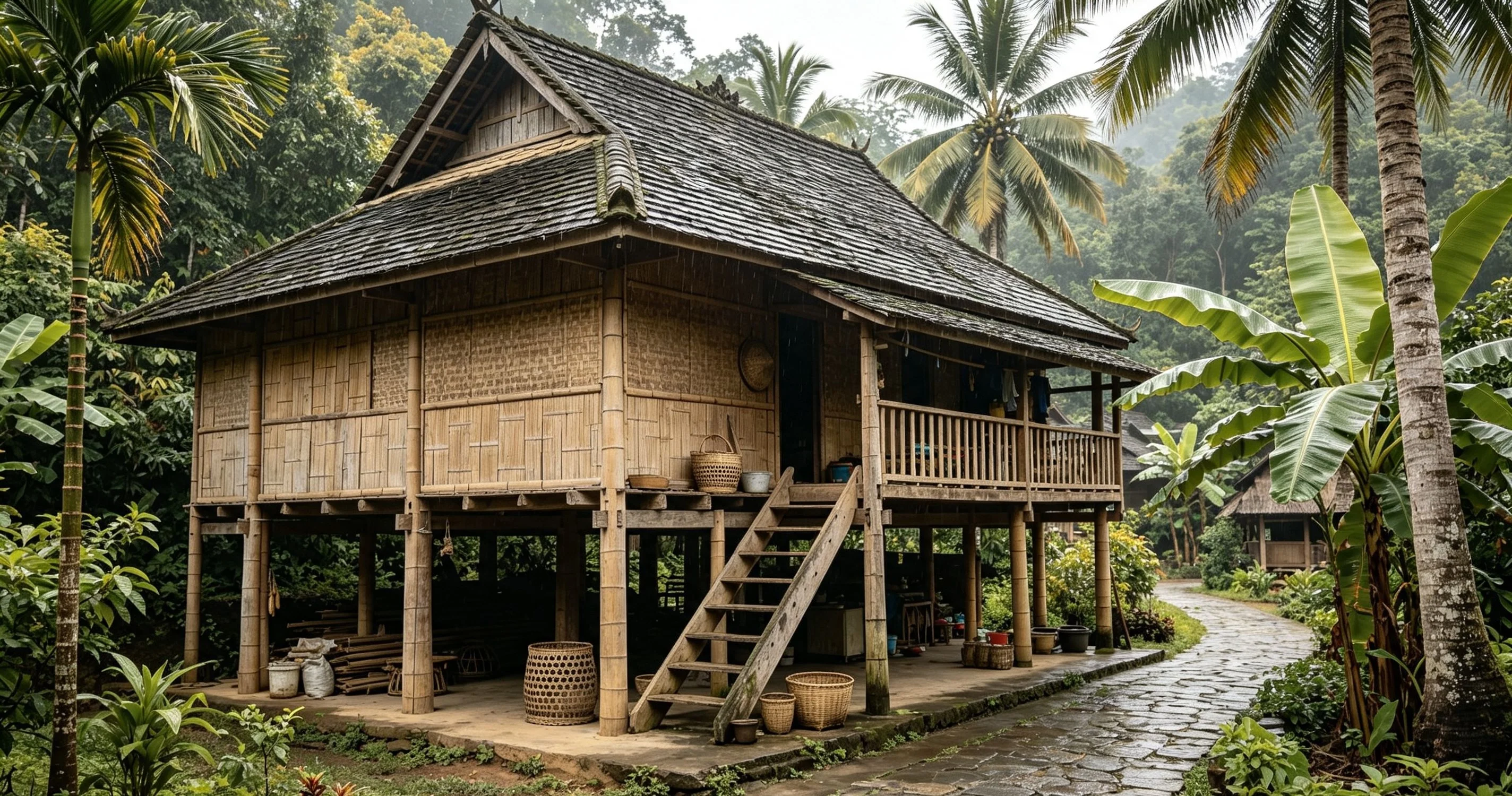
The Wisdom of the House:
Elevated Ground Floor, Upper Floor for Living: The bamboo house has two floors—the upper floor is for living, and the lower floor is elevated for raising livestock and storing miscellaneous items. The elevated design helps prevent moisture, insects, and snakes, while also making full use of space and isolating the house from rainforest ground moisture.
A-Shaped Sloping Roof: Xishuangbanna receives a lot of rain, so the roof is shaped like an inverted "V," with a steep slope. This allows rainwater to drain quickly and also provides ventilation and heat dissipation.
No Nails Required: The bamboo house is constructed without nails, using mortise and tenon joints throughout. The bamboo and wood structure provides warmth in winter and coolness in summer, and is also moisture-proof and earthquake-resistant.
Recommended Places to Visit
Best Time to Visit: November to April of the following year is the dry season, with comfortable weather. The average annual temperature is around 21 degrees Celsius.
Xishuangbanna Dai Ethnic Garden: A national 4A scenic area, composed of five well-preserved Dai villages, showcasing bamboo houses, religious culture, and the Water Splashing Festival.
Manhena Ancient Village: A Dai village with over 1200 years of history, currently containing 103 stilted bamboo houses.
VII. Waterside Dwellings in Jiangnan Water Towns – A Long Ink Painting Scroll Where One Falls Asleep with the River as a Pillow
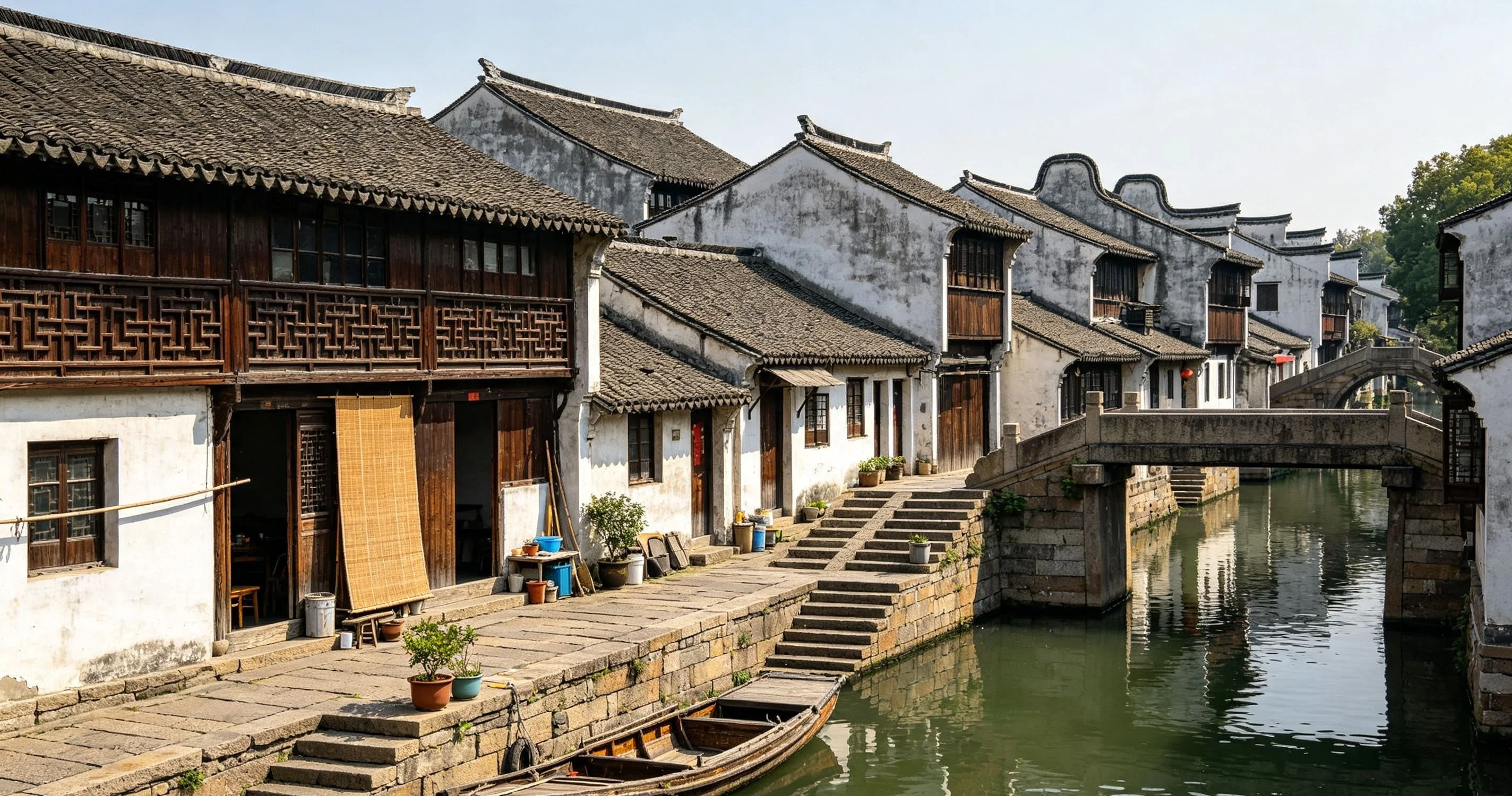
The traditional water town dwellings of Jiangnan are scattered throughout the ancient towns of the Taihu Plain, such as Zhouzhuang, Xitang, Wuzhen, Tongli, Nanxun, and Luzhi. These ancient towns are crisscrossed by waterways, with houses built close to the rivers, preserving a large number of Ming and Qing dynasty buildings.
What does the house look like? What wisdom does it embody?
Waterside pavilion – a room that extends out over the river.
The most distinctive feature of Wuzhen is its "waterside pavilions"—parts of the houses extend over the river, supported by wooden or stone pillars, making them appear to float on the water from a distance. The pillars are mostly made of cypress or fir wood, which is not easily rotted when soaked in water.
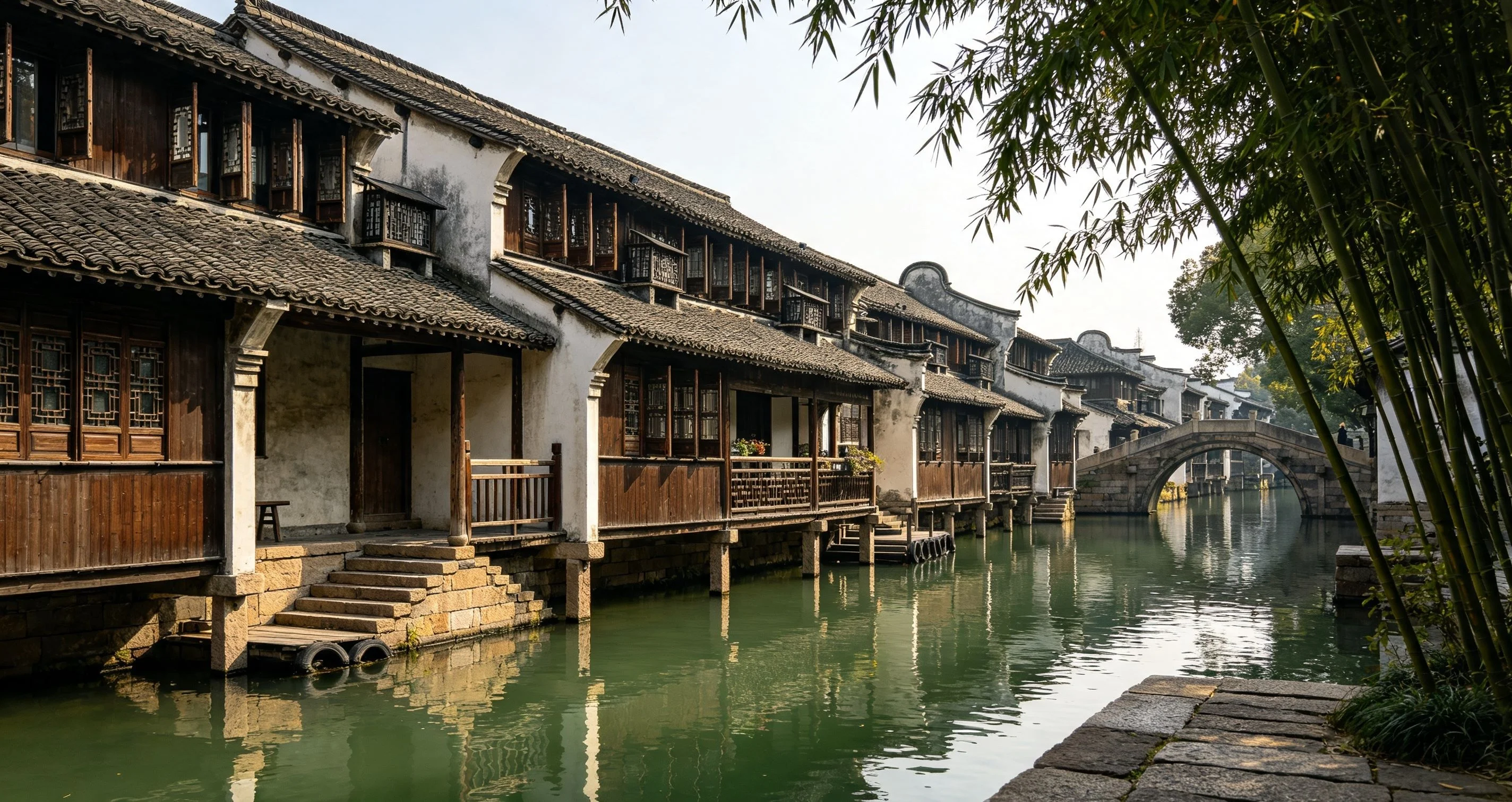
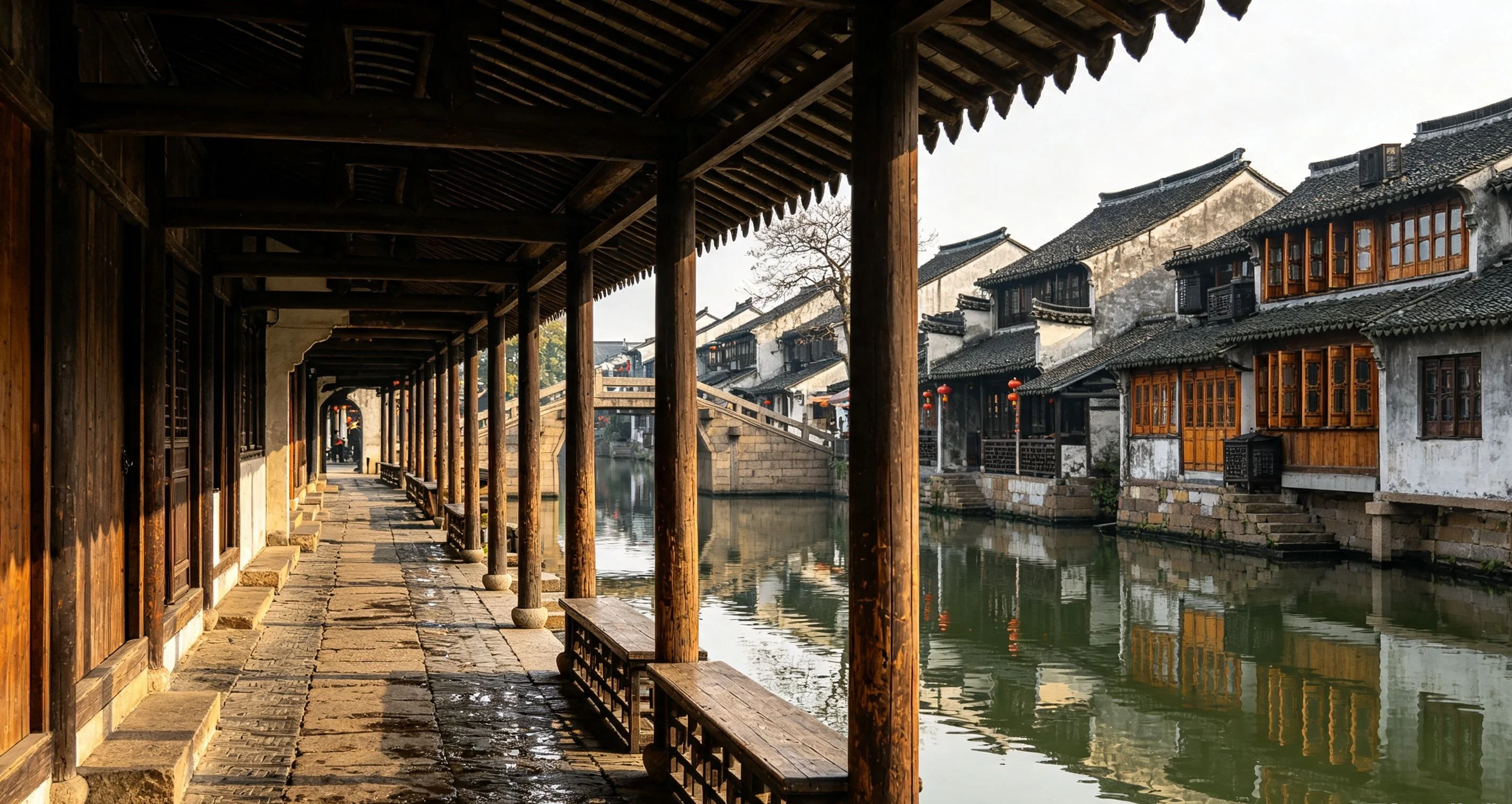
Covered walkways – long streets that are not afraid of sun or rain.
The covered walkways in Xitang are erected one after another along the street by the shops, stretching for more than 1,200 meters. The eaves are wide, providing shade on sunny days and shelter from the rain on rainy days.
River wharf—a small dock in front of every house.
Each household has its own small stone steps extending into the water, where people wash clothes, wash vegetables, and fetch water.
Recommended Places to Visit:
Wuzhen: Its cross-shaped waterway divides the area into four sections: East, West, South, and North, with waterside pavilions stretching for miles. Mao Dun's former residence is located on Guanqian Street.
Xitang: Famous for its covered corridors, stretching over 1200 meters. It features numerous alleyways, bridges, and covered corridors.
Nanxun: A representative of "waterfront dwellings"—the houses face the river, not the street, with only a narrow, less than two-meter-wide flagstone path in front. The wood and brick carvings at Chongbentang are exquisite.
Zhouzhuang: Famous for its twin bridges.
Tongli: The buildings in Tuisi Garden are all built close to the water, reflected in the pond, creating a harmonious interplay of reality and illusion.
Precautions
Respect local customs
Entering a cave dwelling: Do not step on the mat on the kang (heated brick bed), and do not touch the offering table or statues of deities.
Temples or ancestral halls: Remove your shoes, do not wear a hat, do not make loud noises, and follow the guidance of the locals.
Weather and Clothing
Northern China (cave dwellings, courtyard houses): Large temperature differences in spring and autumn, bring a jacket. Cave dwellings are cool in summer, but the sun is strong outdoors, so be sure to protect yourself from the sun.
Southern China (Tulou, Hui-style architecture, western Hunan, southeastern Guizhou, Jiangnan): Rainy and humid, be sure to bring rain gear and non-slip shoes. It's cold in the mountains in the mornings and evenings, so bring a light down jacket or fleece.
Xishuangbanna: Warm year-round, but more comfortable during the dry season (November–April), be aware of mosquitoes.
Accommodation and Food
Staying in guesthouses (cave dwellings, earthen buildings, stilted houses, bamboo houses) is a wonderful experience, but facilities may be basic (e.g., shared bathrooms, no elevator), so be prepared.
Local food may be spicy (Hunan, Guizhou) or oily, so if you have a sensitive stomach, bring your usual medications. Drink bottled water whenever possible.
Transportation and Safety
Public transportation is limited in rural areas; hiring a car or driving yourself is the most convenient option.
During the rainy season (June–August), flash floods may occur in the valleys of northern Shaanxi, and landslides may occur in mountainous areas of Fujian, Huizhou, and western Hunan. Check the weather forecast before traveling and avoid dangerous sections of road.
Note: This article provides general cultural guidance. Individual experiences may vary. Always approach cultural learning with an open mind.