
A trip to Tibet is not one you can simply embark on at a moment’s notice. For overseas travelers, the barriers to entry for this sacred, snow-capped land are far higher than for other Chinese provinces; from legal access requirements to the challenges of high-altitude survival, and from a maze of permits to transportation checkpoints, there are hidden rules at every turn.
1. Independent travel? Forget about it—you have to be "tied" to a travel agency.
The Tibet Autonomous Region requires foreign tourists to join organized group tours or book private, customized tours. You cannot rent a vehicle or purchase tickets to enter any temples or historical sites on your own.
You must arrange your itinerary through a licensed Chinese travel agency and be accompanied by a certified tour guide throughout the trip;
You may join a scheduled group tour organized by the travel agency or request a customized private small-group tour (which offers greater flexibility but comes at a higher price);
In cities such as Lhasa, Shigatse, and Nyingchi, you are free to walk around, shop, or dine within the city limits after the agency-organized group activities conclude; however, a tour guide must be present whenever you visit any temples, museums, or cultural heritage sites.
2. There are only two ways to travel to Tibet: by air or train from mainland China, or by air from Nepal.
Currently, there are only two ways for foreign tourists to legally enter Tibet:
From cities in mainland China: There are direct flights to Lhasa, Nyingchi, or Shigatse from cities such as Beijing, Shanghai, Chengdu, Chongqing, Xi'an, and Kunming, with Chengdu offering the highest frequency of flights (multiple departures daily).
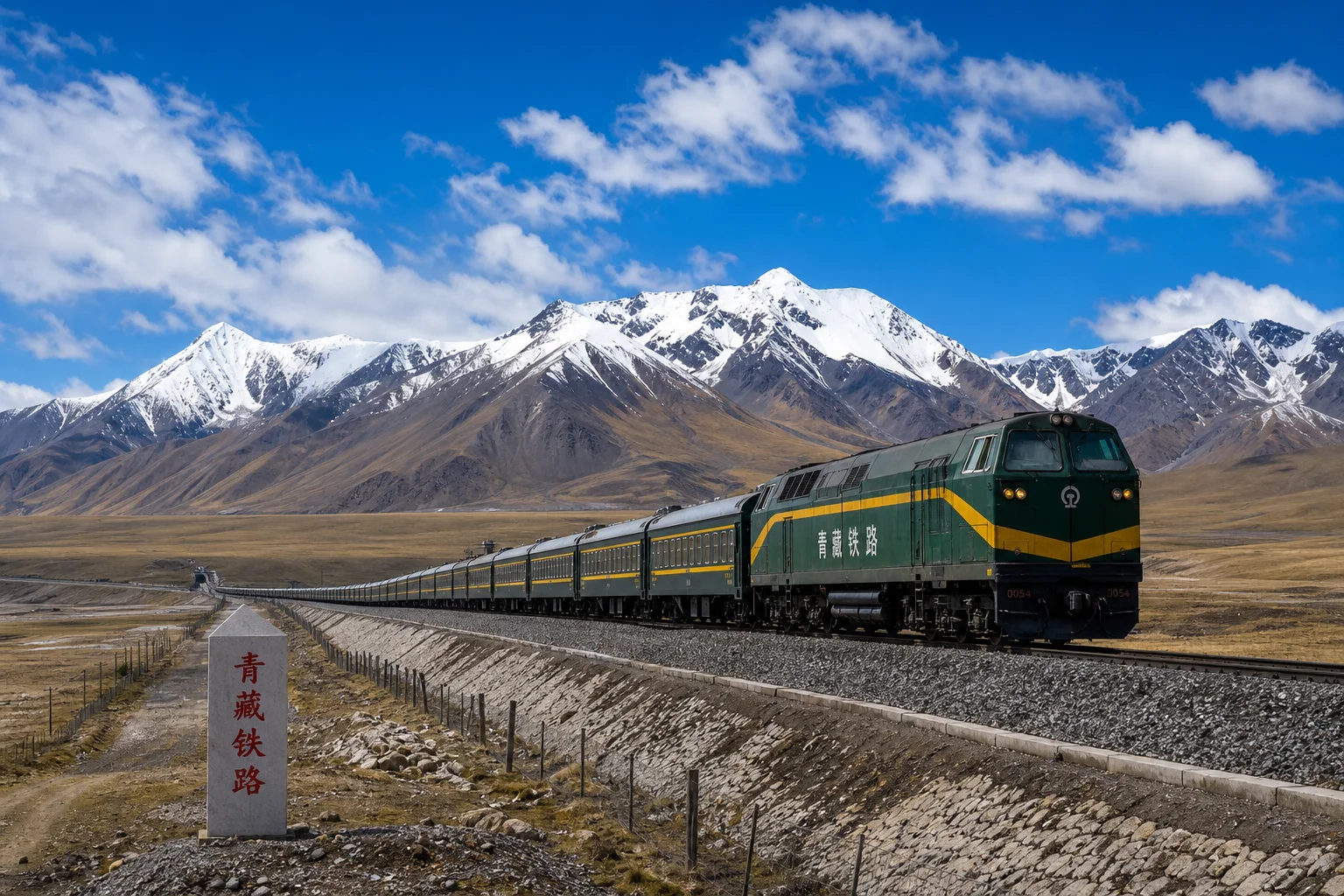
Additionally, the Qinghai-Tibet Railway operates services from cities including Chengdu, Chongqing, Xining, Lanzhou, Beijing, and Shanghai; the journey offers stunning scenery, but train tickets are extremely difficult to secure during peak season, so advance booking is essential.
From Kathmandu, Nepal: There are direct flights to Lhasa (two flights daily during peak tourist season), representing the only international air route.
3. If you are departing from Nepal, you must obtain a "group visa" and a "border pass."
Unlike entering Tibet from mainland China, entering from Nepal involves specific requirements:
Group Visa: You cannot apply for a standard tourist visa at a Chinese embassy or consulate in your home country; instead, you must obtain a Group Visa from the Chinese Embassy in Kathmandu.
This group visa can be used not only for entering Tibet but also for subsequently touring other provinces in China; however, the complete itinerary must be clearly specified at the time of application.
Border Pass: This is required whether you travel by air or overland. Your travel agency will apply for it in Tibet and send you a scan or photo; you simply need to present the digital copy at Kathmandu Airport or the border crossing (please note, however, that the original copy of the Tibet Entry Permit is still required).
4. Essential Document: "Tibet Travel Permit" — without it, you won't even be able to board the train.
This is the most basic "permit" for entering Tibet, issued by the Tibet Autonomous Region Tourism Bureau in Lhasa.
Who handles the application? Individuals cannot apply on their own; it must be processed by your travel agency.
What is required? A valid passport (with at least 6 months' validity remaining), a Chinese visa (or residence permit), and a confirmed itinerary.
Processing time? The standard processing time is 15–20 working days, though it may take longer during peak seasons. Please ensure you allow sufficient time.
How do I receive it? Once the permit is issued, the travel agency will courier the original hard copy to your address in China (e.g., a hotel or a friend's home). You must present the original document to board your flight or pass through the train ticket check; electronic versions or photocopies are not accepted.
If you are flying directly to Lhasa from abroad, you must also obtain the original document before departure; otherwise, you will be denied boarding at the departure airport.
5. Besides the "Tibet Entry Permit," what else do I need to arrange for travel to places outside of Lhasa?
The Tibet Entry Permit covers only Lhasa city and its immediate suburbs (such as Drepung Monastery and Sera Monastery). If you wish to travel further afield, you will need to obtain the following additional permits:
Alien's Travel Permit: All prefecture-level cities outside Lhasa, such as Shigatse, Tsetang, Nyingchi, and Ngari
Border Pass: Mount Everest Base Camp, Mount Kailash, China-Nepal border crossings, etc.
Military Permit: Certain militarily sensitive areas in Ngari and Nyingchi, as well as overland travel via the Yunnan-Tibet and Qinghai-Tibet routes
If you simply want to visit Mount Everest to watch the sunset, you need to have a complete set of three permits: an Entry Permit, a Foreigner's Travel Permit, and a Border Pass.
6. Some tourist attractions are not open to foreigners.
Even if you have obtained all the necessary permits, foreign tourists are still prohibited from entering the following areas (policies are strict, with no exceptions):
Parts of Nyingchi City: Deep within the Yarlung Tsangpo Grand Canyon, Nanyi Valley
Parts of Shannan City: Lhamo La-tso, Pumoyong-tso
Parts of Qamdo City
Ngari Prefecture: Pangong Tso (parts of the lake)
Shigatse Prefecture: Yadong County (near the Bhutan border)
7. Culture and Etiquette: Respect Local Customs
Respecting local culture is essential for a pleasant trip; the following points are particularly important:
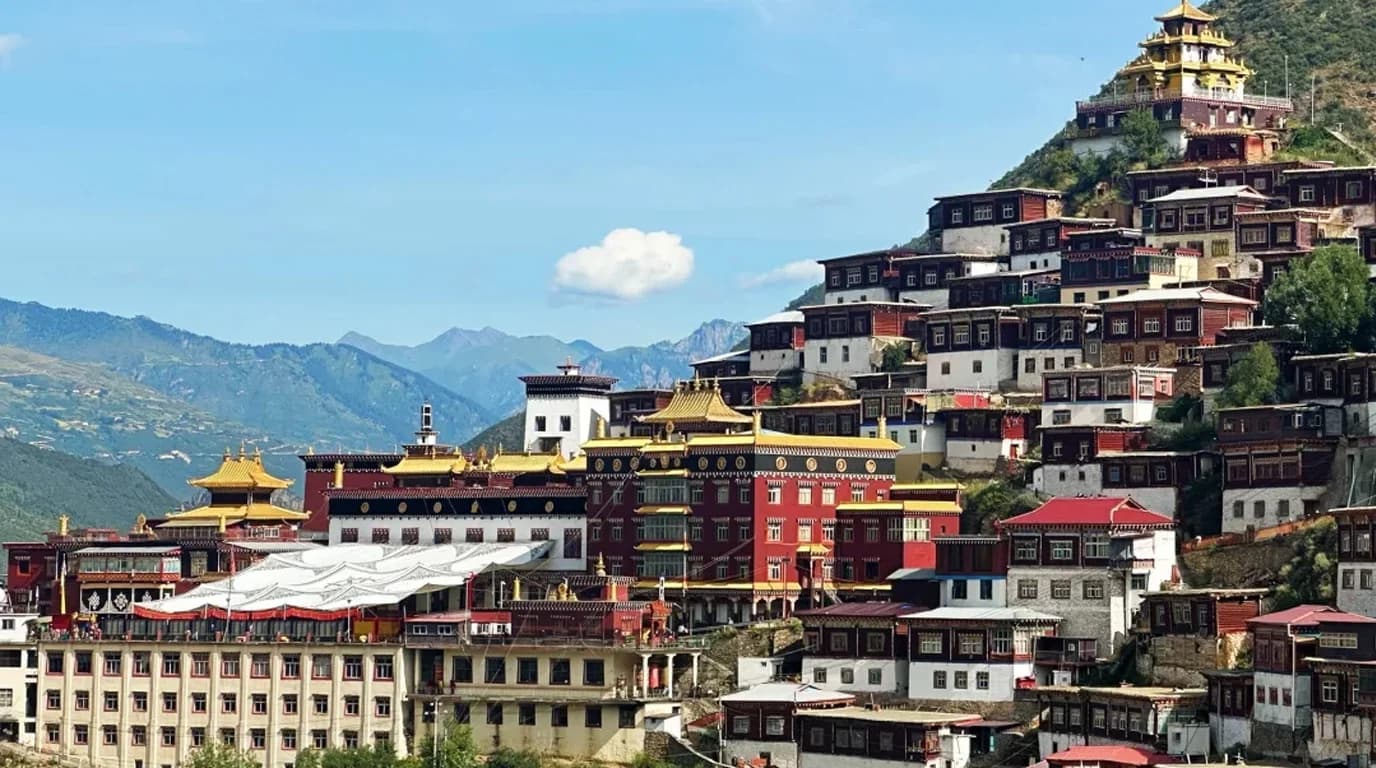
Observe rules at religious sites: When entering the main hall of a temple, remove your hat, avoid stepping on the threshold, and refrain from loud talking; do not take photos or videos inside the hall without permission.
Follow the correct direction for circumambulation: At religious sites such as temples, mani stone piles, and prayer wheels, move in a clockwise direction (with the exception of Bon monasteries).
Observe daily etiquette: When a Tibetan person offers you alcohol, tea, or a khata (ceremonial scarf), it is best to accept it with both hands; if you cannot drink alcohol, explain the situation sincerely to gain their understanding. Avoid passing or receiving items with one hand, and do not touch a Tibetan person's hair or hat. The khata is a symbol of purity; do not remove it immediately after it has been presented to you.
8. Altitude sickness is no joke—patients with these conditions should think twice.
The average altitude of Tibet exceeds 3,500 meters; Mount Everest Base Camp is at approximately 5,200 meters, and the Ngari (Ali) region is even higher. High altitude can trigger Acute Mountain Sickness (AMS), which, in severe cases, may lead to pulmonary edema or cerebral edema.
Individuals for whom travel is strongly discouraged (please consult a doctor):
Severe cold or respiratory infection (pneumonia, tuberculosis, severe bronchitis);
Severe anemia;
Uncontrolled hypertension or severe heart disease;
Severe chronic obstructive pulmonary disease (COPD);
Recent major surgery or late-stage pregnancy.
Note: This article provides general cultural guidance. Individual experiences may vary. Always approach cultural learning with an open mind.