
Among China's many traditional festivals, the Mid-Autumn Festival is perhaps the most poetic. Unlike the bustling Spring Festival or the competitive Dragon Boat Festival, the Mid-Autumn Festival is tranquil and gentle, a festival of moonlight and longing.
For foreign travelers visiting China for the first time, the Mid-Autumn Festival offers a unique cultural experience. During these days, you will witness the most romantic side of China: families reunite under the moonlight, children carry lanterns through the streets, and the air is filled with the aroma of osmanthus and mooncakes. It is a festival about "reunion," and no matter where you come from, "reunion" is a universal human emotion.
I. Time and Holidays in 2026: How to Plan Your Trip
The Mid-Autumn Festival in 2026 falls on September 25th (Friday). According to the arrangements of the State Council of China, the Mid-Autumn Festival holiday will be from September 25th to 27th, a total of 3 days.
The following National Day holiday is from October 1st to 7th, a total of 7 days. The two holidays are separated by only three working days: September 28th, 29th, and 30th. If you can take three days off, you can combine the Mid-Autumn Festival and National Day into a super long 13-day holiday from September 25th to October 7th. This is an excellent window of opportunity for travelers planning an in-depth trip to China.
Travel tips: Domestic transportation will be extremely busy during the holiday period, so it is recommended to book train and plane tickets in advance. Hotels in popular tourist destinations should also be booked as early as possible.
II. Three of the most beautiful legends
If you chat with locals during the festival, almost everyone will mention these stories:
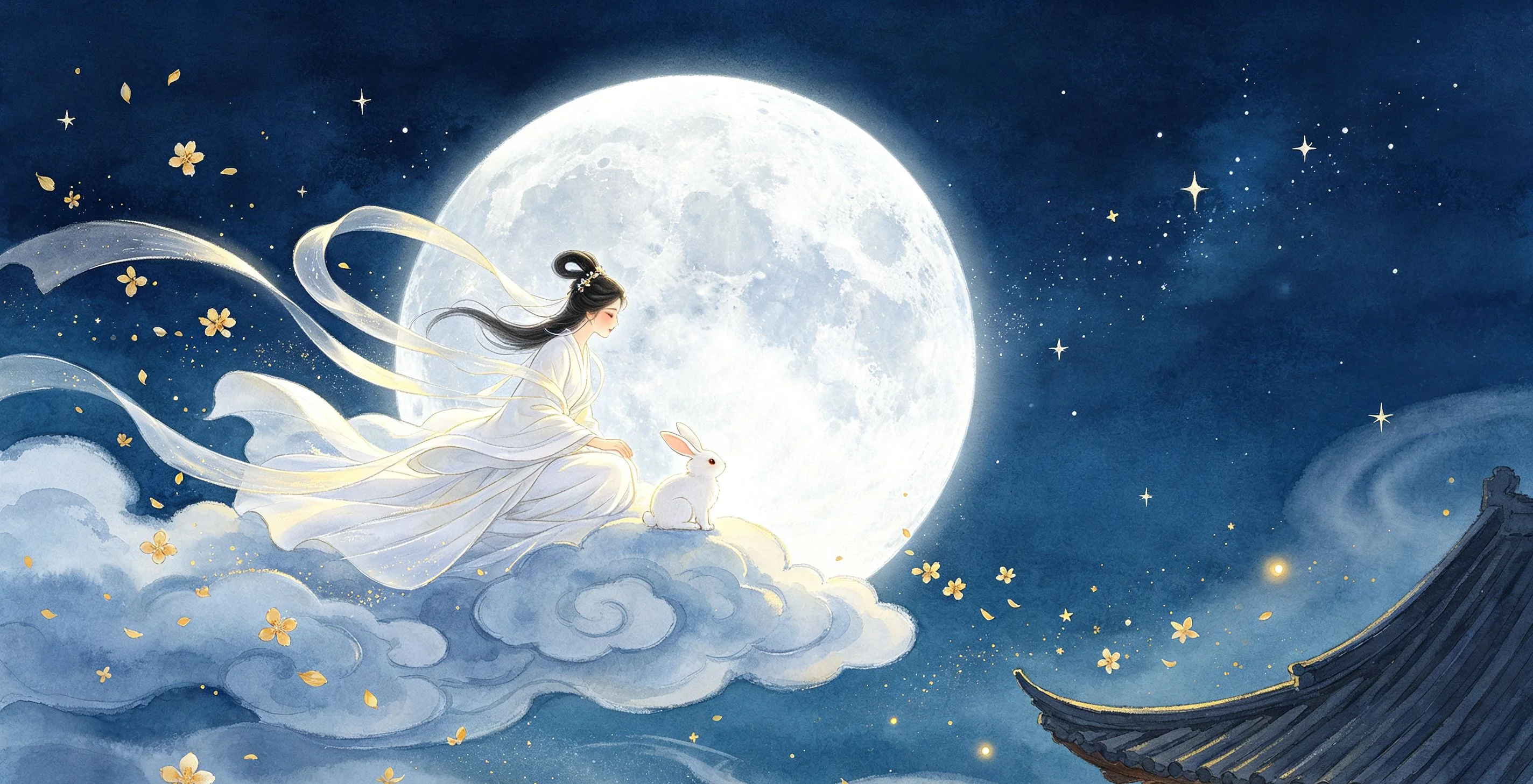
Chang'e Flying to the Moon – this is the most famous Mid-Autumn Festival legend. In ancient times, the hero Hou Yi shot down nine suns and obtained a packet of elixir of immortality from the Queen Mother of the West, which he entrusted to his wife Chang'e for safekeeping. Hou Yi's apprentice, harboring wicked intentions, forced Chang'e to hand over the elixir while Hou Yi was away. In desperation, Chang'e swallowed the elixir, her body floating into the sky and eventually landing on the moon. Hou Yi and the villagers set up an altar under the moon to worship, thus giving rise to the Mid-Autumn Festival custom of moon worship.
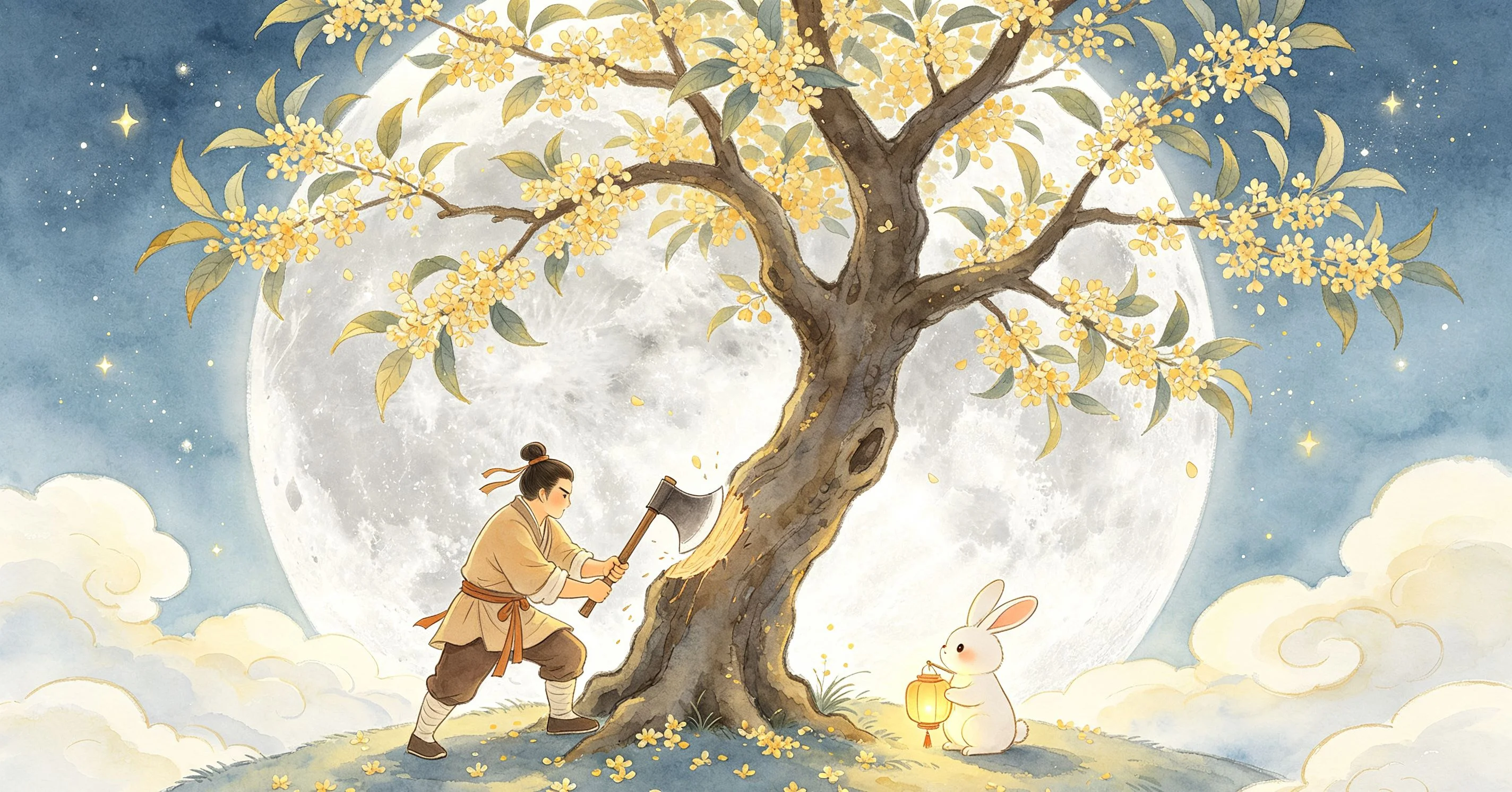
Wu Gang Chopping Down the Cassia Tree – There is a cassia tree on the moon that is 500 feet tall. Wu Gang, a man from the Han Dynasty, made a mistake while learning to become an immortal and was punished by being sent to the moon palace to chop down the cassia tree. However, the wounds on the tree healed immediately with each axe blow, so Wu Gang could only swing his axe day after day. The fragrance of cassia blossoms during the Mid-Autumn Festival has led people to associate it with this divine tree in the moon palace.
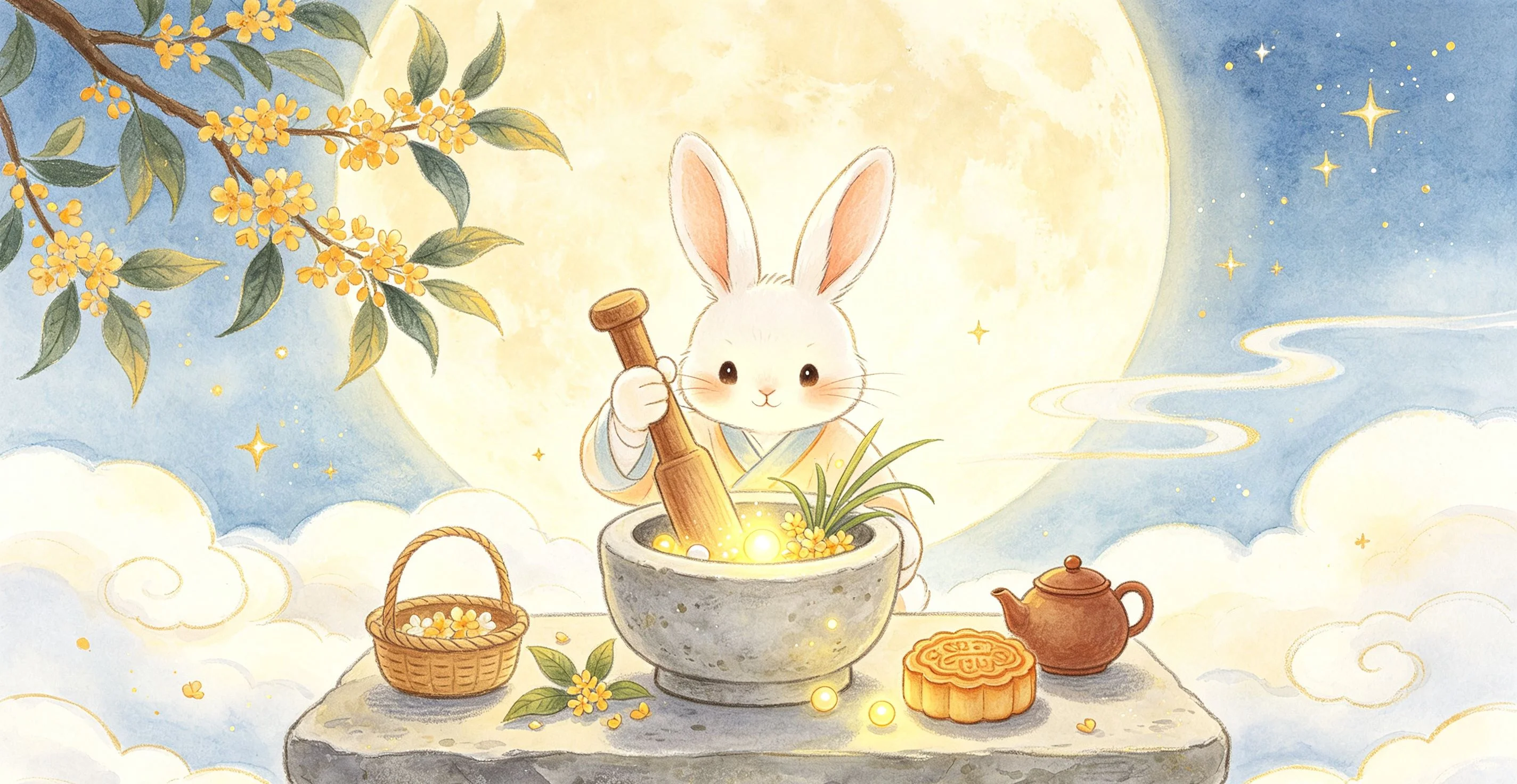
The Jade Rabbit Pounding Medicine – When Chang'e ascended to the moon, she took a white rabbit with her. This jade rabbit, holding a jade pestle, spends its days pounding the elixir of immortality, becoming one of the symbols of the moon.
III. What is the Mid-Autumn Festival? A three-thousand-year-old story.
The Mid-Autumn Festival is one of China's four major traditional festivals, along with the Spring Festival, the Dragon Boat Festival, and the Lantern Festival. Its history can be traced back more than 3,000 years in China.
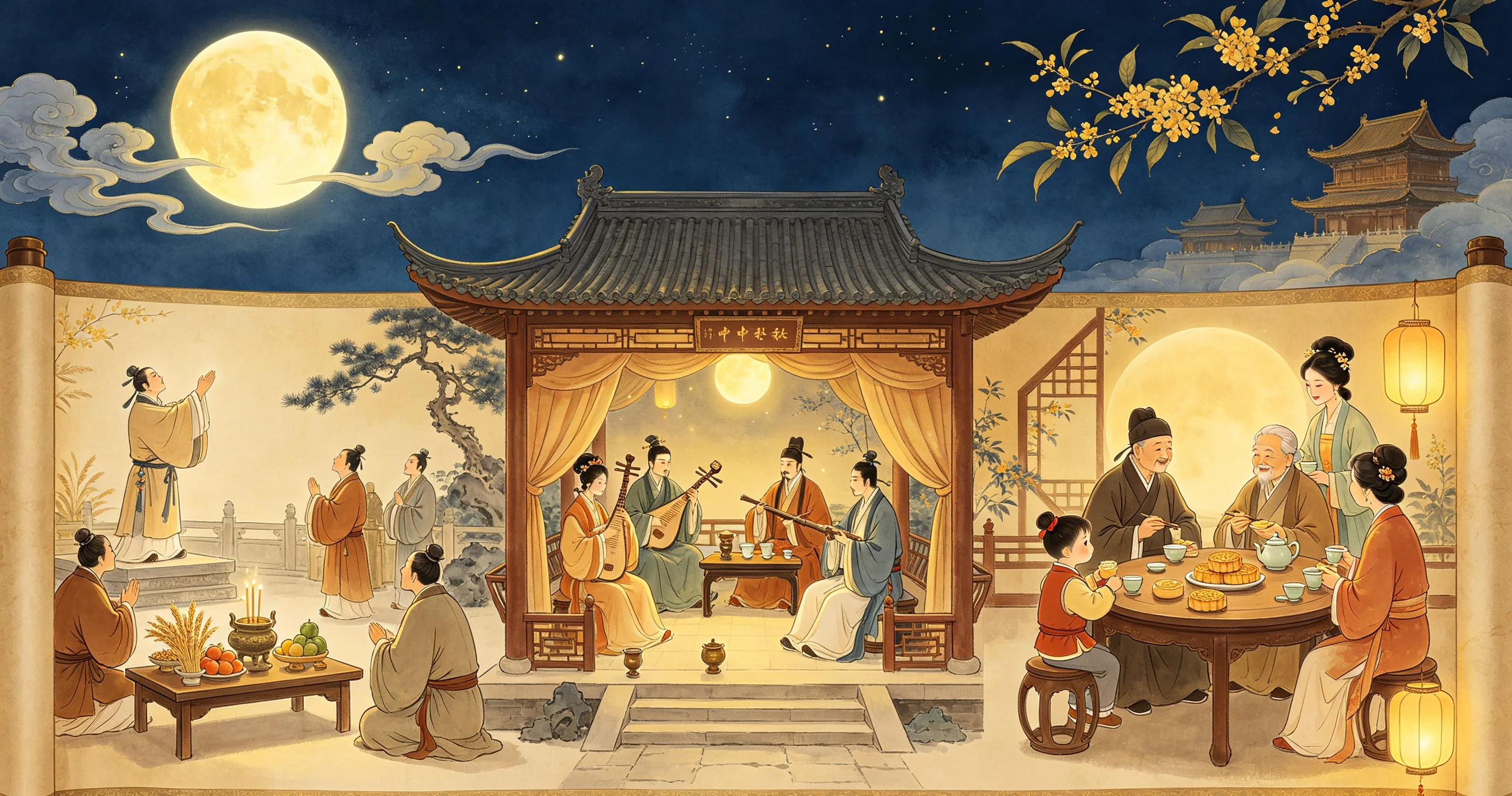
The earliest Mid-Autumn Festival was related to the ancient people's moon worship. On the 15th day of the eighth lunar month—around the autumnal equinox, when the moon is at its fullest and brightest—people held moon-worshiping ceremonies to give thanks for the moon's light and to pray for a bountiful harvest in the coming year.
By the Tang Dynasty, the Mid-Autumn Festival had officially become a nationwide festival. Moon viewing gradually evolved from royal rituals to a popular folk activity. After the Song Dynasty, the custom of eating mooncakes combined with moon viewing, and the Mid-Autumn Festival's connotation of "reunion" deepened.
Simply put, the Mid-Autumn Festival in China is like Thanksgiving in the United States—its core lies in "reunion" and "gratitude." However, while Thanksgiving gives thanks for the harvest, the Mid-Autumn Festival gives thanks for the bright moon and loved ones under its light.
IV. How to experience the Mid-Autumn Festival?
If you come to China during the Mid-Autumn Festival, here are some activities you can participate in:
1. Moon gazing
Moon gazing is the most representative tradition of the Mid-Autumn Festival. On the night of the Mid-Autumn Festival, Chinese people believe that "the moon is brightest and most beautiful on the night of the Mid-Autumn Festival." Families will set up tables and chairs outdoors, and the whole family will sit together to admire the moon, eat mooncakes, and chat.
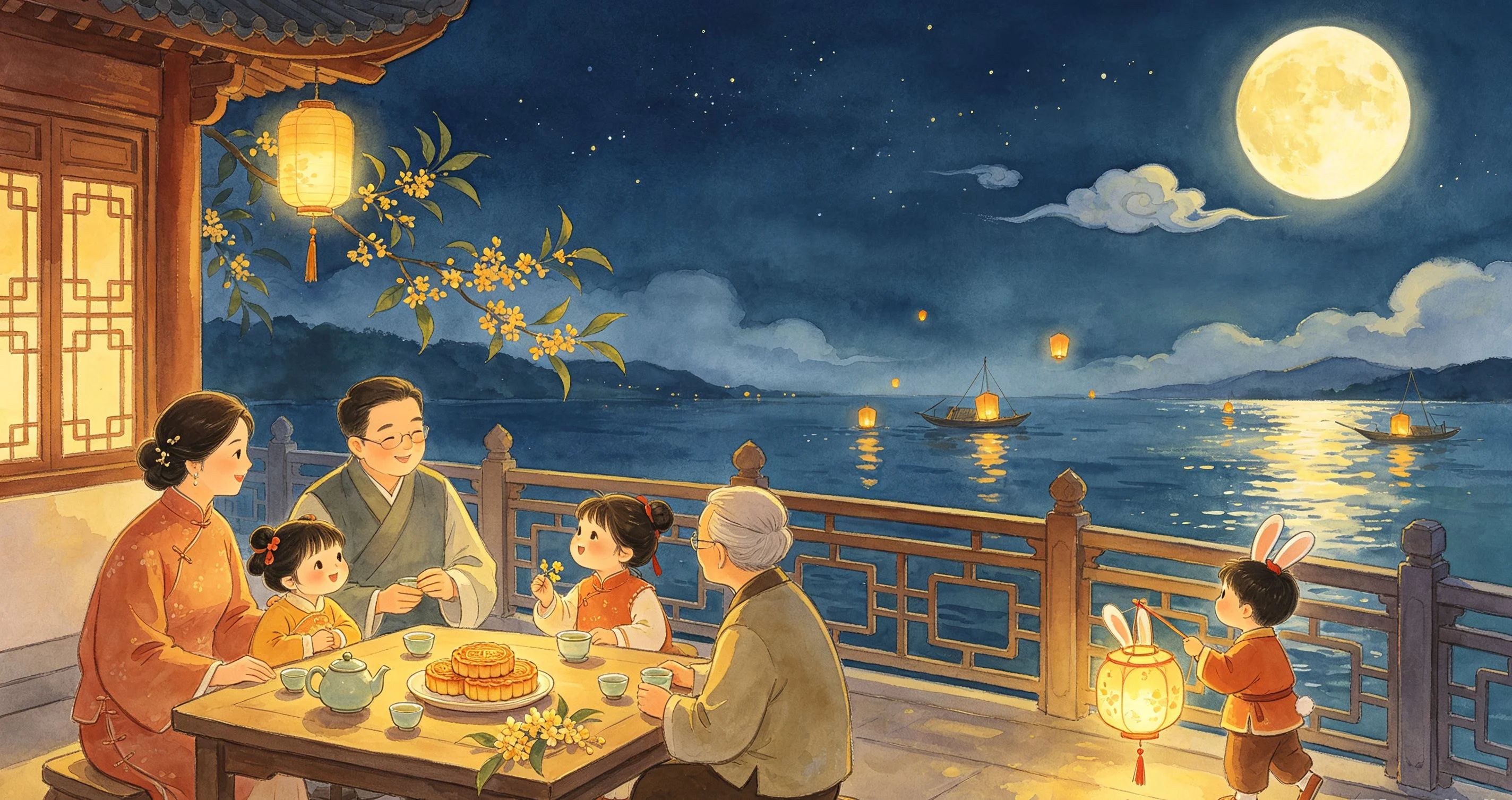
As a traveler, you can find a place with a wide view—the West Lake in Hangzhou, the Kunming Lake in the Summer Palace in Beijing, or the Bund in Shanghai—and join the locals in moon-viewing. Many parks and scenic spots will extend their opening hours and hold moon-viewing activities on Mid-Autumn Festival night.
2. Eating mooncakes
Mooncakes are the iconic food of the Mid-Autumn Festival. These round pastries symbolize completeness and reunion. Traditional mooncakes come in many styles, including Cantonese, Suzhou, Beijing, and Yunnan, with fillings such as lotus seed paste, red bean paste, mixed nuts, and salted egg yolk.
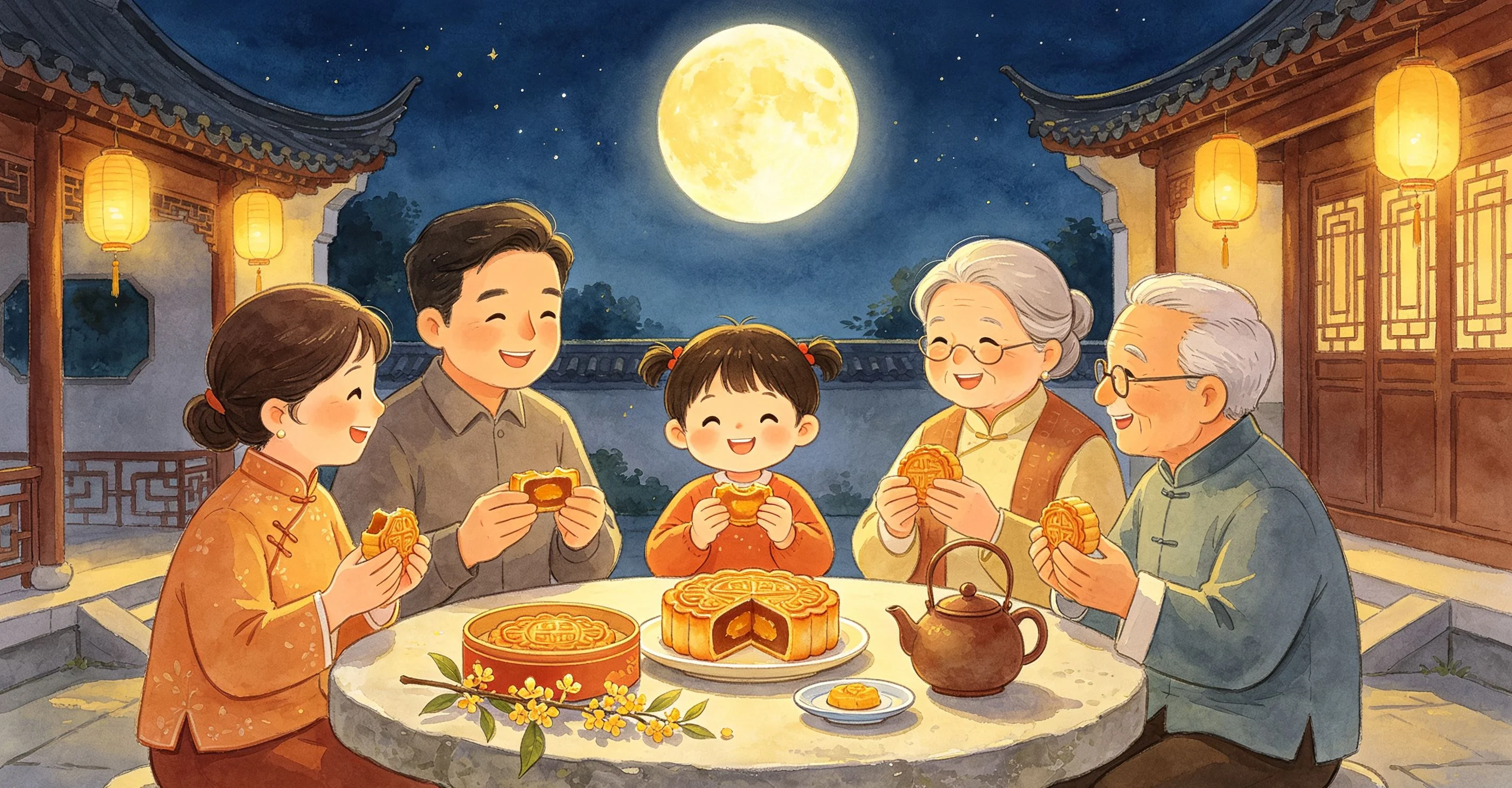
As a traveler, you can: buy mooncakes at local pastry shops or supermarkets to enjoy. Note: Mooncakes are usually eaten with tea to balance their sweetness. A single mooncake is typically cut into small pieces to share – this also symbolizes "reunion."
Mooncake Flavor Tips:
Cantonese-style mooncakes: Thin crust and generous filling, the most common style; lotus seed paste and salted egg yolk are classic.
Suzhou-style mooncakes: Flaky crust, crisp texture.
Snow skin mooncakes: No baking required, refreshing taste, popular in recent years.
3. Lanterns and solving lantern riddles
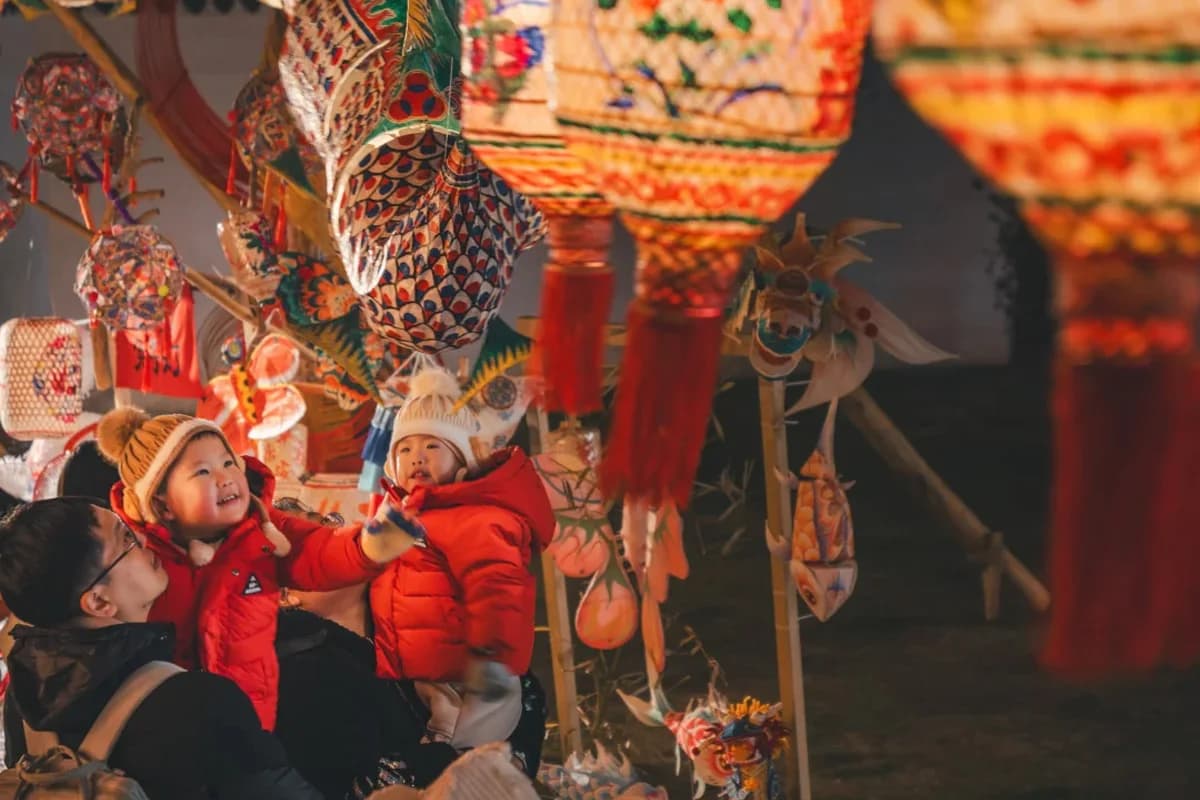
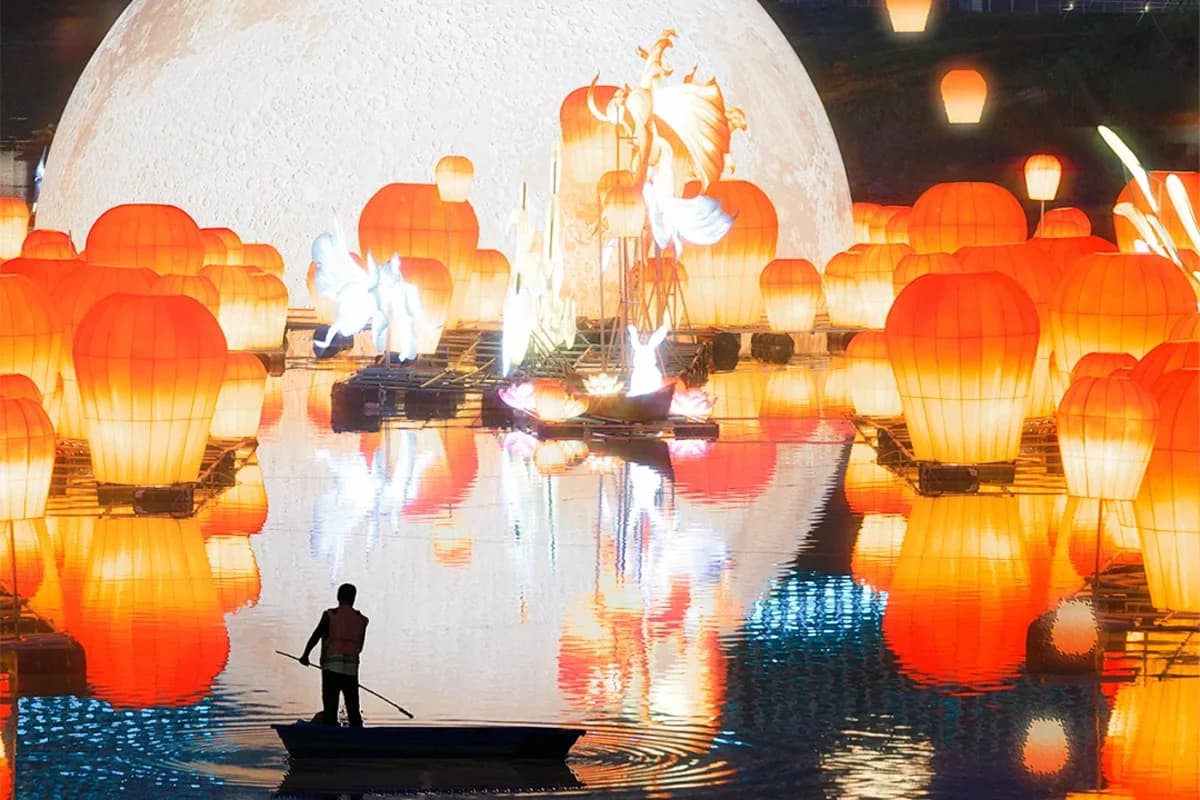
Lanterns are an indispensable element of the Mid-Autumn Festival. On the night of the Mid-Autumn Festival, parks, squares, and streets are lit up with various lanterns. Guessing lantern riddles is another popular activity—people write riddles on lanterns and gather together to solve them.
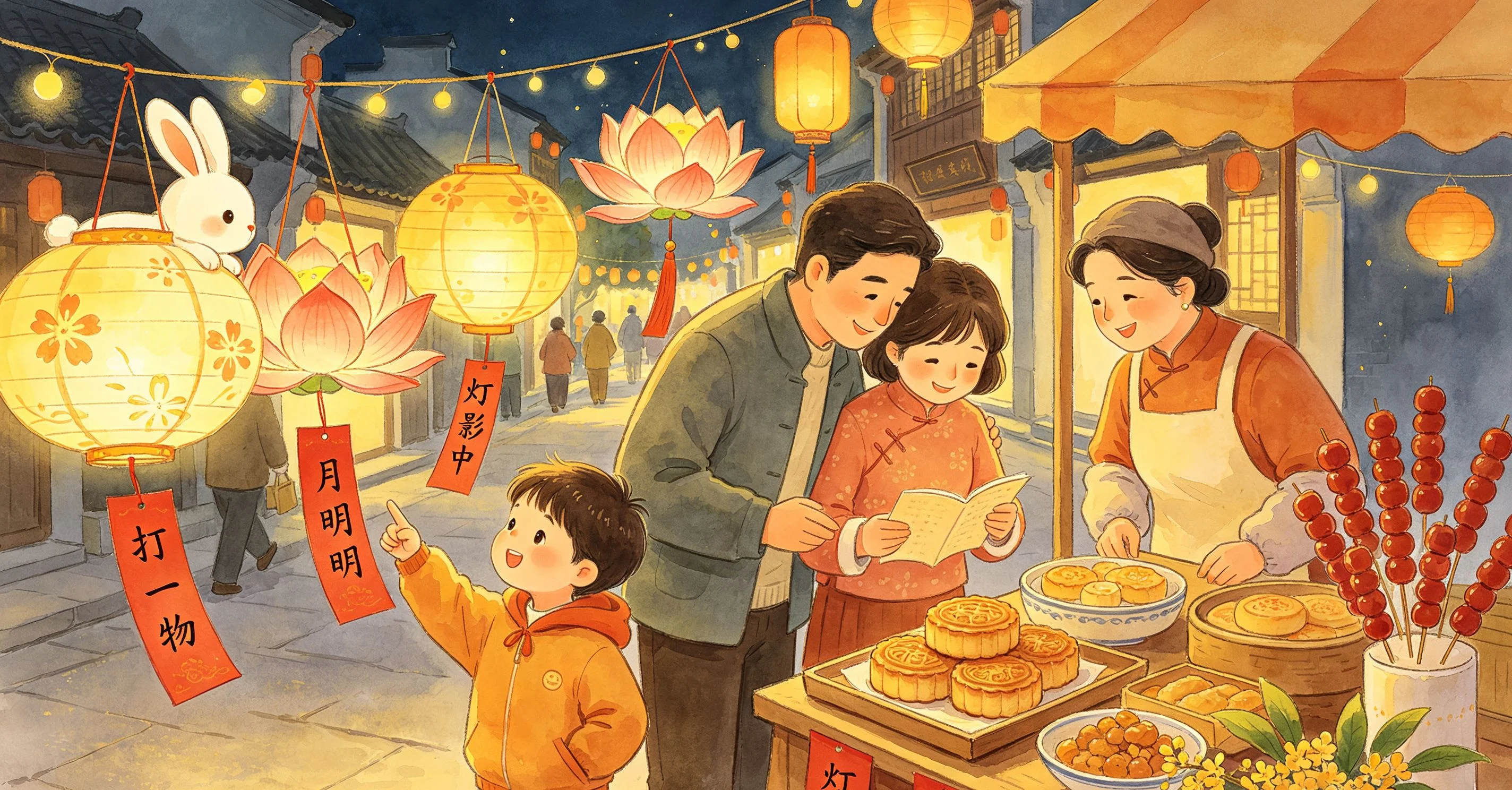
You can: Visit local lantern exhibitions and try to solve some lantern riddles. Many cities hold large-scale lantern festivals during the Mid-Autumn Festival, such as the Yu Garden Lantern Festival in Shanghai and the Victoria Park Lantern Festival in Hong Kong.
Try these two classic riddles (answers at the end):
Red pocket, green pocket, some are afraid, some love. (Guess a vegetable)
A tender little baby, taking a bath and blowing bubbles, shrinking after a wash, disappearing after another wash. (Guess a daily necessity)
4. Reunion Dinner
On the evening of the Mid-Autumn Festival, the whole family gathers together for a sumptuous dinner. The significance of this meal goes far beyond the food itself—it symbolizes family reunion and harmony.
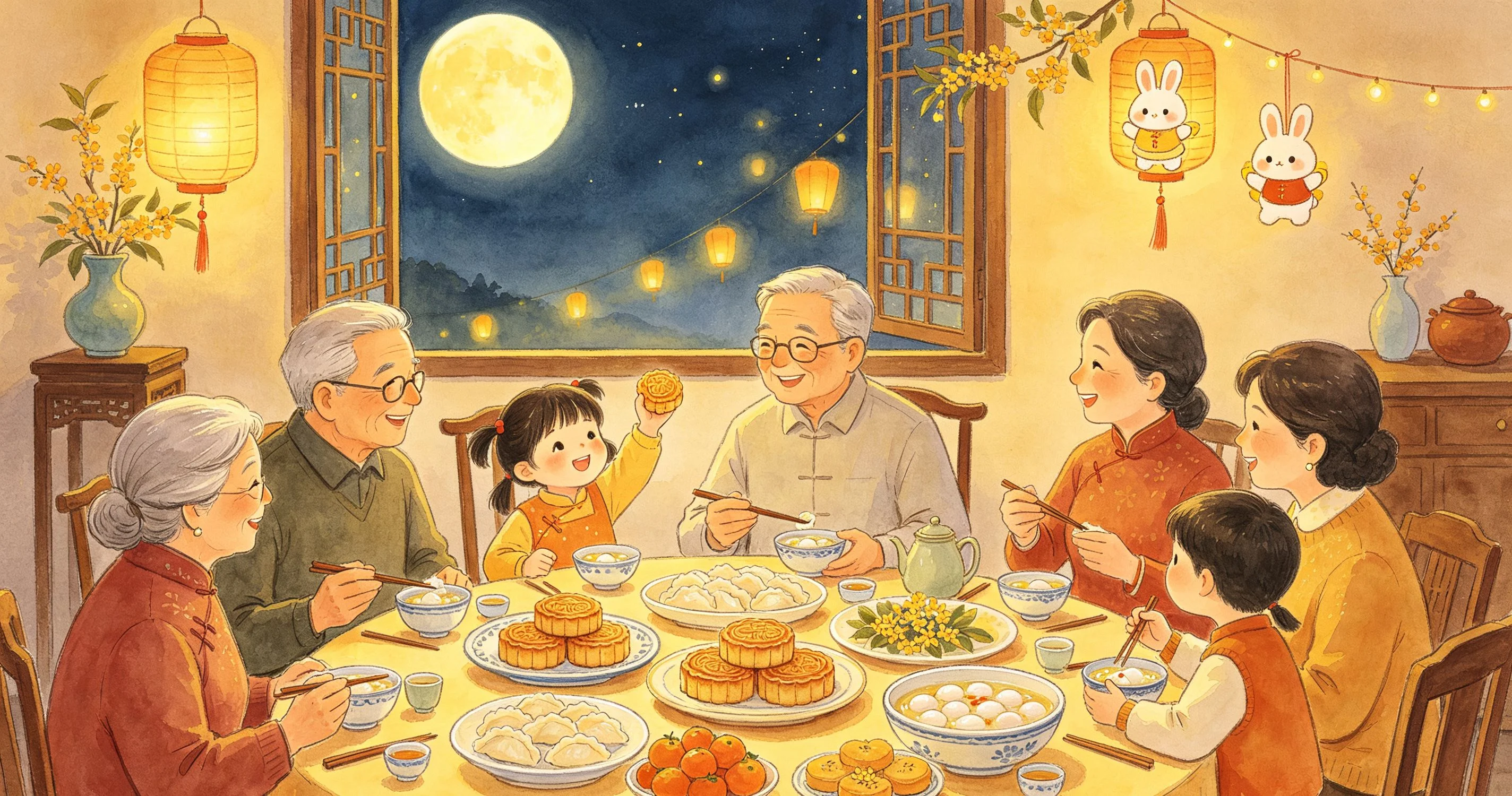
As a traveler, you can: book a special Mid-Autumn Festival set menu at a Chinese restaurant. Many restaurants offer seasonal dishes such as crab (at its fattest in autumn), pomelo (the word "pomelo" sounds like "blessing," symbolizing protection), and pomegranate (symbolizing many children and blessings).
5. Moon worship and prayers
In some regions, the tradition of moon worship has been preserved in a symbolic form. People set up incense tables and offer sacrifices, expressing their wishes for reunion, peace, and happiness under the moon.
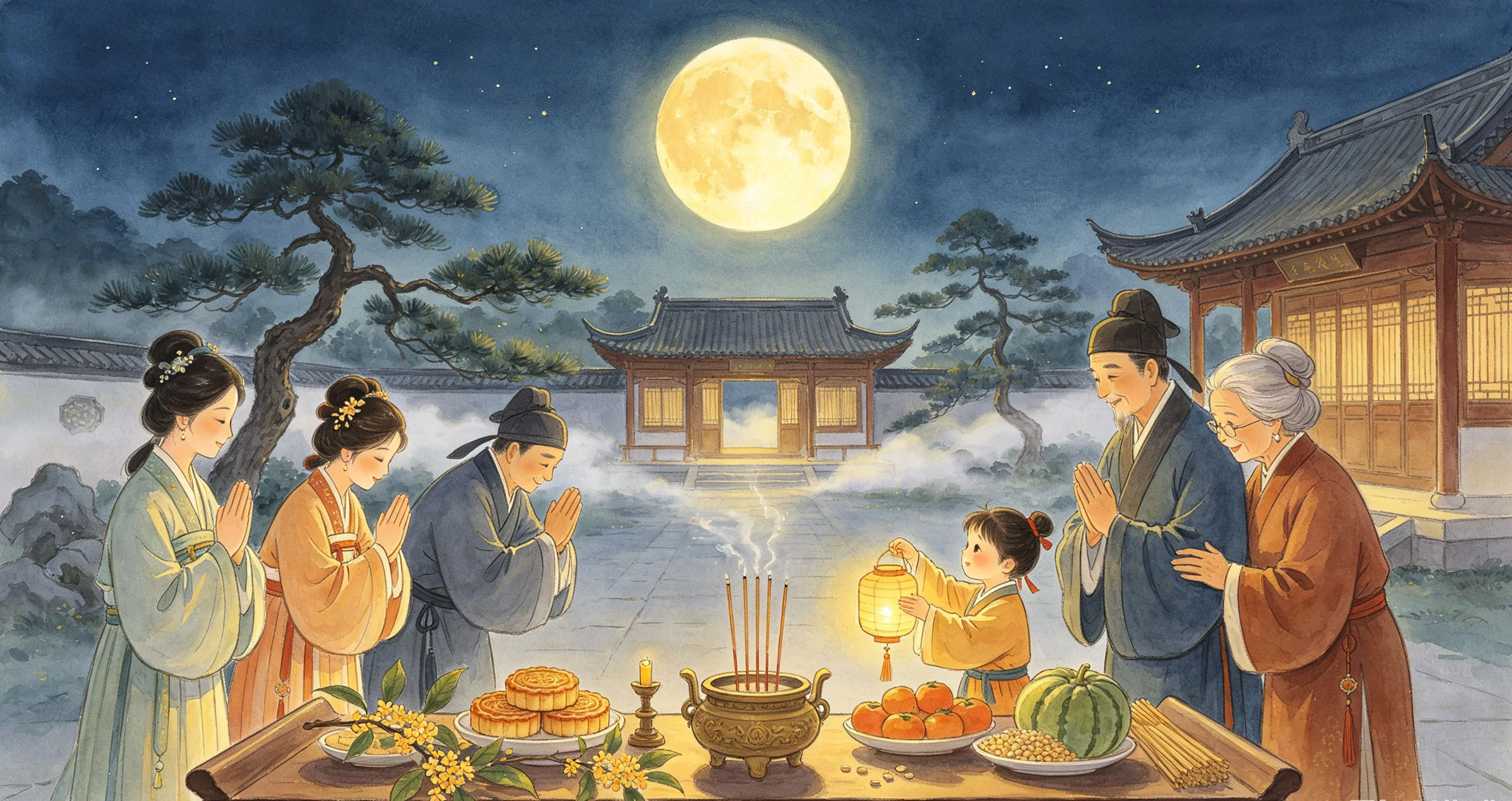
As a traveler, you can: watch moon-worship ceremonies at some traditional scenic spots or cultural events, and experience this tradition that has continued for thousands of years.
V. Where to go for the Mid-Autumn Festival in 2026?
Hangzhou – West Lake night cruise, moon viewing on the lake, and the fragrance of osmanthus blossoms. West Lake's "Autumn Moon over the Calm Lake" is one of China's most classic moon-viewing scenes.
Suzhou – Classical gardens and ancient water towns. The pavilions, terraces, and winding paths in the gardens are excellent spots for moon viewing, full of poetic charm and classical elegance.
Beijing – Kunming Lake in the Summer Palace, once a Qing Dynasty imperial garden, is perfect for Mid-Autumn Festival moon viewing. Jingshan Park and Taoranting Park also have a strong festive atmosphere.
Shanghai – The Yu Garden Lantern Festival is one of the most recommended activities during the Mid-Autumn Festival. The Bund's night view and high-altitude observation decks perfectly blend modern urban life with traditional festivals.
Nanjing – Moon viewing on the Qinhuai River has been a favorite of literati and scholars since ancient times.
Zigong, Sichuan – Zigong is world-renowned for its lantern culture, and its Mid-Autumn Lantern Festival has set an industry benchmark in previous years.
Hong Kong – The “Bingwu Year Mid-Autumn Lantern Festival” will be held from September 17 to October 11, 2026. In addition to showcasing dazzling lanterns with different themes, activities incorporating intangible cultural heritage elements, such as traditional lantern-making demonstrations, will be arranged. The lights will be on until midnight on the actual Mid-Autumn Festival (September 25th), and admission is free.
VI. Mid-Autumn Festival in Other Asian Countries
Influenced by Chinese culture, the Mid-Autumn Festival is also a traditional festival in many East and Southeast Asian countries.
South Korea (Chuseok): One of the most important festivals in South Korea, people return to their hometowns to reunite, pay respects to their ancestors, sweep tombs, and eat songpyeon (rice cakes).
Japan (Jugoya): People eat "tsukimi dango" (glutinous rice dumplings) while moon-viewing.
Vietnam (Lantern Festival): Considered "Children's Day," children parade with lanterns.
Malaysia and Singapore: Lantern parades, dragon and lion dances, and float parades.
Although the names differ, the themes of reunion, gratitude, and blessings are common.
Riddle Answers: The first riddle is "chili pepper," the second is "soap."
Frequently Asked Questions
Q1: When exactly is the Mid-Autumn Festival? How long is the holiday?
A: The Mid-Autumn Festival in 2026 is September 25th (Friday). Mainland China will have a 3-day holiday (September 25th–27th). The National Day holiday will follow immediately (October 1st–7th), so taking 3 days off can create a 13-day long holiday.
Q2: Do I need to book transportation and accommodation in advance?
A: Highly recommended. This is one of the peak travel seasons in China, and train tickets, plane tickets, and popular hotels sell out quickly. Book at least two weeks in advance.
Q3: Will shops, restaurants, and tourist attractions be closed during the Mid-Autumn Festival?
A: No. On the contrary, it will be even more lively. Shopping malls and restaurants will remain open as usual, and scenic spots will offer special Mid-Autumn Festival activities. Only some government agencies will be closed, which will not affect tourists.
Q4: Are there any taboos to avoid?
A: There are no strict taboos. However, please note: it's not advisable to give an odd number of mooncakes (Chinese people prefer even numbers).
Q5: I don't speak Chinese, will I be able to travel smoothly?
A: Major cities and attractions have English signs, and subway announcements are in English. Download translation apps (such as Google Translate or Youdao Dictionary) and map apps (Gaode/Baidu Maps have English versions). Hotel receptionists usually speak basic English.
Note: This article provides general cultural guidance. Individual experiences may vary. Always approach cultural learning with an open mind.