
Stepping into a classical Chinese garden is like entering a living painting. It is a meticulously crafted world where nature and human artistry blend into a harmonious whole. For centuries, these gardens have been sanctuaries for scholars, expressions of philosophical ideals, and masterpieces of Chinese landscape architecture. This guide will take you on a journey through the history, design, and soul of these serene spaces.
The primary keyword, Chinese gardens, encompasses a vast tradition, from the vast imperial retreats to the intimate scholar gardens tucked away in bustling cities. They are more than just collections of plants; they are profound cultural statements. Understanding their elements—from the imposing rockery to the tranquil ponds—unlocks a deeper appreciation for Chinese culture itself.
The Philosophical Roots of Chinese Garden Design
The creation of Chinese gardens is deeply rooted in ancient philosophy. The goal was never to dominate nature, but to emulate its essential spirit. The designs are a physical manifestation of Taoist, Confucian, and Buddhist principles, creating a space for contemplation and harmony.
Taoist Influence: The Pursuit of Natural Harmony
Taoism emphasizes living in accordance with the natural flow of the universe, known as the Tao. This is reflected in the asymmetrical, flowing layouts of Chinese gardens. Paths meander, and elements are arranged to feel discovered rather than imposed, mimicking the wild, untamed beauty of natural landscapes.
Water features are central to this concept, representing the soft and yielding element that, over time, can wear away the hardest stone. The interplay between the solidity of rockery and the fluidity of water is a direct expression of the Taoist yin-yang balance.
Confucian Values: Order and Social Harmony
While Taoism inspired the natural forms, Confucianism contributed a sense of order and purpose. The careful placement of pavilions, walkways, and viewing points reflects the Confucian ideal of a structured society. These gardens were often designed for scholarly pursuits—reading, painting, and discussing poetry—within a morally uplifting environment.
Every element has its place and name, often drawn from classical poetry, reinforcing the connection between humanity, nature, and cultured refinement. This blend of naturalistic form and intellectual order is what makes Chinese garden design so unique.
Key Elements of Classical Chinese Gardens
Every component in a Chinese garden is symbolic and intentionally placed. Understanding these elements will transform your visit from a simple stroll into a rich, interpretive experience. Look for these essential features.
Rockery and Water Features: The Yin and Yang
The combination of rockery and water features forms the foundational contrast in any garden. Rocks, often fantastically shaped limestone from Lake Tai, represent the mountain—the enduring, masculine yang principle. They are chosen for their texture, color, and perforations, and are artfully stacked to create miniature mountain ranges.
Water represents the feminine yin principle—the receptive, life-giving force. Ponds, streams, and pools are never geometrically perfect; their irregular shapes are designed to reflect the sky and surrounding scenery, creating an ever-changing canvas. The sound of water adds an auditory layer of tranquility.
Architectural Structures: Pavilions, Bridges, and Halls
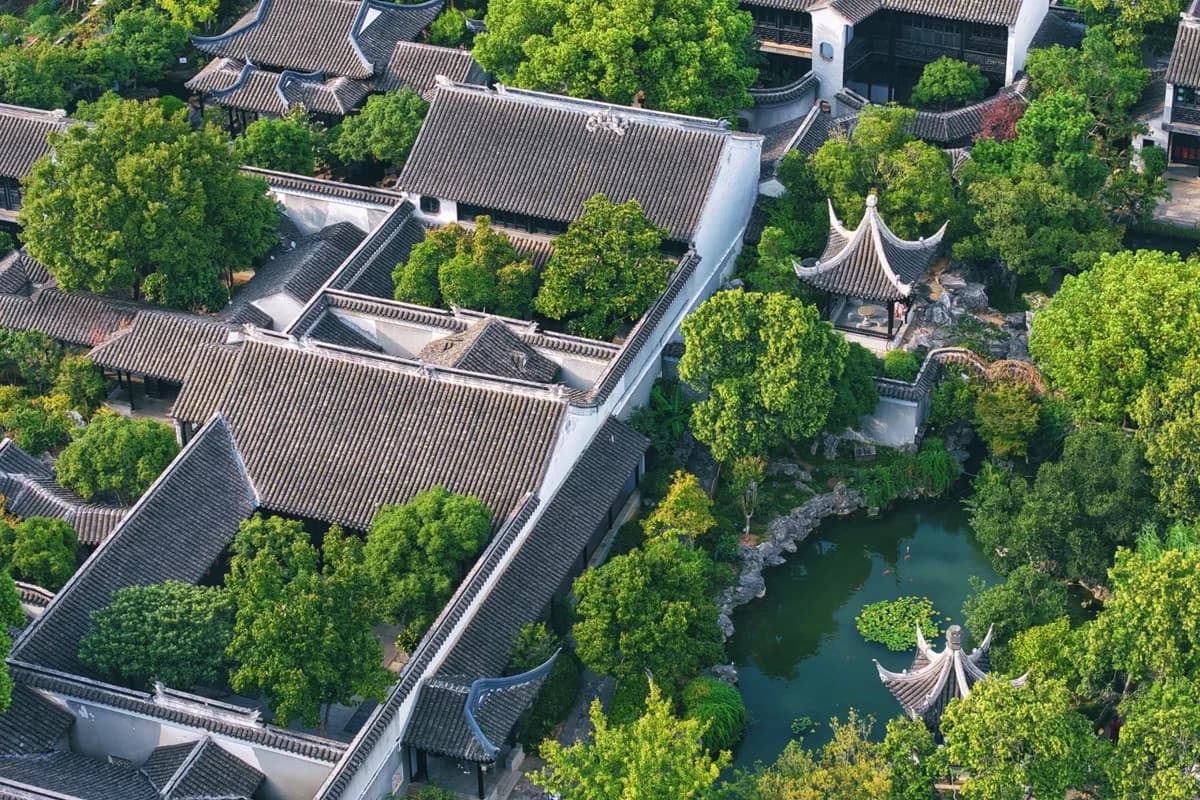
Architecture in Chinese gardens is designed to frame views and provide places for rest and contemplation. Unlike Western gardens where buildings might be the focal point, here they are integrated into the landscape.
Pavilions (Ting): These open-sided structures offer shelter and a dedicated spot to admire a specific scene.
Covered Walkways (Lang): These winding corridors connect different parts of the garden, guiding the visitor's journey and providing framed views at every turn.
Bridges: Often zigzagging to ward off evil spirits (which are believed to travel in straight lines), bridges are both practical and highly decorative.
Flora and Symbolism: The Language of Plants
Plants are chosen for their aesthetic beauty, seasonal interest, and deep symbolic meaning. A plant is never just a plant; it is a message.
Bamboo: Represents resilience, integrity, and elegance. It bends in the wind but does not break.
Pine Tree: A symbol of longevity, steadfastness, and dignity.
Plum Blossom: Blooms in late winter, symbolizing perseverance, hope, and purity.
Lotus: Grows from mud to produce a beautiful flower, representing purity, enlightenment, and rebirth.
The Intimate World of Scholar Gardens in China
While imperial gardens like the Summer Palace are grand and imposing, the heart of Chinese garden culture lies in the smaller, more personal scholar gardens. These were created by retired officials, poets, and artists as private retreats from the pressures of public life.
Places like the Humble Administrator’s Garden in Suzhou exemplify this tradition. They are masterclasses in creating a perception of vast space within a limited area. Through clever design techniques like borrowed scenery (incorporating distant views outside the garden walls), winding paths, and hidden courtyards, these gardens feel much larger than they are.
Visiting a scholar garden requires a slower pace. Sit in a pavilion, observe how the light changes on a rock face, and listen to the sounds. This is how these spaces were meant to be experienced—as a world within a world, offering peace and inspiration.
Penjing Art: A World Within a Pot
The philosophy of Chinese gardens is so powerful that it can be contained in a single pot. This is the art of penjing, the ancient precursor to Japanese bonsai. The name translates to "landscape in a pot," and it perfectly captures the essence of creating a miniature universe.
Penjing art is not merely about cultivating a small tree. It involves creating a complete scene, often including rocks, moss, and tiny figurines to represent a mountainous landscape or a riverside scene. There are three main styles:
Shuihan Penjing: Trees and landscapes featuring water.
Shanshui Penjing: Rock landscapes that mimic mountains.
Shumu Penjing: The tree-focused style most similar to bonsai.
This art form embodies the core concept of Chinese landscape architecture on a tiny scale, proving that the desire to create a harmonious, idealized natural world is not limited by size. For travelers, seeking out a penjing exhibition can be a fascinating addition to understanding the broader garden culture.
Visiting Chinese Gardens: A Practical Traveler's Guide
To make the most of your visit to these incredible sites, a little preparation goes a long way. Here is some practical advice to enhance your experience.
Must-Visit Gardens in China
While beautiful gardens can be found across China, the city of Suzhou is renowned as the epicenter of classical Chinese gardens, with several designated as UNESCO World Heritage Sites.
The Humble Administrator’s Garden (Suzhou): The largest and most famous of Suzhou's gardens, a masterpiece of water-centric design.
The Lingering Garden (Suzhou): Celebrated for its exquisite architecture and the seamless way it divides space into distinct scenic areas.
The Summer Palace (Beijing): A vast imperial garden featuring Kunming Lake and Longevity Hill, showcasing grand-scale Chinese landscape architecture.
The Master of the Nets Garden (Suzhou): A small but perfectly formed scholar garden, especially beautiful when illuminated at night.
Tips for a Fulfilling Visit
Approach a Chinese garden with the right mindset to fully appreciate its beauty.
Visit Early or Late: Avoid the crowds of midday to experience the garden's tranquility. The soft light of morning or late afternoon also enhances the atmosphere.
Slow Down: Do not rush. Find a bench or pavilion and sit for a while. Observe the details—the patterns of a lattice window, the texture of a rock, the reflection in the water.
Look for the Names: Notice the poetic names given to halls, pavilions, and rock formations. They often provide a clue to what the scene is meant to evoke.
Visit in Different Seasons: Each season offers a new perspective. Spring brings blossoms, summer offers lush greenery, autumn has colorful leaves, and winter can provide a stark, dramatic beauty.
The timeless appeal of Chinese gardens lies in their ability to transport us. They are not just destinations to check off a list but spaces to be felt and contemplated. From the grandest imperial park to the smallest expression of penjing art, they invite you to find a world within a pot and peace within yourself.
Note: This article provides general cultural guidance. Individual experiences may vary. Always approach cultural learning with an open mind.