
Wushu: The Art of Chinese Martial Arts
Chinese martial arts, known collectively as wushu (武术) or gongfu (功夫, "kung fu"), encompass hundreds of fighting styles developed over thousands of years. More than combat techniques, these arts incorporate philosophy, medicine, and spiritual cultivation.
Major Martial Arts Families
External (Hard) Styles
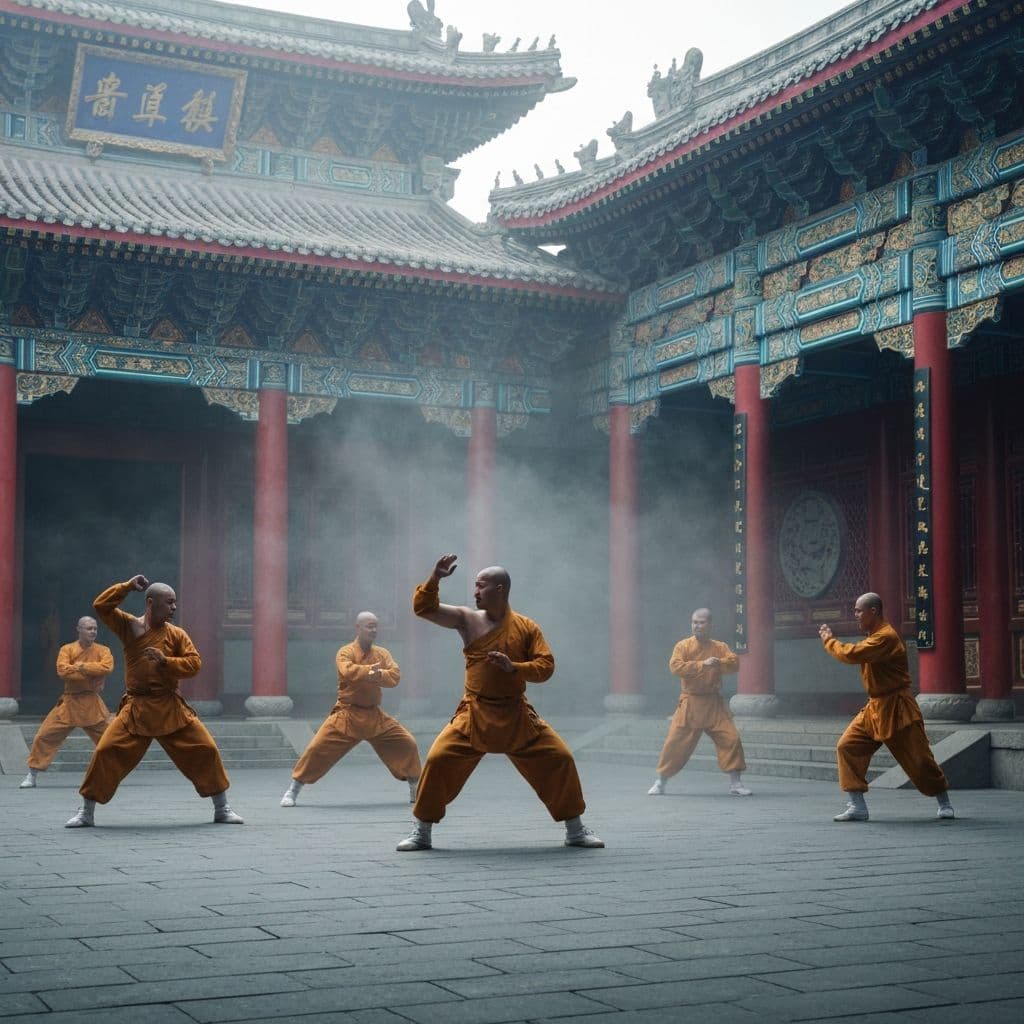
Shaolin Kung Fu (少林功夫)
- Origin: Shaolin Temple, Henan Province
- Character: Powerful, dynamic, combat-focused
- Famous for: Stunning acrobatics, weapon forms
- Philosophy: Chan Buddhist meditation combined with martial training
Wing Chun (咏春)
- Origin: Southern China
- Character: Close-range, efficient movements
- Famous for: Bruce Lee's base style, "wooden dummy" training
- Philosophy: Economy of motion, centerline theory
Internal (Soft) Styles
Tai Chi (太极拳)
- Origin: Chen Village, Henan
- Character: Slow, flowing, meditative
- Famous for: Morning practice in parks
- Philosophy: Yin-yang balance, health cultivation
- Major styles: Chen, Yang, Wu, Sun
Baguazhang (八卦掌)
- Origin: Beijing
- Character: Circular walking, spiral movements
- Famous for: Palm techniques, constant motion
Xingyi Quan (形意拳)
- Origin: Shanxi Province
- Character: Direct, explosive, linear
- Famous for: Five element fists
Where to Experience Martial Arts
Shaolin Temple, Henan Province
The most famous martial arts destination in China.
What to See:
- Shaolin Temple complex (UNESCO site)
- Pagoda Forest (monk burial site)
- Daily kung fu demonstrations
- Training grounds with students
Training Options:
- Short courses for tourists (1-day to 1-week)
- Long-term training schools nearby
- Many schools of varying quality - research carefully
Getting There:
- Fly to Zhengzhou, then bus to Dengfeng
Wudang Mountains, Hubei Province
The birthplace of Taoist martial arts, including tai chi.
What to See:
- Ancient Taoist temple complexes
- Purple Cloud Temple
- Golden Summit
Training Options:
- Traditional Taoist martial arts schools
- More peaceful, philosophical atmosphere than Shaolin
- Focus on internal arts
Chen Village, Henan Province
The birthplace of tai chi, still home to descendants of the Chen family.
What to See:
- Chen family ancestral hall
- Traditional village atmosphere
- Original tai chi practice grounds
Training Options:
- Learn from Chen family lineage holders
- Authentic tai chi instruction
Morning Tai Chi in Parks
The most accessible martial arts experience requires no booking:
Best Cities:
- Beijing: Temple of Heaven Park, Ritan Park
- Shanghai: Fuxing Park, People's Park
- Hangzhou: West Lake shores
- Chengdu: People's Park
Tips:
- Arrive early (6-7 AM)
- Watch respectfully
- Ask permission before joining
- Many practitioners welcome curious foreigners
Watching Performances
Kung Fu Shows
Red Theater, Beijing
- "The Legend of Kung Fu" show
- Spectacular acrobatics and storytelling
- English-friendly
Shaolin Zen Music Ritual, Dengfeng
- Outdoor show directed by Zhang Yimou
- Shaolin monks perform
Various Theaters in Shanghai, Xi'an, etc.
- Traditional and contemporary shows
Tai Chi Demonstrations
- Less theatrical than kung fu
- Often at temples and cultural centers
- Morning park practice is the most authentic
Trying Martial Arts Yourself
Short Experiences (1 day - 1 week)
Many places offer tourist-friendly introductions:
- Shaolin Temple area schools
- Beijing martial arts centers
- Cultural centers in major cities
- Hotel concierge can arrange
What to Expect:
- Basic stances and movements
- Simple forms or techniques
- Historical/philosophical context
- Photo opportunities
Longer Training (weeks to months)
For serious practitioners:
- Research schools thoroughly
- Read reviews from Western students
- Expect basic accommodations
- Language barrier can be significant
- Costs vary widely: ¥3,000-10,000/month including room and board
Health Benefits
Chinese martial arts are practiced not just for fighting but for health:
- Tai chi: Proven benefits for balance, stress, blood pressure
- Qigong: Breathing exercises for energy cultivation
- Kung fu: Cardiovascular fitness, flexibility, strength
Many Chinese practice these arts well into old age - the sight of 80-year-olds doing tai chi sword forms is common in parks.
Note: This article provides general cultural guidance. Individual experiences may vary. Always approach cultural learning with an open mind.