
Buddhism's Journey to China
Buddhism arrived in China around the 1st century CE via Silk Road traders and gradually merged with existing Taoist and Confucian traditions. Over two millennia, it developed distinctive Chinese characteristics while remaining one of the country's major religions.
Three Main Traditions
Han Buddhism (汉传佛教)
The dominant form in mainland China, blending Indian Buddhist teachings with Chinese philosophy.
Key Schools:
- Chan (禅宗) - Known as Zen in Japan; emphasizes meditation
- Pure Land (净土宗) - Devotion to Amitabha Buddha
- Tiantai (天台宗) - Comprehensive philosophical approach
Where to Experience:
- Shaolin Temple, Henan
- Lingyin Temple, Hangzhou
- Famen Temple, Xi'an
Tibetan Buddhism (藏传佛教)
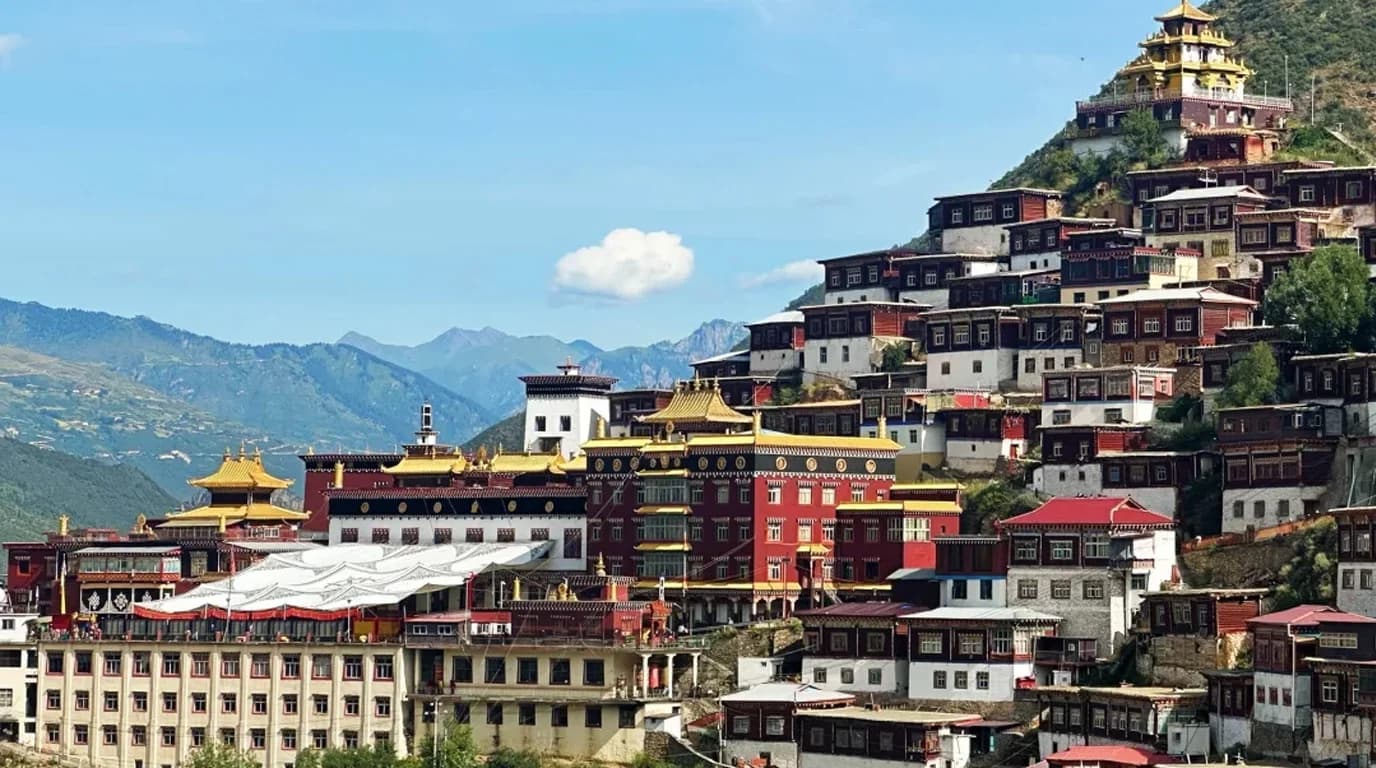
Practiced in Tibet, Qinghai, and parts of Sichuan, Yunnan, and Inner Mongolia.
Distinctive Elements:
- Living Buddhas (reincarnated lamas)
- Colorful thangka paintings
- Prayer wheels and mantras
- Elaborate rituals and ceremonies
Where to Experience:
- Potala Palace, Lhasa
- Labrang Monastery, Gansu
- Kumbum Monastery, Qinghai
Theravada Buddhism (南传佛教)
Practiced by Dai and other minorities in Yunnan Province, similar to Southeast Asian Buddhism.
Where to Experience:
- Xishuangbanna, Yunnan
- Mangshi, Dehong
Temple Architecture Decoded
Understanding temple layout helps appreciate these sacred spaces:
Typical Han Buddhist Temple Layout:
Shanmen (山门) - Mountain Gate
- Entry with two fierce guardian figures (Heng and Ha)
Hall of Heavenly Kings (天王殿)
- Four Heavenly Kings (Directional Guardians)
- Maitreya (Laughing Buddha) facing entrance
- Weituo (Temple Protector) behind
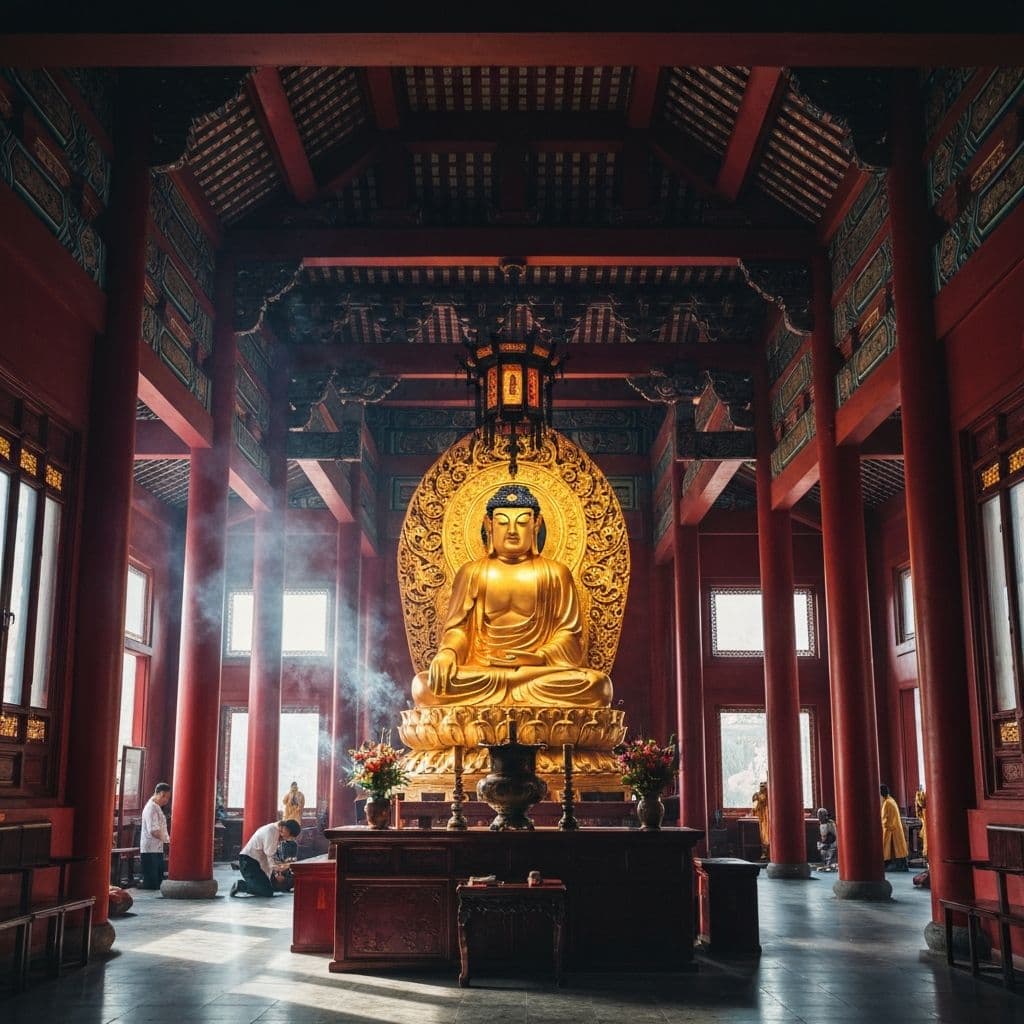
Main Hall (大雄宝殿)
- Central Buddha statue (usually Shakyamuni)
- Ananda and Kashyapa (Buddha's disciples) flanking
- Eighteen Arhats along walls
Side Halls
- Guanyin (Goddess of Mercy) Hall
- Medicine Buddha Hall
- Ancestral halls
Pagoda (塔)
- Originally housed relics
- Odd number of stories (feng shui)
Temple Etiquette
Before Entering:
- Dress modestly (cover shoulders and knees)
- Remove hats
- Silence phones
Inside the Temple:
- Enter through side doors, not center
- Don't step on thresholds (bad luck)
- Walk clockwise around sacred objects
- Don't point at Buddha statues
Photography:
- Ask before taking photos inside halls
- Never photograph monks without permission
- No flash photography near paintings or statues
Offerings & Incense:
- Incense available for purchase (optional)
- Light from existing flame, not lighter
- Three sticks is traditional
- Bow three times
Must-Visit Buddhist Sites
For Art & History
- Mogao Caves, Dunhuang - 1,000 years of Buddhist murals
- Longmen Grottoes, Luoyang - 100,000 carved Buddha images
- Yungang Grottoes, Datong - 5th-century masterpieces
- Leshan Giant Buddha - World's largest stone Buddha
For Living Traditions
- Shaolin Temple, Henan - Birthplace of Chan Buddhism and kung fu
- Mount Emei, Sichuan - One of Four Sacred Buddhist Mountains
- Wutai Mountain, Shanxi - Largest concentration of Buddhist temples
- Putuo Mountain, Zhejiang - Guanyin's sacred island
For Tibetan Buddhism
- Potala Palace, Lhasa - Former Dalai Lama residence
- Jokhang Temple, Lhasa - Tibet's holiest temple
- Labrang Monastery, Gansu - Accessible Tibetan monastery
Festivals to Experience
- Buddha's Birthday (浴佛节) - April/May
- Hungry Ghost Festival (盂兰盆节) - July/August
- Laba Festival (腊八节) - January (Laba porridge)
Note: This article provides general cultural guidance. Individual experiences may vary. Always approach cultural learning with an open mind.