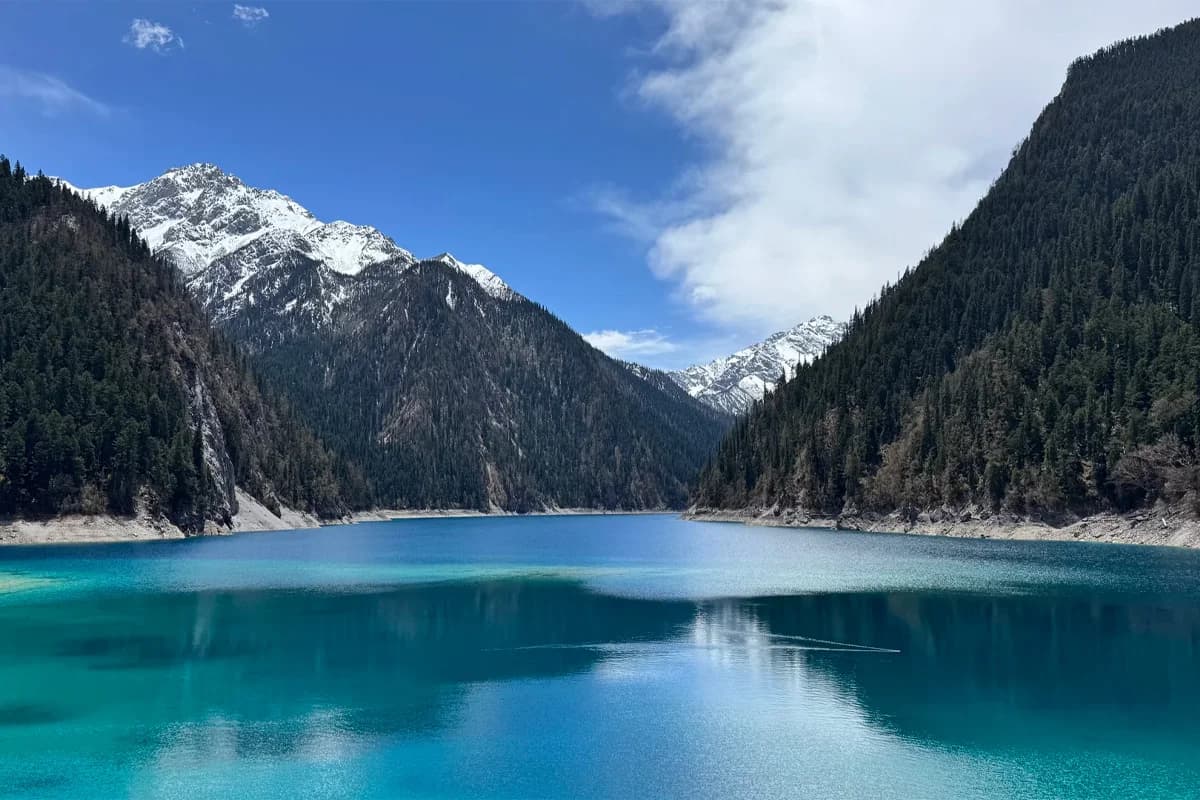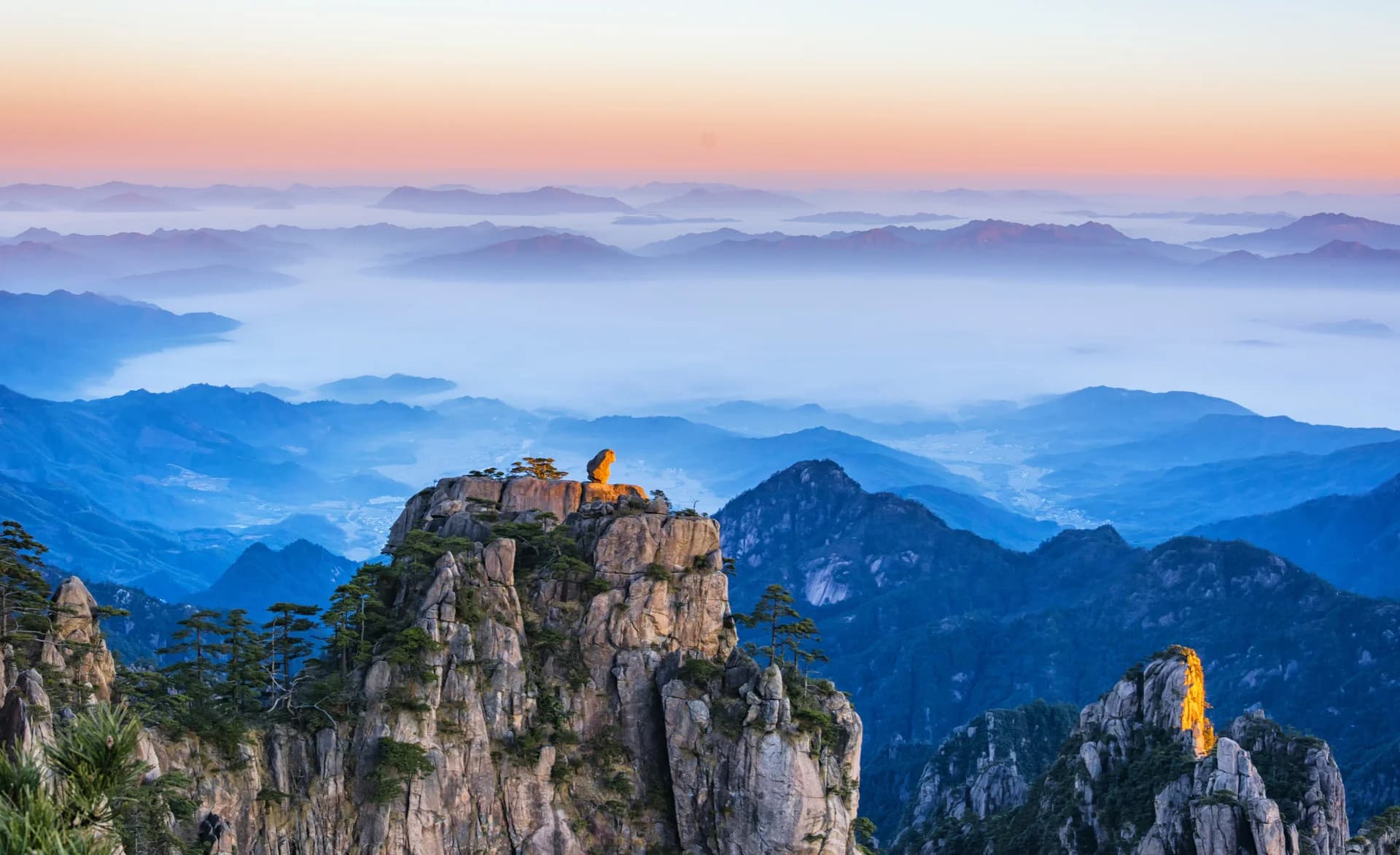

China boasts some of the world's most magnificent mountain landscapes—from the Five Sacred Mountains in the east to the snow-capped peaks in the west, each mountain is a living history book and a masterpiece of nature. This guide not only tells you "where to go," but also "how to travel wisely, safely, and effectively." We suggest you read through it first, and then choose your destinations based on your interests and time.
I. Pre-trip Overview
Mount Tai(Shandong):1545m high. Best seasons are spring and autumn. Must-sees include sunrise, sea of clouds, and the Fengshan (imperial sacrifice) ruins.
Mount Huang(Anhui):1864m high. Best seasons are spring and autumn. Must-sees include uniquely shaped pines, strangely shaped rocks, sea of clouds, and hot springs.
Mount Fanjing:(Guizhou):2572m high. Best seasons are summer and autumn. Must-sees include the Sky City, Mushroom Rock, and the Red Cloud Golden Summit.
Mount Hua: Shaanxi Mount Wuyi (Fujian) : 2154m high, best seasons: spring and autumn, must-see: steep peaks, plank road in the sky, sunrise.
Mount Emei (Sichuan) : 3099m high, best seasons: spring and autumn, must-see: golden summit Buddha's light, monkey troops, ancient temples.
Mount Siguniang (Sichuan) : 6250m high, best seasons: summer and autumn, must-see: snow-capped mountain reflections, high-altitude hiking.
Mount Changbai (Jilin) : 2744m high, best seasons: summer and autumn, must-see: Heavenly Lake, crater, alpine gardens.
Mount Yulong (Yunnan) : 5596m high, best seasons: winter and spring, must-see: glacier cable car, Blue Moon Valley.
Mount Tianmen (Hunan) : 1518m high, best seasons: all year round, must-see: Tianmen Cave, glass walkway, cable car.
Wuyishan (Fujian) : with an altitude of 2158m. The best time to visit is spring and autumn. Must-see attractions include bamboo rafting on the Nine-Bend Stream and the Danxia landform.
II. General Travel Tips
Documents: All scenic spots implement a real-name registration system. Overseas tourists must carry their original passports for ticket purchase and inspection.
Reservations: During peak season (May to October and public holidays), most famous mountains require reservations 1-7 days in advance via official WeChat accounts or travel platforms, especially for cable car tickets.
Clothing: The temperature at the summit is 8-15°C lower than at the foot of the mountain, and it is windy. A windproof jacket is necessary year-round; in winter, a down jacket and crampons are required (some mountain paths are icy).
Equipment: Hiking poles (can be bought or rented at the foot of the mountain), non-slip sports shoes, gloves (required for the Huashan iron chain), sunscreen, sunglasses, and a thermos (hot water on the mountain is usually charged).
Altitude Sickness: Altitude sickness can occur at Yulong Snow Mountain (4500m+), Siguniang Mountain (3000m+), and the Golden Summit of Emei Mountain (3000m). It is recommended to arrive in a lower altitude city 1-3 days in advance to acclimatize, avoid strenuous exercise, and bring oxygen cylinders (available in pharmacies in Lijiang and Chengdu).
Payment: WeChat Pay/Alipay are the primary payment methods within the scenic area, but some ticket windows still accept cash; it is recommended to prepare a small amount of RMB.
Language: Signage in both Chinese and English is available at major scenic spots, but guided tours are mostly in Chinese. You can download a translation app or book an English-speaking guide through a travel agency (advance booking required).
III. Ten Must-Visit Mountains in China
1. Mount Tai – The spiritual pinnacle of imperial sacrifices.
Location: Tai'an City, Shandong Province
The foremost of the Five Sacred Mountains, it has been the site of the Fengshan ceremony performed by 12 emperors since the Qin Dynasty, making it a spiritual symbol of Chinese civilization.
Best time: April to June, September to November (avoiding the sweltering heat of summer and the cold winds of winter).
How to get there: Take the high-speed train to "Tai'an Station", then take Tourist Bus No. 1 or Tourist Bus No. 2 directly to Hongmen or Tianwaicun; or take a bus from Jinan Airport (about 1.5 hours).
Ticket price:
Hiking up the mountain (Hongmen entrance): 115 yuan/person
Taking a bus from Tianwaicun to the mountain (including entrance fee): 155 yuan/person (bus to Zhongtianmen)
The ticket is valid for 3 days and allows re-entry (limited to the same entrance).
To watch the sunrise: you need to hike at night (starting from Hongmen at 2 AM) or stay at a hotel on the mountaintop (expensive, requires booking a month in advance). Military overcoats are available for rent on the mountaintop.
2. Huangshan – A Real-World Model of Chinese Landscape Painting
Location: Huangshan City, Anhui Province
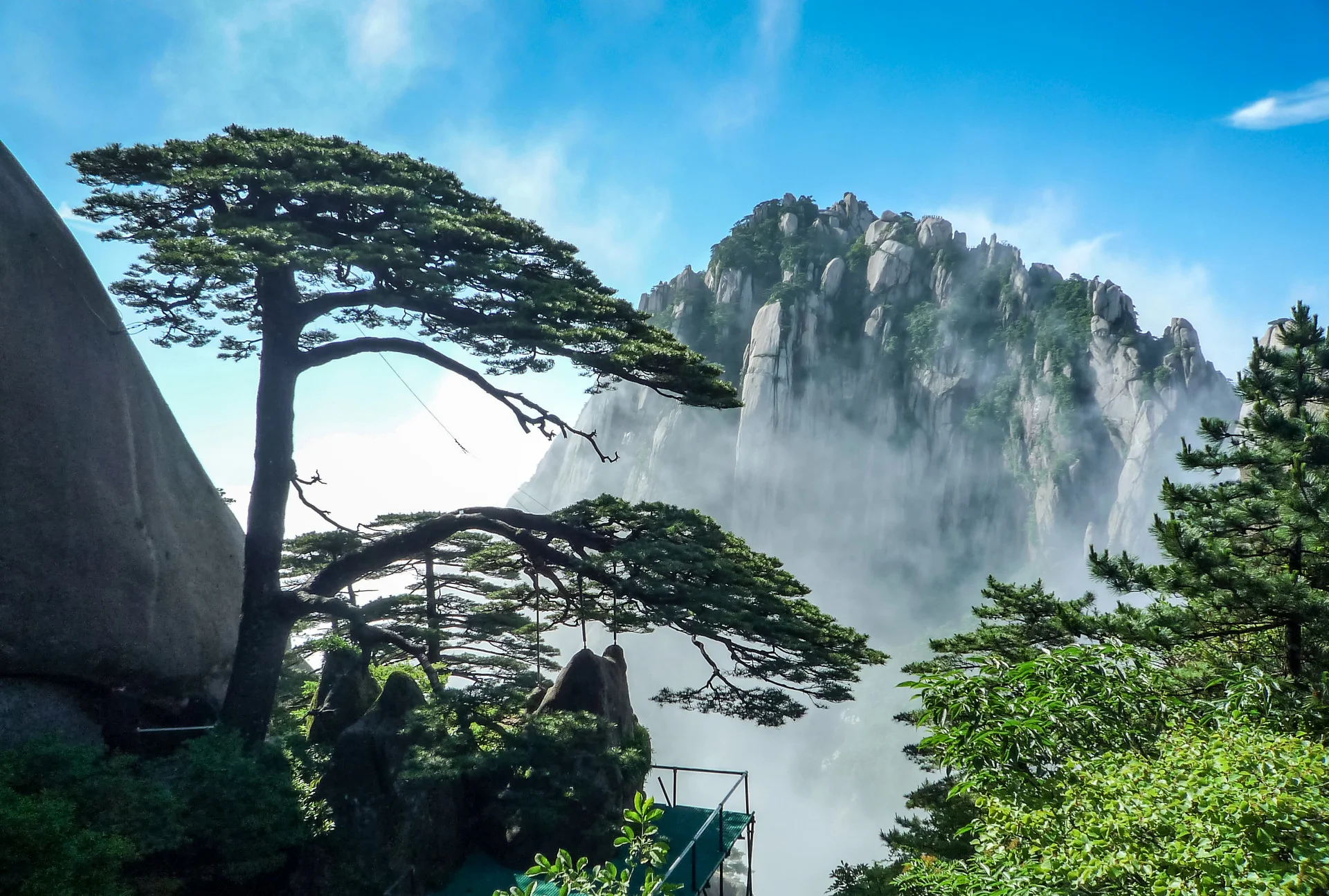
The World Natural and Cultural Heritage site is famous for its four wonders: uniquely shaped pines, strangely shaped rocks, sea of clouds, and hot springs. The Welcoming Pine is a national treasure of China.
Best time to visit: April to June (rhododendrons), September to November (autumn colors). The snow scenery is extremely beautiful in winter, but the mountain roads are slippery.
How to get there: Take the high-speed train to "Huangshan North Station", then take the scenic area shuttle bus (about 1 hour) to Tangkou Town (South Gate).
Ticket prices:
(January 21st - December 19th): 190 RMB/person
(December 20th - January 20th of the following year): 150 RMB/person
Cable car service requires an additional fee.
Accommodation on the mountain is extremely limited, so be sure to book at least two weeks in advance; food and water are expensive, so it is recommended to bring your own food; the best spots for observing the sea of clouds are Bright Summit and Paiyun Pavilion.
3. Fanjingshan – A Real-Life Sky City
Location: Jiangkou County, Tongren City, Guizhou Province
A World Natural Heritage site, located atop the Wuling Mountains, two solitary peaks are home to an ancient temple, perpetually shrouded in a sea of clouds.
Best time to visit: April to June (for azaleas), September to November (for clear autumn skies). In winter, there may be frost, but the hiking trails may be icy.
How to get there: Take the high-speed train to "Tongren Station" or "Tongren South Station", then take a bus to Jiangkou County, and then take the scenic area bus to the East Gate (Mountain Gate).
Tickets and cable car:
Peak season (March to November): 100 yuan for admission; off-season: 90 yuan.
Sightseeing bus (round trip from East Gate): 24 yuan one way, mandatory (approximately 20 minutes of mountain road ride).
Cable car: 70 yuan one way, 140 yuan round trip (highly recommended; saves energy and offers panoramic views of the forest).
If you want to see the sea of clouds, be sure to be among the first to enter the park at 7 a.m.; the roads are slippery on rainy days, and the iron stairs to the Red Cloud Golden Summit are narrow, so those with a fear of heights should choose carefully; there are few restaurants on the mountain, so you may want to bring your own food.
4. Mount Hua – the most precipitous mountain under heaven
Location: Huayin City, Shaanxi Province
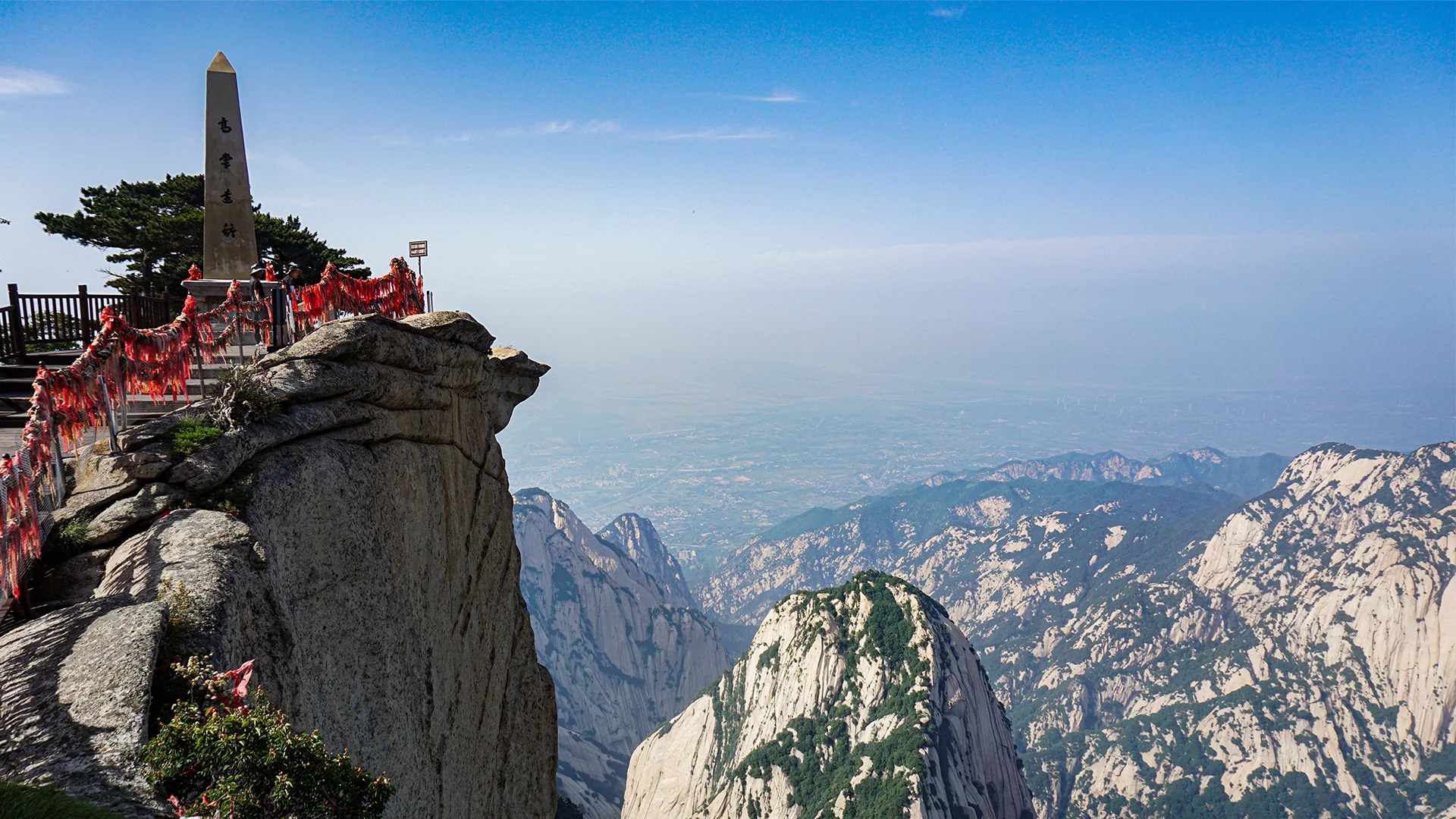
Known for its precipitousness, it is called "the most dangerous mountain in the world". It is a granite fault mountain with sheer cliffs, and the plank road in the sky is a game for the brave.
Best time to visit: March to May and September to November (summer is extremely hot and winter chains are icy cold).
How to get there: Take the high-speed rail to "Huashan North Station", then take a free bus or taxi to the visitor center.
Ticket price:
Peak season (March to November): 160 yuan/person
Off-season (December to February): 100 yuan/person
West Peak Cableway (140 yuan one way), North Peak Cableway (80 yuan one way), Mountain Bus (40 yuan).
Night hike: Those with good physical fitness can choose to hike from Yuquan Temple at 9 pm and reach the East Peak in the early morning to watch the sunrise, but a headlamp and thick gloves are required.
5. Mount Emei – A Buddhist Kingdom Above the Clouds
Location: Emeishan City, Sichuan Province
One of China's four sacred Buddhist mountains, the Bodhimanda of Samantabhadra Bodhisattva, the "Buddha's Light" spectacle at the Golden Summit is truly captivating.
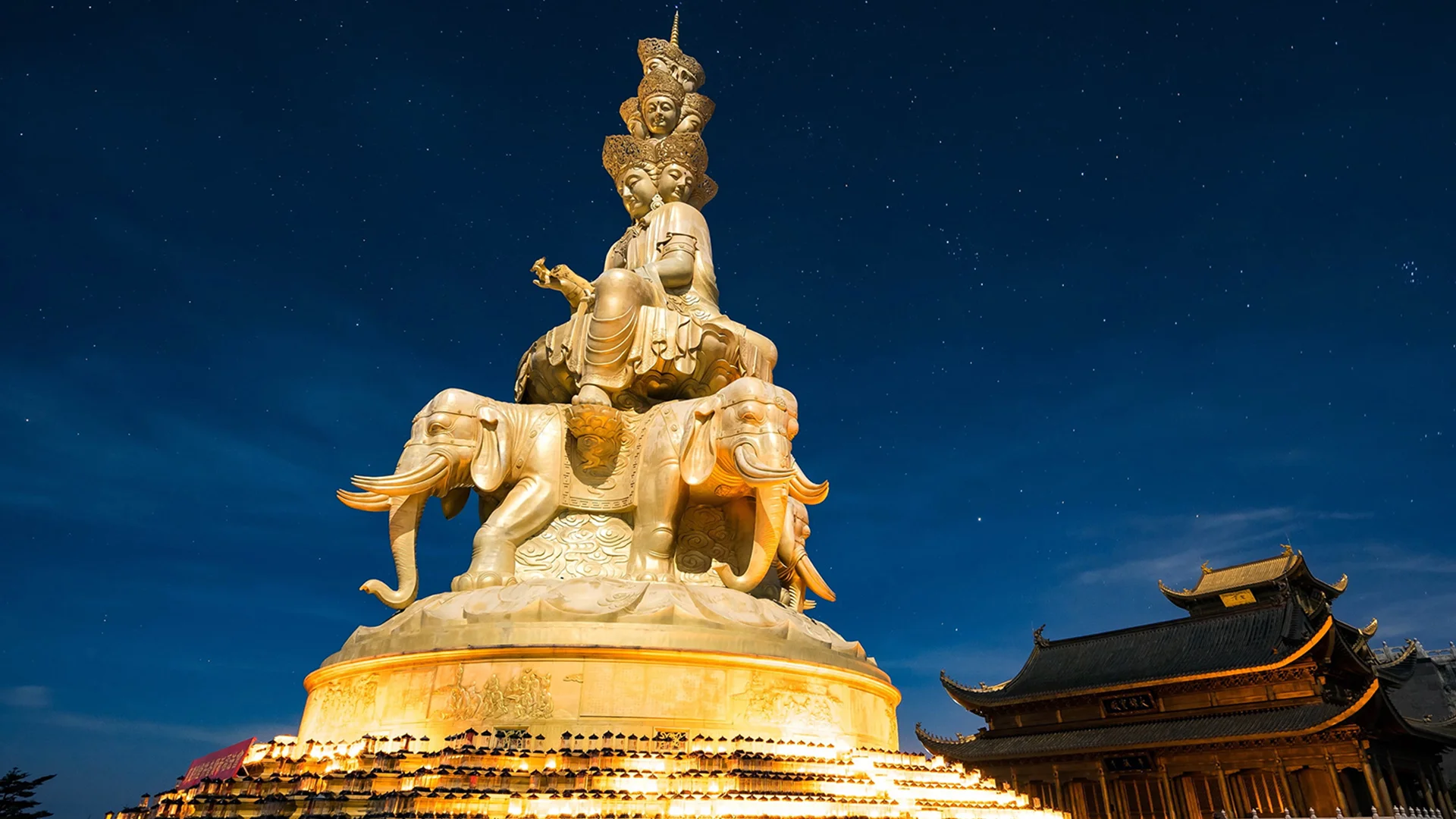
Best time to visit: April to October (for summer retreat). The snow scenery is also beautiful in winter, but the Golden Summit is cold.
How to get there: Take the high-speed train to "Emeishan Station" (not "Emei Station"), then take a bus or tourist bus directly to the scenic area of Baoguo Temple/Huangwan.
Ticket price:
Peak season (January 16th to December 14th): 160 yuan/person
Off-season (December 15th to January 15th of the following year): 110 yuan/person
Wild monkeys on the mountain trails may snatch food and bags, so please do not carry plastic bags, hide food in your backpack, and do not provoke them.
6. Mount Siguniang — The Alps of the East
Location: Xiaojin County, Aba Prefecture, Sichuan Province
Four snow-capped mountains stand side by side, with the main peak, Yaomei Peak, reaching an altitude of 6,250 meters. It is a holy land for mountaineering enthusiasts, and ordinary tourists can visit three valleys.
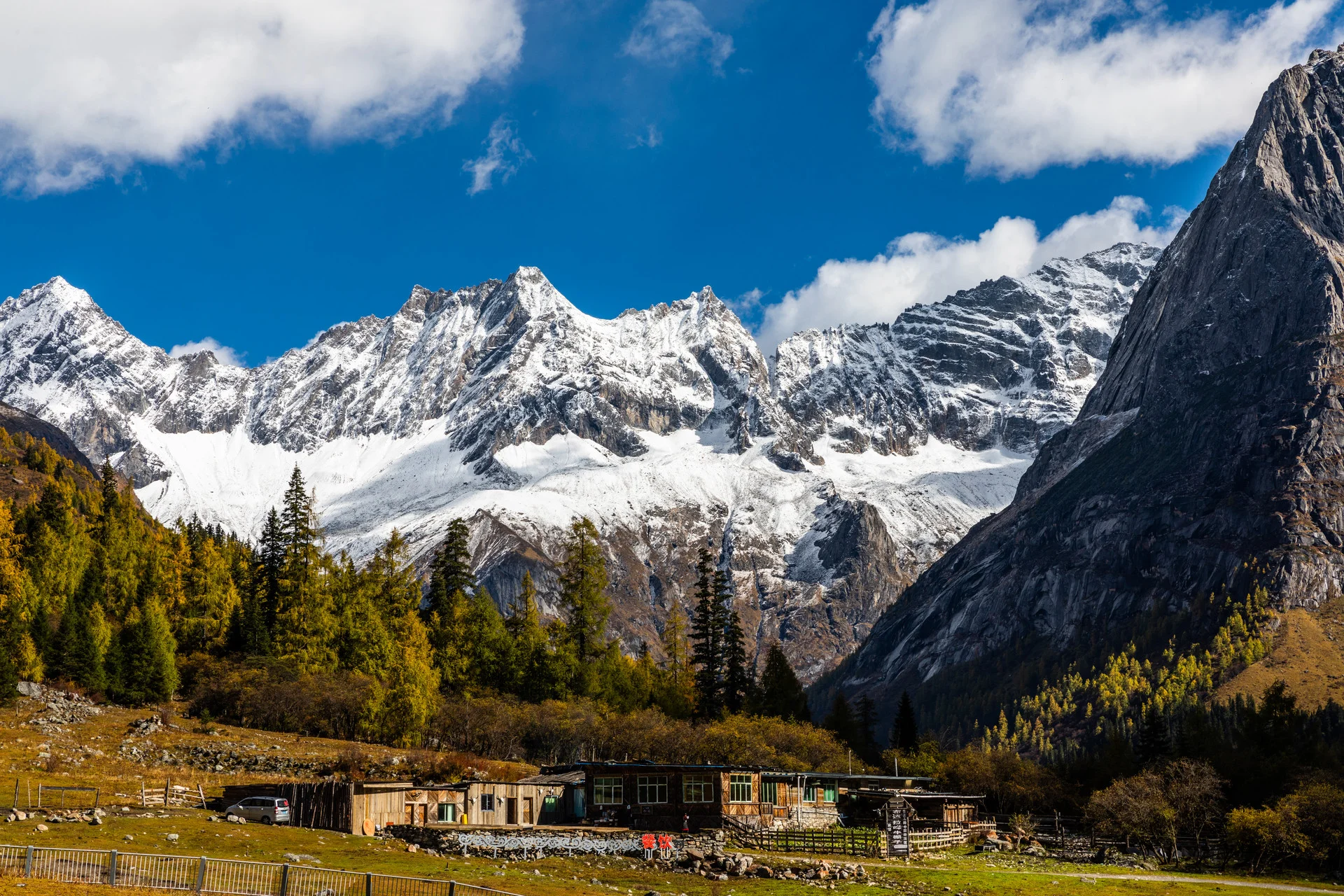
Best time to visit: June to October (green grass and wildflowers), late October to November (colorful forests).
How to get there: Take a bus from Chengdu Chadianzi Bus Station to "Siguniangshan Town" (about 4 hours); you can also hire a car or drive yourself (about 3.5 hours, via Panda Avenue).
Tickets and sightseeing bus (peak season/off-season):
Shuangqiaogou (Sightseeing bus): 150 RMB → 120 RMB (including bus) – The easiest route, suitable for all ages, offering views of redwood forests and snow-capped mountain reflections.
Changpinggou (Hiking + Horseback Riding): 90 RMB → 70 RMB (including sightseeing bus to the entrance) – Explore the valley on foot or horseback, with close-up views of Yaomei Peak.
Haizigou (Pure Hiking): 60 RMB → 40 RMB – No sightseeing bus, suitable for physically fit photography enthusiasts, includes a climb to the main peak (5025 meters), guide required.
Siguniangshan Town is at an altitude of about 3200 meters. It is recommended to rest for half a day after arrival, do not take a bath, and you can take Rhodiola rosea 3 days in advance.Horse riding requires an additional fee.
7. Changbai Mountain – The Roof of Northeast China and the Mysterious Heavenly Lake
Location: Antu County (North Slope), Yanbian Prefecture, Jilin Province / Fusong County (West Slope), Baishan City, Jilin Province
The highest peak in Northeast China, the border mountain between China and North Korea, and Tianchi Lake is the deepest crater lake in China (average depth 204 meters).
Best time to visit: July-August (summer retreat + alpine gardens), September-October (autumn colors). Skiing is available in winter, but Tianchi Lake is often closed.
How to get there: Fly to Changbaishan Airport (closer to the west slope), or take the high-speed train to Changbaishan Station (closer to the north slope), then take a tourist bus.
Basic admission ticket (same for North/West/South slopes): 105 yuan/person; transportation tickets within the scenic area vary depending on peak/off-peak season and season.
The weather at Tianchi Lake is highly variable, and whether you can see it depends entirely on luck. The chances are generally higher in the morning (9-11 am). The temperature at the summit is around 0℃ year-round, so you should wear a down jacket even in summer (available for rent at the scenic area).
8. Jade Dragon Snow Mountain – The Sacred Summit of the Naxi People
Location: Lijiang City, Yunnan Province
The southernmost snow-capped mountain in China, Shanzidou, has never been summited. The Naxi people regard it as the incarnation of the "Three Gods".
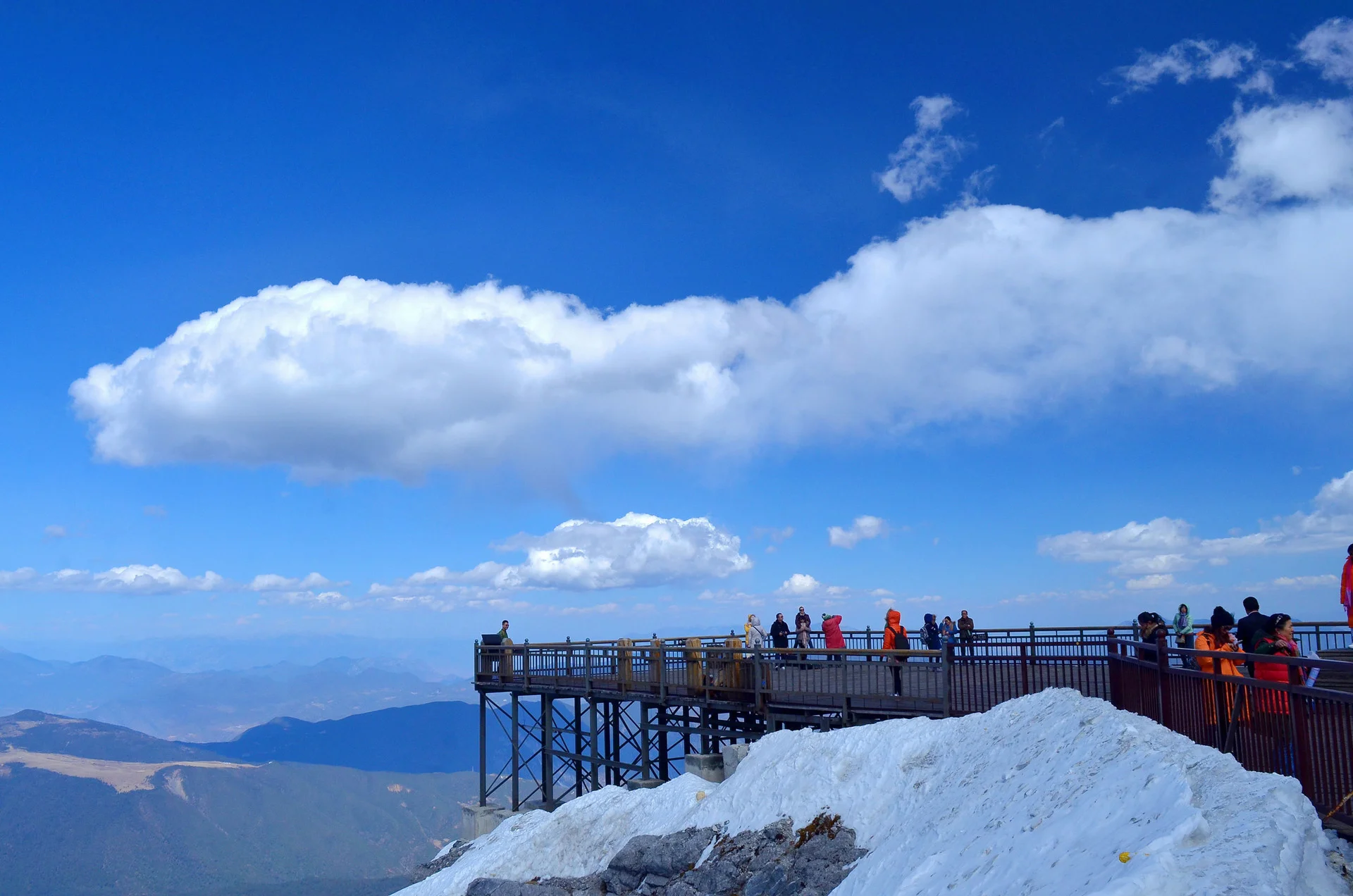
Best time to visit: November to March (most spectacular snow scenery), April to June (rhododendron blooming season), rainy season (July to August) often shrouded in clouds and mist.
How to get there: Take bus route 101 (approximately 1 hour) from Lijiang Old Town directly to the Visitor Center; or take a taxi for approximately 100 yuan.
Tickets and cable car:
Entrance fee to the mountain: 100 yuan/person
Cableway (core): Glacier Park Cableway: ¥120; Spruce Meadow Cableway: ¥40; Yak Meadow Cableway: ¥45
At altitudes above 4500 meters, most people will experience mild headaches, so running should be avoided. It is recommended that each person bring 1-2 bottles of portable oxygen (20 yuan per bottle in Lijiang city, more expensive on the mountain). If severe discomfort occurs, descend immediately.
9. Tianmen Mountain – A Cave Gate Leading to the Sky
Location: Zhangjiajie City, Hunan Province
It is named after Tianmen Cave, a natural karst cave that runs through the mountain at the top. Tianmen Mountain is famous for its steep cliffs, spectacular caves, and thrilling glass walkway.
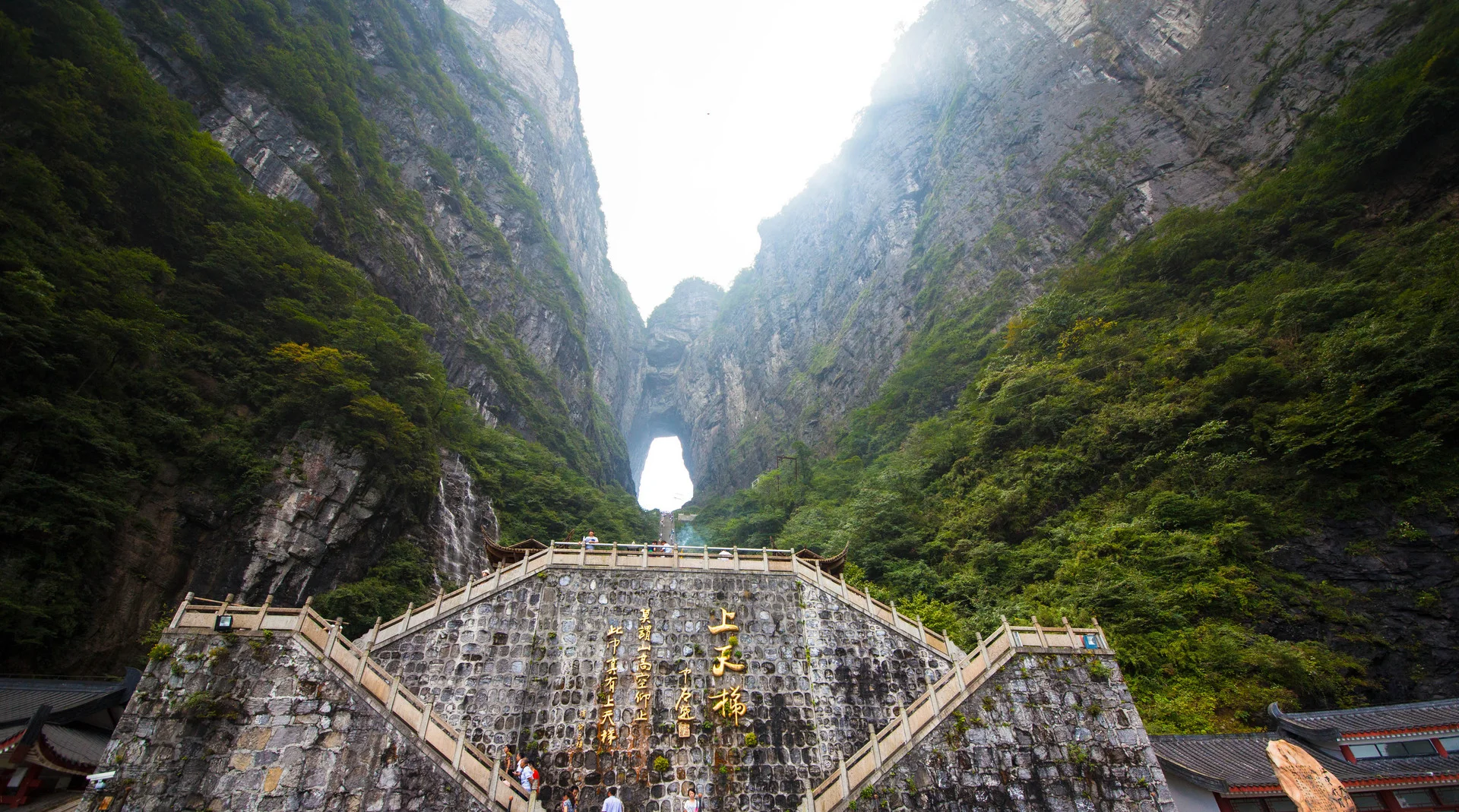
Best time to visit: March to May, September to November, all year round. Winter visits may involve snow and ice.
How to get there: Take the Tianmen Mountain cable car to the lower station. If you get off at Zhangjiajie Station, you can walk or take a taxi.
Tickets (package):
Lines A/B/C (round trip cable car): Adults 278 yuan (round trip)
Lines 1/2 (one-way cable car + eco-friendly bus): 232 yuan
Highlights:
Take the cable car (approx. 28 minutes) to the mountaintop, then walk along the west glass walkway (a 5 RMB shoe cover fee applies; those with a fear of heights can use the wooden walkway).
Afterwards, take the mountain-penetrating escalator (12 sections, free) down to Tianmen Cave Square. You can challenge yourself by taking the 999 steps down the mountain (approx. 15-25 minutes), or take the escalator back.
The glass walkway is divided into three sections: East, West, and Panlong Cliff. You can choose one section. The steps at Tianmen Cave are very steep. If you have knee problems, please use the escalator. There is a luggage storage area at the foot of the mountain.
10. Wuyishan – The Fragrance of Tea Amidst Danxia Landforms and Emerald Waters
Location: Wuyishan City, Fujian Province
A UNESCO World Cultural and Natural Heritage site, the Danxia landform and the Nine-Bend Stream complement each other beautifully, and the birthplace of Wuyi rock tea (Da Hong Pao).
Best time to visit: March to May (tea picking season), September to November (crisp autumn weather), summer is too hot.
How to get there: Take the high-speed train to "Wuyishan North Station" or "Wuyishan Station", then take a bus or taxi to the south entrance of the scenic area.
Ticket prices (peak season/off-season):
Tickets (excluding bamboo raft): 140 RMB → 120 RMB (valid for 3 days)
Bamboo raft ticket: 130 RMB/person (approximately 1.5 hours, must be purchased separately, online reservation required 1 day in advance during peak season)
Bamboo raft boatmen will offer paid guided tours (approximately 20 yuan per person, in Chinese only). If you would like an English tour, you can hire a guide in advance. Bring a sun hat and water in the summer.
IV. Summary and Itinerary Combination Suggestions
For culture and history enthusiasts: Mount Tai + Mount Hua + Mount Emei (the essence of Confucianism, Buddhism, and Taoism)
For nature photographers: Mount Huang + Tianmen Mountain in Zhangjiajie + Mount Fanjing (spectacular peaks and sea of clouds)
For snow-capped mountains and high-altitude challenges: Mount Siguniang + Jade Dragon Snow Mountain (acclimatization required)
For a relaxing getaway with mountain and river bamboo rafting: Mount Wuyi + Changbai Mountain (suitable for families)
Frequently Asked Questions
Q1: I don't speak Chinese, can I visit these famous mountains on my own?
Yes, but you need to be prepared. We recommend downloading an offline translation app (such as Google Translate or DeepL) beforehand.
Q2: Are there places to store my large luggage in the mountains?
Yes. Luggage storage services are available at the visitor centers or entrances at the foot of the mountains in each scenic area (such as Tianwaicun in Tai'an, Tangkou Town in Huangshan, and the cable car station in Zhangjiajie city). Some hotels also allow free luggage storage after check-out. It is recommended to only bring a lightweight hiking backpack up the mountain and leave large suitcases in the city or at the foot of the mountain.
Q3: What can I eat on the mountain? Do I need to bring my own food?
There are restaurants and supply points on the mountain, but prices are high (because supplies are transported by manpower or cable car). If you want to save money or have special dietary requirements (such as vegetarian or halal), it is recommended to buy bread, chocolate, energy bars, instant noodles, and bottled water at the supermarket at the foot of the mountain and pack them in your backpack.
Q4: How do I buy tickets for the scenic area? Can I queue up on-site?
We strongly recommend booking online in advance! Popular scenic spots in China implement strict visitor limits during peak seasons (May Day, National Day Golden Week, and summer vacation). You can purchase tickets through WeChat mini-programs (such as "Taishan Scenic Area" and "Huangshan Tourism Official Platform") or apps like Ctrip and Meituan. Alternatively, you can find a travel agency to help you purchase tickets.
Q5: How do I book accommodation on the mountain? What are the conditions like?
Hotels on the mountaintop (Huangshan, Emeishan, Huashan) are extremely scarce. During peak season, reservations need to be made 1-3 months in advance. Most are dormitory rooms (beds), with basic conditions and no private bathroom. If you can't book a room, consider staying at the foot of the mountain and taking the cable car up early in the morning.
Disclaimer: This information is provided for reference only and was last updated on . Requirements and regulations may change. Always verify with official sources before making travel plans.