Overview
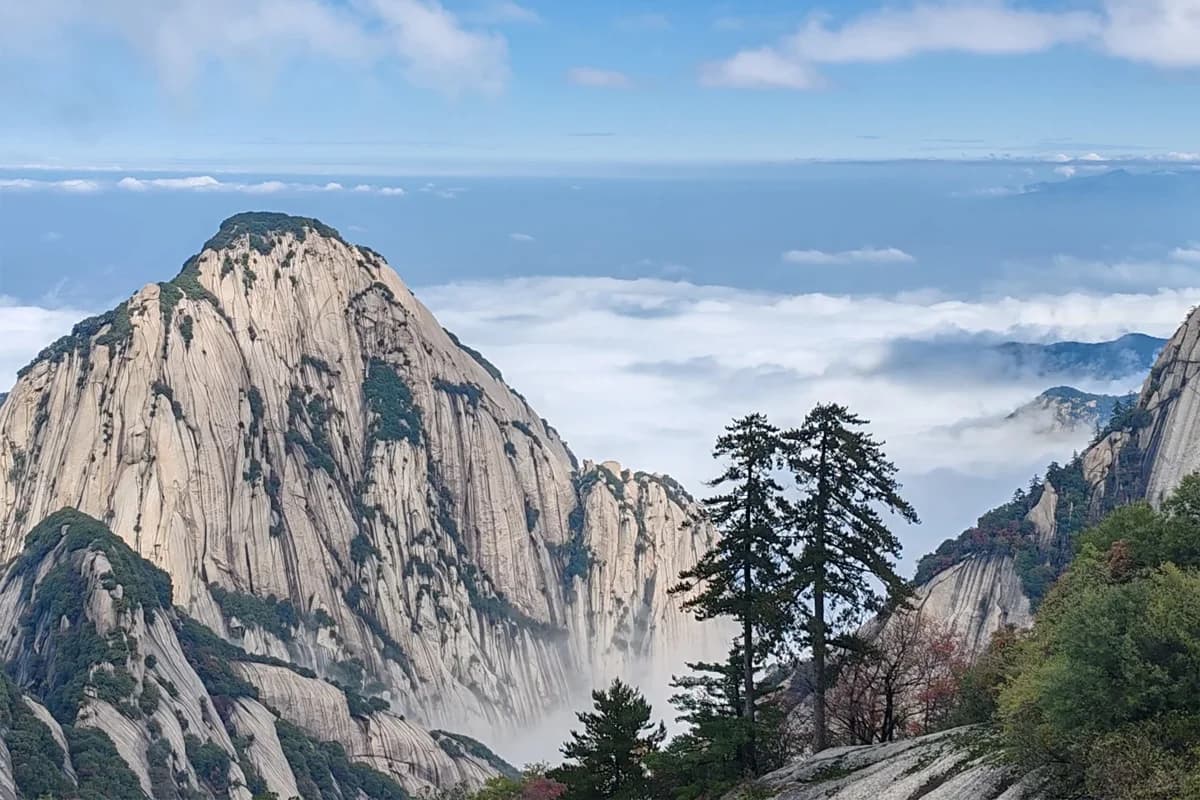
Mount Hua, located in Shaanxi Province, China, is renowned for its precipitous peaks and comprises five main peaks: East, West, South, North, and Central. A full day is typically required to explore the entire mountain; however, to witness the sunrise or sunset, a two-day, one-night trip with an overnight stay is recommended.
The best time to visit is during spring and autumn (April to June and September to October), when the weather is mild and the scenery is at its most beautiful. Climbing options include hiking the challenging "Thousand-Foot Cliff" and taking the easy "Taihua Cableway" to the top.
How to Get There
To reach Mount Hua, the best option is to take the high-speed train from Xi'an North Railway Station (approximately 30 minutes) directly to Huashan North Station. After exiting the station, take the free bus route 1 or 2 (operating generally from 7:00 AM to 7:20 PM) or a taxi to the visitor center. Alternatively, you can take a bus from Xi'an East Bus Station or drive via the Lianhuo Expressway. Upon arrival at the visitor center, you'll need to transfer to the scenic area shuttle bus to the cable car station.
For most tourists, the most effortless and classic way to experience Mount Hua is the "West to North" day trip: take the West Peak cable car up the mountain, visit the West Peak and South Peak in sequence, and finally take the cable car down from the North Peak. This route is mainly downhill and offers panoramic views.
For physically fit hikers, you can choose to hike up from Yuquan Temple, experiencing the thrill of the "one-path-to-Mount Hua" (Thousand-Foot Cliff, Hundred-Foot Gorge) directly to the North Peak. If you want to see the sunrise, you can choose to hike at night, starting from Yuquan Temple and arriving at the East Peak sunrise viewing platform in the early morning.
What to Expect
Mount Hua is renowned for its precipitous terrain. The hiking trails are mostly man-made steps, especially the sections like Qianchi Cliff and Baichi Gorge, which are extremely steep and narrow, requiring handholds on iron chains and are quite physically demanding.
The mountain has comprehensive facilities. Along the main roads, there are several rest stops, shops selling water, snacks, and souvenirs, and restrooms (relatively basic, located in the service areas of each peak).
Currently, cable cars are available from the East, West, South, and North peaks for quick ascent and descent, but queues can be long during peak seasons like Golden Week. It is recommended to wear non-slip athletic shoes, travel light, and bring gloves.
Practical Tips
- The Plank Walk requires a separate ¥30 harness fee
- Night climbs to catch sunrise are popular but exhausting
- West Peak cable car offers the most scenic ride
- Bring warm clothing - temperatures drop significantly at the peaks