Overview
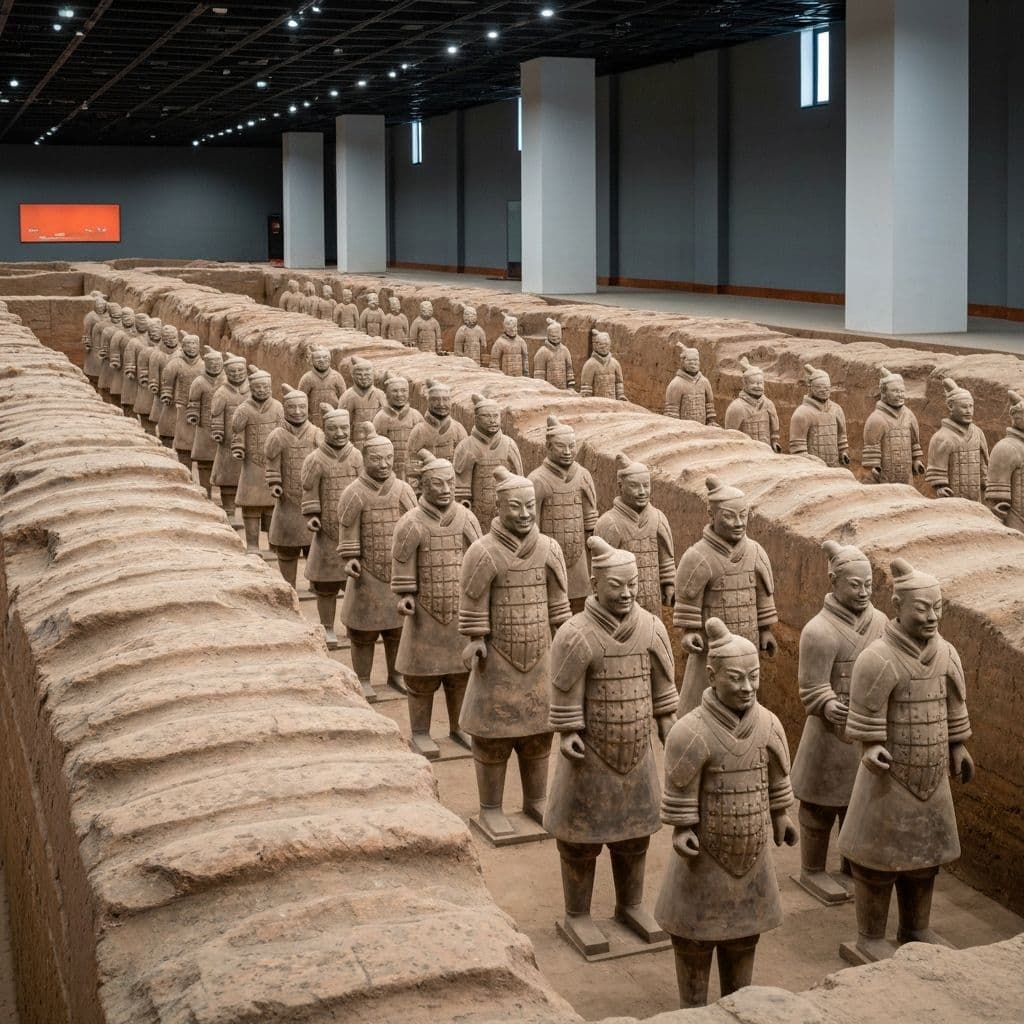
The Museum of Qin Terracotta Warriors and Horses, hailed as the "Eighth Wonder of the World," is a site museum built on the original site of the terracotta pits. You will see a vast underground army composed of thousands of life-size terracotta warriors and horses.
The Museum of Qin Terracotta Warriors and Horses, hailed as the "Eighth Wonder of the World," is a site museum built on the original site of the terracotta pits. You will see a vast underground army composed of thousands of life-size terracotta warriors and horses. Be sure to hire a guide or rent an audio guide, otherwise you will miss many fascinating historical stories. Also, please wear comfortable shoes.
How to Get There
To get to the Museum of Qin Terracotta Warriors and Horses, you can choose public transportation or a taxi. The most economical way is to take Metro Line 9 to "Huaqing Pool" Station, exit from Exit C, and then transfer to bus route 613 or 602, which goes directly to the museum entrance.
If you take a taxi, the journey from downtown Xi'an takes approximately 1 hour to 1 hour and 20 minutes, and the cost is around 80-150 RMB. Many foreign tourists also choose to book half-day or full-day tours that include hotel pick-up and drop-off and an English-speaking guide, which is both convenient and provides a deeper understanding of history.
Upon arrival, it is recommended to first visit Pit 1, 2, and 3 of the Terracotta Army, and then take the free shuttle bus to the Qin Shihuang Mausoleum Archaeological Site Park (Lishan Garden) to continue your visit.
What to Expect
The Qin Shi Huang Terracotta Army Museum has well-equipped facilities. Public restrooms are located near each exhibition hall and are in good hygiene condition. A large gift shop is located at the exit, selling terracotta warrior models, books, and cultural and creative products, but prices are slightly higher than in the city. There are also dining and rest areas within the scenic area, offering light meals and drinks. Special reminder: Security checks are required to enter the scenic area; it is recommended to travel light and take precautions against sunburn.
Practical Tips
- Hire an official guide at the entrance - they're excellent
- Start with Pit 1, then 2 and 3, then the Bronze Chariots museum
- The on-site museum with bronze chariots is a highlight
- Avoid Chinese holidays when crowds are extreme