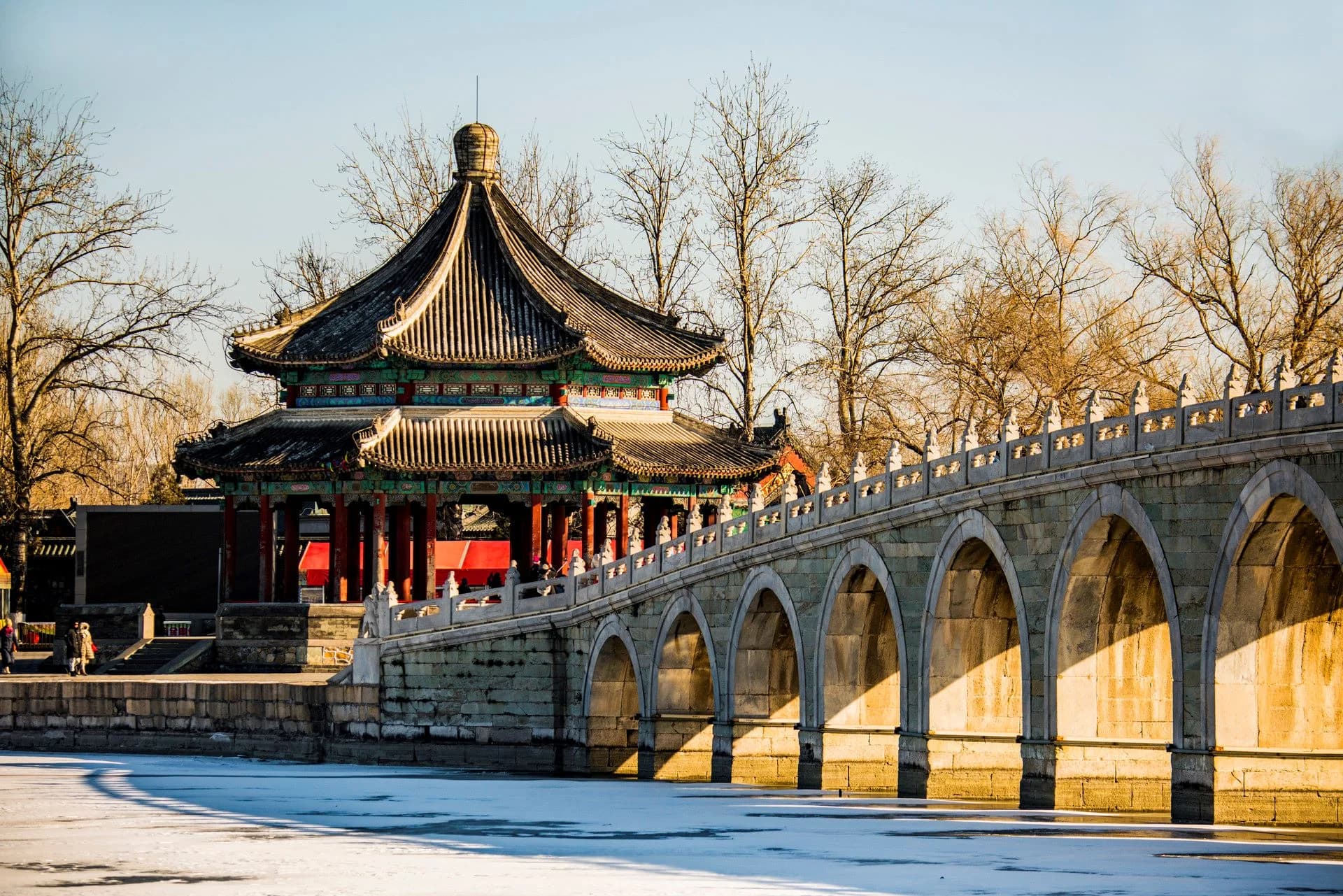
Overview
Beihai Park, located in the heart of Beijing, is the oldest and best-preserved imperial garden in China. Its iconic landmark is the Tibetan-style white pagoda standing on Qionghua Island.
A tour of the entire park takes approximately 2 to 4 hours. It is beautiful in all seasons, but the best time to visit is late spring (April-May) for flower viewing and autumn (October-November) for leaf peeping. Summer (June-August) offers opportunities to enjoy the lotus pond and boating.
How to Get There
The most convenient way to get to Beihai Park is to take Metro Line 6 to Beihai North Station and exit from Exit B or D. You can also take bus routes 101, 103, 109, etc., and get off at Beihai Station (near the South Gate) or Beihai North Gate Station.
A recommended classic route is to enter the park from the South Gate, first visit Tuancheng (Circular City), then cross Yong'an Bridge and climb Qionghua Island for a close-up view of the iconic White Pagoda. Afterwards, take a ferry to the North Bank and visit Jingxinzhai (Quiet Heart Studio), Xitian Fanjing (Western Paradise), and the unique double-sided glazed nine-dragon wall. Finally, exit from the North Gate. This route is smooth and avoids backtracking.
What to Expect
The main paths within Beihai Park are clearly marked with signs (some in both Chinese and English). Restrooms are located near the main attractions and are relatively easy to find. There are several souvenir shops near the park entrances and around Qionghua Island, selling cultural and creative products, postcards, and local snacks, but the selection is limited. There are plenty of benches throughout the park, so you can rest whenever you get tired. Please note that there are no railings along the lakeside embankment, so please be careful while visiting. Cash may be more useful at the smaller stalls, so it's advisable to carry some small change.
Practical Tips
- Visit early in the morning to enjoy the park's tranquility before the crowds arrive.
- Purchase tickets online in advance to avoid long queues at the entrance.
- Wear comfortable walking shoes as the park is expansive with some uneven paths.
- Consider taking a boat ride on the lake for a unique perspective of the White Dagoba.