naturalTibet
Buddha's Palm Sand Dunes
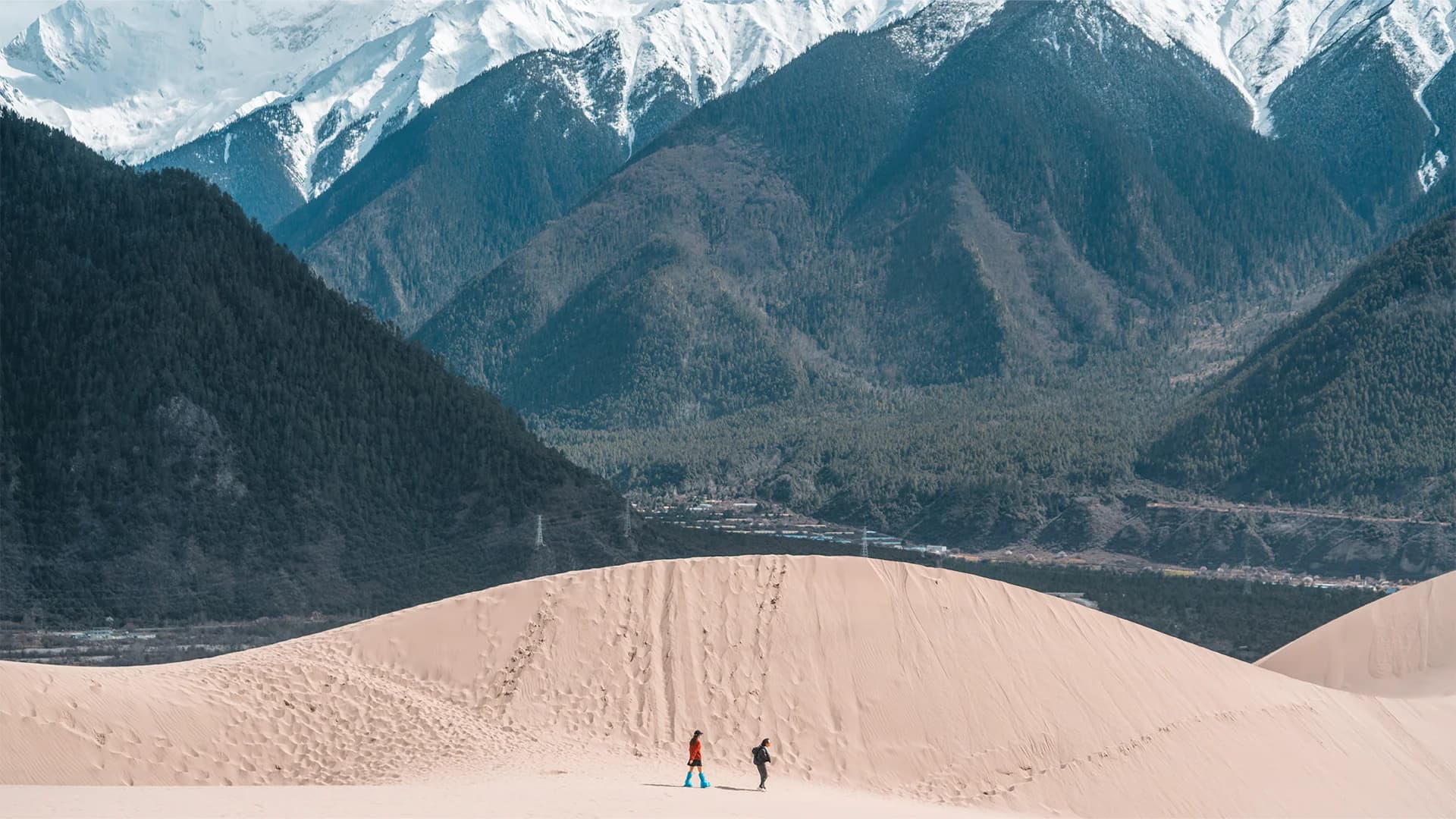
The Buddha's Palm Sand Dunes are a famous natural landscape in Tibet, renowned for their golden sand dunes resembling a hand's palm, which complement the magnificent scenery of the plateau. The value of the Buddha's Palm Sand Dunes lies not only in their unique landscape where desert and snow-capped mountains meet, but also in their important place in Tibetan history and culture. This land was, for centuries, a crossroads of high-altitude transportation routes and Buddhist geography. Local guides often associate the dunes' outlines with sacred symbolism, referring to them as the e "Fo Zhang Shaqiu" (佛掌沙丘, Buddha's Palm Sand Dunes).
Opening Hours
8:00 AM - 6:00 PM
Ticket Price
Tickets: ¥30; Sandboard: ¥60
Location
Buddha's Palm Sand Dunes are located in Milin County, Nyingchi City, Tibet.
Overview
Buddha's Palm Sand Dunes are located on the banks of the Yarlung Tsangpo River in Dannang Township, Milin County, Nyingchi City, Tibet. They are named for the sand dunes and their reflections in the water, which resemble two hands clasped in prayer. The dunes are golden yellow with fine sand, surrounded by emerald green river water and snow-capped mountains and forests, creating a unique landscape. The scenic area is open year-round, but the best time to visit is from late autumn to late spring, when the winds are stronger, the dune formations are most prominent, and there is a higher chance of sunny days. It is recommended to visit in the morning when the light is ideal for photography, as the afternoons are windier and sandstorms are more likely. A visit typically lasts 1 to 3 hours. Visitors can enjoy sandboarding (renting sandboards costs approximately 60 yuan) or driving ATVs (approximately 200 yuan/20 minutes), experiencing the unique coexistence of desert and snow-capped mountains.
How to Get There
Reaching the Buddha's Palm Sand Dunes is primarily by road, with the most convenient way being by car or chartered vehicle. From Bayi Town in Nyingchi City, drive along National Highway 219 or the Nyingchi Airport Expressway towards Milin County; the entire journey is approximately 65 kilometers and takes about 1.5 to 2 hours. From the Yarlung Tsangpo Grand Canyon Scenic Area or Sosong Village, drive west along National Highway 219 on the north bank of the Yarlung Tsangpo River for about 31 kilometers, a journey of approximately 45 minutes. Navigation systems can be easily located by searching "Buddha's Palm Sand Dunes." The route typically involves stops along the way from Nyingchi to the Grand Canyon or Sosong Village; the sand dunes are right beside the road, within walking distance of the parking area. Please note that there are border checks along this section of the road, so please be sure to carry valid identification (passport) and vehicle registration.
What to Expect
The facilities at Buddha's Palm Sand Dunes are relatively simple. The viewing platform is right next to the road, making parking convenient. At the entrance, there's a basic ticket booth and shoe cover distribution point; visitors can get free shoe covers to prevent sand from getting into their shoes. Simple walking paths have been laid on the dunes, but the main activity area is still natural sand. The area has public restrooms and a small gift shop or store, but food options are limited; it's recommended to bring your own drinking water and food.
Practical Tips
- 1Carry your passport and Tibet travel documents at all times — roadside checks are common on routes from Lhasa, and drivers may ask to see them before departure.
- 2Plan for cashless payment but keep some cash as backup — as of 2026, small vendors and parking areas may accept WeChat Pay or Alipay, while mobile signal can be patchy.
- 3Start early from Lhasa and aim to reach the dunes before 10:00 or after 16:00 for softer light, fewer tour vehicles, and less intense midday UV at high altitude.
Share This Attraction
Found this helpful? Share it with fellow travelers!
More in Tibet
Explore Tibet
Discover more attractions, food, and travel tips for Tibet.
View destination
More Attractions to Explore
Tibet·natural
Yarlung Tsangpo River
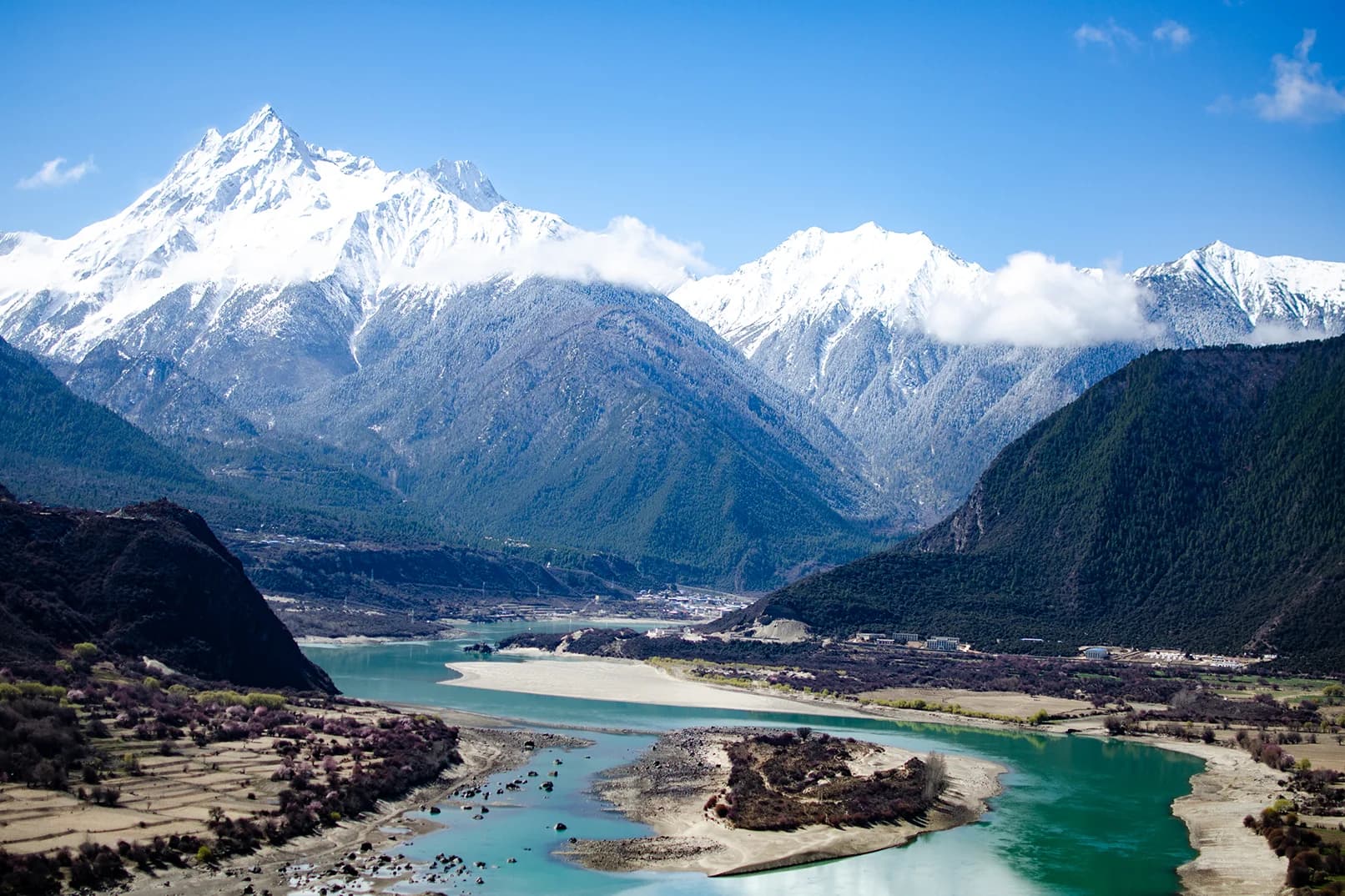
The Yarlung Tsangpo River is a natural wonder of Tibet, renowned for its magnificent alpine canyon scenery, sacred cultural history, and the breathtaking canyon system near Nyingchi. Originating in western Tibet, it flows eastward across the plateau, closely connected to the Yarlung Tsangpo Valley, considered one of the cradles of Tibetan civilization. For most travelers, the most convenient way to experience the Yarlung Tsangpo River is through viewpoints in Nyingchi and the Yarlung Tsangpo Grand Canyon region.
Tibet·natural
Karola Glacier
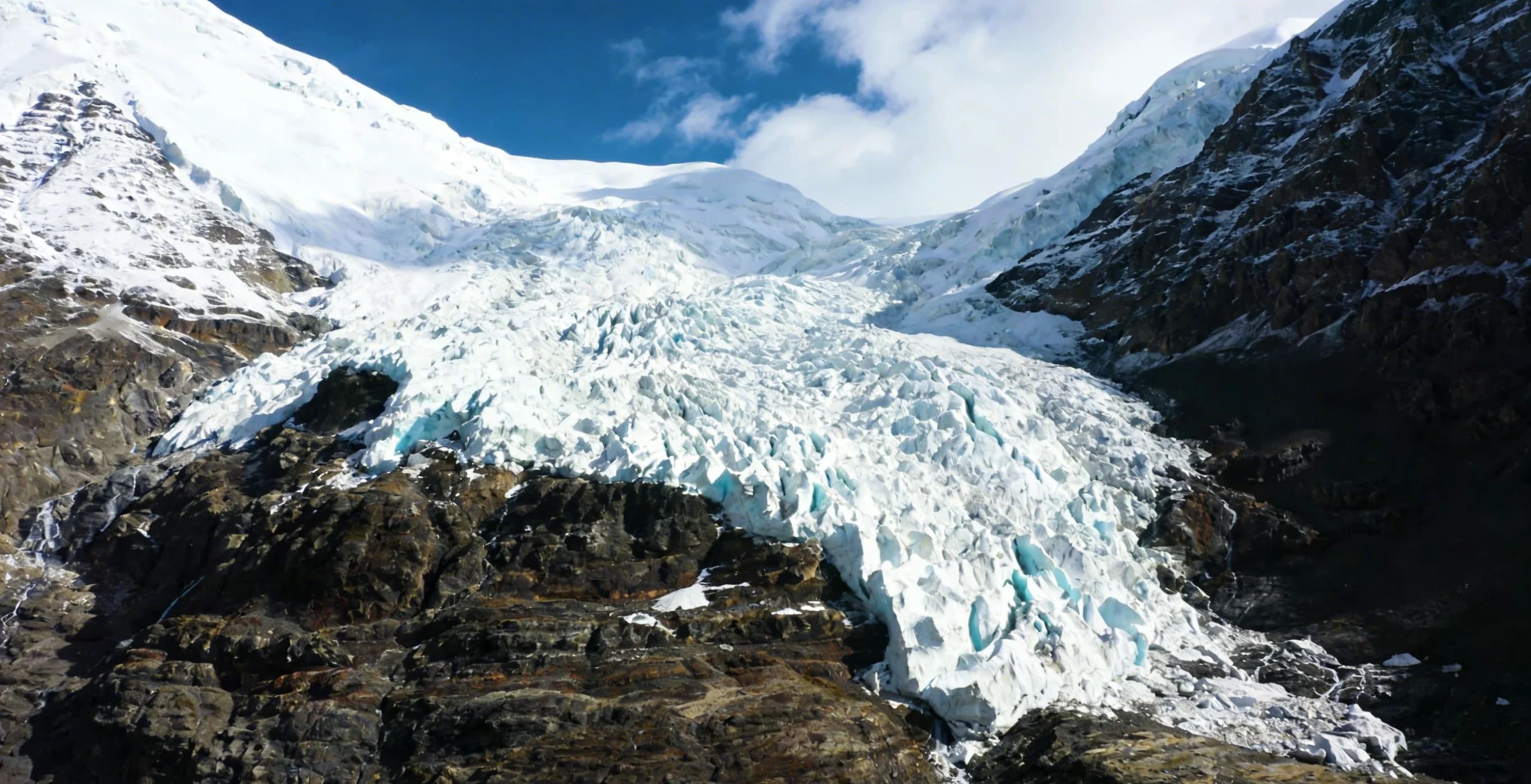
Karola Glacier is a famous natural landscape in Tibet, renowned for its spectacular blue-white ice walls located near the highway between Lhasa and Gyantse. Perched on the slopes of the Norjin Kangsan Mountains at an altitude of over 5,000 meters, it is one of the most easily accessible glaciers in Tibet, requiring no long trek. In Chinese, it is usually written as Karola Bingchuan(卡若拉冰川), and many travelers combine it with Yamdrok Lake and Gyantse Dzong to form a classic overland travel route in Tibet.

Zhangjiajie·natural
Tianmen Mountain
Tianmen Mountain, often called the "Soul of Zhangjiajie," is famous for its towering natural arch known as Heaven's Gate. Visitors can reach the summit via the world’s longest cable car ride, offering breathtaking views of the winding 99-Bend Road below. At the top, explore the massive Tianmen Cave, walk along the terrifying glass skywalk clinging to the cliffside, and take the escalator tunnel through the mountain. This destination combines spiritual significance with adrenaline-pumping adventures, making it a must-visit for nature lovers and thrill-seekers alike. The dramatic landscapes provide endless photo opportunities against a backdrop of misty peaks and lush forests.