Overview
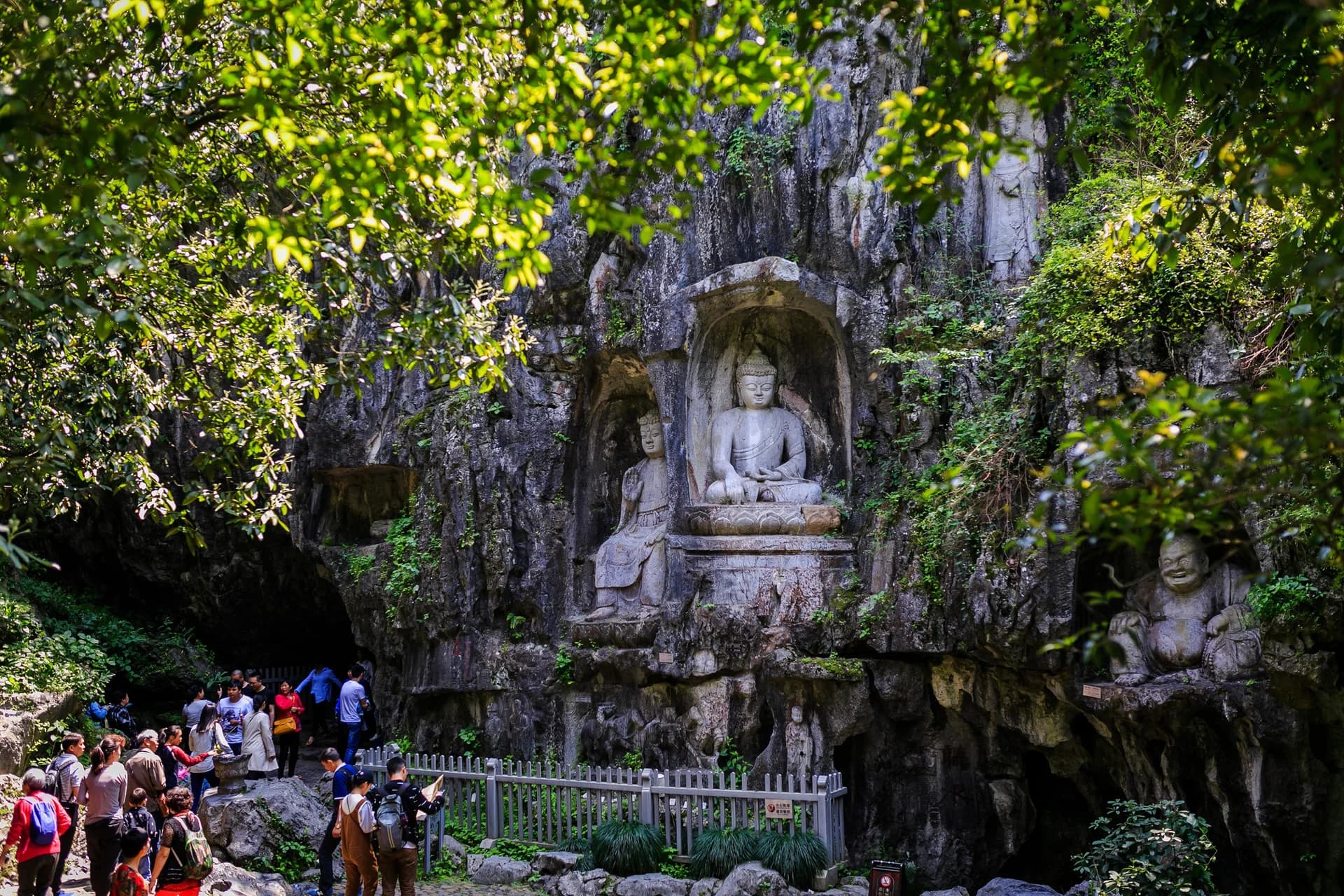
Lingyin Feilai Peak, also known as Lingjiu Peak, is said to have been named after the Eastern Jin Dynasty monk Huili, who, upon ascending this mountain, exclaimed, "This is a small ridge from Lingjiu Mountain in India; I wonder when it flew here!" This inspired the name and the construction of Lingyin Temple, marking the beginning of Lingyin Temple's thousand-year history. Feilai Peak is approximately 168 meters high, and its surface is covered with Buddhist grottoes dating from the Five Dynasties to the Yuan Dynasty. There are currently over 390 surviving statues, encompassing both Han and Tibetan artistic styles, making it the largest collection of ancient grotto art treasures in the Jiangnan region of China.
The most famous are the Laughing Buddha and the Eighteen Arhats, with their bare chests and smiling faces, representing the pinnacle of Song Dynasty sculpture. A visit takes approximately 2 to 3 hours, with the best seasons being spring (March-May) and autumn (September-November) for pleasant weather and captivating scenery.
How to Get There
Public transportation is the most convenient way to get there. You can take bus routes 7, 7W, or 1314 directly to the Lingyin bus stop. Alternatively, take Metro Line 3 or 10 to Huanglong Sports Center Station, then transfer to the "Huanglong Sports Center to Lingyin Special Line" (approximately 30 minutes). Taxi/Ride-hailing services are also available. During peak season, traffic restrictions apply in the Lingyin area; you'll need to transfer to a shuttle bus at 608 Xixi Road or Xiaoyawu bus stop to enter the scenic area.
Recommended Itinerary (approximately 3-4 hours): After entering the scenic area, turn left and walk along the forest path for about 5 minutes to reach Qinglin Cave. Legend has it that the stone slab in front of the cave was once the "bed" of the monk Jigong. Then head north to Yuru Cave to admire the group of eighteen Arhats from the Northern Song Dynasty and the statue of the Sixth Patriarch of Zen Buddhism. Afterwards, explore Longhong Cave (Guanyin Cave) and the famous "One Line Sky" rock crevice landscape. Follow the trail along the stream, admiring the grottoes and statues from various dynasties along the way, and finally arrive at Lingyin Temple—an ancient temple with a history of over a thousand years—where you can enter for a visit and prayer. Those with ample energy can climb the trail to the top of Feilai Peak (approximately 30 minutes) for a panoramic view of Lingyin Temple.
What to Expect
Starting December 1, 2025, Feilai Peak Scenic Area (including Lingyin Temple, Yongfu Temple, and Taoguang Temple) will offer free admission. Opening hours are 7:30 AM to 5:30 PM daily (last entry at 5:00 PM). However, reservations must be made at least one day in advance via the Alipay or WeChat mini-program by searching for "Hangzhou Lingyin Feilai Peak." Same-day reservations are not accepted.
The scenic area features well-maintained main walking trails and stone steps. Feilai Peak is only 168 meters above sea level, and the trails are generally gentle and easy to walk, taking about half an hour to reach the summit. Public restrooms are available within the scenic area, along with signs and rest pavilions. Gift shops and food stalls are located within and around the scenic area, where you can purchase souvenirs and vegetarian noodles (vegetarian noodles at "Shifangyuan" inside Lingyin Temple cost approximately 20 yuan per bowl).
Practical Tips
- Recommended vegetarian restaurants within the scenic area: Lingyin Temple Vegetarian Restaurant, Taoguang Tea House
- This trip can be combined with visits to West Lake and Faxi Temple; a full day is recommended.
- Guided tours are available at the attraction, but reservations must be made in person. For English-language commentary, you can rent an audio guide.
- Wear comfortable shoes; some sections require climbing stone steps.