Overview
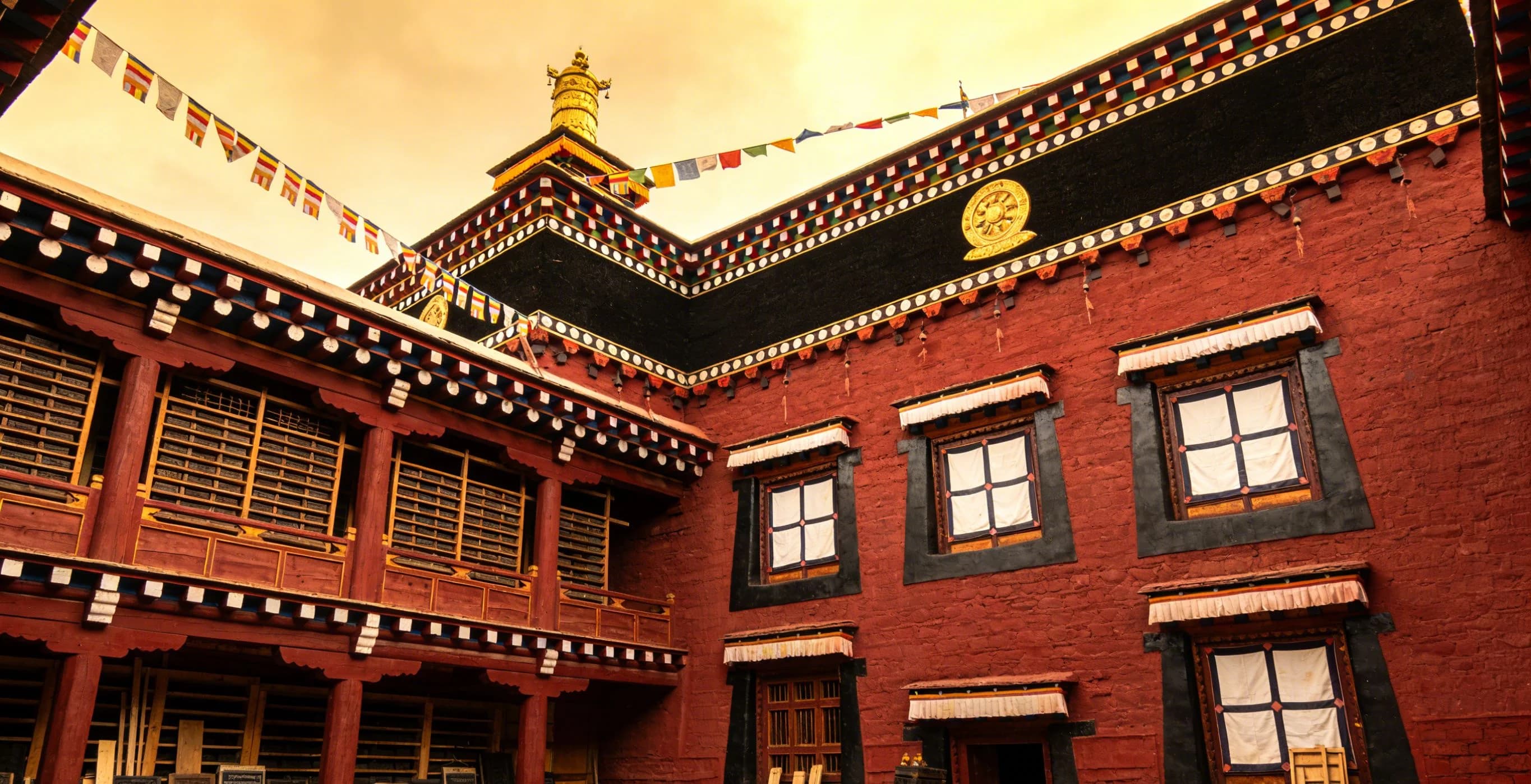
Dege Printing House, located in the center of Dege County, Ganzi Prefecture, Sichuan Province, is hailed as an "encyclopedia of Tibetan culture" and is the foremost of the three major printing houses in the Tibetan region. It is world-renowned for its collection of over 300,000 ancient woodblock printing plates and its well-preserved traditional woodblock printing techniques.
A visit takes approximately 2-3 hours. Opening hours are 8:30 AM - 12:00 PM and 2:00 PM - 5:30 PM (summer). The best time to visit is in the morning when natural light is strongest and you can witness artisans printing scriptures on-site. It is recommended to visit the printing workshop and the Tibetan woodblock storage in the morning, and in the afternoon, you can circumambulate the monastery or visit Gengqing Monastery.
How to Get There
For independent travel, the typical route involves flying to Chengdu first, then taking a long-distance bus from Chengdu's Xinnanmen Bus Station to Kangding (approximately 8 hours), followed by a transfer to a bus to Dege County (approximately 12 hours). Upon arrival in Dege County, you can walk or take a local taxi to the central printing house. Alternatively, driving or hiring a car along the G317 Sichuan-Tibet Northern Route is highly recommended. Starting from Chengdu, the route passes through Kangding and Ganzi County before reaching Dege, taking approximately 12 hours and offering stunning highland scenery along the way.
A suggested tour route is to enter through the main gate, first visiting the printing plate washing platform and printing workshop on the first floor, then going up to the second floor to visit the Tibetan printing plate storage (the core area) and the scripture hall, and finally reaching the top floor's scripture drying tower for a panoramic view of the county.
What to Expect
The printing house is located within the county town and is within walking distance. However, the passageways inside are narrow and the stairs are steep, posing a challenge for those with mobility issues. As the building is primarily wooden and relies heavily on natural lighting, the interior is dimly lit; please be careful where you step. Facilities are basic, including restrooms. A gift shop is located near the entrance where you can purchase souvenirs, and there are also Tibetan restaurants and guesthouses nearby.
Practical Tips
- Plan this as a long overland trip from Chengdu or pair it with Garze/Dege county travel — road journeys are lengthy, so start early and keep your itinerary flexible.
- Visit in the morning for better light and a calmer atmosphere when workshop activity is easier to observe.
- Bring your passport and use Gaode Maps or Baidu Maps in Chinese for navigation, as English map labels can be inconsistent in western Sichuan.
- Ask staff before photographing printers or woodblocks — some working areas and religious materials may have restrictions.