Overview
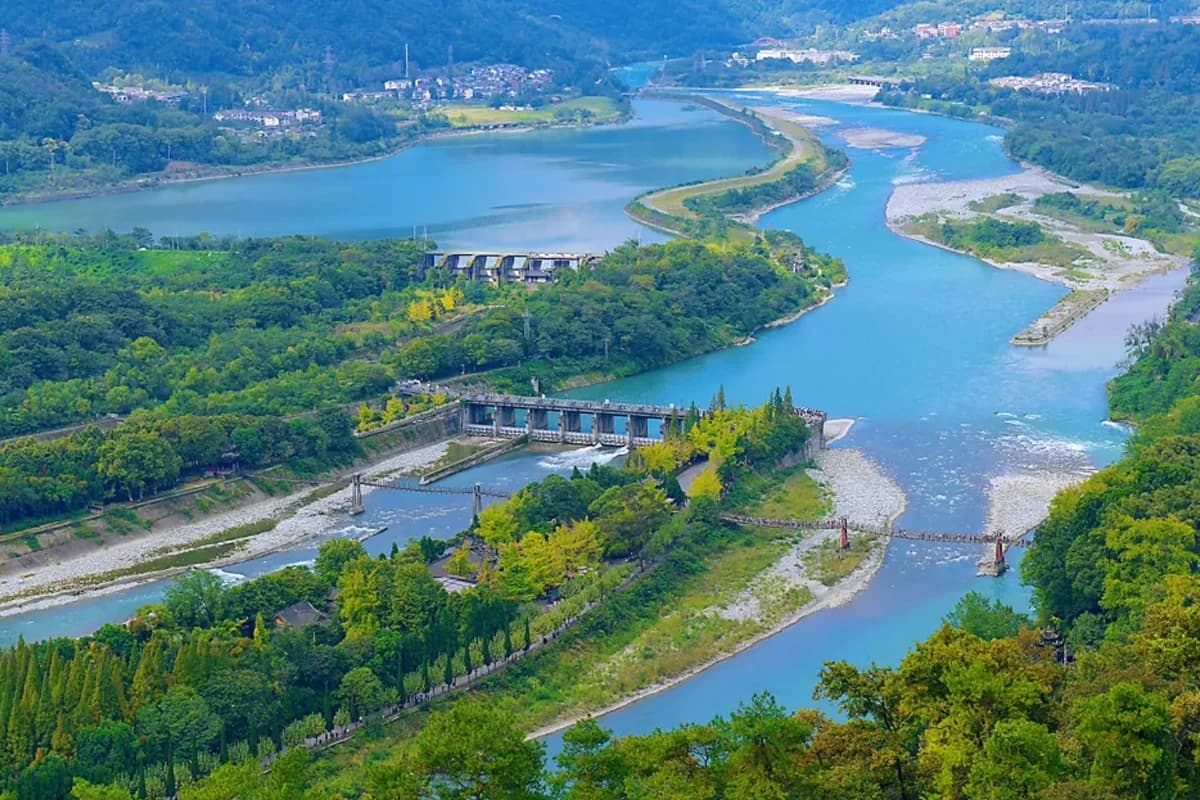
Dujiangyan, built in the 3rd century BC, is the world's oldest and only surviving damless water diversion project, hailed as the "ancestor of world water conservancy culture." Its core attractions consist of three main structures: the Fish Mouth Diversion Dam, the Feisha Weir Spillway, and the Baopingkou Intake, which continue to irrigate the Chengdu Plain to this day.
Spring (March-May) and autumn (September-November) offer pleasant weather and are the best seasons to visit. A visit of 2 to 4 hours is recommended.
How to Get There
From Chengdu, the most convenient way is to take the intercity high-speed train from Xipu Station (approximately 20-30 minutes) directly to Dujiangyan Station or Lidui Park Station, with Lidui Park Station being closer to the scenic area. Alternatively, you can take a tourist bus directly from Chadianzi Bus Station.
We recommend the "effortless panoramic light tour," entering the scenic area from Qinyan Tower (Gate 6), where you can capture a panoramic view of Dujiangyan. Afterwards, visit the Erwang Temple, cross the Anlan Suspension Bridge (Couple's Bridge), and get a close look at the Fish Mouth Diversion Dam, Feisha Weir, and Baopingkou. Finally, exit through the Lidui Park gate (Gate 1), which leads directly to the ancient city of Guanxian, where you can enjoy local cuisine and admire the night view of Nanqiao Bridge.
What to Expect
The scenic area boasts well-developed infrastructure, with walking as the primary mode of exploration. The routes are well-designed, featuring both flat main paths and sections with steps and the swaying Anlan Suspension Bridge. Comfortable walking shoes are recommended. Public restrooms are widely available throughout the scenic area. Gift shops and rest pavilions are located near the main entrances and attractions. A sightseeing escalator (at an additional cost) is also available at the core attraction, Yulei Pavilion, providing a convenient option for visitors who prefer not to hike and enjoy panoramic views.
Practical Tips
- Take the intercity rail from Chengdu’s Xipu area to Lidui Park Station for the most convenient arrival near the old town and scenic area entrance.
- Arrive before 09:30 if you want quieter paths and better photos at Yuzui and Anlan Suspension Bridge.
- Wear non-slip shoes — stone steps, riverside paths, and bridge sections can be slippery after rain.
- Use Gaode Maps or Baidu Maps instead of relying only on overseas map apps, which can be inaccurate in China.
- You can check out the blue tears phenomenon near Dujiangyan around 7 pm.