Overview
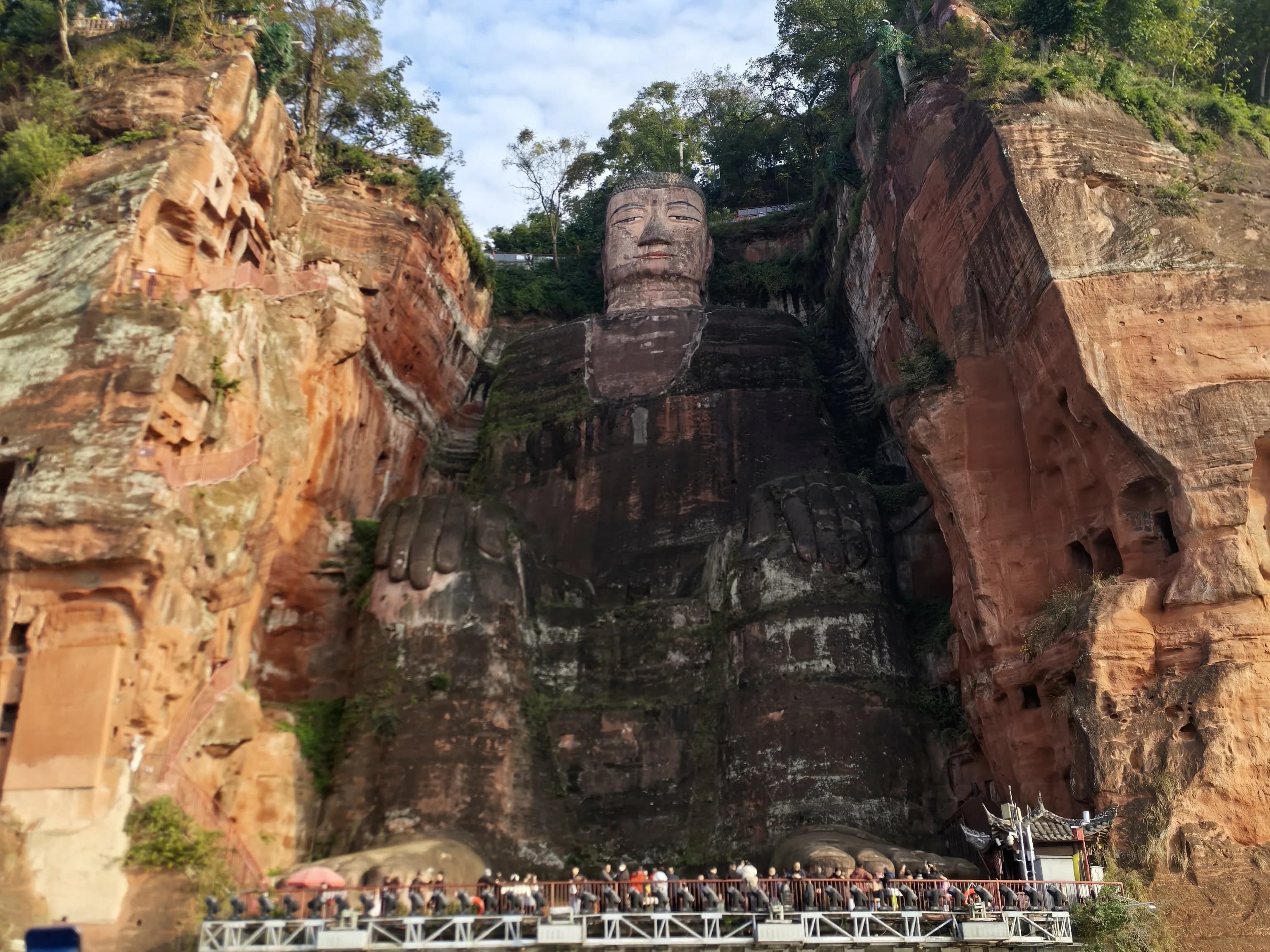
The Leshan Giant Buddha, located in Leshan City, Sichuan Province, is the world's tallest and largest stone-carved Maitreya Buddha statue, standing 71 meters tall. Construction began in the Tang Dynasty and took 90 years to complete. It is a UNESCO World Heritage Site.
A visit to the Buddha takes approximately 2-3 hours. The best time to visit is spring (March-May) and autumn (September-October), when the weather is mild and you can avoid the high temperatures and muddy river waters of the summer flood season.
How to Get There
The most convenient way to get to the Leshan Giant Buddha from Chengdu is by high-speed rail to Leshan Station (approximately a 50-minute ride). After exiting the station, you can transfer to bus routes K1, 3, or 13 to reach the scenic area directly. For those driving, the Chengdu-Leshan Expressway provides access, taking about 2 hours.
Two recommended tour routes are: The land route starts from the North Gate, passing Lingyun Temple and descending the winding plank road to the Buddha's foot platform, allowing for a close-up experience of the Buddha's majestic grandeur; the water route starts from Jiaozhou Ferry Terminal, taking a boat (approximately 30 minutes) to enjoy panoramic views of the Buddha from the river, including the natural "giant reclining Buddha" formation.
What to Expect
The walking paths in the Leshan Giant Buddha Scenic Area are mainly stone steps, with the Nine-Bend Plank Road being particularly steep and narrow; caution is advised when walking. The commercial street at the exit has gift shops and food stalls where you can buy souvenirs or sample local cuisine. Comfortable walking shoes are recommended. The entire walk takes approximately 1.5 to 2 hours; some areas have steps, making it less convenient for wheelchairs and strollers.
Practical Tips
- Take a boat for the full frontal view of the Buddha
- The staircase descent beside the Buddha has long queues - go early
- Combine with Leshan Old Town for local cuisine
- High-speed train from Chengdu takes only 1 hour