Overview
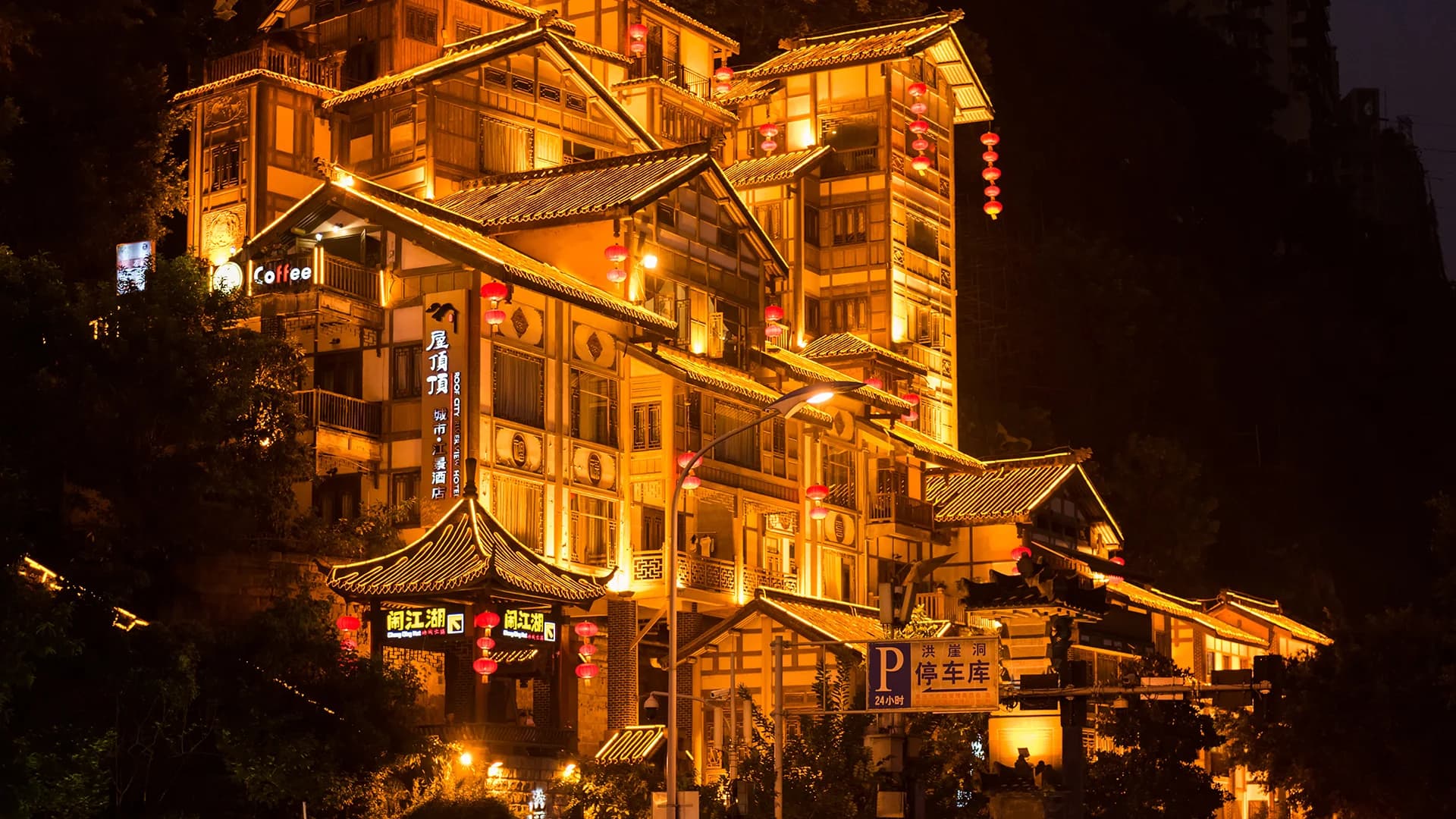
Hongyadong is a cluster of traditional Bayu stilted buildings located on the banks of the Jialing River in Chongqing. Reaching 11 stories, it is famous for its nighttime illumination, which resembles a scene from the animated film *Spirited Away*.
A visit of 2-3 hours is recommended, with the best time to visit being between 7:30 PM and 11:00 PM when the buildings are illuminated. The "Blue Hour" from 7:30 PM to 8:00 PM offers the best photo opportunities. It is suggested to start from the city balcony on the 11th floor and walk down each floor, saving energy and allowing for a comprehensive experience of the building's interior and exterior structures.
How to Get There
The most convenient way is by subway. You can take Line 1 or Line 6 to Xiaoshizi Station (exit from Exit 6 or 9), or Line 2 to Linjiangmen Station. After exiting the station, walk about 500-1000 meters to reach the entrance to the top floor (11th floor) of the scenic area. By bus: Take bus routes 111, 151, or 181 to Hongyadong Station.
Recommended Itinerary: We recommend first going to the riverside area near the Grand Theatre Station in Jiangbei District to take photos of the distant view of Hongyadong and the Qianximen Bridge. Then walk across the Qianximen Bridge to enjoy the panoramic view from afar. After crossing the bridge, you will arrive directly at the entrance to the 11th floor of Hongyadong. From there, explore the area floor by floor down to the riverside promenade on the 1st floor.
What to Expect
Hongyadong is entirely built into the mountainside, with internal passages and external connections relying primarily on numerous staircases and elevators. However, elevator queues can be long during holidays, so it's advisable to be prepared to walk. Restrooms are available throughout the scenic area, mainly located on some floors (such as near the food street on the 4th floor). Gift shops and restaurants are scattered across all floors, especially the "Bayu Style Street" on floors 1-3, which sells various folk souvenirs, while floors 9-10 offer exotic handicrafts. Furthermore, both the ground floor (1st floor) and the top floor (11th floor) lead directly to roads, perfectly showcasing Chongqing's "magical" mountainous terrain.
Practical Tips
- Go after 18:30 for the illuminated facade, but arrive before 17:30 if you want photos with shorter queues and less crowding.
- General entry is free as of 2026; bring your passport and check for real-name registration notices on official signage during peak holidays.
- Use Metro Line 1 or Line 6 to Xiaoshizi Station, then follow signs carefully — Chongqing's multi-level streets can make the walk look shorter on maps than it feels.
- For the classic skyline shot, cross toward the Qiansimen Bridge or nearby riverfront viewpoints rather than shooting only from inside the complex.
- Avoid national holidays if possible: evening crowd control is common, and entry/exit routes may be one-way during busy periods.