Overview
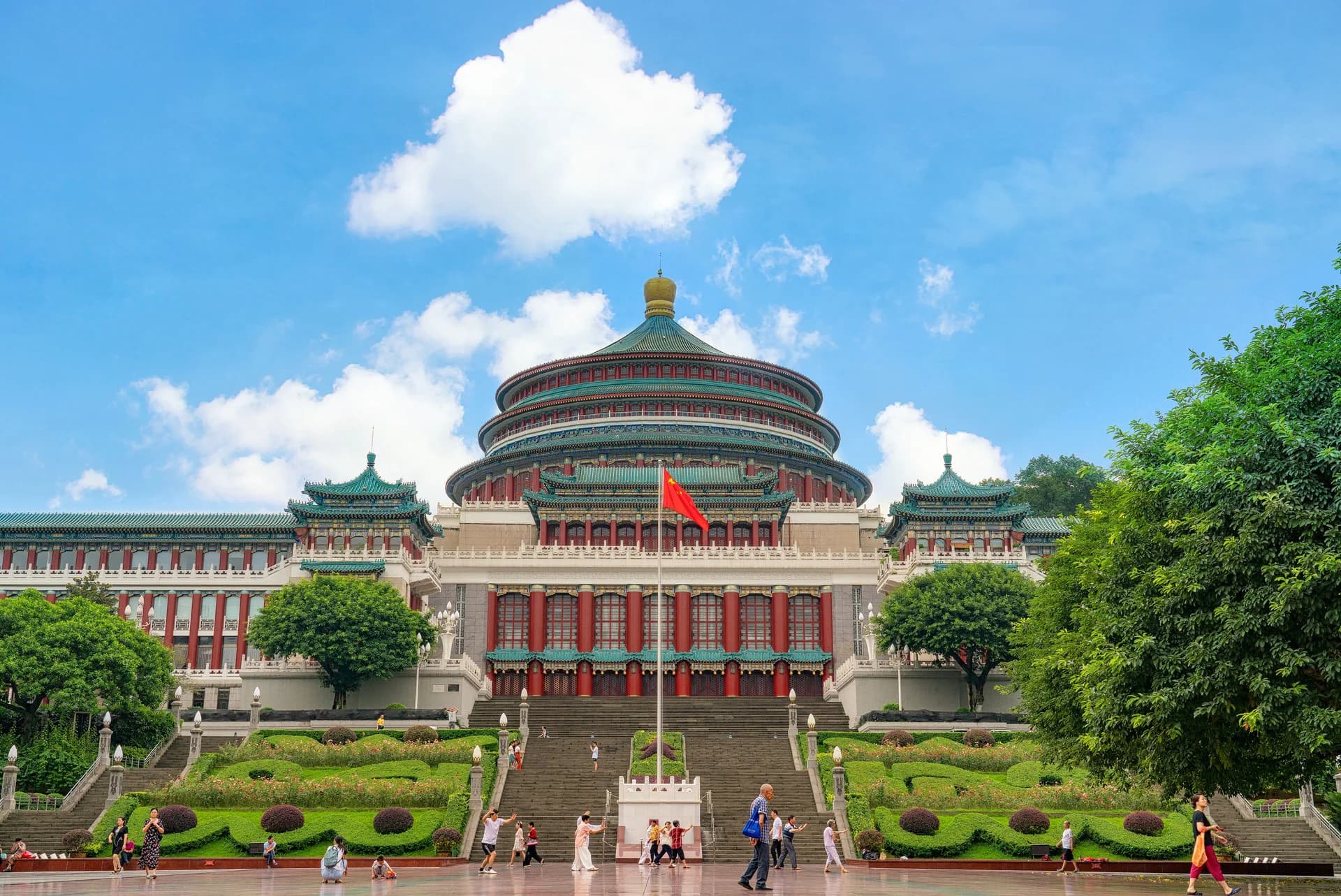
The Chongqing People's Great Hall is a landmark building in Chongqing, known as a "miniature Temple of Heaven hidden in the city center." It blends traditional Chinese palace style with modern architectural technology. Its iconic red walls, green tiles, and golden eaves are magnificent and perfect for taking photos. A visit of 1-2 hours is recommended. The best time to visit is in the spring and autumn (March-May and September-November) in the morning or evening, when the light is soft and the photos are most beautiful. The view is especially spectacular when the lights come on at dusk.
How to Get There
The most convenient way is by public transportation. You can take Metro Line 10 to "Great Hall Station" and exit from Exit 1 or 4, then walk to the auditorium; or take Metro Line 2 to "Zengjiayan Station" and exit from Exit A or 3, then walk for about 3-10 minutes. Alternatively, you can take bus routes 145, 181, 829, or T480 (sightseeing bus) to "Great Hall Station".
Recommended Route: It is suggested to start the visit from the main gate archway, cross People's Square, and look up at the magnificent main building. Tickets can be purchased to enter the auditorium and admire the circular hall, stage murals, and unique dome structure. After the visit, you can walk across the street to the Chongqing China Three Gorges Museum (free admission, reservation required) to continue your tour and learn more about the history of the Bashu region.
What to Expect
The main entrance to the Great Hall of the People has 128 steps, requiring some walking ability, but there are accessible ramps inside the main building. Restrooms are available within the scenic area, primarily located inside the Great Hall and around People's Square. Gift shops selling souvenirs and cultural and creative products with Chongqing characteristics are located near the square and in the surrounding streets. In addition, the nearby Great Hall of the People Food Street offers a variety of local delicacies for convenient dining.
Practical Tips
- Go right after opening at 08:00 for the quietest photos of the front plaza and dome — the light is usually softer and tour groups are fewer.
- Combine it with the Three Gorges Museum across the square to make a half-day visit — the two sights are close enough to walk between in a few minutes.
- While you can take photos from the outside, it's recommended to buy an 8 yuan ticket to enter and experience the grandeur of the main hall.