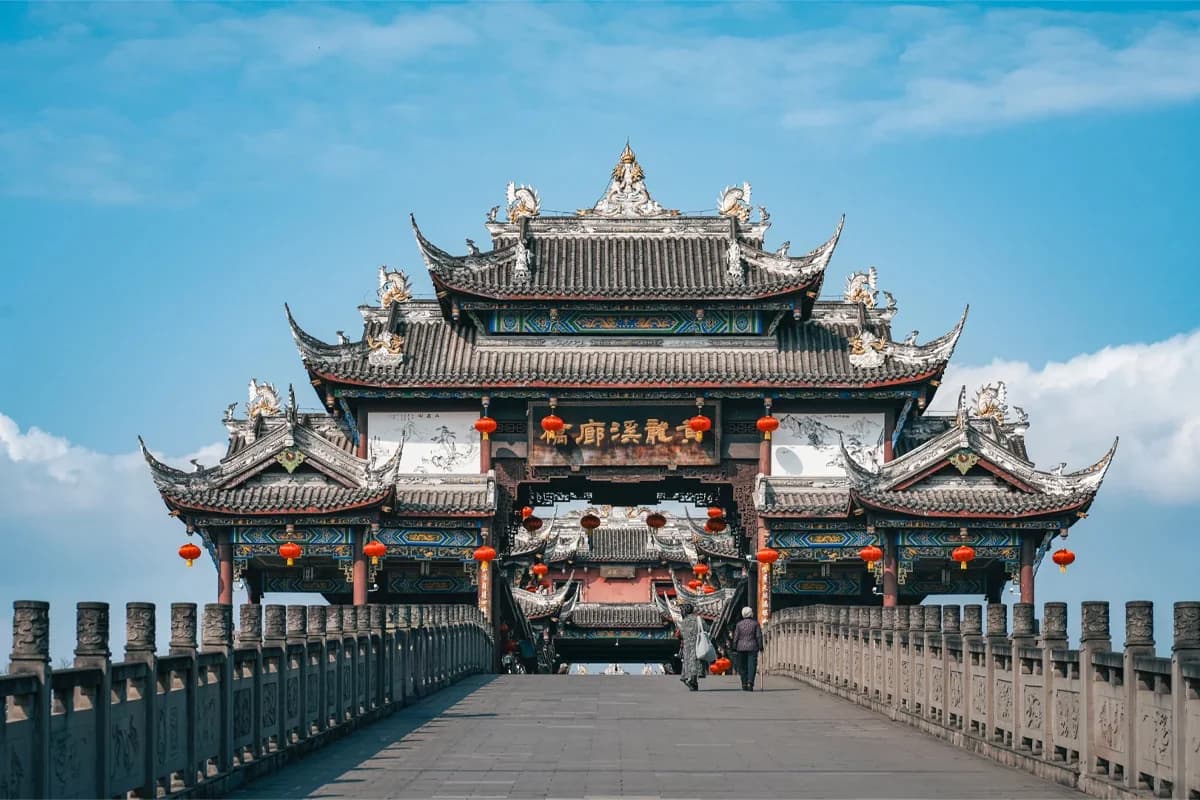
Overview
Huanglongxi Ancient Town, located about 40 kilometers south of Chengdu, is a free water town with a history of over 1700 years, renowned for its Ming and Qing dynasty architecture, cobblestone streets, and ancient trees.
A visit typically takes 2-3 hours or half a day; a full day is recommended for a more leisurely experience. The best time to visit is spring and autumn (March-June and September-November), when the weather is pleasant. Although summer is hot, splashing and water fights in the shallow streams that run through the town are the most popular ways to cool off.
How to Get There
By Metro + Bus: Take Chengdu Metro Line 5 to "Huilong Station", exit from Exit H1, transfer to bus S18 or S18K to "Huanglongxi Bus Station", and walk for about 10-15 minutes to reach the ancient town. By Bus: Take a direct bus from Chengdu Xinnanmen Bus Station (Exit D of Xinnanmen Station on Metro Line 3), the journey takes about 1 hour. By Car: Drive about 40 kilometers along the Chengya Expressway, the journey takes about 1 hour. There are several parking lots around the ancient town, with parking fees of about 10-20 yuan/day.
Suggested Itinerary: Enter the Western Sichuan Folk Houses Cultural Street from the entrance of the ancient town → Longtan Square (water play area) → Huanglong Main Street (visit Gulong Temple, the Three County Government Offices, Chaoyin Temple, and Zhenjiang Temple) → Huanglongxi Covered Bridge (take photos and enjoy the scenery) → Enjoy local delicacies on the ancient street. A full day trip is recommended.
What to Expect
The ancient town is primarily paved with bluestone slabs, and the pedestrian area is extensive; comfortable flat shoes or sneakers are recommended. The main streets are flat and easy to walk on, while some alleys have steps, making it ideal for walking. The scenic area has well-equipped facilities, with restrooms along the way that are clearly marked. There are many gift shops and specialty shops in and around the ancient town, selling handicrafts, longan pastries, and other souvenirs. In summer, the water play area has changing and shower facilities for visitors to change clothes after getting wet. Teahouses, snack stalls, and restaurants are scattered throughout the ancient town, providing places to rest and dine at any time.
Practical Tips
- Town entry is usually free in 2026, but carry small cash or mobile payment for side halls, boat rides, snacks, and paid shows, which often range from ¥10 to ¥30.
- Visit before 10:00 or after 16:00 for softer light and fewer tour groups; weekends and public holidays are much busier.
- Wear non-slip walking shoes — the old stone lanes can be uneven and slippery after rain, especially near the water channels.