Overview
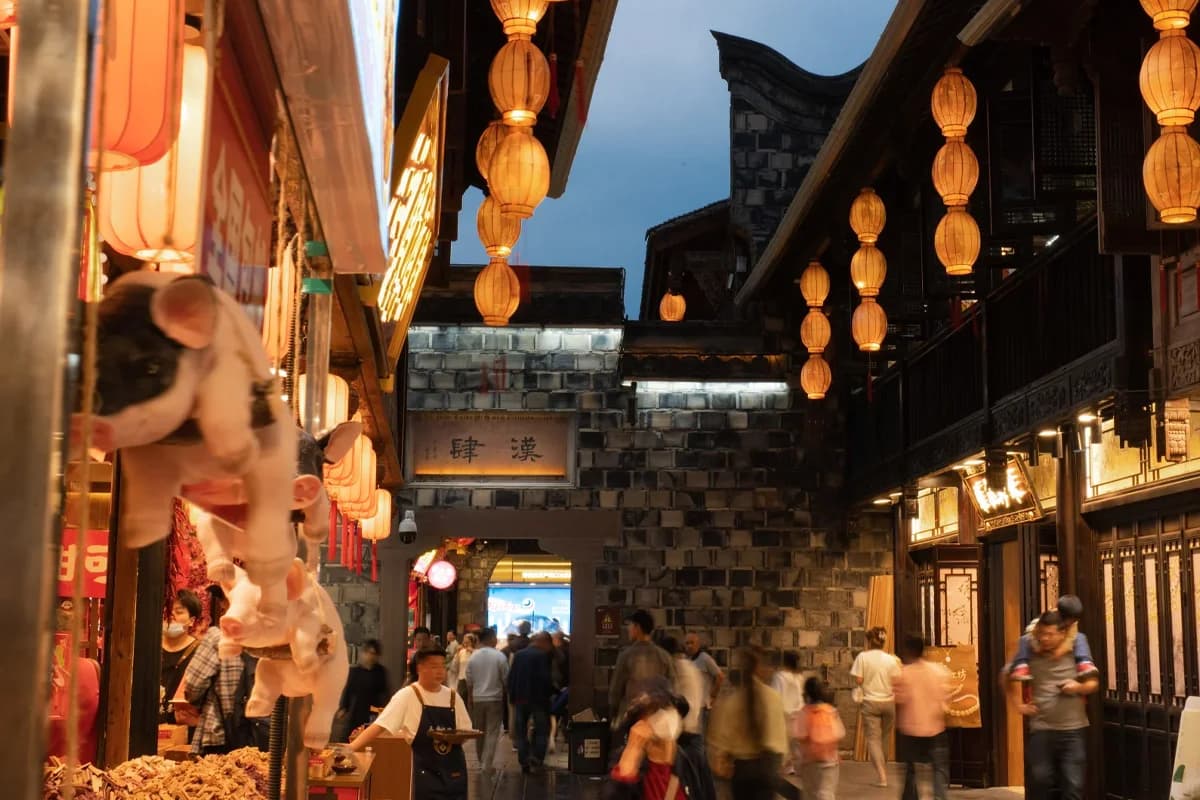
Jinli Ancient Street, adjacent to Wuhou Temple, is a traditional street that preserves the architectural style of western Sichuan residences from the late Qing Dynasty and early Republic of China. Known as the "First Street of Western Sichuan," it is open to the public free of charge. It encapsulates Chengdu's culture and cuisine, where you can sample local snacks like "Three Cannons" (a type of glutinous rice cake) and "Bo Bo Chicken" (a type of Sichuan hot pot), and appreciate folk crafts such as sugar painting and shadow puppetry. A 2-3 hour visit is recommended, but the best way to experience it is to arrive in the evening. As night falls and thousands of red lanterns light up, Jinli becomes most poetic and romantic under the glow of the lights.
How to Get There
The most convenient way is to take Metro Line 3 or 5 and get off at Gaoshengqiao Station. Exit from Exit D and walk approximately 800 meters. Alternatively, you can take bus routes 1, 57, 82, or 334 and get off at "Wuhou Temple Station". If taking a taxi, tell the driver to go to "Jinli Ancient Street next to Wuhou Temple".
Travel Suggestion: Combine Wuhou Temple and Jinli Ancient Street in one trip. In the evening, explore Lantern Alley to photograph the night view and experience the charm of the ancient street at night.
What to Expect
Jinli Ancient Street is entirely paved with bluestone slabs and has a relatively flat surface. However, since it's a pedestrian street, the entire walk is required, so comfortable shoes are recommended. Gift shops and food stalls line both sides of the street, where you can buy local specialties such as Shu embroidery and Zhang Fei beef. Public restrooms are available within the scenic area, and the signs are quite clear. The ancient street is open all day, but due to its popularity, it can get very crowded on weekends and holidays.
Practical Tips
- Entry to Jinli Ancient Street is free as of 2026, but if you also want to visit Wuhou Shrine next door, budget about ¥50 for the shrine ticket.
- Go after 18:30 for the best lantern photos, but arrive before the dinner rush if you want shorter food queues.
- Use Gaode Maps or Baidu Maps instead of Google Maps in China; search for 锦里古街 to navigate accurately.
- Try classic Chengdu snacks in small portions first — prices vary, but many street items cost around ¥10-¥25 in 2026.