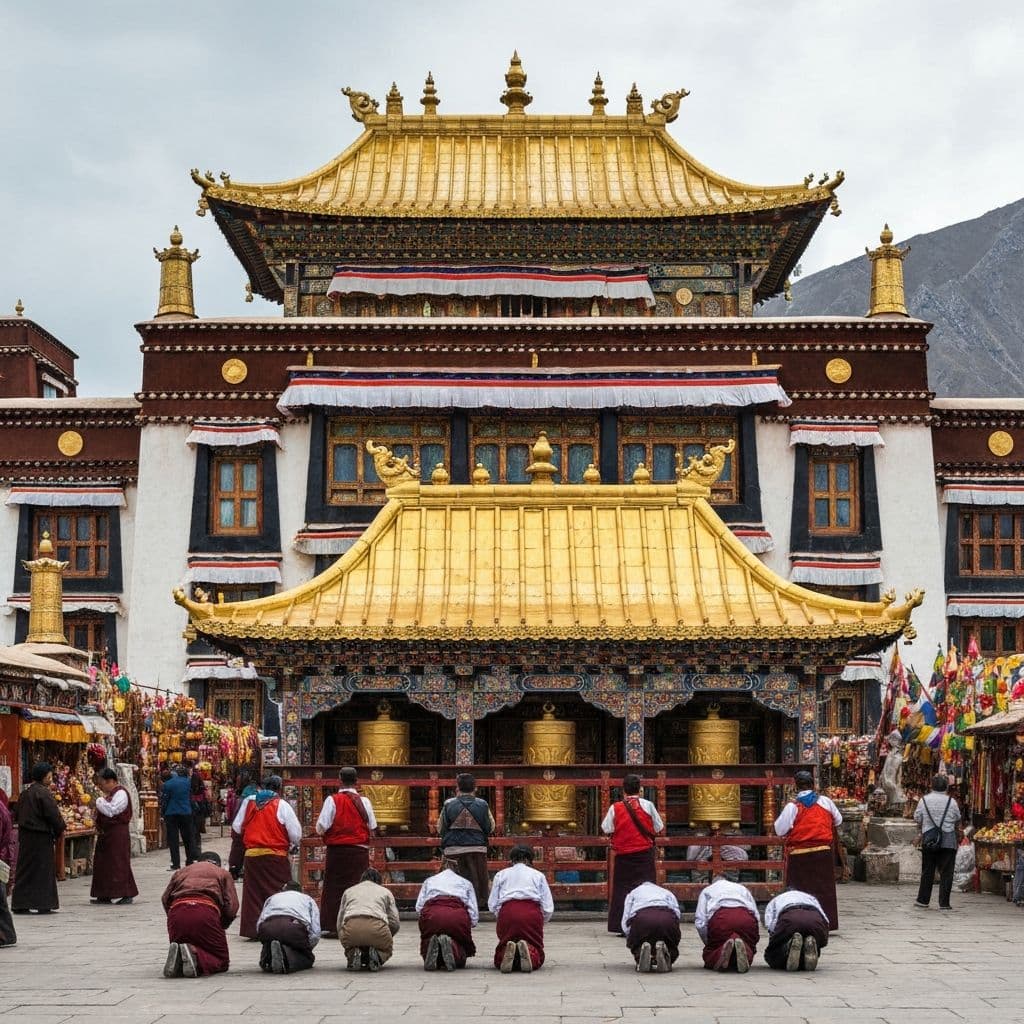
Overview
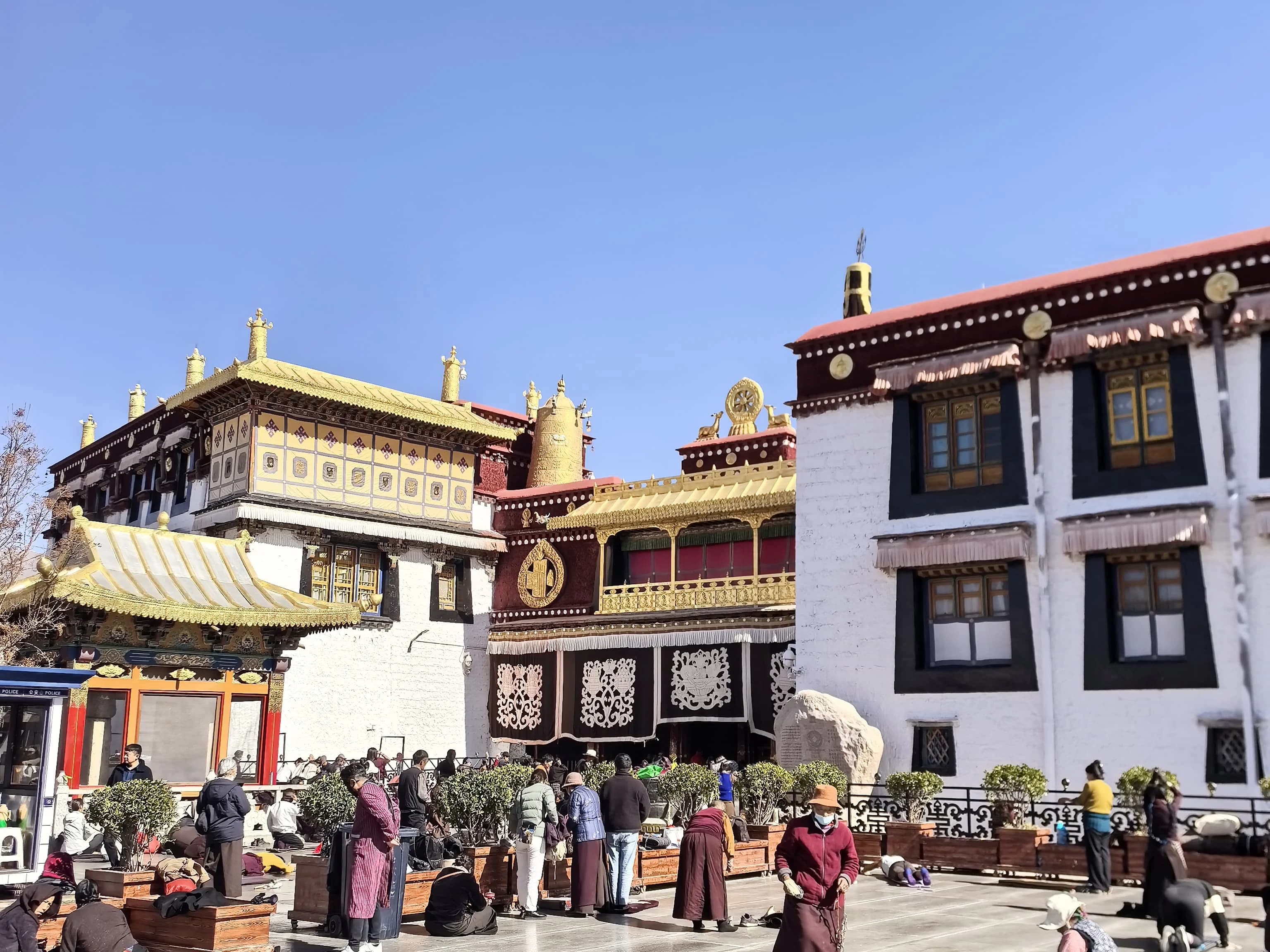
Jokhang Temple, located in the heart of Lhasa's old city, is the most sacred temple of Tibetan Buddhism, housing a life-size statue of the 12-year-old Shakyamuni Buddha brought by Princess Wencheng.
A visit of 2-3 hours is recommended. The best time to visit is from May to October when the weather is pleasant. Please visit in a clockwise direction, dress appropriately (long trousers and long sleeves), and refrain from taking photos inside the temples.
How to Get There
To reach Jokhang Temple, the most recommended route is to start on foot from Barkhor Street, as motor vehicles are prohibited in the old city. Take bus routes 7, 8, or 20 to "Tsomeilin Station" or "Chongsaikang Station"; alternatively, you can take a taxi to Jokhang Temple Square or a traditional rickshaw (approximately 5-15 yuan).
When visiting, please proceed clockwise: enter the temple from the square, first visit the main hall, Jokhang Temple, then follow the pilgrimage route to visit the various halls, finally ascending to the second-floor golden roof platform. After exiting, you can immediately join the pilgrims on Barkhor Street and experience the rich religious atmosphere. Please note that security checks and identification are required to enter the Barkhor Street area.
What to Expect
When visiting Jokhang Temple, please note that you should not pilgrimage counter-clockwise. Public restrooms (mainly dry toilets, with paid restrooms in the square) are available both inside and outside the temple. Souvenir shops and teahouses are located around Barkhor Street, and there are also shops selling Buddhist items (Buddha statues, Thangkas, etc.) inside the temple. Please note that you will need to go through security checks to enter the temple, the pilgrimage route must be strictly clockwise, and hats and sunglasses are generally not allowed inside the halls.
Practical Tips
- Join pilgrims on the clockwise Barkhor circuit
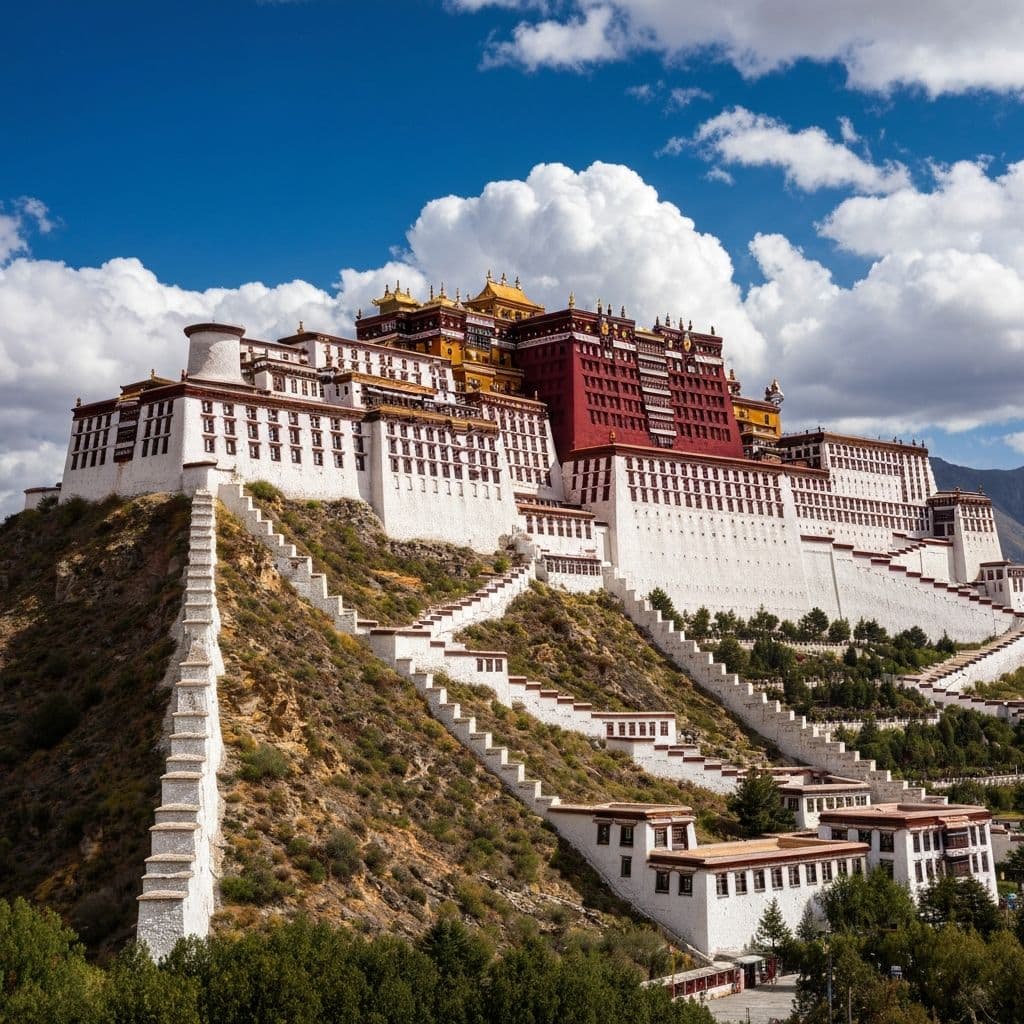
- Rooftop terrace has the best views of Potala
- Photography inside chapels is prohibited