north China
Kunming
Is Kunming worth 2–4 days? Spring weather, Yunnan food, and easy day trips
Best time: March to October
2 days suggested
5 highlights
Why Visit Kunming
Visit Kunming, the City of Eternal Spring. Discover top attractions, weather, and travel tips for your Yunnan adventure. Plan your Kunming trip with us!
Top Highlights
Nature day trip: take the 1.5-hour trip to Stone Forest (Shilin) and spend 3–5 hours on the main loop; book a combined train/bus transfer if you want the simplest DIY option, and budget roughly ¥130–¥200 plus transport.
City walk day: pair Green Lake Park, Yuantong Temple, and Yunnan University in one half-day; these central stops are close enough for short taxi hops or a long walk, making them ideal for your first afternoon in Kunming.
Lake-and-view outing: ride out to West Hill (Xishan) and Dianchi Lake, then use the cable car and walking paths for a half-day to full-day nature break without leaving the city; expect entrance and cable car costs around ¥60–¥120 depending on route.
Food-focused evening: eat across Nanqiang Street and nearby central districts for small-plate Yunnan snacks such as crossing-the-bridge noodles and grilled tofu; plan ¥20–¥80 per person for a casual dinner crawl.
Culture cluster: visit Yunnan Provincial Museum with Guandu Ancient Town on the same day if you want context before regional side trips; this works especially well for travelers deciding whether to continue to Dali, Jianshui, or Yuanyang.
Must-See Attractions
4 attractions to explore in Kunming

Fuxian Lake
China's second deepest freshwater lake (158.9m) and the largest deep freshwater lake by volume. The crystal-clear water reaches visibility of 8 meters, perfect for swimming and diving. Ancient submerged ruins on the lake bottom add mystery. Less developed than nearby Dianchi, Fuxian offers clean beaches, water sports, and a relaxed lakeside atmosphere just 60km from Kunming.
natural
Kunming Old Street
Located in the city center, Kunming Old Street perfectly blends history and modernity, making it a place visitors linger. This pedestrian street brings together many beautifully restored Ming and Qing dynasty buildings, showcasing both traditional Yunnan features and incorporating Western architectural elements.
cultural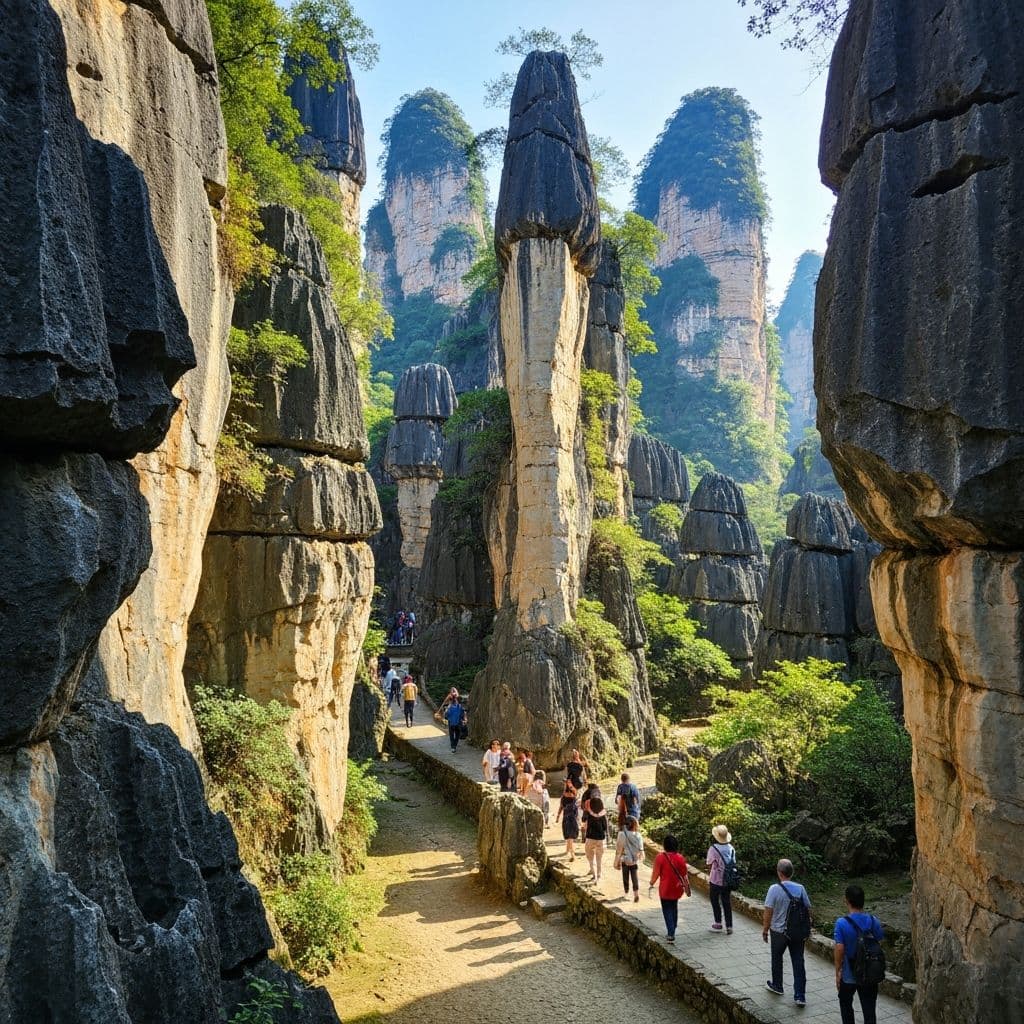
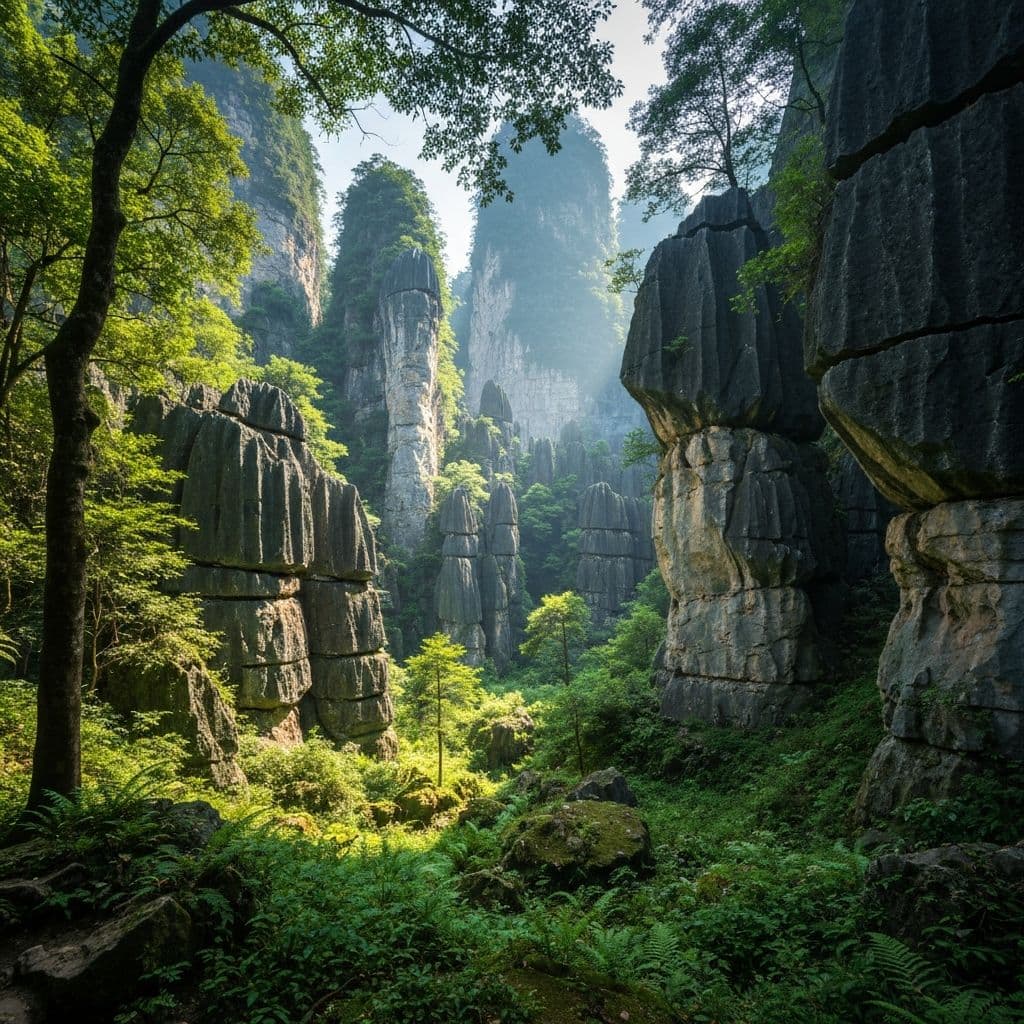
Stone Forest
A UNESCO World Heritage Site featuring 270-million-year-old limestone formations rising like a forest of stone pillars. The 400km² park contains multiple scenic areas with formations reaching 30 meters tall. The Sani people (Yi minority) have lived here for generations, and their colorful culture adds to the experience. A surreal landscape that inspired countless Chinese painters and poets.
natural
Xishan Scenic Area
Explore Xishan Scenic Area with top highlights, travel tips, scenic viewpoints, key attractions, transport advice, ticket details, and visitor information.
naturalTrip Planning Guide
"Kunming works best as a low-stress Yunnan gateway: you come for 2–4 days if you want good weather, regional food, and smart onward connections rather than a packed big-city checklist." Who Should Visit Kunming Kunming suits first-time China travelers who want an easier landing than Beijing or Shanghai. The pace is slower, the altitude is manageable at roughly 1,900m, and the climate is usually comfortable enough for year-round walking. If you like balancing city time with one signature excursion, Kunming is a strong fit because you can do urban sights one day and the Stone Forest the next without changing hotels. Food-focused travelers get a lot from Kunming because it is one of the simplest places to sample Yunnan cuisine in short distances: crossing-the-bridge noodles, wild mushroom dishes in season, grilled tofu, and minority-influenced snacks are all easy to find in central areas. Families usually find Kunming practical because Green Lake, Dianchi, and West Hill give kids outdoor space, while travel days are simpler than in more spread-out provinces. Backpackers and independent travelers often use Kunming as a route hub since high-speed rail and flights make it easy to continue to Dali, Lijiang, Xishuangbanna, or even cross into Southeast Asia-linked routes. How Many Days Do You Need Quick stop: 2 days. Use Day 1 for central Kunming: Green Lake Park, Yuantong Temple, Yunnan University area, and a night food crawl around Nanqiang Street. Use Day 2 for the Stone Forest. This is enough to decide whether Yunnan matches your travel style without overcommitting. Classic first-time trip: 3 days. Keep the 2-day plan above, then add a Dianchi Lake and West Hill day. That extra day matters because it breaks up temple-and-park sightseeing with wider views and gives you time for a museum or Guandu Ancient Town if the weather turns. For most first-time visitors, 3 days is the sweet spot. Deep exploration: 4–5 days. Extra time lets you add the Yunnan Provincial Museum, Guandu Ancient Town, a mushroom-focused meal, and a slower lake day, or use one day for a longer side trip to Jianshui by rail. If you are deciding whether to continue through Yunnan, 4+ days in Kunming helps you travel at a better pace before moving on to Dali or Lijiang. Main Areas & Route Groupings Central Kunming is your easiest first-day cluster. Green Lake Park, Yuantong Temple, and Yunnan University sit within a compact zone north of the commercial center. You can cover them mostly on foot with short taxi or metro transfers; allow 4–6 hours total including lunch. This cluster is the best choice after arrival because it avoids long commutes and gives you a quick read on the city. The Dianchi-West Hill cluster works as a separate day. From central Kunming, expect 35–60 minutes by taxi or metro-plus-bus depending on exactly where you start. You can combine the lakeside area with the cable car, West Hill walking routes, and optional Yunnan Ethnic Village if traveling with children or if you prefer a fuller sightseeing day. If you are short on time, prioritize the lake and West Hill over trying to add too many paid attractions. The Stone Forest is a true excursion day, not a casual add-on. Shilin is about 80–90km from central Kunming. With transfers, most travelers should budget 7–9 hours door to door. Start early, especially on weekends and Chinese public holidays, when entry lines and shuttle queues can lengthen. If your schedule is tight, do not pair Stone Forest with too many evening plans back in Kunming. Main transit-side cluster: Guandu Ancient Town and Yunnan Provincial Museum fit well together because they are both easier to reach in the city’s southeast than from the Green Lake area. This grouping is useful for your departure day if you have an evening train or flight and do not want to commit to a full-distance excursion. Trip Combinations Kunming combines especially well with Dali and Lijiang. High-speed rail to Dali is roughly 2 hours, and Lijiang is commonly around 3.5–4 hours by rail depending on the service. A simple 6–8 day Yunnan first trip is 2–3 days in Kunming, 2 days in Dali, and 2–3 days in Lijiang. If you prefer historical towns over mountain scenery, pair Kunming with Jianshui for 4–5 days total. For China-wide itineraries, Kunming works as a smart southwestern stop after Chengdu, Chongqing, Guangzhou, or Hong Kong because flights are frequent and rail options are improving. It is less efficient as a side trip from Beijing or Shanghai unless you plan to continue deeper into Yunnan rather than fly in just for one night. Planning Tips Book Stone Forest tickets and transport at least 1–2 days ahead in peak periods, especially July-August and major holidays. Stay near a metro station in central Kunming rather than near the airport; the time saved each day is worth more than a cheaper airport hotel. If you only have 24 hours, skip Guandu Ancient Town and focus on Green Lake plus one good Yunnan meal. Common mistake: underestimating transfer time to outlying sights and assuming Kunming is only a same-day transit city. If you have 3 days, it is usually worth staying in Kunming first, adjusting to Yunnan pace, then moving onward.
Food & Dining
Kunming cuisine blends local Yunnan flavors, ethnic minority flavors, and southwestern tastes. Its overall characteristics include a rich variety of ingredients, abundant mushrooms, common rice noodles, a refreshing sour and spicy flavor, and a distinct spice aroma. Must-Try Foods 1. Crossing-the-Bridge Rice Noodles One of Kunming's most representative dishes. Hot soup, rice noodles, sliced meat, and vegetables are served separately; you add them to the soup one by one to eat. Where to Eat: Kunming Old Street, around Green Lake, rice noodle shops in the city center Reference Price: 25–80 RMB/serving 2. Steamed Chicken in a Clay Pot A classic Yunnan dish, chicken broth is slowly steamed in a clay pot, resulting in a clear and flavorful soup, suitable for tourists who don't want anything too spicy. Where to eat: Yunnan restaurants, local time-honored restaurants Reference price: 80–180 yuan/serving 3. Wild Mushroom Hot Pot A unique Yunnan experience, especially suitable during mushroom season. The broth is flavorful and aromatic, and common mushrooms include porcini, termite mushrooms, and matsutake. Where to Eat: Mushroom hot pot restaurants and Yunnan cuisine restaurants in Kunming city center Estimated Price: 120–250 RMB per person, depending on the type of mushrooms. 4. Fresh Flower Cake A representative Yunnan dessert, often filled with rose petals, with a flaky crust and a pronounced floral aroma. Where to eat: Kunming Old Street, shopping malls, airport, high-speed rail station, souvenir shops Reference price: 3–8 yuan/piece Recommended Dining Areas: Kunming Old Street: Suitable for first-time visitors to Kunming. Concentrated with rice noodles, snacks, flower cakes, and Yunnan cuisine. Cuihu Lake Area: Ideal for a stroll followed by a meal. Numerous restaurants and cafes to choose from, offering a relaxed atmosphere. Nanping Street / City Center: A well-established commercial area, great for restaurants, casual dining, and local chain stores. Wenhua Lane / Yuanxi Road Area: Popular with young people, offering a wide variety of snacks, cafes, and light meals, perfect for a leisurely evening stroll. Dounan Flower Market Area: Ideal for combining with a flower market visit. Casual meals and Yunnan snacks can be found nearby.
Getting There & Around
Kunming is the most important transportation hub in Yunnan, and is a good place to travel to Dali, Lijiang, Shangri-La, Xishuangbanna, Stone Forest and Fuxian Lake. How to get to Kunming? 1. By plane | Kunming Changshui International Airport Kunming Changshui International Airport is the most commonly used airport for entering Yunnan Province. It is suitable for flights from cities such as Beijing, Shanghai, Guangzhou, Shenzhen, Chengdu, and Xi'an, and also has some international routes. Methods to get to the city center: Subway: Inexpensive, suitable for travelers with light luggage, approximately 6-10 RMB Airport bus: Suitable for travel to designated shopping areas Didi/Taxi: More convenient, suitable for travelers with luggage or arriving late, approximately 50-100 RMB/vehicle 2. High-speed rail | Kunming South Station Kunming South Station is a major high-speed rail station, suitable for travelers arriving from or departing from Dali, Lijiang, Guiyang, Nanning, Chengdu, etc. Suitable for: Travelers planning multi-city trips in Yunnan, visiting cities like Dali, Lijiang, Guiyang, and Nanning, and those who don't want to frequently fly. 3. Train | Kunming Station Kunming Station is closer to the city center, suitable for travelers staying near the city center, Green Lake, or Kunming Old Street. How to get around Kunming? 1. Subway The Kunming subway is suitable for traveling between the airport, high-speed rail station, and city center. It's inexpensive and relatively stable. Fee estimate: Approximately 2-10 RMB per trip Suitable routes: Airport → City center Kunming South Station → City center City center → Kunming Station / High-speed rail station 2. Didi / Taxi Suitable for those with luggage, arriving late, or needing shuttle service to/from Stone Forest or Fuxian Lake. Also suitable for short trips within the city. Fee Reference: Short city trip: Approx. 15–40 RMB City center → Airport: Approx. 40–80 RMB City center → Kunming South Railway Station: Approx. 100–180 RMB 3. Chartered Car/Small Group Tour For visiting nearby attractions like the Stone Forest, Fuxian Lake, and Dongchuan Red Land, chartering a car or joining a small group tour is more convenient. Suitable for: Families, Small Groups, Photographers, and Those who don't want to figure out public transportation. Accommodation and Transportation Recommendations First-time visitor to Kunming We recommend staying near Cuihu Park, Kunming Old Street, Nanping Street, or the city center. These areas offer convenient access to restaurants, walking areas, and city transportation. Catching the high-speed train You can stay near Kunming South Railway Station, but the tourist atmosphere is weaker, making it more suitable for transit. Visiting Stone Forest/Fuxian Lake We recommend staying in the city center, allowing for more flexibility with a chartered car or small group tour the next day.
Frequently Asked Questions
Is 2 days enough for Kunming?
Yes, 2 days is enough for a first look if you focus on one city day and one Stone Forest day. Day 1 should cover Green Lake, Yuantong Temple, and a Yunnan food evening; Day 2 is best used for Shilin. If you also want Dianchi and West Hill without rushing, stay 3 days.
How do I get from Kunming to the Stone Forest, and is it worth doing independently?
Most independent travelers go by train or road transfer to Shilin, then continue by local shuttle or taxi to the scenic area. Door-to-door, budget 1.5–2.5 hours each way and around ¥130–¥200 total for entry plus basic transport, depending on your route. It is worth doing independently if you are comfortable with one or two transfers; otherwise a small-group day tour saves time.
Should I stay near Kunming Railway Station, Kunming South, or Green Lake?
For most visitors, Green Lake or the central commercial area is the best base because restaurants and the easiest half-day sights are close by. Kunming South is too far out for sightseeing and mainly makes sense for very early trains. Near Kunming Railway Station can be practical for one night, but it is usually less pleasant than staying in the center.
Can I visit Dianchi Lake and West Hill in half a day?
Yes, but only if you start early and keep the plan simple. From central Kunming, getting there usually takes 35–60 minutes each way, so a realistic half-day is 5–6 hours total including transport, a short cable car or hill walk, and lakeside time. Add Yunnan Ethnic Village only if you have a full day.
Is Kunming a good base before going to Dali and Lijiang?
Yes, it is the most practical entry point for many Yunnan itineraries because flights are plentiful and high-speed rail connections are straightforward. Spending 2–3 nights in Kunming first lets you recover from travel, see Stone Forest, and then continue to Dali in about 2 hours by rail or Lijiang in roughly 3.5–4 hours.
When is the best time to visit Kunming for weather and lower crowds?
March to May and October to November are the easiest months for most travelers: mild temperatures, relatively lower rain, and comfortable walking conditions. July and August are greener but wetter, so afternoon showers can affect lake and hill plans. Chinese public holidays, especially early May and National Day week in October, bring higher prices and heavier crowds.
Quick Info
- Region
- north China
- Best Time to Visit
- March to October
- Suggested Duration
- 2 days
Weather & Climate
Monthly climate overview for Kunming
Jan3°–16°C16mm
Feb5°–18°C16mm
Mar8°–21°C20mm
Apr11°–24°C24mm
May14°–25°C97mm
Jun17°–24°C181mm
Jul17°–24°C202mm
Aug17°–24°C204mm
Sep16°–23°C119mm
Oct12°–20°C79mm
Nov7°–18°C42mm
Dec4°–15°C11mm
Best time to visit
March to October
Plan Your Trip
Need help planning your Kunming itinerary? Get personalized travel advice from our team.
Contact UsExplore More Destinations

Lijiang
Is Lijiang worth 2–4 days? Old Town lanes, mountain views, and side trips

Mangshi
2–3 days in Mangshi: temples, Dai food, and a low-stress Yunnan border stop
Luoyang
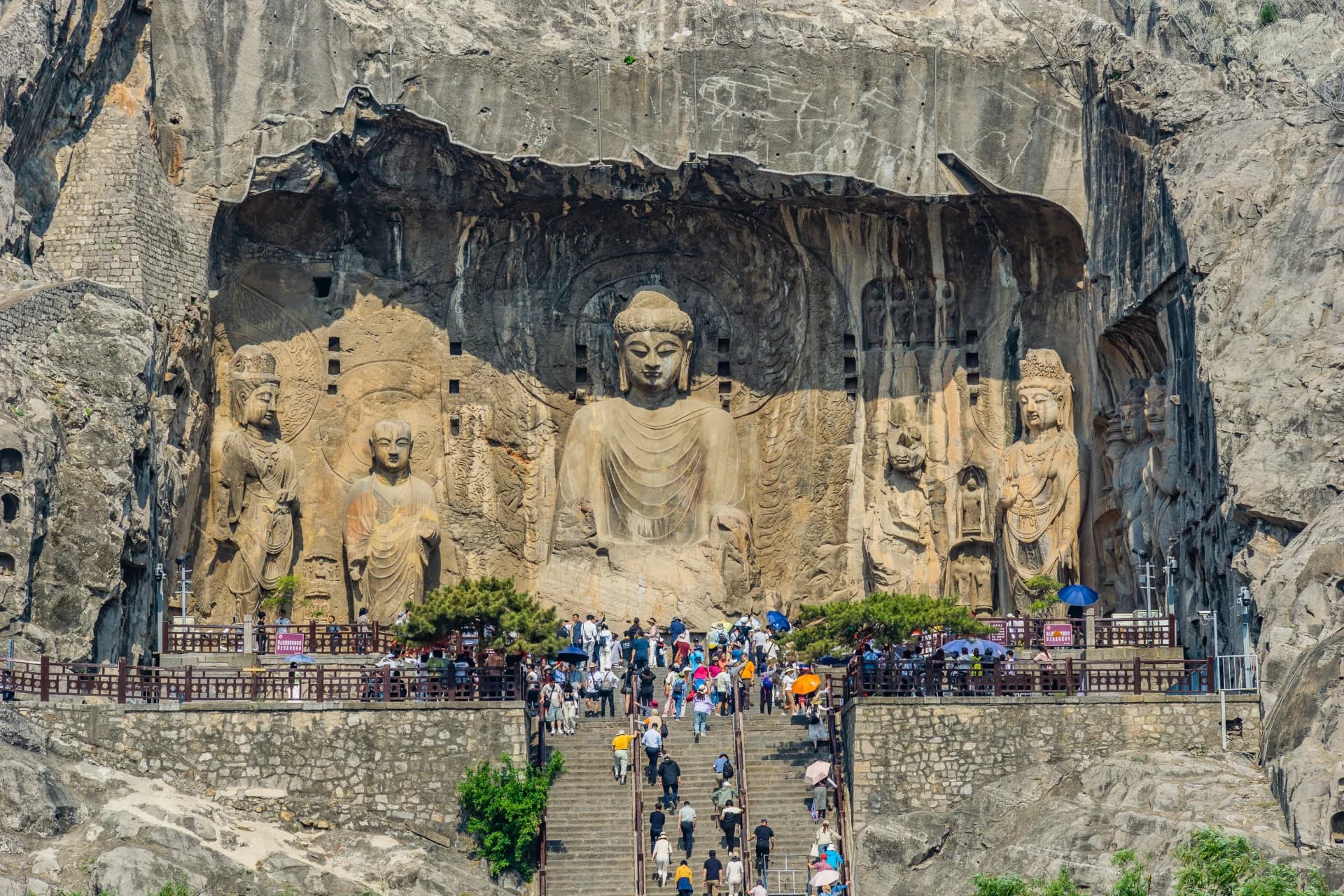
Is Luoyang worth 2-3 days? Ancient capitals, grottoes, and easy rail links

Tangshan
Is Tangshan worth 2–3 days? Earthquake history, imperial tombs, and an easy Beijing side trip